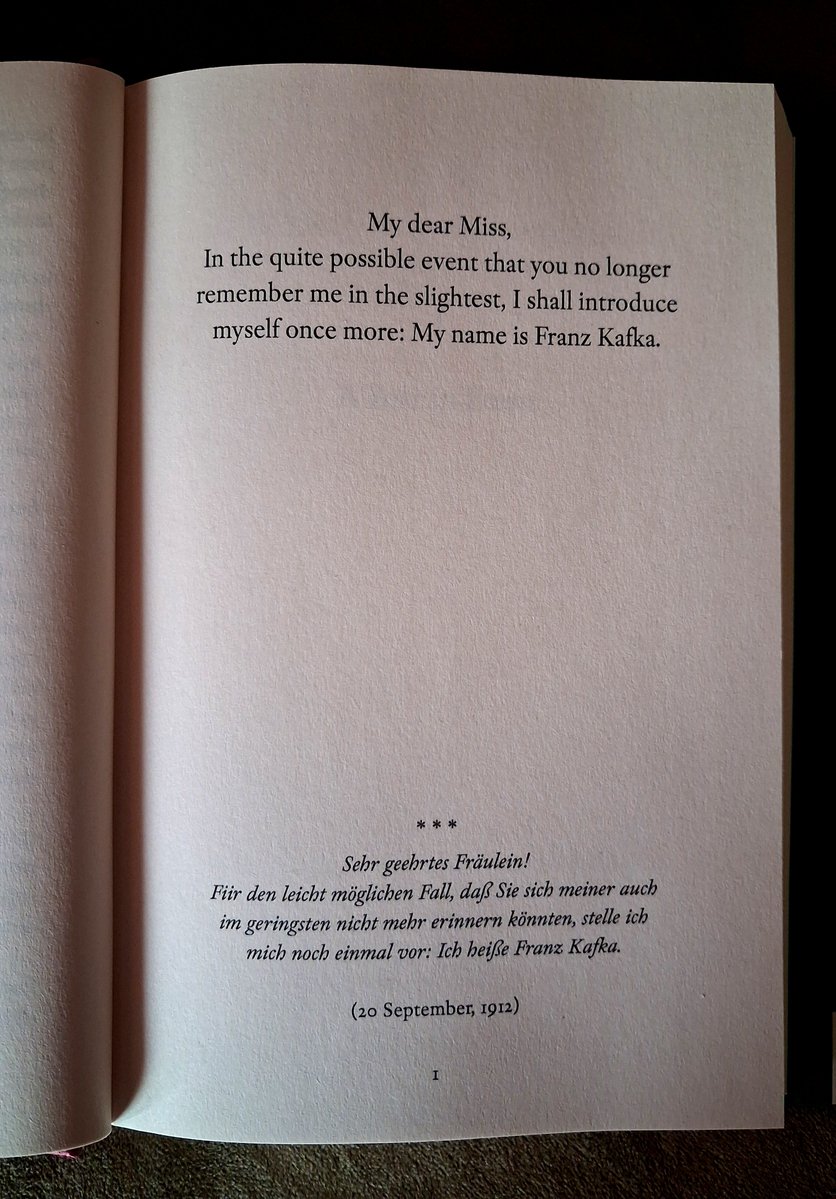
My dear Miss,
In the quite possible event that you no longer remember me in the slightest, I shall introduce myself once more: My name is Franz Kafka.
Franz Kafka, 1912.
Exactly. This is why imperialists and their sympathisers have never stopped trying to tarnish Abacha’s name. The smear campaign against him has been going on for decades, and few Nigerian leaders have been subjected to such sustained vilification.
But the truth cannot be buried forever. As Allah says:
وَقُلْ جَاءَ الْحَقُّ وَزَهَقَ الْبَاطِلُ ۚ إِنَّ الْبَاطِلَ كَانَ زَهُوقًا
“And say, ‘Truth has come, and falsehood has vanished. Indeed, falsehood is bound to vanish.’” — Qur’an 17:81
May Allah expose falsehood, establish the truth, and guide us to judge history with justice rather than prejudice. آمين.
Let me tell you something: there is a difference between seeking the truth and taking pleasure in slandering the dead. What I watched in that six-minute Arise News segment was a disgraceful, slanderous and poor journalism. Four people sitting together, laughing, cracking jokes and entertaining themselves with an allegation about the circumstances of a man’s death. And now you come along, disguising yourself as a champion of righteousness, suggesting that his family should pray for his forgiveness and give sadaqah, while continuing to propagate the very allegation you claim to be concerned about.
Have you forgotten what Allah says about those who hear slander?
When the slander against ʿĀʾishah (رضي الله عنها), the Mother of the Believers, was circulated, Allah rebuked those who failed to reject it as believers ought to have done.
وَلَوْلَا إِذْ سَمِعْتُمُوهُ قُلْتُمْ مَا يَكُونُ لَنَا أَنْ نَتَكَلَّمَ بِهَٰذَا سُبْحَانَكَ هَٰذَا بُهْتَانٌ عَظِيمٌ
“Why, when you heard it, did you not say, ‘It is not for us to speak of this. Glory be to You! This is a tremendous slander’?”
— Qur’an 24:16
Subḥānaka, mā yakūnu lanā an natakallama bihādhā, subḥānaka hādhā buhtānun ʿaẓīm.
That is how a believer should respond when confronted with a grave allegation that has not been established not repeat it, entertain it and give it the appearance of credibility.
Now, let us talk about evidence. Major Hamza al-Mustapha was Abacha’s close aide and, according to his account, He was present when he died. His testimony carries more weight than that of a slanderous kafir. Why should an account from someone who was present be dismissed while a sensational allegation circulated in a book and repeated by television commentators is treated as established fact?
I am not claiming that someone’s faith automatically makes every statement true, or that someone’s disbelief automatically makes every statement false. But four people repeating an allegation does not make it true, and a published book does not magically turn an unverified story into established fact. Where is the credible evidence? Where is the corroboration? Why should Nigerians accept this narrative simply because four commentators repeated it while laughing and mocking.
You cannot manufacture certainty out of insinuation.
And do not pretend to be concerned about a man’s akhirah while helping to spread an allegation you have not established. If you genuinely wish good for the deceased, make duʿāʾ for him. Give sadaqah if you wish. Ask Allah to forgive him. But do not use religious language to disguise the propagation of a potentially grave slander.
I know that Abacha remains a deeply controversial figure in Nigerian history. I regard him as one of our most consequential and, in my view, underappreciated Heads of State. You are free to criticise his government and disagree with his legacy. But political animosity does not give anyone the right to spread unverified allegations about his private life or death.
The issue is not whether Abacha was beyond criticism. The issue is whether our hatred for a political figure has become so great that we no longer care about the truth.
He is dead. He cannot defend himself. That should make us more careful with our tongues, not less.
Allah has already taught us how to respond to slander. So, before you present yourself as a champion of righteousness, ask yourself whether your conduct reflects the Qur’anic command you claim to uphold.
Fear Allah in what you say. Fear Allah in what you repeat. And fear Allah when speaking about the dead.
سُبْحَانَكَ هَٰذَا بُهْتَانٌ عَظِيمٌ
Glory be to You, O Allah! This is a tremendous slander.
May Allah guide us to the truth, protect our tongues from slander, and forgive the deceased among the Muslims. Āmīn.
If TRULY Abacha died while on sexual intercourse with a supposed woman who is not his wife, then I can only pray that God forgives him.
What is the implication of this? The final moment of your life is everything. We call this Su' al-Khatimah, which means a bad ending. The Prophet (peace be upon him) warned us that every person will be resurrected upon the state in which they died.
Think about the terror of such reality. Imagine waking up on the Day of Resurrection and standing before the Creator in a state of Zina.
Leaving this world while committing a major sin puts the soul in severe jeopardy for the punishment of the grave. He did not even get a chance to repent or wash the impurity off. This tells you everything about the kind of life he lived.
This is not to add to the atrocities that have been attributed to him in his desperate bid to grab and hold on to power.
The only lifeline he has is his family. His family must engage in relentless prayers for his forgiveness. They need to give continuous charity in his name, like providing water for communities or feeding the poor, while begging the Almighty to pardon him.
At the end of the day, this is a bad legacy to leave behind.
@Dan_Yarwa Exactly, brother. That is what baffles me most. He claims to be concerned about Abacha’s forgiveness, yet he is helping to propagate the very allegation he ought to be cautious about. May Allah protect our tongues from slander and guide us to what pleases Him. Ameen.
No, brother. There is no “if truly” when you are dealing with an unsubstantiated allegation that has been turned into a source of mockery and entertainment. And the admonition is certainly not for everyone in the same way.
Allah taught the believers what they should say in times like this;
سُبْحَانَكَ هَٰذَا بُهْتَانٌ عَظِيمٌ
“Glory be to You! This is a tremendous slander.” (Qur’an 24:16)
That is the point: when you hear an allegation that has not been established, you do not casually repeat it under the pretence of giving advice. You reject the slander and demand evidence.
Here, we have an account from Major Hamza al-Mustapha, Abacha’s close aide who says he was present at the time of his death, yet you are willing to propagate a conflicting allegation that was turned into a laughing matter on television. Have you considered the evidence before repeating it?
Of course, if a claim is genuinely established, it can be discussed responsibly. But “if truly” can not be used as a licence to circulate every sensational allegation, especially when the circumstances surrounding it demand scrutiny.
VIDEO UPDATE: Ahmed Zakka, who was abducted alongside his wife and their baby in Millennium City, Kaduna, has sent another desperate plea for help to his relatives.
In the heartbreaking video, he says his hand (right) has gone numb after being tightly tied with a rope by the bandits. He fears they may cut off his hand.
A whole family is in captivity, and Ahmed is pleading to be rescued before it is too late. His wife and innocent baby are also at the mercy of their captors.
My appeal is to the authorities and everyone who can help to do everything possible to secure their safe release.