Hot take: a good demo beats a good pitch.
I turned a static 3D model into something you can pause, scrub, and pull apart. Same model, ten times more interesting.
What have you turned from “a file” into “something you can play with”?
Society is witnessing a massive transition from physical corporate prestige to digital autonomy. People are willingly trading high-status titles for location independence, flexible schedules, and direct ownership over their economic output.
If you could maintain your income while working from anywhere with complete schedule freedom, what location would you choose?
Exactly. The real challenge isn’t making agents more autonomous — it’s making autonomy safe and predictable.
Strong permission boundaries allow agents to handle more complex tasks without putting the entire system at risk.
Trust shouldn’t come from better instructions alone. It should come from the architecture itself.
The AI race is becoming an infrastructure race.
Models matter, but so do power, data centers, deployment systems, robotics and the controls that keep agents within their permissions.
The strongest companies may not be the ones with the loudest demo.
They may be the ones that connect the whole stack reliably.
What do you think will become the biggest bottleneck: computing power, energy or infrastructure?
I don't think the best workflow will be purely open-source or fully managed. I'd rather use reliable tools for critical changes and cheaper agents for repetitive tasks, with clear boundaries between them.
DeepSeek just open-sourced a prototype coding agent aimed at Claude Code.
For a solo builder:
A) Pay ~$200/mo for a polished tool that just works
B) Run open-source for near zero, and own the setup
My bet: most pick A until B gets boring-easy.
You?
A recent conversation with Sam Altman raised a question every AI business should answer:
Are we measuring usage, or actual value?
Tokens, API calls, and subscriptions tell us what was consumed. They don't tell us whether a customer saved time, avoided mistakes, or made more money.
I'd judge an AI product by the result, not the meter.
What metric would you trust most?
Not every breakthrough happens overnight.
Some things take time.
Some dreams require patience.
And some of the best views come after the longest climbs.
Keep building, even when nobody sees the progress.
One day, the results will speak for themselves. 🌅
Vincent Builds.
I like that approach. It’s not about choosing one over the other, but using each where it creates the most value.
Let the polished tool handle critical work where reliability matters, and let open-source agents take care of repetitive tasks where experimentation is cheap.
The smartest setup might be a hybrid workflow.
@georgeorch Exactly. The hidden cost of open-source isn’t always money — it’s time, setup, maintenance, and troubleshooting.
I’d rather pay for a tool that keeps me building than spend my weekend fixing the tool itself.
Convenience is a competitive advantage.
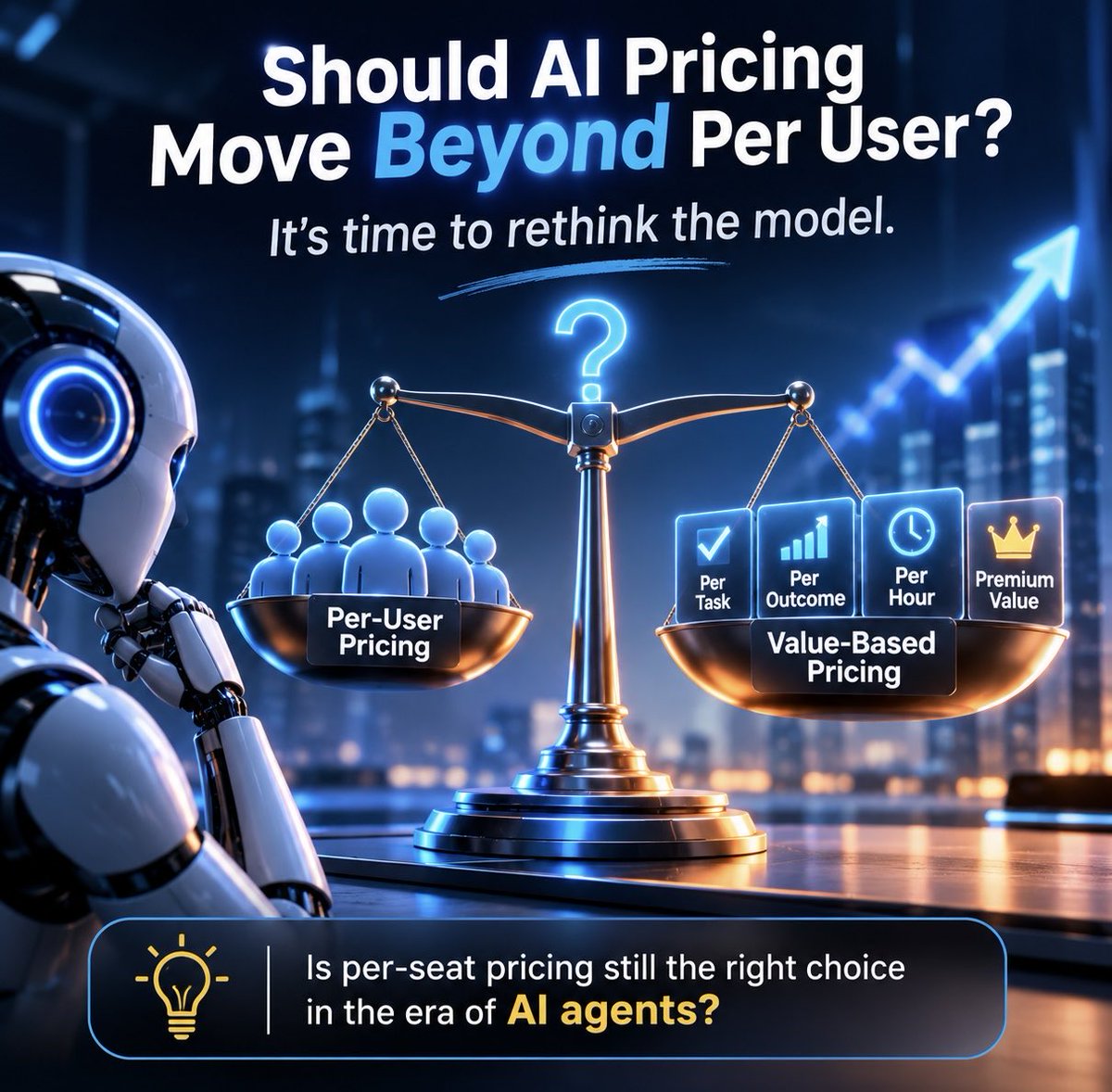
If AI agents can complete more work with less human input, should software companies keep charging per user?
Or should pricing move toward the value delivered?
For example:
Per completed task.
Per successful transaction.
Per hour saved.
Or a monthly subscription with usage limits.
Per-seat pricing is simple.
But when one person can manage multiple agents, the old pricing model may become harder to justify.
Which model would you pay for?
@dijedont That’s a solid point. Time spent debugging is time taken away from building. If a tool can reliably reduce that friction, $200/month might be a worthwhile investment.
The real question is how much time it saves compared to the cost.