I would like to share the story of how a patient with cancer came up with the idea for a randomized trial, & how listening to him saved a lot of lives.
1/ In 2002, I had just completed a randomized trial with the notorious drug thalidomide for the cancer, multiple myeloma.
Just out: Our study using NHANES samples in persons age 10-49 shows that MGUS starts at a younger age in Black people and that there is a markedly higher risk of MGUS in African Americans compared to White people. The 2-3 fold high risk of MGUS in Black people is the reason why Multiple Myeloma is 2-3 fold more likely to occur in African Americans compared to the White population. Study done in collaboration with @DrOlaLandgren over 15 years. This is the third paper and uses highly sensitive mass spectrometry.
Monoclonal Gammopathy of Undetermined Significance (MGUS) is the premalignant precursor of multiple myeloma. The reason age adjusted prevalence of myeloma in African Americans is mainly because they have a 2-3 fold higher higher risk of MGUS and not felt to be due to a higher risk of progression of MGUS to myeloma. This is an important point. Genetic differences in other words predispose to the “polyp” (MGUS) but not the cancer (myeloma).
We believe there is a genetic predisposition to the origin of MGUS presumably due to an aberrant response to antigen stimulation in Blacks in the US and in Western Africa compared to Whites. We don’t think that the disparity in the occurrence of MGUS is due to environmental exposure differences. For one it’s seen in all socio economic strata. Second the higher prevalence is seen in studies we did in Ghana exactly similar to what we see in African Americans. And third, in a study we did in a Southern US cohort where we looked at African American and White women living in the same region with same socioeconomic status, we found a 2-3 fold higher risk of MGUS in African American women. So it’s unlikely to be environmental differences. Our study of other modifiable risk factors in NHANES doesn’t explain the disparity.
We suspect that the disparity we see in African Americans and in studies Western Africa, may or may not be present in Eastern African countries. Which is why we are studying the Somali population in Minnesota currently.
Our NHANES study just published @BloodCancerJnl shows that the disparity in occurrence of MGUS is apparent even at age 30-39 in African Americans compared to White population in America.
https://t.co/XzxrKVGfY6
Out now in @AjHematology! We identify factors associated with early treatment failure (PFS <12 months) in patients with R/R myeloma receiving cilta-cel and identify early prognostic markers
Key takeaways:
✅ Early failure noted in Prior BCMA-directed Rx, EMD and higher ferritin/cytopenias at baseline
⭐️ No difference in PFS or early failure for early (1-3) vs later(≥4) lines of therapy
⭐️ BM MRD or PET positivity at 3 months post infusion markedly prognostic. Need consideration for consolidation in these patients?
🧵 1/
https://t.co/szBjyW42pc
Don’t miss: Today at 7 pm central. An update of what’s new in myeloma from
#ASCO26#EHA26#IMWG26
IMWG conference series webinar. I will be joined by @NikhilMunshiMD@SagarLonialMD - and we will answer your questions.
Moderated by @IMFmyeloma CEO Heather Cooper Ortner. See link for registration. https://t.co/IxfZm6DDt8
This is a Landmark paper by @VincentRK and @DrOlaLandgren The monoclonal disparity starts at the precursor stage. Genetic predisposition in those of African ancestry to MGUS genesis and not progression is a critical point
Exactly. The reason for the disparity is that certain not all people of African ancestry seem to get it far more frequently than White people and at much younger ages. That has not been studied as to why it happens. Based on the studies we have done this genomic MGUG (clonal premalignancy) is most likely driven by some genetic factor rather than environmental. Once the MGUS is established, the driver for who and when and how genomic / and overt myeloma (malignancy) develops is not driven by ancestry. And that’s what your paper shows.
@FrancescoMaura4@MayoClinic@MSKCancerCenter@nyulangone@SylvesterCancer Need to study normal PCs Versus MGUS PCs, and why normal people get MGUS and normal PCs become premalignant MGUS genomically in large diverse populations. We cannot look at MM samples and conclude why there is a disparity in MGUS incidence. It’s apples and oranges.
Again. I think ancestry has minimal effect on MM. MM is conditioned kn some one having MGUS.
Ancestry drives MGUS. Not MM
So you cannot do a study in MM and extrapolate to why people get MGUS
It’s like saying gender has no effect on hemophilia occurrence by studying risk of bleeding in hemophiliacs and finding that regardless of gender hemophilia has same bleeding risk adjusted to factor level. Similarly studying Ethiopia doesn’t tell anything about risk in Ghana or African Americans right?
There is no environmental variable that can explain why there is a disparity in MGUS incidence when we have tons of studies in all SES strata in America. NHANES itself is a stratified random sample of the US population.
If you study MM of course there will be no germline or somatic differences. Because the cohort is all MM. I agree that your study shows what you studied. MM is not driven by ancestry.
MGUS to MM is purely a function of random events happening. It will not be driven by ancestry. No one ever claimed that.
There is marked disparity in incidence of MGUS and we have to study MGUS at young ages with the type of genetic studies you have done in MM to find the cause.
I don’t believe we have any data that African Americans have higher risk of MGUS than whites because of environmental factors that are different. We have the same disparity in every study in every ses group.
Just out: Our study using NHANES samples in persons age 10-49 shows that MGUS starts at a younger age in Black people and that there is a markedly higher risk of MGUS in African Americans compared to White people. The 2-3 fold high risk of MGUS in Black people is the reason why Multiple Myeloma is 2-3 fold more likely to occur in African Americans compared to the White population. Study done in collaboration with @DrOlaLandgren over 15 years. This is the third paper and uses highly sensitive mass spectrometry.
Monoclonal Gammopathy of Undetermined Significance (MGUS) is the premalignant precursor of multiple myeloma. The reason age adjusted prevalence of myeloma in African Americans is mainly because they have a 2-3 fold higher higher risk of MGUS and not felt to be due to a higher risk of progression of MGUS to myeloma. This is an important point. Genetic differences in other words predispose to the “polyp” (MGUS) but not the cancer (myeloma).
We believe there is a genetic predisposition to the origin of MGUS presumably due to an aberrant response to antigen stimulation in Blacks in the US and in Western Africa compared to Whites. We don’t think that the disparity in the occurrence of MGUS is due to environmental exposure differences. For one it’s seen in all socio economic strata. Second the higher prevalence is seen in studies we did in Ghana exactly similar to what we see in African Americans. And third, in a study we did in a Southern US cohort where we looked at African American and White women living in the same region with same socioeconomic status, we found a 2-3 fold higher risk of MGUS in African American women. So it’s unlikely to be environmental differences. Our study of other modifiable risk factors in NHANES doesn’t explain the disparity.
We suspect that the disparity we see in African Americans and in studies Western Africa, may or may not be present in Eastern African countries. Which is why we are studying the Somali population in Minnesota currently.
Our NHANES study just published @BloodCancerJnl shows that the disparity in occurrence of MGUS is apparent even at age 30-39 in African Americans compared to White population in America.
https://t.co/XzxrKVGfY6
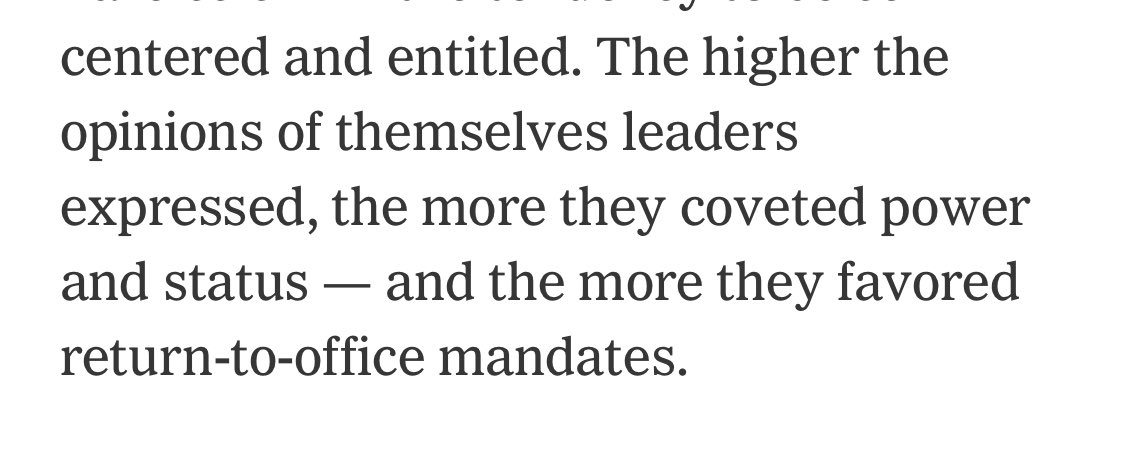
@VincentRK I've always thought this was obvious, but it's good to have empirical data backing up something every worker understood from experience.
There's a classic essay ("What do Bosses Do?") on an analogous situation in the early industrial revolution.
https://t.co/uC4v3llswO
Finishing up heme/ onc fellowship and want to lead in Cellular Therapy?
The Cell Therapy Fellowship at @MayoClinic Rochester covers it all: #CART, #TIL, immune engagers and more
➡️ 2027 Applications now open ( Int’l applicants also welcome)
📩 [email protected]
Join us: I’ll be discussing the use of CAR-T and Bispecifics in Multiple Myeloma in Minneapolis tomorrow evening with @sasoefje@myelomaMD@ZanwarSaurabh@AJMC_Journal#IVBM
Details and registration info: https://t.co/gc2csZcPkD
From #ASCO26 to #EHA2026, the momentum in hematology was extraordinary.
Hope is increasingly becoming reality for patients. Proud to have launched @TheIACH 2026–2030 Strategic Vision & Roadmap to advance education, collaboration, and innovation worldwide.
https://t.co/e6bLw2B0ff
We believe Medicare is the best. We have written about it — the paper includes leading experts in oncology in the US: we will choose for ourselves at 65 standard Medicare over any Medicare Advantage plan. https://t.co/v6APCOSS8K
We see the problems of patients with Medicare Advantage securing doctors and practices that are in network for our patients to take care of serious cancers. @DrHKantarjian@Dr_AmerZeidan