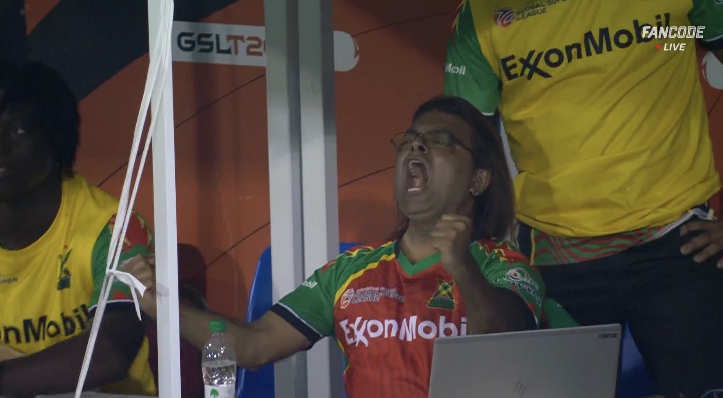
@ShiprocketIndia you guys operate on “stealth mode” - no customer service number and no escalation points. And to top it off, you’ve such unruly, irritating delivery personnel. Have you heard about Customer Empathy and such values?
@ShiprocketIndia you courier service is pathetic. You have atrocious persons as your delivery boys who can’t even bother to come at doorstep to collect OTP. And they have the balls to refuse delivery if we don’t go where they are!!
I think India accidentally built the internet’s greatest nostalgia archive.
It started with one barbershop.
Now there are websites for truck journeys, chai tapris, regional songs, 90s cartoons, pan shops, bus rides and basically every piece of desi life you forgot you missed.
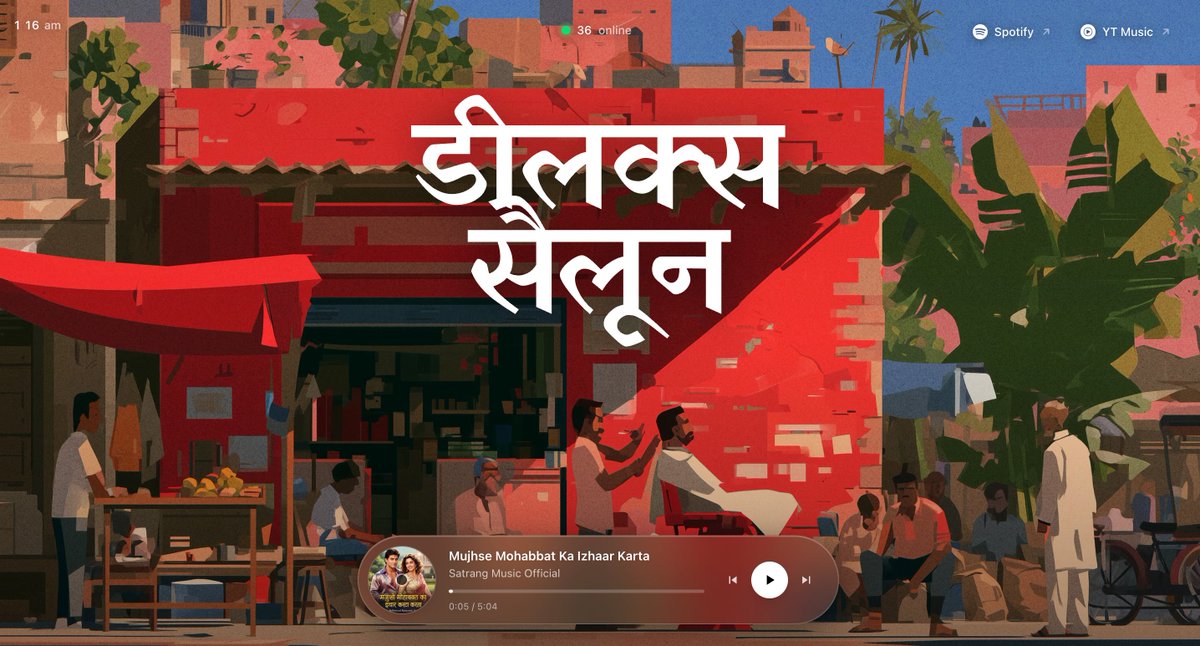
> https://t.co/GH9QuwYunn → ₹20 haircut + 90s barbershop bangers
> https://t.co/1MG24W55lW → Horn OK Please at 2 AM
> https://t.co/KbvIwPBU3H → Classic truck radio
> https://t.co/HdD5jubQgW → UP Parivahan nostalgia
> https://t.co/6hjRNCAirz → Missing home + Marathi classics
> https://t.co/BANAbuZPyz → Soft Tamil night drive
> https://t.co/xwxRyQN2Fj → 2000s Kannada childhood unlocked
> https://t.co/crdYmXGUWM → Pure Kannada nostalgia
> https://t.co/a3gWUaO7px → Sindhi lada, full volume
> https://t.co/zaX4ov0ZpE → Old Punjabi Bluetooth-memory-card songs
> https://t.co/X9AmyYpCv1 → Bihar bus journey core
> https://t.co/w676HEEG27 → Gujarati chachar chok
> https://t.co/kJcffs7BFQ → Mazdoor anthem energy
> https://t.co/WWbE0PjGVN → Cutting chai + plastic stool
> https://t.co/0lzs44brad → Chai ki tapri classic
> https://t.co/ttUYsY5dy5 → Long-distance bus uncle playlist
> https://t.co/Ij0ge45Onr → Roadways bus vibes
> https://t.co/VwExVWy1HB → Mistri / construction site radio
> https://t.co/b6PmEPGNaf → Auto wala, full volume
> https://t.co/7YvIImffu1 → Pan shop corner energy
> https://t.co/DnF8JMQhzx → Deluxe saloon upgrade
> https://t.co/l7lllxIK8q → Dhaba + full thali mood
> https://t.co/o4sgCk4NxY → Qawwali mehfil, late night
> https://t.co/eKvjd2LypA → Gali walk + old Bollywood
> https://t.co/qy4hneF2Dc → Interactive truck + 90s bangers
> https://t.co/3lMURmJPet → 90s cartoon theme songs
> https://t.co/Mrewbn0slC → 80s–90s gali nostalgia
> https://t.co/yt4Ao1OTqM → Another cutting chai classic
> https://t.co/gGyBf2nkUu → Cutting chai special
> https://t.co/7mL6WU4z4a → Another truck-radio gem
> https://t.co/X9AmyYpCv1 → Bihar Parivahan Nigam bus
> https://t.co/w676HEEG27 → Gujarati nostalgia
> https://t.co/kJcffs7BFQ → Mazdoor radio
And somehow, every single one feels like a tiny time machine.
The internet is weird.
One day it's another AI wrapper.
The next day someone builds a website that makes you remember sitting at a chai tapri, travelling in a UP bus, listening to songs from a Bluetooth memory card or getting a ₹20 haircut in 2007.
Internet is actually beautiful sometimes.
Drop the desi nostalgia website I missed in the replies.
Let's see how deep this rabbit hole goes. 👇
If you, like me, grew up in Tamilnadu, the town bus music is a whole genre of bangers you’d have enjoyed.
Made a sunday eve project inspired by this idea.
Take it for a spin: https://t.co/vfELdy1f9A
I made a website that plays bangers from indian barbershops
before you became fancy and started visiting salons. you once went to a 'saloon'. ₹20 haircuts. simple hairstyles with music that could fix your soul.
https://t.co/j3E8VfwiUU
The unwritten rule of cricket: NEVER bowl a bouncer to a fast bowler who can bowl 95mph back at you. 😭
After being struck flush on the helmet by a Fanie de Villiers bouncer, the South African slip cordon laughed.
Big Devon looked at them, made a promise, and turned the second innings into an absolute warzone. Allan Donald later called it "the most destructive piece of fast bowling I have ever seen."🤯
Devon Malcolm turned a bruised helmet into a career-defining 9 for 57 demolition. 🔥
A teacher in Dehradun told his class that light travels only in straight lines.
One boy in that room spent the next forty years bending it, and the internet now runs on what he built.
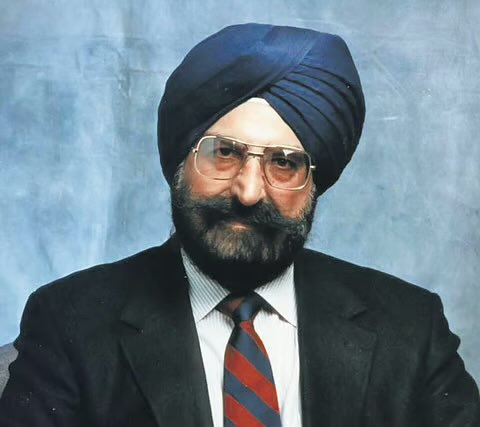
His name was Narinder Singh Kapany.
Born in Moga, Punjab in 1926. Schooled in Dehradun, graduated from Agra University, worked as an officer in the Indian Ordnance Factories. In 1952 he went to Imperial College London.
There, with a professor named Harold Hopkins, he bundled thin strands of glass together and transmitted a clear image through them. Around corners. Along bends. Nobody had done it before.
That is fibre optics. Undersea internet cables, endoscopy, laser surgery. He gave the field its name in a 1960 article in Scientific American.
Nehru wanted him back in India as scientific adviser to the defence ministry. He went to America instead. Founded Optics Technology, took it public in 1967, held over a hundred patents, and became one of the first Indians to build a company on that scale in Silicon Valley.
In 2009 the Nobel Prize in Physics was awarded for the transmission of light through glass fibre. It went to Charles Kao, who had solved the problem of impurities in the glass swallowing the signal.
Kapany was not named.
Whether he should have shared it is still disputed by people who understand the physics. What is not disputed is that Fortune had already listed him among the seven unsung heroes of the twentieth century, ten years earlier.
He died in California in 2020, aged ninety four. India awarded him the Padma Vibhushan the following year.
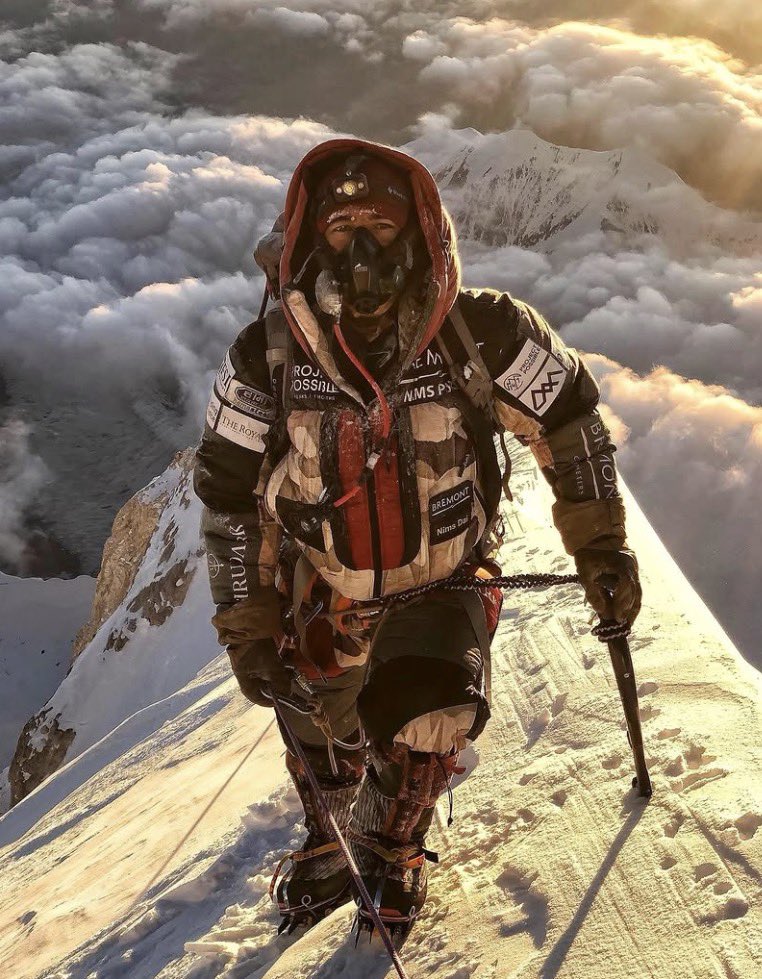
Before Nimsdai, completing all 14 of the world's 8,000-meter peaks was regarded as a lifetime achievement. Polish mountaineer Jerzy Kukuczka accomplished the feat in 7 years, 11 months, and 14 days, a record that stood as the benchmark until South Korea's Kim Chang-ho reduced it by just over a month. Kukuczka's legacy, however, extended far beyond speed. During his career, he pioneered 10 new routes on 8,000-meter peaks and achieved four first winter ascents, defining one of the greatest eras in mountaineering history.
Then came Nirmal "Nimsdai" Purja, bringing a bold, modern vision to Himalayan climbing. Combining meticulous planning, exceptional physical endurance, efficient logistics, fixed ropes, helicopter transfers where appropriate, supplementary oxygen, and—most importantly—the strength of an outstanding team of Nepali climbers, he redefined what many believed was possible.
In 2019, through Project Possible, Nimsdai completed all 14 eight-thousanders in just 6 months and 6 days, shattering previous records. His achievements during the project remain extraordinary: he climbed six 8,000-meter peaks in Nepal within 31 days, all five of Pakistan's 8,000-meter peaks in just 23 days, and summited Everest, Lhotse, and Makalu within only 48 hours and 30 minutes.
His climbing style has sparked discussion, as mountaineering has always debated the use of supplementary oxygen, expedition support, speed, risk, and the concept of alpine purity. Yet one fact remains beyond dispute: his impact transformed modern high-altitude mountaineering. Nimsdai demonstrated that multiple 8,000-meter peaks could be climbed within weeks rather than over many years, inspiring a new generation of climbers to pursue goals once considered unattainable.
Perhaps his greatest contribution was elevating Nepali climbers to the forefront of the global mountaineering community. For decades, they were the backbone of Himalayan expeditions, yet rarely received equal recognition. In 2021, Nimsdai stood alongside nine fellow Nepali climbers on the first winter ascent of K2, where the team reached the summit together while singing Nepal's national anthem—a defining moment in mountaineering history. Nimsdai completed that ascent without supplementary oxygen, further demonstrating his exceptional ability.
Records are meant to be broken, but true pioneers are remembered for changing the limits of human belief. Before Nimsdai, climbing all 14 eight-thousanders in less than a year seemed impossible. After Nimsdai, an entirely new generation began planning expeditions measured in months rather than years. That is the legacy of a true trailblazer—someone who didn't just break records, but forever moved the line of what humanity believed was possible.
PRAY FOT NIMSDAII AND CLIMBERS.
#nimsdai #nirmalpurja #projectpossible #mountaineering #HighAltitude #himalayas #8000ers #FOURTEENPEAKS #broadpeak #k24 #everestbasecamp #nepaliclimbers #climbinghistory #mountainlife #AdventureAwaits #alpinismo #summit #legend #inspirationalquotes #nepal #SherpaBlanket #mountains #climbon #nevergiveup #legacy #HimalayanHeroes #Respect #prayfornimsdai
There are only 14 mountains in the world that rise above 8,000 metres. Nirmal "Nimsdai" Purja summited every one of them in just 6 months and 6 days during Project Possible, achieving what many believed was impossible.
Today, the world has lost a legend.💔
Nirmal "Nimsdai" Purja
25 July 1983 - 1 August 2026 🕊️
#OnThisDay in 1956, Jim Laker became the first bowler to take all 10 wickets in a Test innings 🤯
Seven decades later, his match figures of 19-90 are still the best by any bowler in Test history 🏴
#Cricket#OTD
Everyone remembers the attack on the Mumbai railway station on 26/11, the gunmen walking the platforms, more than fifty people killed. Almost nobody remembers the announcer whose voice sent hundreds of strangers running the other way while the bullets were still flying.
His name is Vishnu Dattaram Zende.
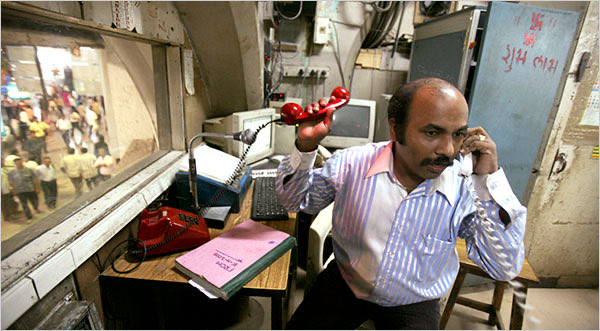
On the night of 26 November 2008, he was on duty in the announcer's cabin at Chhatrapati Shivaji Terminus, a raised glass room looking out over the platforms. It was near the end of his shift when he heard a loud blast and gunfire, and saw people running.
Two terrorists had walked into the busiest station in the country and begun shooting everyone in sight. At that station alone, they would kill more than fifty people.
From his cabin he could see the whole layout, and he understood something fast. Local trains were still pulling in, each one about to pour hundreds of passengers straight onto the platforms where the gunmen were standing.
He had a microphone that reached every platform. He decided to use it, even though it meant staying exactly where he was, in full view, instead of hiding.
He began making announcements, over and over, in Hindi and Marathi, telling people not to come to the main concourse, telling them to leave by the rear exits, warning them away from the guns.
Hundreds of people changed direction because of that voice and walked out of the station instead of into the bullets.
The terrorists worked out where the announcements were coming from. They came and stood almost directly below his cabin. One of them fired up toward him. He kept low, waited, and when he could, went back to the microphone.
He was an ordinary railway announcer on an ordinary shift. He had no weapon and no protection, just a mic and a clear view of what was coming. He stayed at his post and used the one tool he had to push strangers out of the path of the killers.
The men with the rifles are the names everyone remembers from that station. The voice that quietly saved hundreds of the people they came to kill belonged to Vishnu Zende.