@0x0SojalSec Awesome well done.
I wrote an air gapped crypto wallet that sent signed blobs to a net connected PC.
The air gapped wallet is on a PC that has no wireless or Ethernet on it.
People don't realize just how much info you can pack into a QR code. It's amazing.
@ElieJarrougeMD Interestingly I have pattern evidence amongst 1500 patients where biomarkers such as t cells, nk cells, cd5, cd19, etc are associated with high LDL.
Not univariant threshold data, but subtle yet compelling multi variant data.
@ClaudeCdPirates@turingpi Nice, let me know how you go. The trap though is trying to create algorithms for it to decide handoffs. You need to make sure it's always Agentic.
How many families turn to surrogacy when there is an undiagnosed immune system dysfunction that causes miscarriage?
When you lose genetically perfect embryos, clinics blame bad luck.
If you dig deeper, reproductive immunology offers intense protocols like IVIG and steroids to stop your body from rejecting the pregnancy. But the success rate stalls around 60%.
When that physical and emotional toll peaks, surrogacy becomes the ultimate relief, bypassing your immune system entirely for a healthy pregnancy.
We are using AI to diagnose immune issues and have a 90q success rate. So there is 100% options, the IVF clinics won't tell you, because 5 to 6 cycles is a gold mine for them.
Yes but this has always been there.
The true value in software isn't the code, it's marketing and engagement.
Like many engineers, I have always struggled with that, and assumed my AWESOME app would be an instant hit.
Further, the other valuable attribute of your code is security and compliance. Get a certification like iso 27001, have processes, procedures. AI can't copy that, cos it needs enterprise.
100%. And the ultra processed foods directly affect the immune system.
Scientists are now attributing nearly every single diseases to an immune system dysfunction.
I have data that an AI has trained linking immune markers to high LDL.
The mune system can be the defender, or the aggressor, depending on how you treat your body.
Immune system with flare up when foods contain anything other than FOOD:
Emulsifiers, preservatives, colour, anti caking agents, stabilizers, etc. these are not FOOD.
Next time you go the the supermarket, take a look at how much real food is there, 90% is just processed garbage.
There is little money to be made and lots of spoilage to supply fresh apples.
100%. And the ultra processed foods directly affect the immune system.
Scientists are now attributing nearly every single diseases to an immune system dysfunction.
I have data that an AI has trained linking immune markers to high LDL.
The mune system can be the defender, or the aggressor, depending on how you treat your body.
Immune system with flare up when foods contain anything other than FOOD:
Emulsifiers, preservatives, colour, anti caking agents, stabilizers, etc. these are not FOOD.
Next time you go the the supermarket, take a look at how much real food is there, 90% is just processed garbage.
There is little money to be made and lots of spoilage to supply fresh apples.
I admit that the past 8 months, I have not engaged or hired any developers for my projects.
I spent a lot of time refining my Agentic prompting and planning skills.
And I am super happy, I save a lot of money and pass that savings onto my clients.
I know it's difficult for devs, but this is notcthecfiret or last time technology displaces employment, if I don't do it, I will go broke too as my customers week cheaper suppliers.
Agree.. I have been tinkering with hybrid models.
That is, imagine your local LLM is the main point of contact. It does it's turns and when needed it has a skill called ask_grok.
This way, 70% of tokens are used in the local LLM, while 30% Grok. Best of both worlds. For Agentic coding though, I haven't gotten that far.
@AnatoliKopadze LLMs are an intellectual lever.
It is like being a senior supervisor in your field, and having a team of 100 capable resources who work 1000x more efficient than humans.
The question is, how can you transform into a senior AI supervisor. That is what people have to learn.
If you love to measure your bio metrics, the big one to look at is HRV.
Heart rate variability, or HRV, is the single most important metric to track because it reveals how well your autonomic nervous system balances stress and recovery.
It shows your body's real-time adaptability and resilience far better than resting heart rate alone. An optimal HRV range signals strong fitness, good recovery, and lower health risks. Tracking it daily helps you fine-tune training, sleep, and lifestyle decisions based on your personal window.
This is mine for today.
Nothing wrong with "ai slop".
So, what you dont want to do is create an App that looks so different, that people struggle to navigte and use it.
I for one think its a good thing that an all looks familiar, and easy to use. Hamburger menu on left, easy to find items. UI components look familiar.
Mobile apps that try to be overly fancy, are great to attract new users, but long term use creates "hoo ha fatigue"...
AGI ≠LLMs
LLMs will never evolve to AGI, it's a completely different architecture, one that has too many engineering limitations to solve.
Don't believe these big companies who claim they will have AGI. they will still be LLMs, still have context windows and memory problems.
LLMs are just very good autocomplete enginees. And is static, so it never learns.
AGI requires a complex neural network, one where it can create it's only smaller AI and network it back into the main so, and thus creating network of networks, nested, mashed and organized in multiple dimensions. This requires a phenomenal amount of bandwidth 10Tbps, huge memory (15 to 20TB), and even larger SSD storage 1PB.
Then such a system will have an immense thermal load, and power consumption.
Clusters of compute/memory currently maybe run at best 1Tbps, but more like 100Gbps.
We are just not there. Even if we do achieve it, the AGI will be a 2 to $3B machine that spans multiple racks and servers.
AGI ≠LLMs
LLMs will never evolve to AGI, it's a completely different architecture, one that has too many engineering limitations to solve.
Don't believe these big companies who claim they will have AGI. they will still be LLMs, still have context windows and memory problems.
LLMs are just very good autocomplete enginees. And is static, so it never learns.
AGI requires a complex neural network, one where it can create it's only smaller AI and network it back into the main so, and thus creating network of networks, nested, mashed and organized in multiple dimensions. This requires a phenomenal amount of bandwidth 10Tbps, huge memory (15 to 20TB), and even larger SSD storage 1PB.
Then such a system will have an immense thermal load, and power consumption.
Clusters of compute/memory currently maybe run at best 1Tbps, but more like 100Gbps.
We are just not there. Even if we do achieve it, the AGI will be a 2 to $3B machine that spans multiple racks and servers.
Most people know AI as chat agents like ChatGPT, Gemini and Grok.
But that is only one type of AI.
One that is deterministic and very useful at learning complex patterns is Machine learning neural networks.
Here is my paper where we use Machine Learning to solve one of life's toughest and heart breaking problems: miscarriage.
https://t.co/qUS2wDxSSR
@ThemBeforeUs IVF centres will do 5-6 cycles of IVF, only to put you on immune suppressants, and boom, you get pregnant and have a live birth.
We have studied so many of these cases, and there are real breakthroughs: https://t.co/e2dQwZaJVa
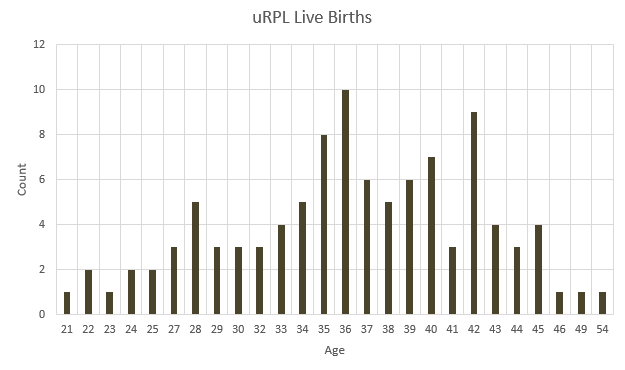
Well, its not always infertility, its sometimes treatable! We had a 54 year old spontaneous pregnancy and live birth!!!
Many unexplained recurrent pregnancy losses (uRPL) are driven by silent maternal immune dysfunction. As we age, the immune system loses the adaptability required to tolerate a fetus.
Current ESHRE guidelines don't support immune therapies because traditional testing fails. Our 36,000-patient dataset shows why: individual immune markers have a weak correlation ($r < 0.5$) to pregnancy outcomes. Evaluating them in isolation tells us nothing.
However, when we feed these complex interactions into our machine learning model, predictive accuracy hits 95%. For the first time, we can reliably decode, diagnose, and treat immune-mediated uRPL.
Happy to share paper with anyone interested to learn more.
This chart shows our treatment of patients with uRPL, there is bias as most patients are > 33-35 years old. But as you can see, there is still hope.