In January 2015 @DreamfieldsP launched our very first DreamLeague at Setlabotjha Primary in Sebokeng. 146 learners signed up for to play 5-a-side football so they could learn the game. Last night in Monterrey one of those boys, Thapelo Maseko, made all our dreams come true
A Japanese immunologist spent 20 years proving that the chemicals trees release into the air walk into your bloodstream, hunt down your stress hormones, and arm your immune system in ways no therapist or pharmaceutical has ever matched, and most of the data has been sitting in Japanese medical journals for two decades waiting to be translated.
His name is Qing Li.
He is a clinical professor at Nippon Medical School in Tokyo and the president of the Japanese Society of Forest Medicine. The Japanese government has been funding his research since 2004, and the body of work he has produced is the reason forest bathing is now an officially prescribed clinical therapy in Japan and Korea.
The story actually starts in 1982, when the Japanese Ministry of Agriculture, Forestry and Fisheries coined the term shinrin-yoku to describe the practice of slow, mindful walking in a forest. They did it for a practical reason.
Japan was urbanizing fast, stress-related illness was climbing, and the country had thousands of square kilometers of forest sitting unused. The idea was to give people a reason to walk into the trees... They had no idea what was actually happening to the human body during those walks until Qing Li ran the first proper experiment in 2005.
He took twelve healthy adult men on a three-day, two-night trip to a forest park. They walked for a few hours each day. Nothing strenuous. No prescribed routes or breathing exercises. They simply walked slowly through the trees, breathing the air, looking at the forest.
Li drew blood and urine samples before the trip, on the second day, on the third day, on day seven after returning home, and again on day thirty.
The numbers that came back from the lab were not what anyone expected.
The activity of a specific type of immune cell called the natural killer cell, which is the cell your body uses to hunt down cancer cells and virus-infected cells before they can spread, had jumped by roughly 50 percent during the forest trip. The actual number of natural killer cells circulating in the bloodstream had increased significantly.
Three different anti-cancer proteins that those cells produce, called perforin, granzymes, and granulysin, had all risen sharply. And the effect did not disappear when the men went home. The immune boost was still measurable on day seven and was still partially present on day thirty.
Two hours a day in a forest had upgraded the immune system for a full month.
Li ran the same experiment with women a year later and found nearly identical results. Then he ran it with a control group who took a three-day trip through an urban area with the same amount of walking, the same hotel quality, and the same diet.
The urban group showed no measurable change in natural killer cell activity at all. The forest was doing the work, not the vacation.
The mechanism turned out to be a class of airborne molecules called phytoncides. Trees produce these compounds to defend themselves against insects, bacteria, and fungi. Pine, cedar, oak, and cypress trees release them in particularly large amounts, especially in warmer weather and after rainfall.
When you walk through a forest, you are inhaling those molecules into your lungs and absorbing them through your skin, and once inside your body they appear to directly stimulate the production and activity of the very immune cells Li was measuring in his lab.
Roughly 50 percent of the health benefit of a forest walk, according to Li's data, comes from the chemistry of the air itself. The other half comes from what the forest is doing to your nervous system.
This is where it stops being only about the immune system and starts being about stress.
A separate Japanese research team measured cortisol, the body's main stress hormone, in 84 participants across 35 different forest sites. They drew samples before and after a 30-minute walk in each forest and compared them to control walks in matched urban environments. The cortisol levels of the people who walked in the forest were lower than the cortisol levels of the people who walked in the city by a significant margin. Their heart rates were lower. Their blood pressure was lower.
The activity of their parasympathetic nervous system, which is the part responsible for rest and recovery, had gone up. The activity of their sympathetic nervous system, which is the part that drives fight or flight, had gone down.
Then a researcher at the University of Michigan named MaryCarol Hunter ran the cleanest version of this experiment ever done. She recruited participants from a city and told them to take a nature pill three times a week for eight weeks.
They were free to choose the time, the place, and the duration of the nature experience, as long as it was outside, in daylight, and free of phones, conversations, and aerobic exercise. They sent her saliva samples before and after each session so she could measure cortisol changes accurately and rule out the normal daily drop in stress hormones that happens to everyone.
The result was that participants experienced a 21.3 percent drop in cortisol per hour spent in nature, with the biggest payoff happening between minutes 20 and 30 of the walk.
After that, the cortisol kept dropping, but more slowly. The threshold dose for measurable stress relief was just 20 minutes outside in something that looked and felt like nature.
What none of this means is that nature is a substitute for therapy or for medication when someone genuinely needs them. Therapy treats different things than a walk does, and Li himself has been careful in interviews to call forest bathing a complementary intervention rather than a replacement for clinical care.
But what the research has settled is that the human body has a physiological response to being among trees that operates on the same biological systems modern medicine is trying to reach with drugs and clinical protocols, and that response is fast, measurable, and free.
The strangest part of Li's work is the implication he keeps repeating in interviews. The average person now spends more than 90 percent of their life indoors. Their cortisol stays elevated. Their natural killer cells stay sluggish.
Their parasympathetic nervous system rarely gets a chance to take over. The system that was tuned by millions of years of life under a canopy of trees is being asked to run permanently inside a box made of drywall and screens.
Your body has not forgotten what it is supposed to do in a forest. It is waiting for you to walk into one.
It’s been exactly 6 years since the South African government released a picture to explain to the country what midnight meant.
You see, we had our first “family meeting” ever on the 23rd of March, and it was announced that we were going into a state-of-emergency lockdown (at midnight on the 26th of March). At first, we all forgot what midnight actually meant. Just typing that made me giggle. The government had to change the regulations to 23:59 in order for us to understand. We couldn’t buy roast chickens, or flip-flops or smoke cigarettes… because when people zol!?! But we were all making banana bread, watching Tiger King, trying our hand at pineapple beer and eventually joining the comrades’ marathon every morning between 6 and 9.
Friends… there was one day that I ran a 5km around my house. In my garden. Circles for days.
3 weeks became 3 months, then 6 months and then a really bizarre couple of years.
Do you remember how weird it got? And then the weird just got weirder.
It was all just surreal.
The “family meetings” started off pretty inspirational. We were all being led. And slowly, that inspiration turned to doubt and disappointment. We stopped calling them family meetings. We got more weird regulations, more money being stolen (we’ve actually stopped speaking about the missing billions), more jobs lost and more weirdness.
And do you remember those bizarre dreams? The world was collectively having the worst night’s sleep and no one knew why. It could have been Carol Baskin, but I guess it’s because we were all dealing with something so weird… a loss of our normality, loss of incomes and loss of loved ones.
The world shifted and we all kinda lost our balance.
One of the biggest realisations for me during that time was that mental health and wellness matter. I spent quite a few days properly feeling my feelings and having to find a way out of the sadness.
Those couple of years made me understand that we live in a very broken world where people who we love are silently dealing with massive monsters that we know nothing about.
Everyone is fighting in a fight club we know nothing about… because we don’t talk about fight club.
It was overwhelming and incredibly tough… and some days it still is… but I just want to remind everyone that it is okay not to be okay, and sometimes you need to take a time out, or reach out, or do whatever you need to protect yourself.
Reaching out might be the most important lesson for me.
I went through many dark days but on the 6th of November 2020, I had a real panic attack. The first I have ever had. It only took 224 days of lockdown but that day, I broke down. I lay on the floor, grasping for something to hold onto. I couldn’t breathe.
The next day, I shared my story, and the outpouring of love was so intense that I could feel it wrapped around me like a warm blanket.
So I want to remind you that you don’t need to do it all, and you don’t need to do it alone. If you’re feeling like it’s all too much, even now, then please reach out.
This is solid advice and 100% worked for me.
We also cannot lose hope. The world is a crazy place. Even now. More so now. It can feel very overwhelming, but we must not forget that there is always hope! And hope is a good thing. Maybe the best of things… and no good thing ever dies.
Also… please, please, please never stop believing in the wild possibility that is you and your impact. Live in purpose, on purpose, with hope and kindness!
I don’t have the answer as to how to fix the economy, or how to create jobs when there just aren’t any… or even how to repair what is broken in our country, but I do believe with a little kindness and some hope, we might just be able to help each other through whatever we are going through.
We rise by lifting others, right? Well… kindness and hope is how we do that!
So if you see someone falling behind, walk beside them. If someone is being ignored, find a way to include them. If someone has been knocked down, lift them up.
Always remind people of their worth.
Be who you needed when you were going through hard times.
Oh, and if you want a laugh, this picture of me was the recommendation by the “Coronavirus Command Council” in May 2020 on what we should all be wearing during that time… crop bottoms worn with boots and leggings. I am not joking. This was written into a lockdown regulation and approved by our “leaders”.
What a weird time. But at least we all now know that midnight means 23:59.
Okay. Love you. Bye.
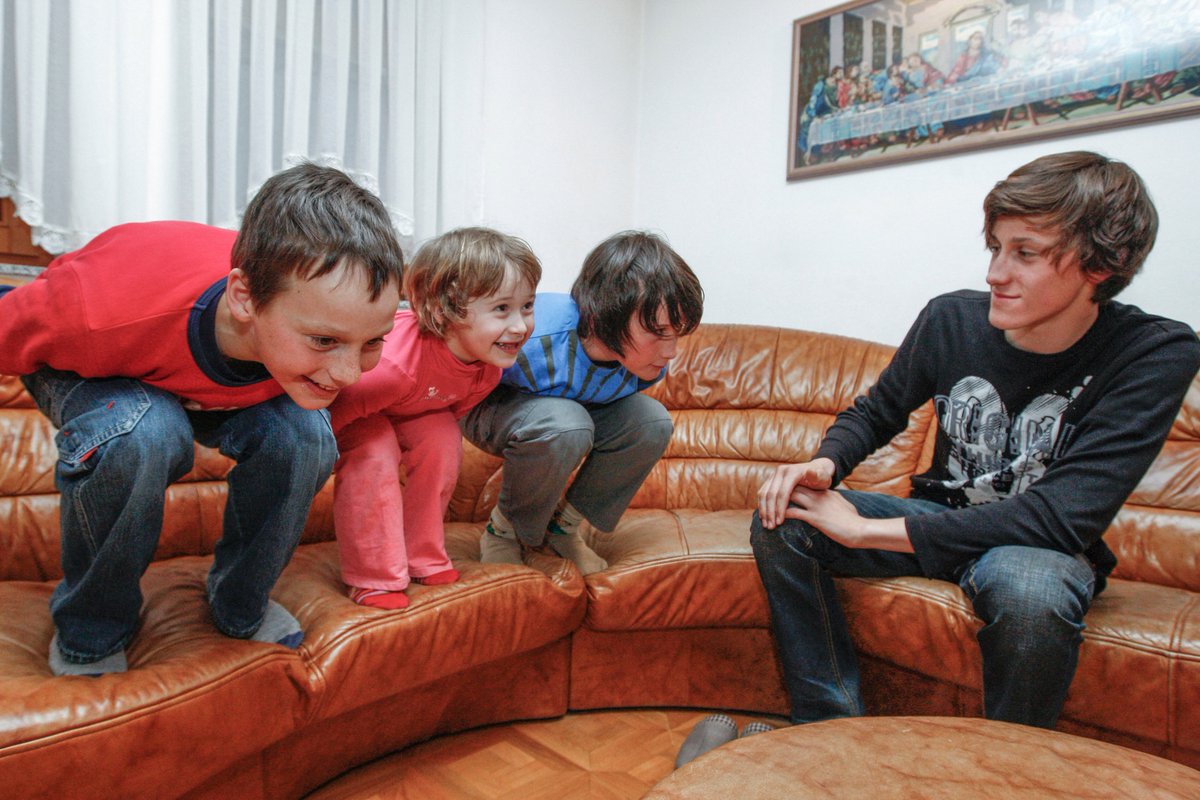
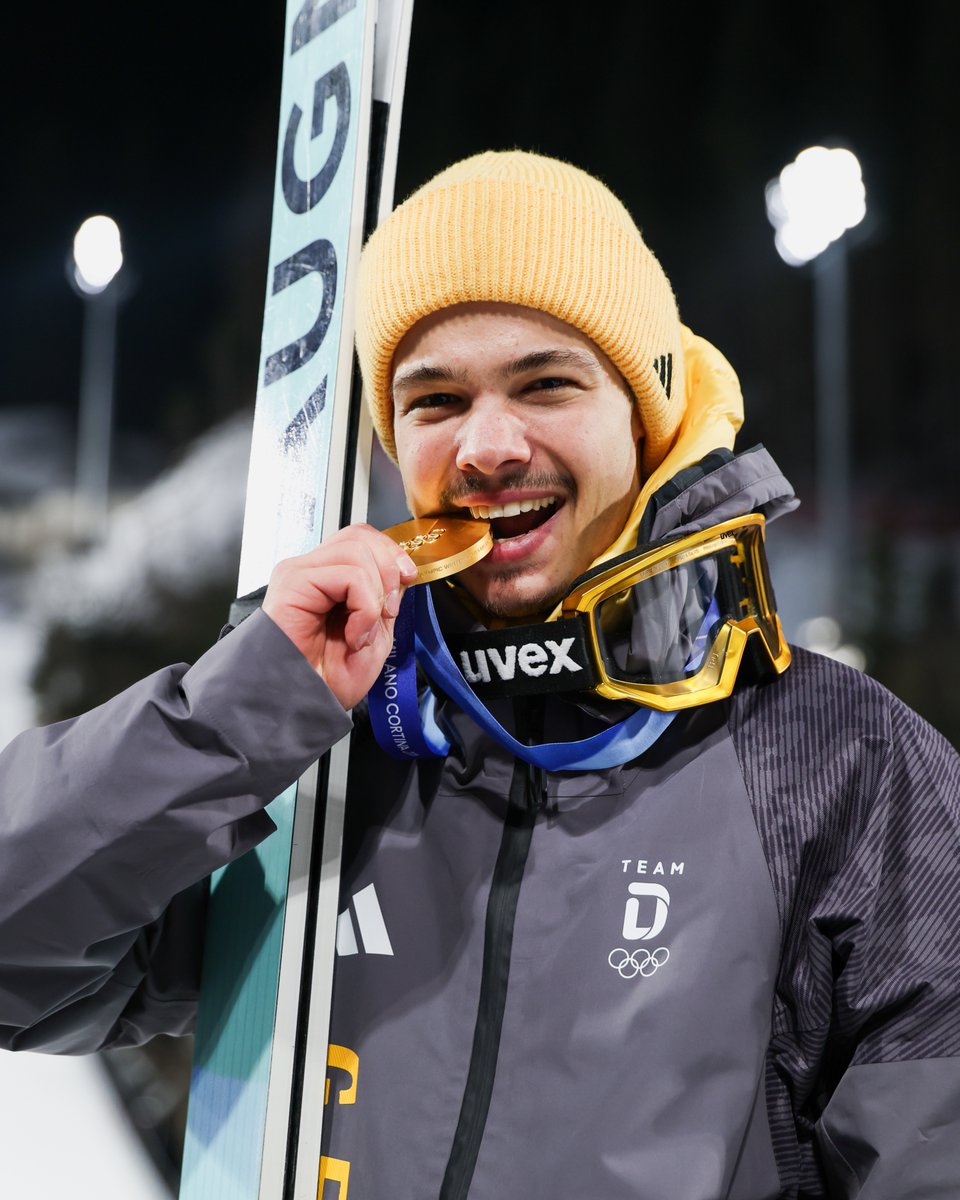
That is one talented family! 🤯
The four Prevc siblings that ski jump have now ALL won Olympic medals:
Nika 🥇🥈 Milano Cortina 2026
Domen 🥇 Milano Cortina 2026
Cene 🥈 Beijing 2022
Peter 🥇🥈🥈🥉 Sochi 2014, Beijing 2022
#MilanoCortina2026
Wise words
“My name’s Frank. I’m 64, a retired electrician.
Forty-two years I spent running wires through houses, fixing breakers, making sure people had light in their kitchens and heat in their winters. Never once did anyone ask me where I went to college. Mostly, they just wanted to know if I could get the power back on before their ice cream melted.
Last May, I was at my granddaughter Emily’s school career day. You know the drill — doctors, lawyers, a software guy in a slick suit talking about “scaling startups.” I was the only one there with a tool belt and work boots.
When it was my turn, I told the kids, “I don’t have a degree. I’ve never sat in a lecture hall. But I’ve wired schools, hospitals, and your principal’s house. And when the hospital generator failed during a snowstorm in ’98, I was the one in the basement with a flashlight, keeping the lights on for newborn babies upstairs.”
The kids leaned forward. They had questions — real ones. “How do you fix stuff in the dark?” “Do you make a lot of money?” “Do you ever get zapped?” (Yes, once, and it’ll curl your hair.)
When the bell rang, one boy hung back. Small kid, freckles, hoodie too big for him. He mumbled, “My uncle’s a plumber. People laugh at him ’cause he didn’t finish high school. But… he’s the only one in the family who can fix anything.”
I looked that boy in the eye and said, “Kid, your uncle’s a hero. When your toilet overflows at midnight, Harvard ain’t sending anyone. A plumber is.”
Here’s the thing nobody told me when I was young — the world doesn’t run without tradespeople. You can have all the engineers you want, but if nobody builds the house, wires the power, or lays the pipes, those blueprints just sit in a drawer.
We’ve made it sound like trades are what you do if you can’t go to college, instead of a path you choose because you like working with your hands, solving problems, and seeing your work stand solid for decades.
Four years after high school, some kids walk away with diplomas. Others walk away with zero debt, a union card, and a skill they can take anywhere in the world. And guess what? When your furnace dies in January, it’s not the diploma that saves you.
A few weeks ago, that same freckled kid’s mom stopped me at the grocery store. She said, “You probably don’t remember, but you told my son trades are important. He’s shadowing his uncle this summer. First time I’ve seen him excited about anything in years.”
That’s the part we forget — for some kids, knowing their path is respected changes everything. It’s not about “just” fixing wires or pipes. It’s about pride. Purpose. The kind that sticks with you long after the job’s done.
So next time you meet a teenager, don’t just ask, “Where are you going to college?” Ask, “What’s your plan?” And if they say, “I’m learning to weld,” or “I’m starting an apprenticeship,” smile big and say, “That’s fantastic. We’re going to need you.”
Because we will. More than ever. And when the lights go out, you’ll be glad they showed up.”
So good they couldn’t ignore her!
Teen swimmer Jess Thompson blazes her own trail - five national titles and an African record before turning 19!✨
https://t.co/lRrp98Bxjf
After standing shut for half a decade, the Johannesburg City Library is finally OPEN again!!
For five long years, 1.5 million books, including rare and valuable Africana archives, sat locked away, gathering dust. This year, the library turns 90 years old, a true continental landmark and one of the largest public libraries in Africa. That such a vital space could be left dormant for so long is unthinkable.
This reopening belongs to the caring citizens of Joburg, heritage groups, civil society, and activists who refused to accept closed doors fighting shoulder to shoulder with @JoburgHeritage, Joburg Crisis Alliance, @JohannesburgIYP, Bridge Books, and many others.
In an age of disinformation, inequality in digital access, and shrinking public spaces, libraries are more relevant than ever. They are lifelines for learning, safe spaces for community, and guardians of our shared heritage.
Let this be a reminder: when we fight for what matters, we can bring life back to the heart of our city. ❤️🔥
Check out more pics from inside on my Instagram page.
This baby girl is Tubby Nugget. She does a fearsome murderface when you pick her up, but switches to purrs within seconds.
She is +/- 8wks old. She has had first vaccs + is looking to be adopted in JHB. Please contact Belinda (Kempton Ferals NPO) on +27 83 271 5956 to arrange.
Hi Twitter. This lil Possum is ready for adoption.
She is roughly 8 weeks old. If you can give this purrbag a home* in Jozi, please contact Belinda (Kempton Ferals NPO) via WhatsApp on +27 83 271 5956 to request adoption forms.
* Subject to home check + adoption fee.
Madison Keys will be back to her career high of world #7 when the new rankings come out.
The last time she held that ranking was in 2016.
9 years later, she’s back where she belongs.
A story full of pain, joy, doubt… but most importantly resilience.
🇺🇸❤️