🇪🇸 Escribiendo sobre Astrofísica Computacional, la vida académica y algunas herramientas. Investigadora @UAM_madrid.
🇬🇧 Astrophysics updates. Researcher.
Un nuevo episodio del podcast "Matilda al habla", con entrevistas a investigadoras de @ami
Historia Antigüa con María José Estarán Tolosa, de la Universidad de Zaragoza:
https://t.co/tyXxjsVtSt
Escucha el episodio de #matildaalhabla "Ondulaciones en el espacio tiempo con Isabel Cordero" https://t.co/HHw3NQKxx2
Isabel es una matemática que habla de ondas gravitacionales, agujeros negros y otros eventos relacionados con la relatividad numérica.
Escucha el episodio de #matildaalhabla "Lingüística, datos y enfermedades mentales con Gemma Boleda" https://t.co/2CiTvx29C0
Gemma es lingüista, madre y sufre de dos problemas de salud crónicos, que ha ido aprendiendo a gestionar poco a poco, pero con los que tiene que convivir
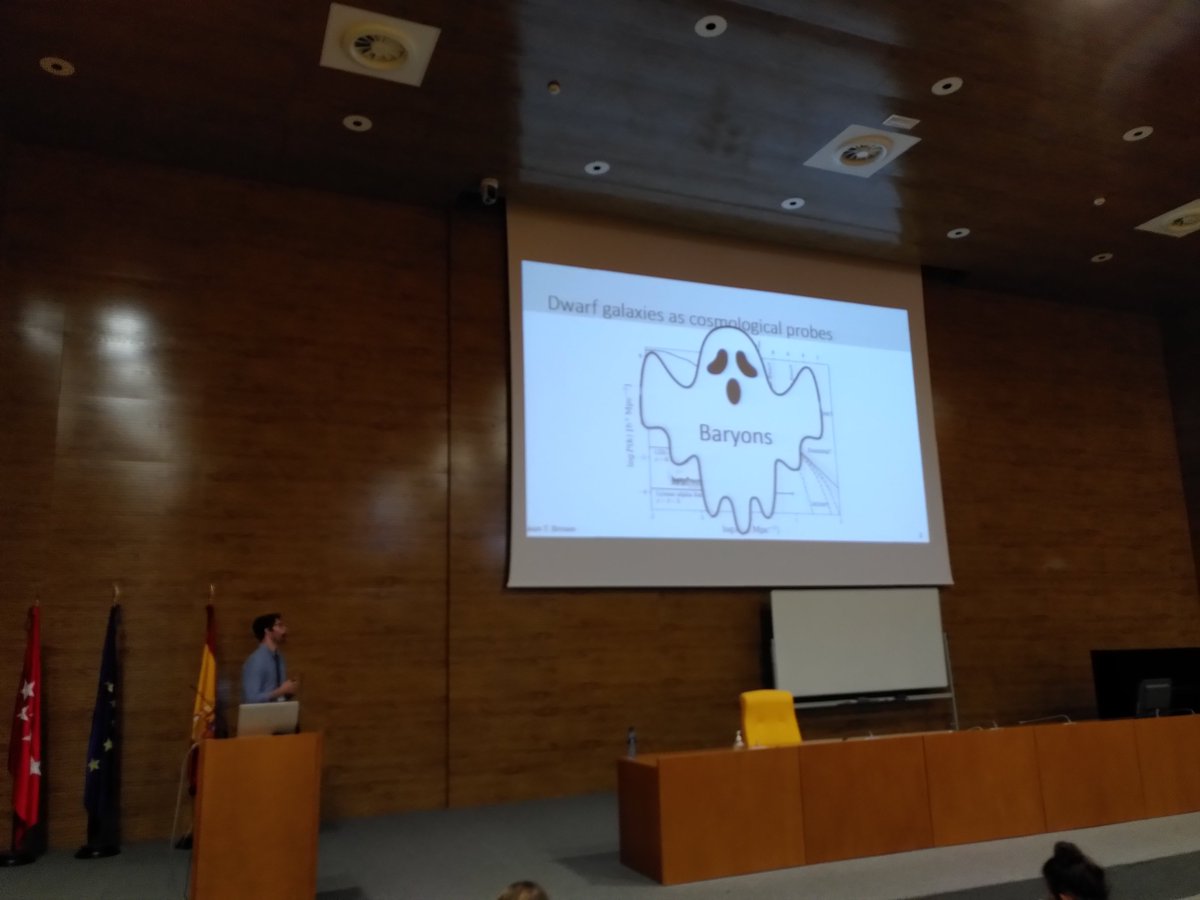
Shaun Brown @DarkerMatters (@LJMU_Astro before) has developed emulators to be able to do cosmology with dwarf galaxies, a scary place because of baryons! We want to vary cosmology and astrophysics at the same time #cosmo23@ift
Raúl Angulo @DIPCehu posses big questions on how to approach learning from the Universe. He proposes to use Large Scale Structure data for jointly constrain astrophysics and cosmology. In fact the "lensing is low" problem seems to come from baryon physics #cosmo23@ift_uam_csic
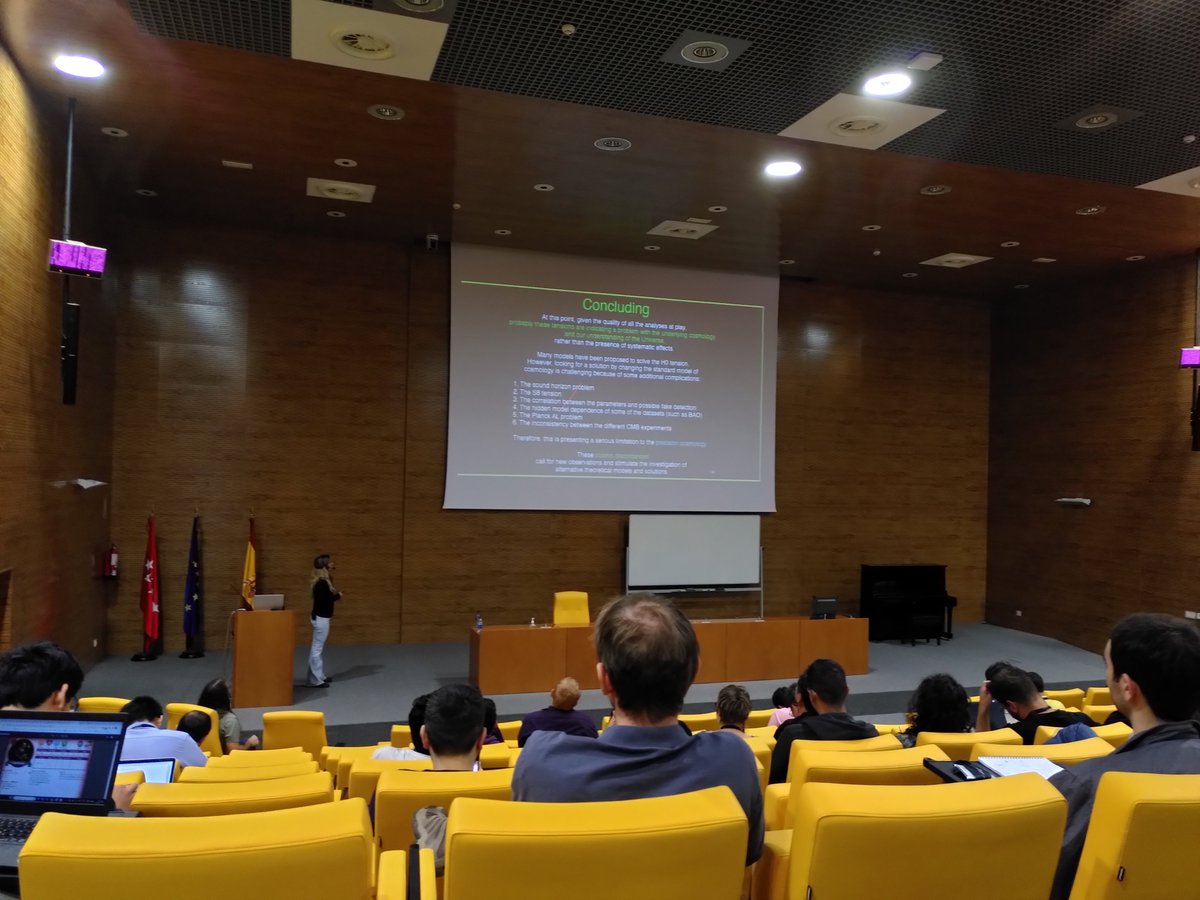
Eleonora di Valentino has reviewed all the proposed models to solve the tension between late and early Universe. Although interacting dark energy (DE) and a closed Universe with phantom DE are promising, they are not solving the tensions. #cosmo23@ift_uam_csic
Francisco Villaescusa-Navarro @flatir has shown that machine learning trained with the Quijote and Camels simulations allows to marginalise over astrophysics and extract cosmology information from the messy small scales.
#cosmo23@ift_uam_csic
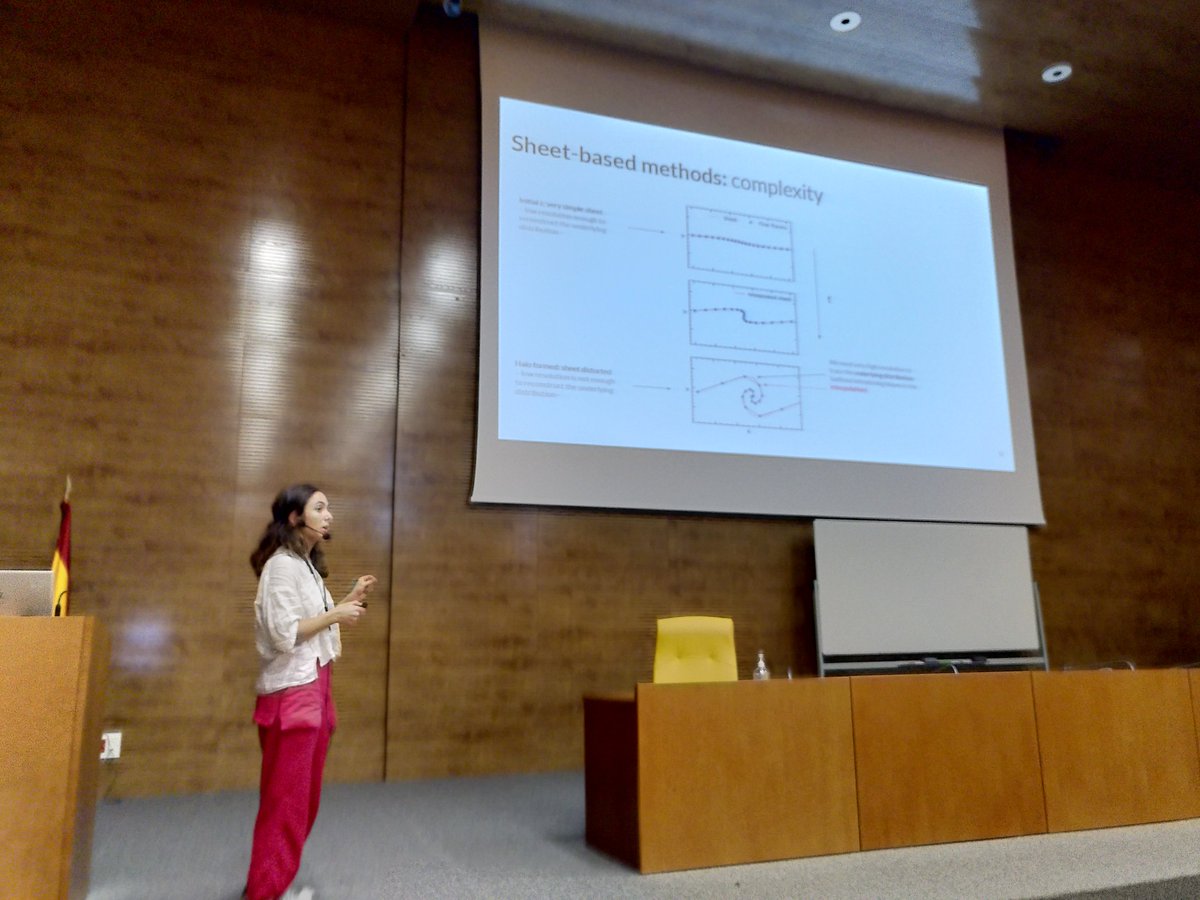
Lourdes Ondaro @DIPCehu has used "sheet simulations" to testthan in WDM haloes are very cuspy. Artificial fragmentation in N-body sims makes haloes less cuspy. #cosmo23@ift
Stefano Anselmi advocates to use the Linear Point as a complementary standard ruler to the BAO, as it is model independent for a broad family of cosmologies. #cosmo23@ift
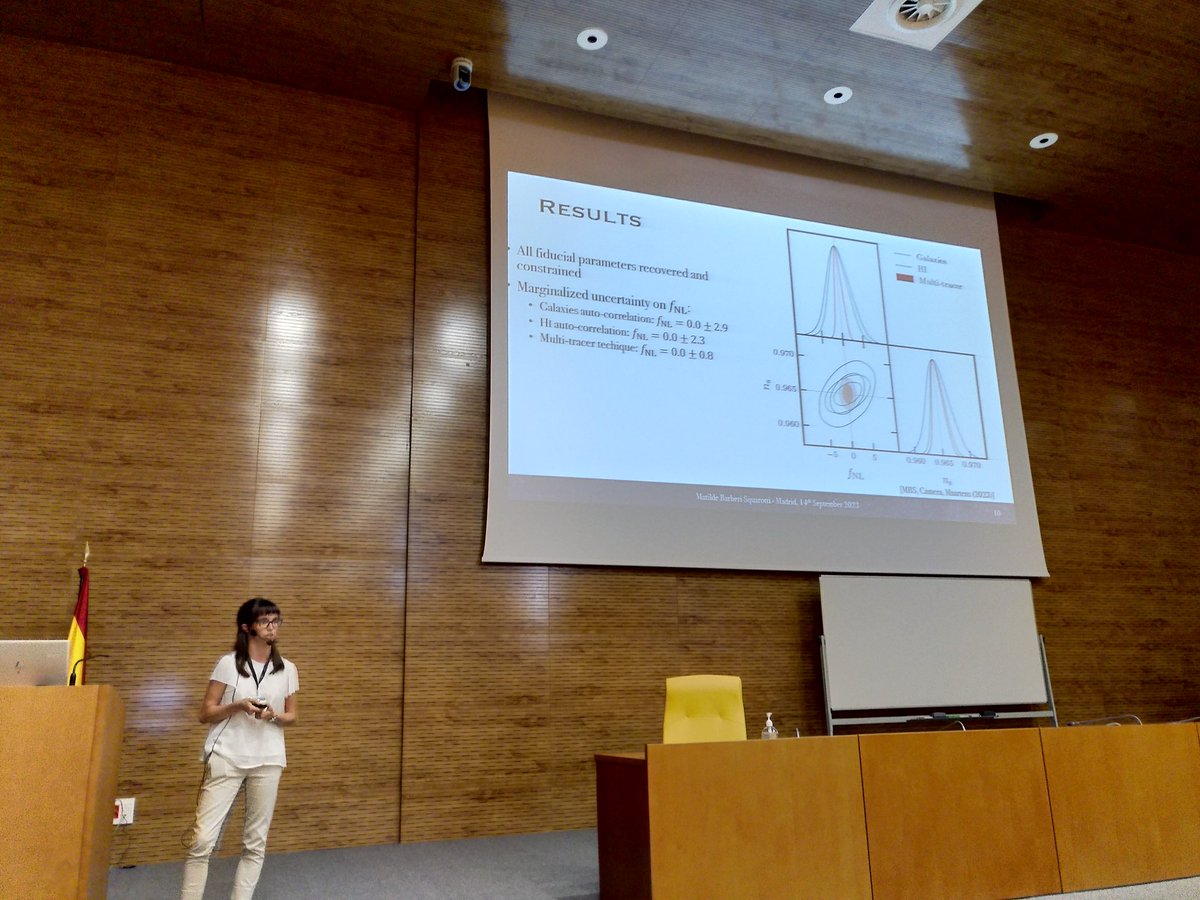
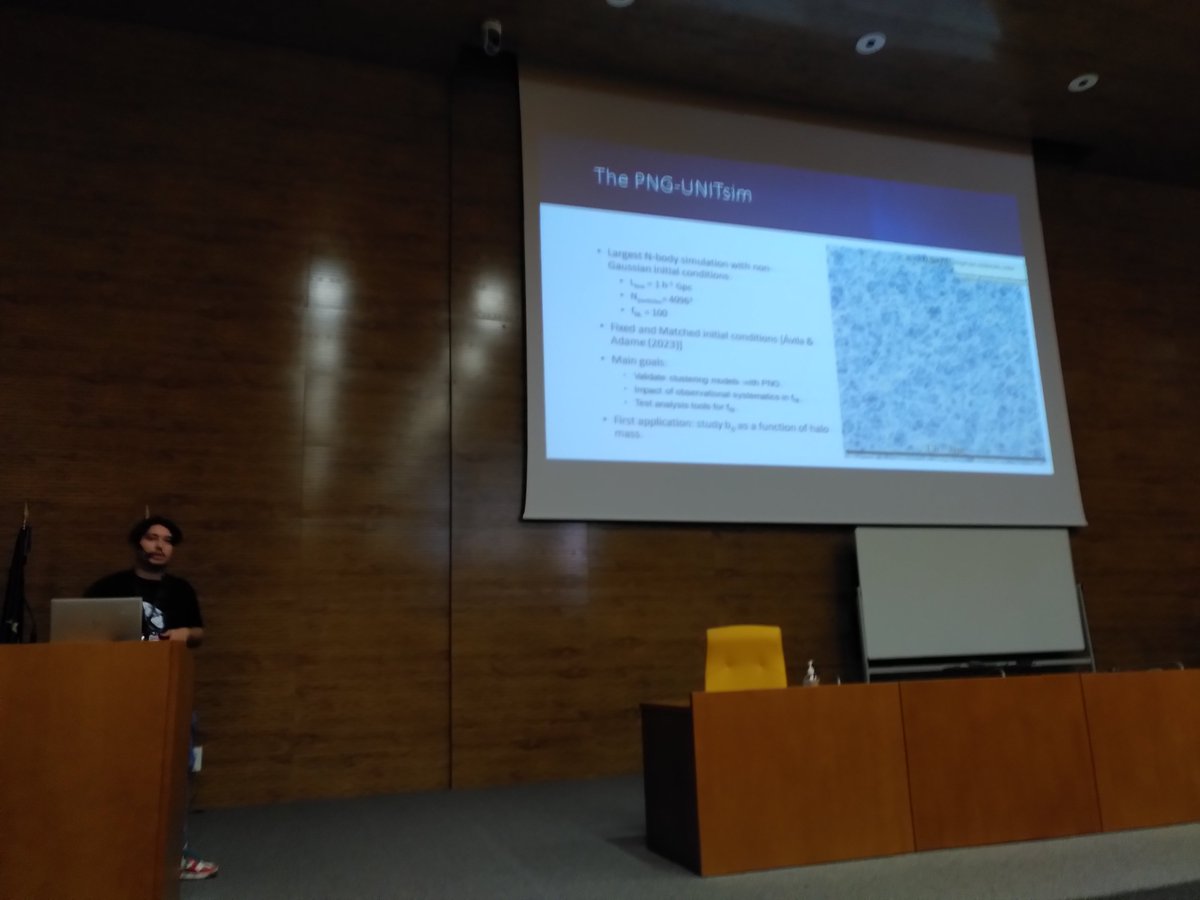
Matilde Barberi-Squarotti has done simulations to shows that a multi-tracer analysis, with galaxies and HI gas, can put tighter constriants on f_NL for primordial non Gaussianities #cosmo23@ift
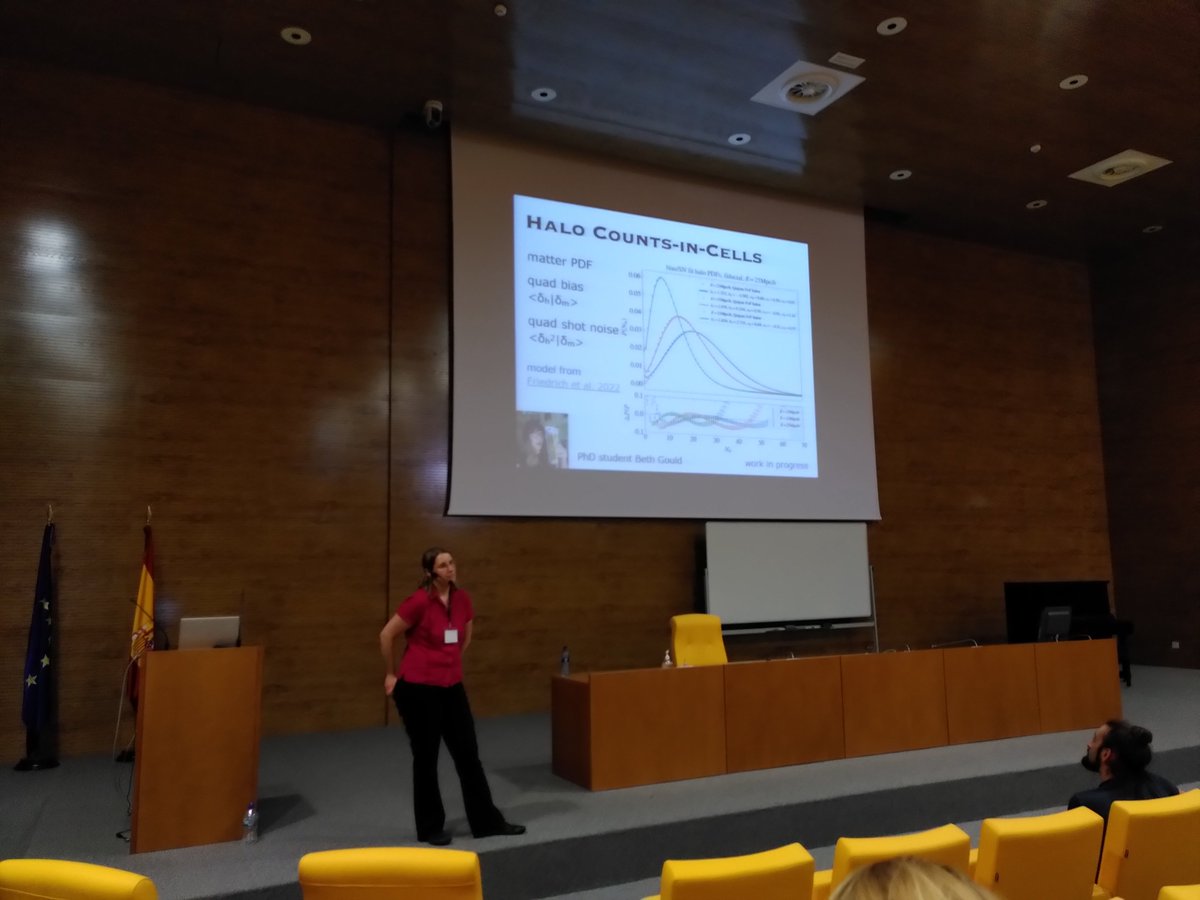
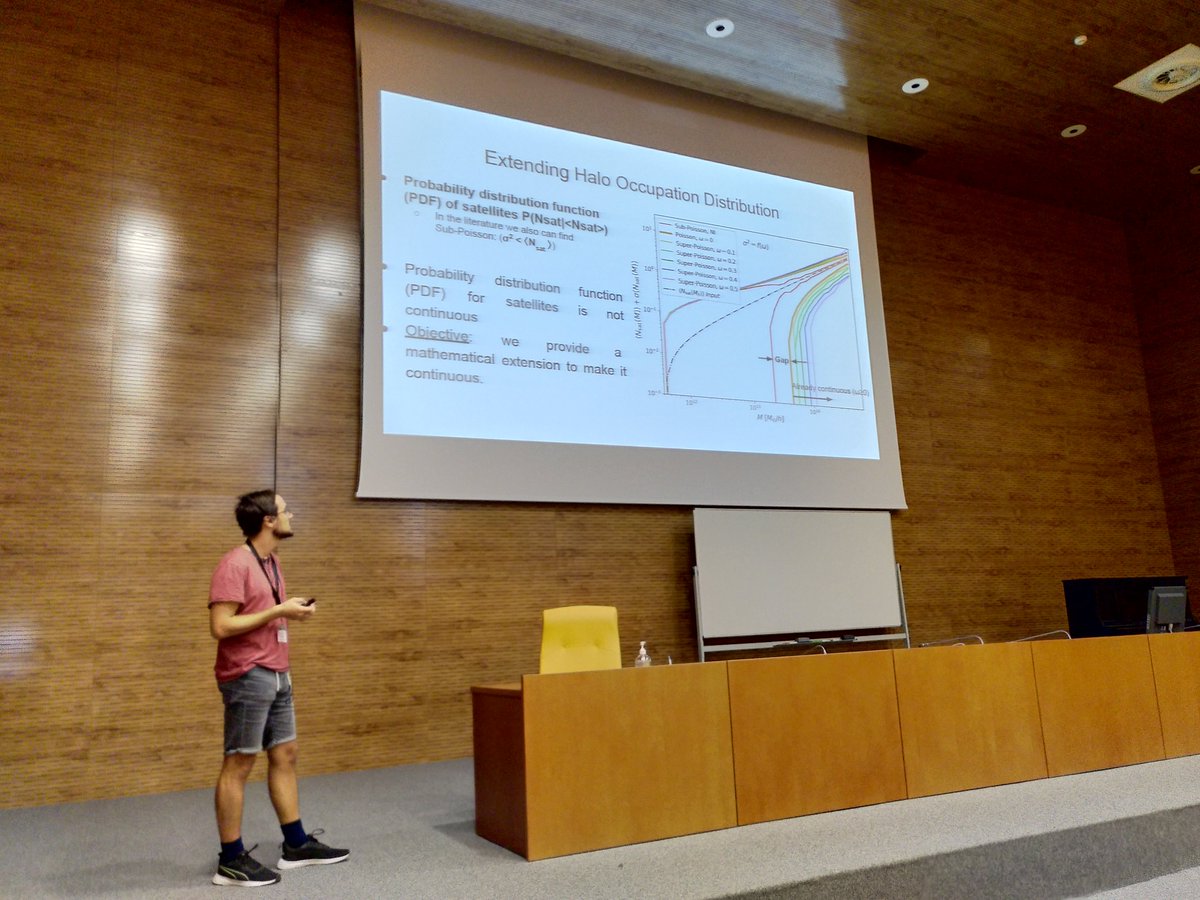
Bernhard Vos Ginés has filled the gap between a Poissonian and a Nearest Integer variance using an extended binomial distribution, for populating dark matter haloes with satellite galaxies. He has shown an application w @eBOSSurvey#cosmo23@ift
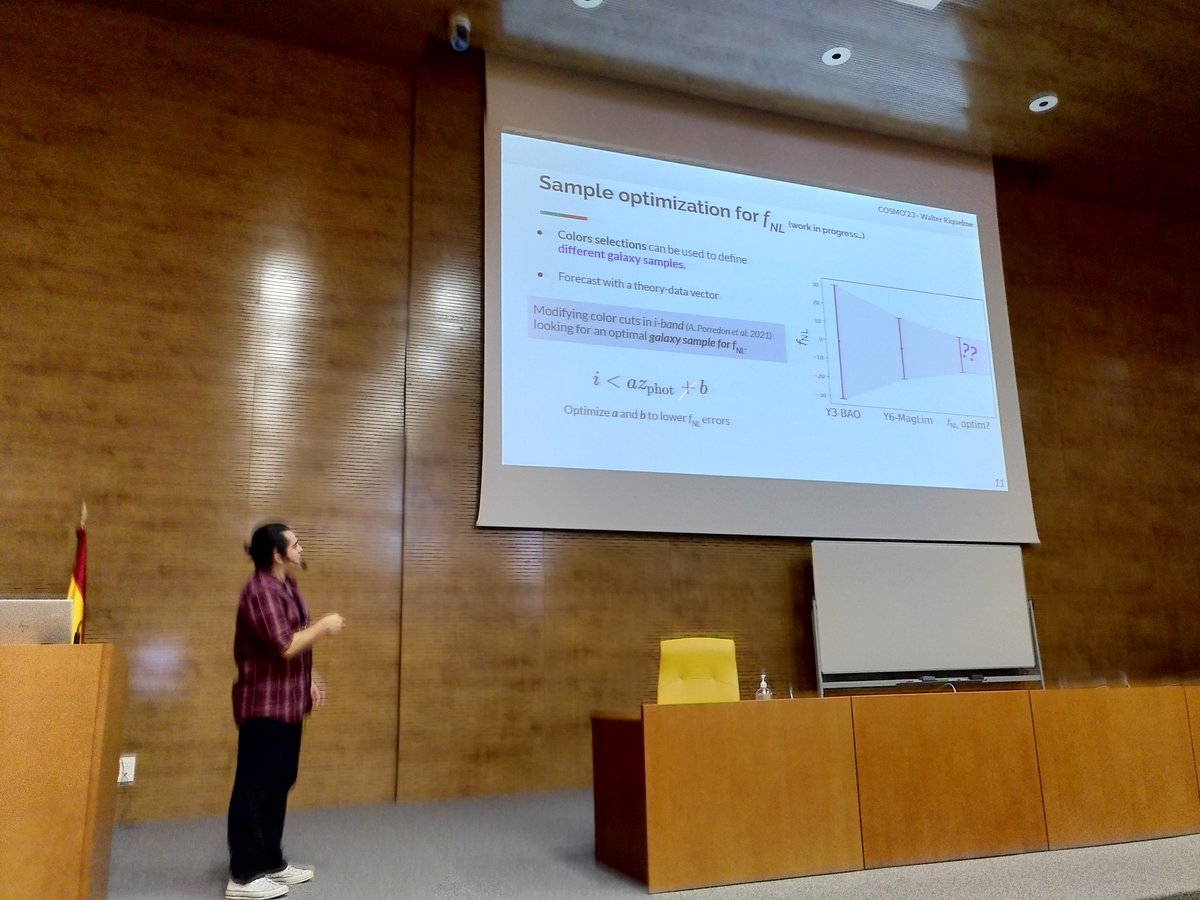
Walter Riquelme has managed to measure fnl (p=1) from @theDESurvey. The error is of about 30, but it could improve with a tailored selection of galaxies. #cosmo23@if
Pedro Carrilho tells us that density splits analysis for clustering is going to reduce the errors for multi-tracer analysis. Very promising numbers for @desisurvey#cosmo23@ift
Alex Barreira insist to constrain the product f_nl*b_phi and that multi-tracers (w about rhe same shot noise) make the need for priors more relaxed. #cosmo23@ift
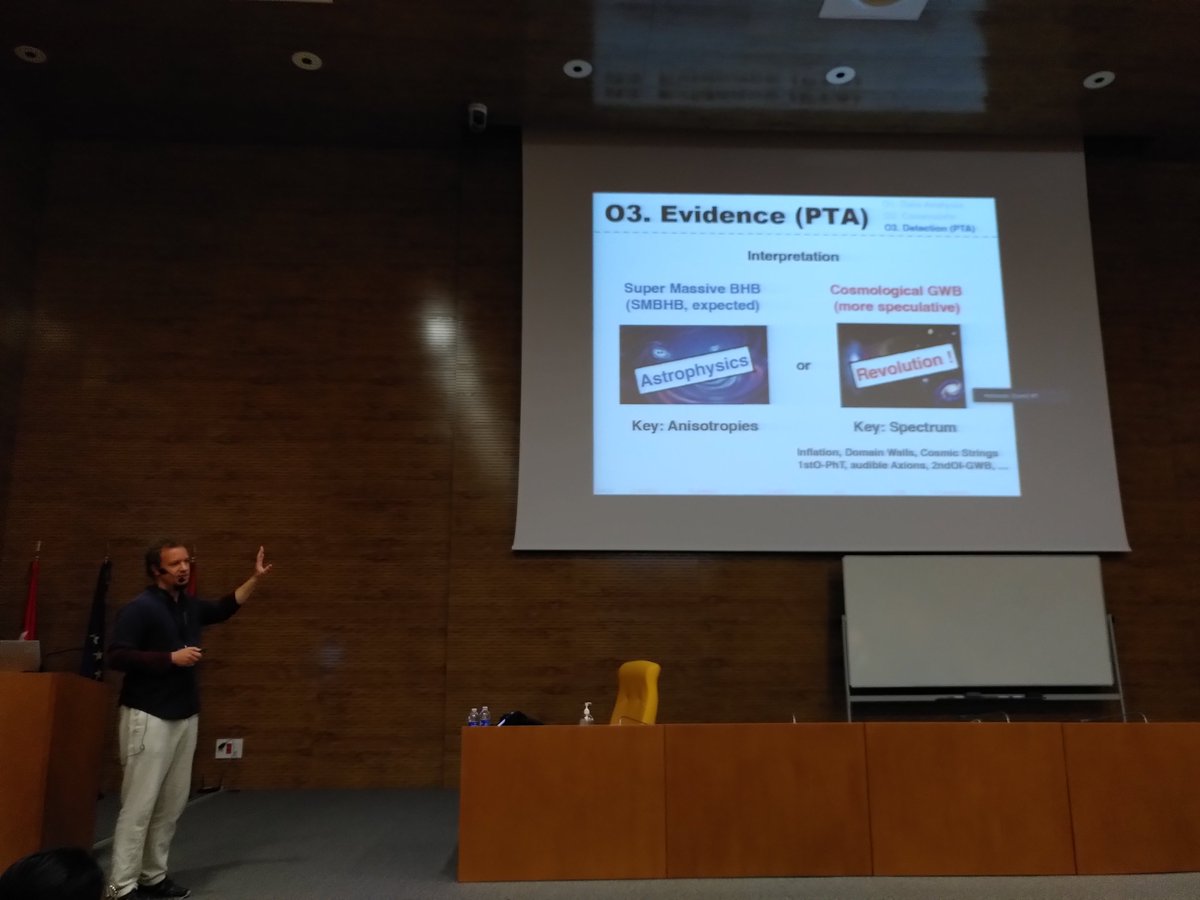
Daniel Figueroa has been talking about Gravitational Waves (GW) as probes of the Early Universe.
What is the origin of the GW background detected independently this summer by 4 groups?
We might be close to a revolution! #cosmo23@ift