Thinking of buying furniture from @Lifestyle_Store? Think again. 🚨
I bought a premium sofa from them about 4-5 years ago, expecting the kind of long-term durability you look for in major home investments. It recently broke and needs a repair. However, when I reached out to their customer care, I was hit with a shocking, anti-consumer policy: They only offer service or repair support for exactly 1 year.
After that 12-month window? They completely wash their hands of the product. Even when a customer explicitly requests a PAID repair and is fully willing to bear the service costs, @Lifestyle_Store flatly refuses to provide any assistance or after-sales support.
A sofa is meant to be a long-term piece of furniture for your home, not a disposable item you replace when a minor part breaks. If a brand refuses to help service its own products—even when the customer is offering to pay for it—it speaks volumes about their confidence in their own build quality and their lack of interest in long-term customer satisfaction.
Think twice before investing your hard-earned money in anything from Lifestyle Furniture. Brand accountability shouldn't expire after just one year. 🛋️❌
@JoshiPralhad@PralhadJoshiOfc@jagograhakjago@nch1915 #LifestyleFurniture #ConsumerAwareness #BadService #CustomerReview #ConsumerRights #AfterSalesSupport
EPFO just moved the wage ceiling. First change since 2014.
Mandatory cover: ₹15,000 → ₹25,000 a month.
Who this hits: people earning ₹15,000–₹25,000 at an EPFO-covered firm.
Until now, a new joiner above ₹15,000 was not auto-enrolled in EPF. That band now comes inside the mandatory net.
Govt says 51 lakh+ extra employees will get:
• Provident fund (EPF)
• Pension (EPS)
• Death insurance (EDLI)
Starts 17 Sep 2026 (Vishwakarma Jayanti).
The other side of it: the contribution base can rise with the new ceiling, so take-home may dip. Employee and employer EPS contributions also go up.
Pension: they did not hike existing monthly pensions from ₹7,500.
₹7,500 is the formula pension on the old cap:
(pensionable salary × years) ÷ 70
= 15,000 × 35 ÷ 70 = ₹7,500
If pensionable salary is also ₹25,000, the same 35 years becomes:
25,000 × 35 ÷ 70 = ₹12,500
That's about 67% more — later, not tomorrow.
Caveats:
• 10 years of EPS service to get a pension at all
• Pensionable salary is the last 60-month average. Full ₹25,000 only after 5 years under the new cap
• People already drawing EPS were not told their cheque jumps to ₹12,500
• Reports: Centre's 1.16% EPS subsidy still sits on the old ₹15,000 cap
If you earn in that band, this is take-home vs retirement math. Not a slogan.
#ExpandingSocialSecurity
India’s demographic dividend will not be decided in air-conditioned tech hubs or elite private universities.
It will be decided in our rural and municipal government classrooms.
Here is the hard reality:
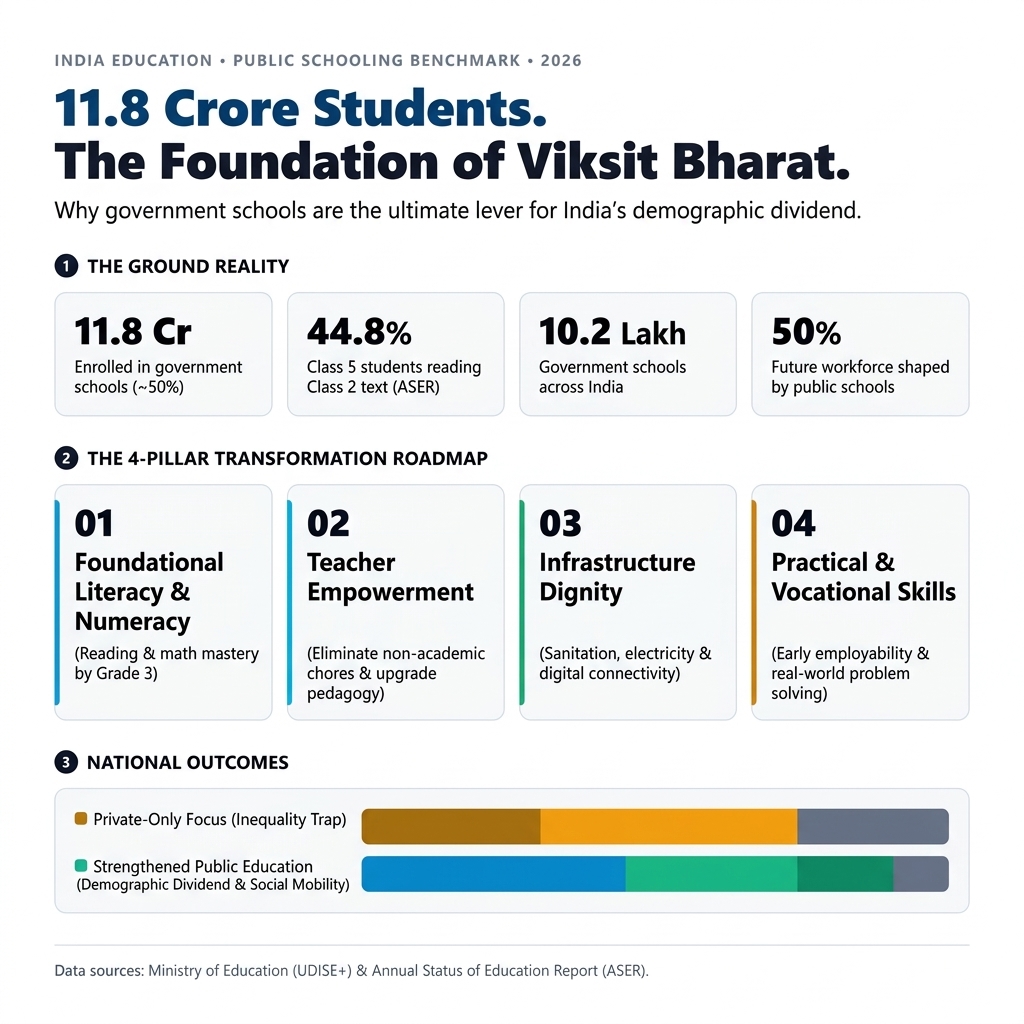
Over 11.8 crore students—nearly 50% of India’s entire school-going population—rely on government schools.
Yet according to national ASER findings, only 44.8% of Class 5 students in rural government schools can read a simple Class 2-level text. More than half our children reach age 10 without mastering the foundational basics of reading.
We cannot build a developed $10 Trillion economy if half our future workforce enters the market without foundational skills.
Private schooling cannot be our default national strategy. When quality learning is accessible only to those who can pay high tuition, education ceases to be an equalizer and becomes an engine of permanent inequality.
So, how do we fundamentally transform Indian schooling?
1. Relentless Focus on Foundational Literacy & Numeracy (FLN)
Rote memorization and board exam cramming start far too early. We need an uncompromising focus on the first 5 years of school (as targeted by NIPUN Bharat). If a child cannot read with comprehension and do basic math by Grade 3, every subsequent grade is an uphill struggle.
2. Free and Empower Our Teachers
Government teachers are among the most educated professionals in rural communities, yet their teaching hours are consistently eroded by non-academic clerical duties and surveys. We must insulate teachers from administrative chores, invest in continuous training, and reward classroom learning outcomes.
3. Basic Dignity in School Infrastructure
You cannot prepare kids for a digital future without working electricity, clean drinking water, and functional separate toilets for girls. Upgrades must reach every village school, not just flagship model campuses.
4. Integrate Real-World & Vocational Skills Early
Degrees without employability create anxiety. Practical hands-on skills, financial literacy, and digital exposure must start in middle school.
Public education is not charity—it is our highest-ROI national capital investment.
Fix our government schools, and India’s future will take care of itself.
Freedom was never given. It was earned with unbroken courage, solitary cells, and supreme sacrifice.
From Bhagat Singh’s fearless resolve to Lokmanya Tilak’s roar of Swaraj, Rani Lakshmibai’s defiance to Chandrashekhar Azad’s unyielding vow.
Saluting their immortal spirit. Happy Independence Day
#FreedomFighters #IndependenceDay #Sacrifice #ImmortalHeroes #India #VandeMataram
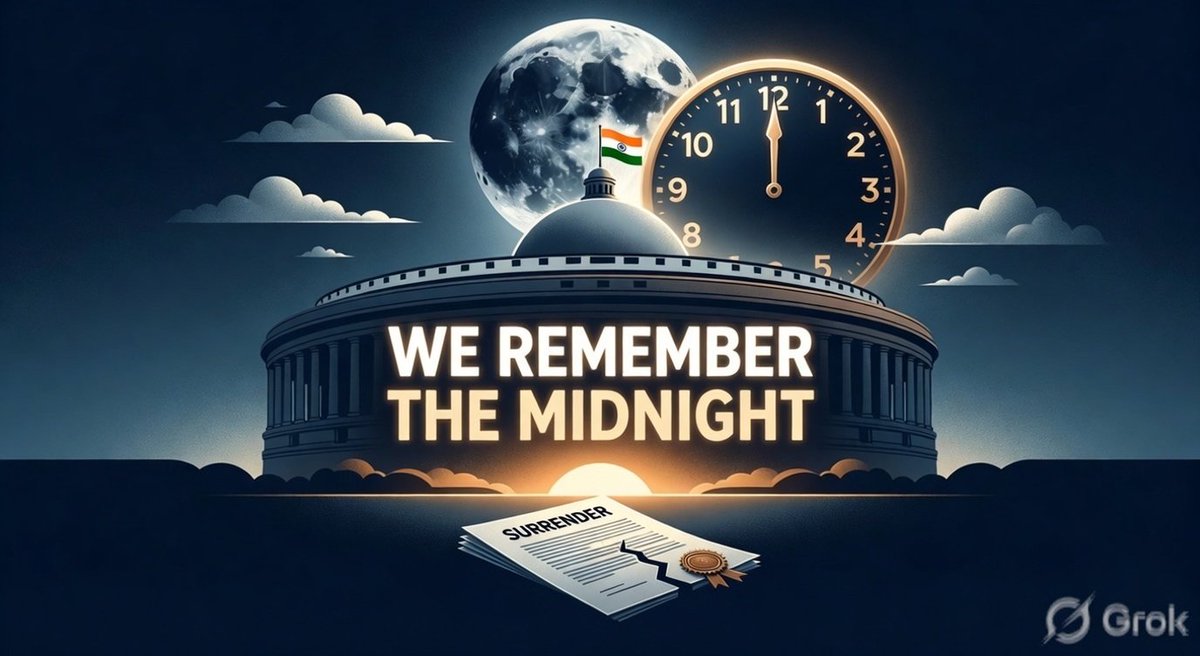
We remember the midnight.
Fewer people remember that the morning was picked to mark a surrender two years earlier, on the other side of the war.
What else about 15 August did nobody teach you?
(6/6)
India celebrates Independence Day on 15 August.
From 1930 to 1946, Congress observed it on 26 January.
The date we got was not the date the movement had claimed. 🧵 (1/6)
The day Congress had already been using did not disappear.
When the Constitution came into force in 1950, 26 January became Republic Day.
Two national days. Two different clocks.
(5/6)
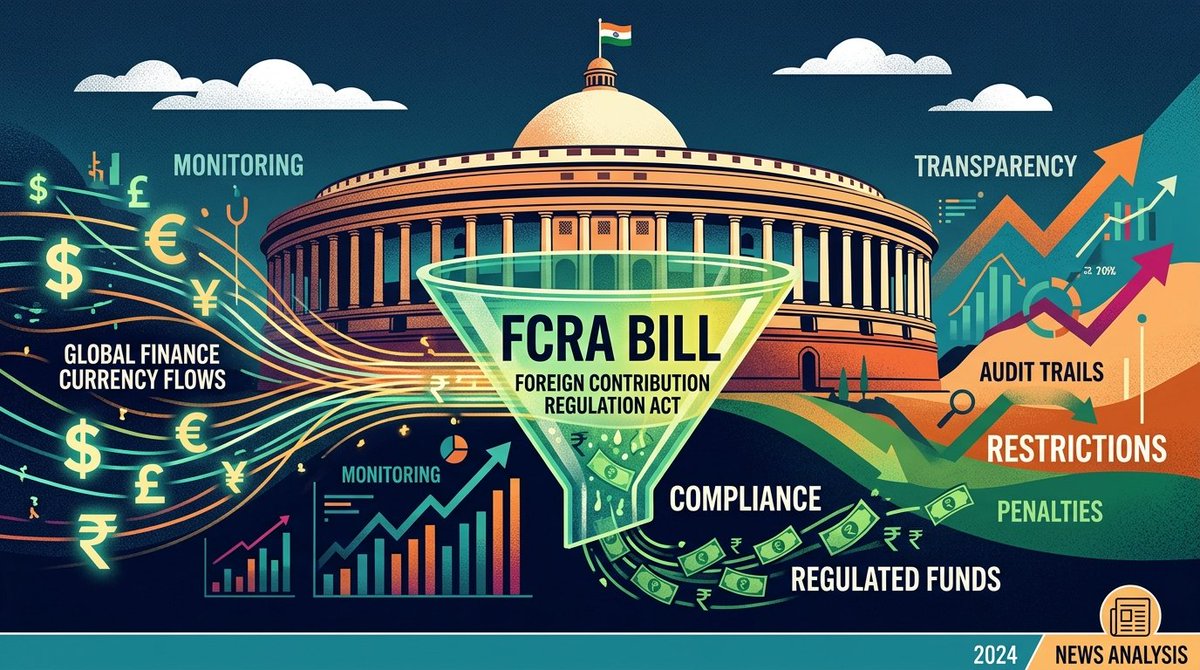
What’s next for the FCRA Bill?
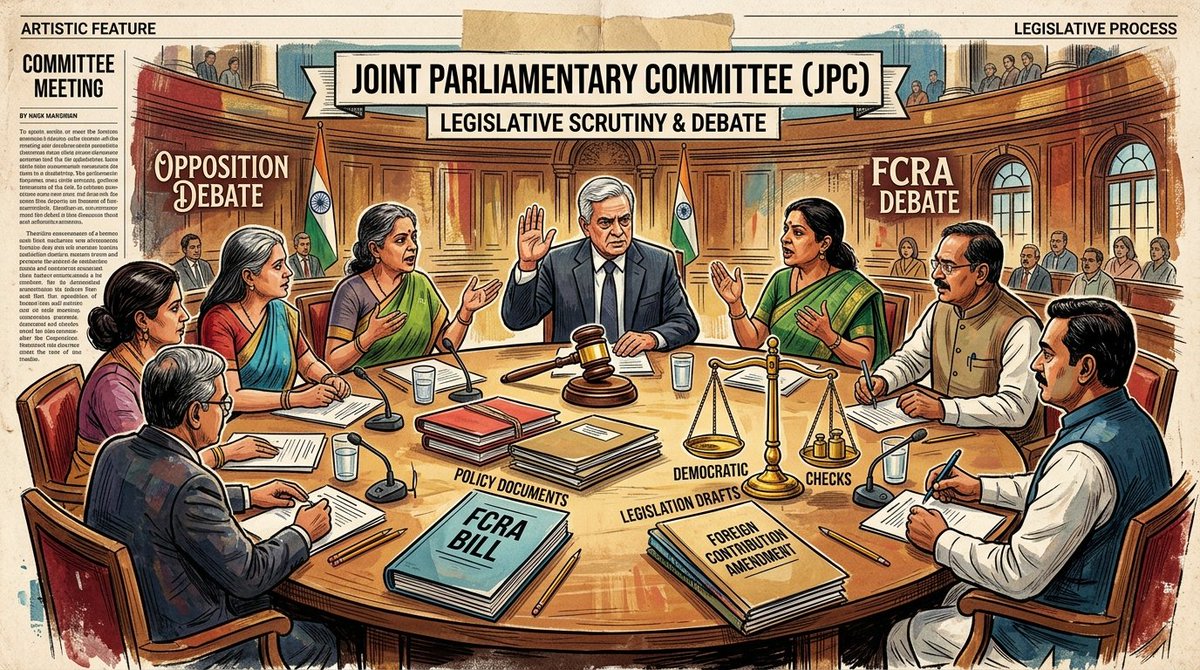
Following parliamentary debate, the Bill was referred to a Joint Parliamentary Committee (JPC) to balance national security safeguards with protecting legitimate non-profits.
Will the JPC recommend safeguards for genuine NGOs? Expect key developments in the upcoming parliamentary session!
What are your thoughts on foreign funding rules? Comment below! [5/5]
#FCRABill #NGO #Parliament #India #Policy #CivilSociety
Major updates in India's NGO & non-profit ecosystem!
The Foreign Contribution (Regulation) Amendment Bill, 2026 is under active legislative scrutiny after being referred to a 31-member Joint Parliamentary Committee (JPC).
What is the FCRA Bill, why is it being amended, and how will it impact foreign-funded organizations?
Here is a full breakdown: [1/5]
How will this impact non-profits and ground-level projects?
• Heavy Compliance: Small and medium NGOs face increased administrative hurdles and strict audit oversight.
• Funding Uncertainty: Heightened risk of asset seizure upon non-renewal affects long-term healthcare, education, and rural welfare initiatives relying on global grants.
• Chilling Effect: Civil society bodies voice concern over operational sustainability. [4/5]
Here's the catch.
The lower half of the rock is eroded, and scholars read it differently. Proposed dates for his reign run from the 2nd century BCE to the 1st century CE.
A king who wrote his own history — and we still can't agree when he lived.
(3/3)
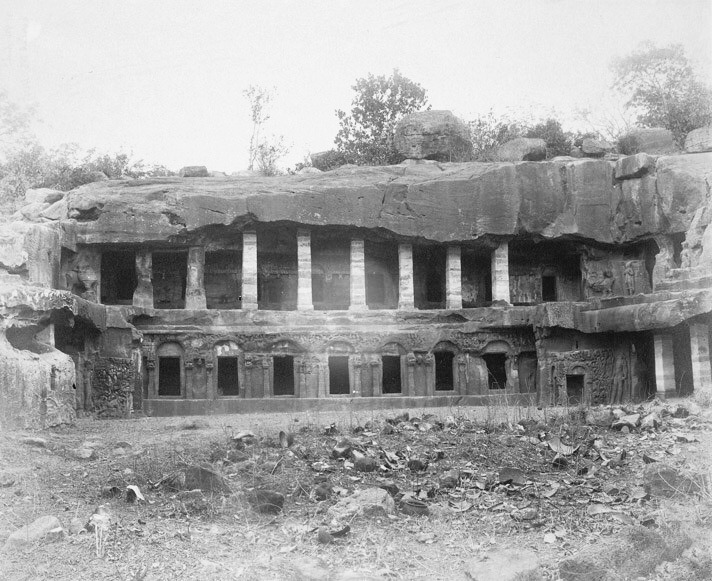
About 2,000 years ago, a king of Kalinga had his own reign carved into a cliff.
17 lines of Prakrit above a cave in Udayagiri, Odisha. A year-by-year account, written in the first person.
His name was Kharavela. Almost everything we know about him is on that rock. 🧵 (1/3)
The cave is Hathigumpha — Elephant Cave.
It opens not with conquest but with a Jain invocation: salutation to the arhats, salutation to all the siddhas.
Then the years: canals, rebuilt cities, campaigns, and a Jain image the Nandas had carried off, brought home.
(2/3)
We name airports after some freedom fighters and misplace others completely.
Saraswathi Rajamani spent two years inside enemy camps before she was old enough to vote, and most Indians have never heard her name.
Who else have we forgotten?
(11/11)
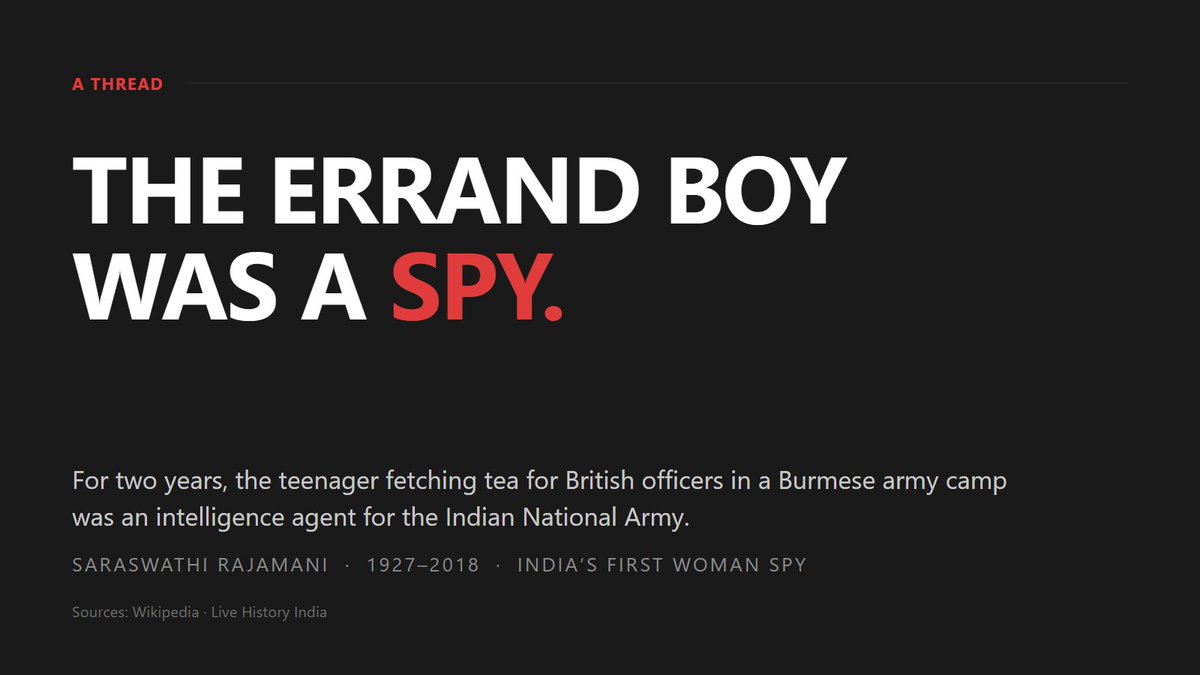
For two years, the errand boy fetching tea for British officers in a Burmese army camp was a teenage girl.
She was an intelligence agent for the Indian National Army.
Almost nobody in India knows her name. 🧵 (1/11)
She spent decades in a crumbling one-room flat in Chennai. In 2005 the state finally gave her a house.
When the tsunami hit, a woman living on a pension in one room gave her savings to the relief fund.
She died in 2018, aged 91.
(10/11)