Prompt of the Day: WANTED POSTER — Fantasy Guild Warning Notice Edition ⭐📜💜💚
Todays prompt is brought to us in full by @Nodoka_Katana and as always, its a good one
Today’s Prompt of the Day turns your character into an in-world fantasy wanted poster, bounty notice, guild warning, royal decree, black-seal threat advisory, or forbidden emergency notice.
Use one character reference as @Image1, then fill in the character name, alias, tone, threat level, and setting style.
Have fun with this one — and maybe don’t accept the bounty if the poster gives them seven stars ⭐📜
............................PROMPT STARTS HERE............................
Prompt of the Day: WANTED POSTER — Fantasy Guild Warning Notice Edition ⭐📜
@Image1 = primary character reference
@CharacterName = [write character name here]
@AliasOrTitle = [optional alias / title / nickname]
@Tone = [funny / dangerous / regal / chaotic / gothic / wholesome / ominous / custom tone]
@ThreatLevel = [1–5 stars, 6 stars for extreme “avoid on sight” characters, or extremely rare 7 stars for mythic calamity-level threats]
@SettingStyle = [fantasy guild / wild west / royal decree / black seal warning / modern agency / custom style]
Create a highly detailed fantasy wanted poster / warning notice based on @Image1.
REFERENCE RULES:
Use @Image1 as the ONLY character identity source.
The final character must clearly remain the same individual from @Image1.
Preserve the character’s:
face shape
hairstyle
hair colour
eye colour
body type
outfit motifs
accessories
colour palette
personality
species traits if present
overall visual identity
Do not use any character, outfit, design, cast member, or visual information from previous prompts, previous generations, earlier conversations, or memory.
Do not include any character not visible in @Image1.
CORE CONCEPT:
Design the image as an in-world wanted poster, bounty notice, guild warning, royal arrest notice, black-seal threat advisory, or forbidden emergency notice.
The poster should not feel like plain character art with text added.
It should look like a real document from a fictional world, posted on a bounty board, town wall, guild hall, royal checkpoint, tavern noticeboard, magical academy board, or agency archive.
The character should be the main visual focus.
Their pose, expression, body language, and surrounding design should match their personality and threat level.
POSTER CONTENT:
Include these readable fields:
WANTED
WARNING NOTICE or equivalent
Name: @CharacterName
Alias / Title: @AliasOrTitle
Threat Rating
Threat Class
Reward / Bounty
Charges / Known Offenses
Capture Advice
Random Fact
Status
Last Seen
Footer tagline
STAR RATING SYSTEM:
Use a star-based danger rating.
Suggested scale:
★☆☆☆☆ — Minor nuisance / minor anomaly
★★☆☆☆ — Troublemaker
★★★☆☆ — Dangerous
★★★★☆ — Highly dangerous
★★★★★ — Extreme threat
★★★★★★ — Avoid on sight / catastrophic / black-seal target / do not engage
SPECIAL RARE THREAT OVERRIDE:
The normal danger scale is 1–6 stars.
However, if the character feels impossibly dangerous, mythic, cursed, reality-breaking, divine, eldritch, or beyond the authority of the issuing guild, the poster may assign a forbidden rare 7-star rating:
★★★★★★★ — Forbidden / Mythic Calamity / Reality-Class / Authority Cannot Engage
The 7-star rating should be EXTREMELY rare.
Do not use the 7-star rating unless the character’s design, aura, or prompt tone strongly suggests a once-in-history threat. It should feel like the poster system itself has failed.
A 7-star poster should feel like an emergency artifact rather than a normal wanted notice.
For 6-star targets, use a severe warning style such as:
BLACK SEAL WARNING
AVOID ON SIGHT
DO NOT ENGAGE
REPORT SIGHTINGS ONLY
THREAT BEYOND BOUNTY
CALAMITY-CLASS TARGET
For 7-star targets, use an even more terrifying emergency style such as:
FORBIDDEN SEAL WARNING
MYTHIC CALAMITY NOTICE
REALITY-CLASS INCIDENT
AUTHORITY CANNOT ENGAGE
DIVINE INCIDENT
UNREGISTERED APOCALYPSE
CROWN-SEAL FAILURE
REWARD / BOUNTY LOGIC:
Include a reward line by default.
The reward should reflect the character’s danger level, setting, and tone.
Examples by tier:
★☆☆☆☆:
500 Gold
1,500 Gold and one rare book
One free meal and official thanks
★★☆☆☆:
3,000 Gold
5,000 Gold
Guild voucher and apology paperwork
★★★☆☆:
15,000 Gold
25,000 Gold
Payment doubled if captured alive
★★★★☆:
100,000 Gold
Royal commission
Full pardon for minor crimes
★★★★★:
250,000 Gold
500,000 Gold
Immediate audience with the crown
★★★★★★:
For 6-star targets, the reward may be replaced by a warning instead of money.
Examples:
Your life is not worth the reward.
No sum is sufficient.
Survival is considered compensation enough.
Capture not advised under any circumstances.
If you are reading this and already found them, run.
Crown accepts no liability for your death.
Posthumous recognition may be awarded.
Do not engage. Report sightings only.
★★★★★★★:
For 7-star targets, replace the normal reward with a survival warning or catastrophic notice.
Examples:
No reward. No recovery.
Survival is the only prize.
The Crown denies issuing this notice.
Do not pursue. Do not bargain. Do not look back.
If sighted, evacuate the province.
Your bloodline has been informed.
This bounty has been retired due to casualties.
The reward was withdrawn after the last guild vanished.
CHARGES / OFFENSES:
The charges should be character-specific, not generic.
They may be serious, funny, poetic, dramatic, or absurd depending on @Tone.
Examples:
A fiery chaotic character:
Setting three kitchens on fire “to test the ambiance.”
Verbal assault.
Resisting common sense.
Unauthorized arson of dignity.
A gentle peaceful character:
Repeatedly assisting a known menace through inaction.
Unauthorized peacekeeping.
Excessive tolerance of chaos.
Apologizing while under arrest.
A regal character:
Unlawful possession of overwhelming majesty.
Moonlit intimidation.
Destruction of weak resolve.
Excessive royal presence.
A celestial / angelic character:
Unauthorized morale restoration.
Possession of excessive grace.
Inspiring bystanders without a permit.
Illegal levels of encouragement.
A gothic / ominous character:
Unknown.
Suspicious silence.
Intimidation by presence alone.
Possession of forbidden aura.
Disturbing the confidence of trained officials.
A 7-star mythic calamity:
Unauthorized existence beyond sanctioned reality.
Collapse of multiple response units.
Incitement of prophecy, dread, or mass panic.
Refusal to obey divine, royal, or natural law.
Presence correlated with disappearance of previous hunters.
RANDOM FACT:
Include one short random fact that reveals personality.
It should be funny, ominous, charming, or lore-flavoured.
Examples:
Claims every disaster was “technically under control.”
Has apologized while being arrested.
Criminals have surrendered after being called “disappointing.”
Witnesses forgot their own names after making eye contact.
Has never raised her voice, and somehow that makes it worse.
Once won an argument she started with herself.
Could probably ruin your life politely.
The last clerk to update this poster resigned immediately afterward.
CAPTURE ADVICE:
Include a short capture advice section.
Examples:
Do not provoke. Do not argue. Keep water nearby.
Approach gently. Tea may improve compliance.
Polite conversation strongly recommended.
Do not approach alone. Diplomatic caution advised.
Do not engage. Report sightings only.
Avoid eye contact. Avoid sarcasm. Avoid thinking you are in control.
For 7-star targets:
Evacuate and report only.
Engagement prohibited by surviving authorities.
Do not initiate contact under any circumstance.
If already in pursuit, reconsider your life choices immediately.
No confirmed safe method of capture exists.
STATUS:
Include a status field.
Examples:
Capture with caution.
Capture if possible. Survival recommended.
Preferred alive, unharmed, and not too stressed.
Return safely. Damage claims will not be tolerated.
Avoid on sight. Crown accepts no liability for your death.
Authority cannot engage. Observation only.
Poster remains active despite loss of enforcement division.
LAST SEEN:
Include a last seen field matched to the character’s tone.
Examples:
Laughing near the source of the problem.
Trying to clean up after someone else.
Where hope needed help standing back up.
Under moonlight, where silence starts to kneel.
Exactly where you hoped she wasn’t.
Walking calmly away from an event no one survived explaining.
FOOTER TAGLINE:
End with a memorable footer tagline.
Examples:
Flame does not ask permission.
Too kind for the charges, too involved to deny them.
Illegal levels of encouragement.
She could probably ruin your life politely.
If you are reading this and already found her, run.
The seal broke before she did.
Some warnings are written too late.
VISUAL STYLE:
Use:
aged parchment
torn, weathered, or burnt paper edges
distressed ink
ornate borders
fantasy guild stamps
wax seals
star threat icons
reward box
official seal
handwritten notes
decorative icons
themed symbols
readable typography
For 6-star posters, optionally add:
black wax seal
red warning accents
harsher typography
scarred paper
ominous official markings
For 7-star posters, optionally add:
damaged seals
black wax
cracked stamps
redacted sections
emergency marks
handwritten panic notes
forbidden sigils
broken border elements
signs that the document itself barely contains the warning
The poster should feel like a finished in-world artifact.
CHARACTER-SPECIFIC DESIGN:
Tailor the entire poster to the character.
Match:
colour palette
outfit motifs
personality
body language
expression
threat rating
reward style
charges
symbolism
guild stamp
seal design
background motifs
Examples:
Fiery character:
Use scorched parchment, ember sparks, flame icons, red wax seal, fire guild stamp, cocky pose.
Gentle floral character:
Use cleaner parchment, flower motifs, lavender ink, soft expression, apologetic pose, tea icon.
Celestial character:
Use feathers, halo motifs, stars, blue-gold seal, luminous parchment, graceful pose.
Regal moon character:
Use lunar symbols, dragon motifs, purple-gold ink, moonlit background, royal seal, poised stance.
Gothic danger character:
Use blackened parchment, occult symbols, dark purple wax seal, black-seal warning, severe expression, ominous pose.
Mythic 7-star calamity:
Use broken seals, forbidden sigils, black-red emergency ink, distressed parchment, failure stamps, grim annotations, and a presentation that feels like the authorities are genuinely afraid.
COMPOSITION:
The character should be large and clear.
The poster may show:
bust portrait
half-body portrait
three-quarter body
full body if it suits the layout
The character’s body language should communicate the threat rating:
smug / cocky
serene / innocent
regal / commanding
shy / apologetic
cold / intimidating
chaotic / triumphant
gentle / wholesome
mythic / untouchable / terrifying
Do not make the poster look like a modern profile card.
Do not make it look like a clean game UI.
Do not create a plain white background.
Do not make it a character reference sheet.
QUALITY TARGET:
Highly detailed.
Readable.
Character-specific.
In-world artifact.
Strong typography.
Poster-like composition.
Distinct personality.
Polished fantasy document.
Fun, dramatic, ominous, or catastrophic depending on character.
NEGATIVE / AVOID:
No wrong names.
No previous character names.
No unrelated characters.
No generic crimes.
No generic bounty notice.
No modern UI.
No clean white background.
No full character turnaround sheet.
No messy unreadable text.
No random symbols that do not fit the character.
No halftone dots.
No stippling.
No pointillism.
No glitter overload.
..............................END OF PROMPT..................................
#POTD #promptoftheday #AI #AiArt #Art #AnimeArt #WantedPoster #FantasyArt #BountyNotice #GuildNotice #CharacterDesign #DigitalArt #AnimeStyle #CommunityPrompt
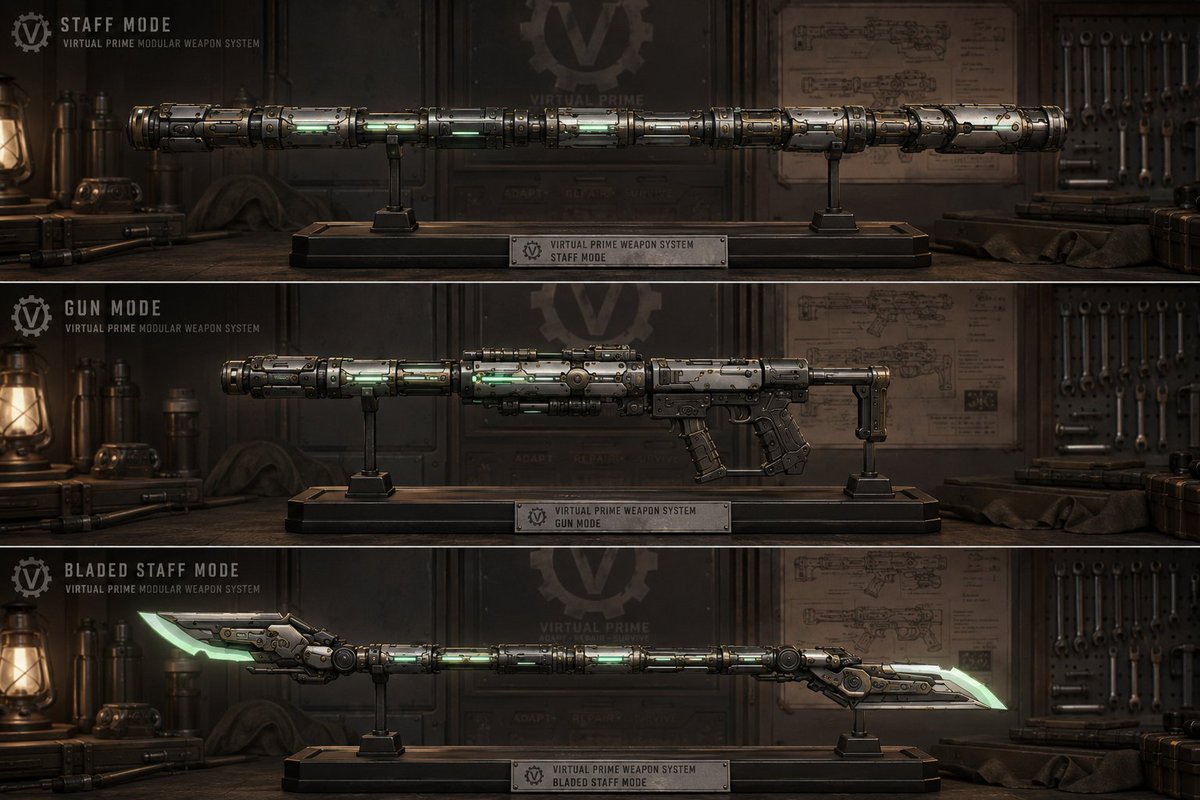
Prompt of the Day: SIGNATURE WEAPON SHOWCASE ⚔️🛠️💜💚
Today’s Prompt of the Day turns your character’s design into a grounded, realistic custom weapon built around their colour palette, silhouette, outfit motifs, materials, and personality.
Use one character reference as @Image1.
Optional: manually choose the weapon type at the top, or leave it blank and let the prompt design the most suitable realistic weapon for the character.
Just a side not this is not as well tested as normal please excuse any weirdness, kind of hit a wall last night
Have fun with this one ⚔️
............................PROMPT STARTS HERE............................
@Image1 = primary character reference
WEAPON TYPE:
[Optional: manually enter a realistic weapon type here, such as combat knife, tactical sword, katana, bow, crossbow, spear, axe, rifle, pistol, shield, baton, gauntlets, staff, polearm, or hybrid weapon.]
If no weapon type is provided, design a realistic weapon type that best suits @Image1’s visual identity, personality, silhouette, colour palette, outfit motifs, species traits, accessories, and overall character vibe.
Use @Image1 as the ONLY character identity and design reference.
@Image1 is the full source for the weapon’s colour scheme, styling, materials, shape language, markings, display environment, and overall design direction.
Character reference rules:
- Preserve @Image1’s visual art style, colour palette, outfit motifs, accessories, species traits, silhouette language, personality, and overall character vibe.
- The weapon must feel custom-designed for this specific character.
- Do not create a generic fantasy, sci-fi, magical, or oversized weapon unless those elements are clearly present in @Image1.
Scene concept:
Create a cinematic product-style illustration of @Image1’s custom signature weapon displayed in a realistic room, armoury, workshop, collector’s case, or character-appropriate display space.
The weapon should look functional, believable, high-quality, and carefully engineered, while still being visually designed around @Image1.
The result should feel like a premium custom weapon showcase, not a fantasy relic.
Weapon design direction:
Design the weapon using @Image1’s colours, outfit shapes, accessories, materials, texture language, trims, symbols, and personality as the foundation.
The weapon should have realistic proportions, practical construction, believable weight, functional grips, usable edges or mechanisms, and grounded material choices.
Use character-inspired design details such as custom handle wrapping, engraved trim, colour-matched panels, shaped guards, subtle markings, personalised fittings, etched motifs, matching metal finishes, leather, carbon fibre, polished wood, painted enamel, matte coating, tactical fabric, or other materials that suit @Image1.
The design should feel custom-made from the character’s identity, not like a generic weapon with random decoration added.
Realism rule:
Keep the weapon grounded, usable, and physically believable.
Use restrained character-themed detailing instead of excessive fantasy ornamentation.
The weapon may be beautiful and highly detailed, but it should still feel like something that could be built, held, mounted, and used.
Avoid oversized blades, impossible shapes, floating parts, excessive spikes, giant glowing crystals, magical cores, fantasy runes, or unrealistic proportions unless specifically requested.
Display setting:
Place the weapon on a realistic display stand, wall mount, glass case, workshop bench, armoury rack, custom foam case, museum-style pedestal, tactical storage wall, collector’s cabinet, or character-appropriate room display.
The room should match @Image1’s style, mood, colour palette, and personality without becoming too fantastical.
The display should feel intentional, premium, and believable.
Environment and composition:
Use a cinematic product-shot composition with the weapon as the clear central focus.
Keep the full weapon large, sharp, readable, and fully visible.
Show enough of the surrounding room to communicate the character’s atmosphere, but keep the background secondary.
Use strong visual hierarchy so the viewer immediately understands this is @Image1’s personal custom weapon.
Lighting and mood:
Use realistic dramatic lighting such as soft studio light, rim light, display-case reflections, workshop lighting, moody room shadows, warm spotlights, neon accent light, or subtle atmospheric haze if it fits @Image1.
The mood should feel premium, personal, controlled, powerful, and cinematic.
Hard style rule:
Preserve @Image1’s visual art style while designing the weapon and display room.
If @Image1 is anime, keep the weapon and room anime-style.
If @Image1 is stylized, keep the same stylization.
Do not turn the weapon, room, or scene photorealistic unless @Image1 is already photorealistic.
Quality and rendering:
Polished, premium-quality illustration with clean linework, crisp rendering, readable forms, elegant detailing, realistic construction, strong lighting, and clear composition.
Concentrate the strongest detail on the weapon, display setup, materials, and character-specific design elements.
The final image should feel like official concept art for a grounded custom weapon designed specifically for @Image1.
Do not:
- Do not include @Image1 physically in the scene unless specifically requested.
- Do not create a fantasy relic, magical artifact, or divine weapon.
- Do not make the weapon oversized, impossible to hold, or physically unbelievable.
- Do not add giant glowing crystals, magical cores, fantasy runes, excessive spikes, floating parts, or impossible mechanisms.
- Do not design a generic weapon unrelated to @Image1.
- Do not add unrelated symbols, random logos, random decorations, or motifs that are not inspired by @Image1.
- Do not randomly change the character’s colour palette.
- Do not use a weapon style that clashes with @Image1’s art style.
- Do not make the weapon tiny, blurry, hidden, cropped, or unreadable.
- Do not make the display room busier than the weapon.
- Do not create floating sticker-like decorations, disconnected PNG elements, or collage pieces.
- Do not add extra characters, clones, alternate versions, or unrelated people.
- Do not use photorealism unless specifically requested.
- Do not create messy shapes, muddy textures, malformed weapon parts, broken perspective, unreadable details, or cluttered composition.
..............................END OF PROMPT..................................
#POTD #promptoftheday #AI #AiArt #Art #AnimeArt #WeaponDesign #CharacterDesign #ConceptArt #CustomWeapon #DigitalArt #AnimeStyle #CommunityPrompt
🎥Friday stream this week!!! 6 pm PST :)
We Chill, We Has The Lolz, We Mass Effect, We Chat, Okay? Okay!💫🚀
💎Watch me on:
🔴https://t.co/El0lD1SgEk
🟢https://t.co/QjLXE4B6m5
👟https://t.co/lKcGHf0OEo
🟣https://t.co/yGNnFWAx8F
⚫ https://t.co/cXFrwf66Gg
🎨Art Cred: @Virtual_9_0
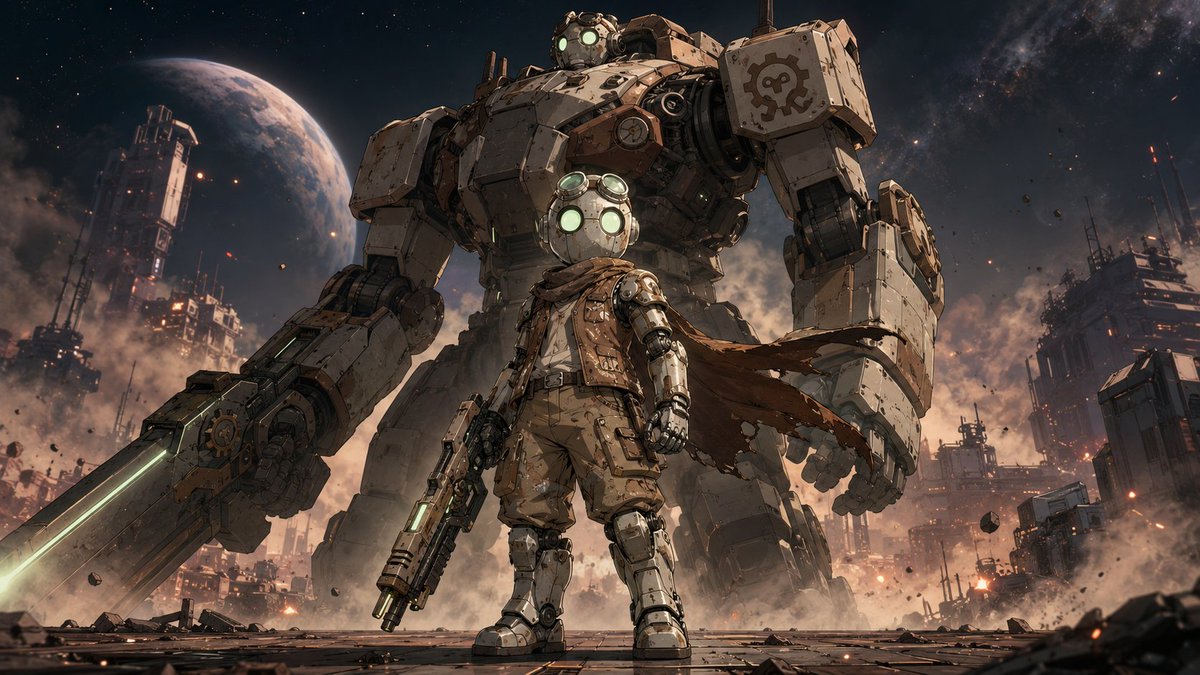
Prompt of the Day: MECHA GUARDIAN ASCENSION 🤖⚔️💜💚
Today’s Prompt of the Day turns your character into a futuristic sci-fi guardian fighter standing before their own towering personalized mecha.
Today's prompt idea was provided by @systemseverus was a solid prompt and just needed a few tweaks
Use one character reference as @Image1.
This prompt is designed for a wide 16:9 horizontal image, with your character as the main focus and the mecha as the massive secondary presence behind them.
Have fun with this one ⚡
............................PROMPT STARTS HERE............................
@Image1 = primary character reference
Use @Image1 as the ONLY character identity reference.
@Image1 is the full identity source for the character design.
Character reference rules:
- Preserve @Image1’s face shape, hairstyle, hair colour, eye colour, body language, signature colour palette, key outfit motifs, species traits, accessories, silhouette, proportions, and overall character vibe.
- The final design must still clearly look like the character from @Image1.
- Do not redesign @Image1 into a different person.
Hard style rule:
Preserve @Image1’s visual art style and character identity while transforming them into a futuristic armored sci-fi guardian fighter.
If @Image1 is anime, keep it anime. If @Image1 is stylized, keep that stylization.
Do not turn the character photorealistic unless specifically requested.
Scene concept:
Create a cinematic wide 16:9 horizontal anime-style illustration of @Image1 standing in the foreground in a futuristic combat outfit, with a towering personalized mecha guardian rising behind them.
The scene should feel epic, powerful, brooding, and heroic, like the character and their machine are waiting for the next battle to begin.
Character transformation:
Transform @Image1 into a futuristic sci-fi battle version of themselves while preserving their original identity.
Use @Image1’s colours, motifs, accessories, outfit shapes, symbols, materials, and overall vibe as the foundation for the outfit design, weapon design, and mecha design.
Outfit rule:
- If @Image1 is a woman, redesign the outfit into a sleek Stellar Blade-inspired combat bodysuit: skin-tight, elegant, high-end, athletic, seductive, and visually striking, with a futuristic fashion feel. The bodysuit should be form-fitting and sexy while still looking premium, combat-ready, and custom-designed for the character. Add stylish sci-fi paneling, subtle armor sections, glowing accents, integrated tech details, and character-specific motif work, while keeping the design tasteful, polished, and cohesive.
- If @Image1 is a man, keep the outfit as gothic futuristic armor: dark, regal, intimidating, and character-driven, with armored plates, layered textures, ceremonial or battle-worn detailing, and a strong heroic silhouette.
- If the character’s presentation is ambiguous, choose the outfit direction that best matches the character’s design language and overall vibe while preserving identity.
Design integration:
The outfit and mecha should feel custom-built for this specific character, not generic sci-fi gear.
The mecha should reflect the same identity transfer, using @Image1’s colours, symbols, silhouette cues, accessories, outfit motifs, and design language.
Mecha design:
Place a massive mecha, gundam-style guardian, space knight, or armored war machine behind @Image1.
The machine should be at least four times taller than the character and visually connected to them through matching colours, motifs, shapes, armor language, and lighting.
Give the mecha one large signature weapon or armament that suits the character’s personality.
Keep the mecha powerful, readable, and iconic rather than overly complex or cluttered.
Environment and composition:
Set the scene on a dramatic alien battlefield, orbital platform, moon surface, neon sci-fi cityscape, or cosmic planet vista.
Create the final image in a wide 16:9 horizontal aspect ratio.
Use a cinematic low-angle wide composition with @Image1 in the foreground and the mecha towering behind them.
Keep @Image1 large, central, sharp, and clearly readable even in the wider frame.
Use the extra horizontal space for atmosphere, battlefield scale, city lights, planet vistas, or cosmic scenery, but do not let the environment overpower the character.
Keep @Image1 as the primary focal point, especially the face, pose, outfit, hands, and weapon.
Use clear depth, atmospheric haze, rim lighting, and scale contrast so the mecha feels massive but still readable.
Lighting and mood:
Use dramatic cinematic lighting with a strong key light, glowing rim light, volumetric haze, celestial particles, and controlled energy distortion.
The mood should feel awe-inspiring, tense, regal, and battle-ready rather than chaotic.
Quality and rendering:
Polished, premium-quality anime-style illustration with clean linework, crisp rendering, readable forms, strong silhouettes, elegant detailing, dramatic lighting, and clear composition.
Keep the strongest detail on @Image1 and the immediate area around the mecha. Use slightly less detail in distant background elements.
Do not:
- Do not change the character identity.
- Do not redesign @Image1 into a different person.
- Do not add extra characters, clones, alternate versions, or unrelated people.
- Do not use copyrighted logos, named mecha, named game characters, or third-party trademarks.
- Do not make the mecha look generic or unrelated to @Image1.
- Do not make the mecha more visually important than the character.
- Do not overcomplicate the machinery with messy, unreadable parts.
- Do not use bright colours that clash with @Image1’s original palette.
- Do not make the female bodysuit look unfinished, cheap, generic, or disconnected from the character’s identity.
- Do not make the male armor lose its gothic identity.
- Do not use a vertical, square, portrait, or 2:3 composition.
- Do not make @Image1 tiny or lost in the wide 16:9 frame.
- Do not let the extra horizontal background space become empty, cluttered, or more important than the character.
- Do not make the background busier than the character.
- Do not make the main subject blurry, tiny, hidden, or unreadable.
- Do not crop important character features unless specifically requested.
- Do not create messy anatomy, extra limbs, malformed hands, distorted faces, or muddy textures.
- Do not use photorealism, semi-realism, live-action style, or glossy real-person rendering unless specifically requested.
..............................END OF PROMPT..................................
#POTD #promptoftheday #AI #AiArt #Art #AnimeArt #Mecha #SciFi #CharacterDesign #AnimeStyle #DigitalArt #OCArt #AIPrompt #StellarBlade #GundamStyle #CommunityPrompt
Prompt of the Day: PLATFORM FIGHTER CHAOS 🎮⚔️💥💜💚
Today's prompt is crafted one again by the amzing @Nodoka_Katana
🚨Use our ref sheets if you need other players🚨
Today’s Prompt of the Day throws your characters into a chaotic platform-fighter battle screenshot, like a match already in progress.
Use 2–4 character references.
For best results, name each uploaded reference image/file with the character name you want shown in the in-game UI.
Example:
- Luna.png
- Riven.png
- Sable.png
- Orion.png
You can also write the HUD names manually in the prompt if you want full control.
Have fun with this one 🎮
............................PROMPT STARTS HERE............................
@Image1 = Fighter 1 reference REQUIRED
@Image2 = Fighter 2 reference REQUIRED
@Image3 = Fighter 3 reference OPTIONAL
@Image4 = Fighter 4 reference OPTIONAL
HUD names override OPTIONAL:
Fighter 1 =
Fighter 2 =
Fighter 3 =
Fighter 4 =
Important naming note:
For best results, each reference image/file should be named with the character name you want to appear in the battle HUD.
If HUD names are written above, use those exact names.
If HUD names are not written, use the visible character name from the current reference image or the provided reference file name if available.
Do not use names from previous generations, previous prompts, older reference sets, memory, or unrelated characters.
If no name is available, use Fighter 1, Fighter 2, Fighter 3, or Fighter 4.
Create a high-quality 16:9 anime-style illustration that looks like a real live in-game screenshot from an original platform-fighter battle.
Use only the current supplied character references.
Ignore all previous generations, previous characters, previous prompts, previous names, and previous outputs.
Use the supplied references as the full identity sources for the fighters.
Preserve each fighter’s:
- face shape
- hairstyle
- hair colour
- eye colour
- body type
- outfit design language
- signature colours
- accessories
- personality
- overall vibe
- original art style
This must look like an actual gameplay moment, not a poster, splash art, character lineup, or key visual.
==================================================
FIGHTER COUNT + IDENTITY LOCK
==================================================
Only include the fighters supplied as references.
If 2 references are supplied, show exactly 2 fighters.
If 3 references are supplied, show exactly 3 fighters.
If 4 references are supplied, show exactly 4 fighters.
Do not add extra fighters.
Do not duplicate fighters.
Do not create spectators, clones, alternate versions, or unrelated characters.
Every provided reference image represents a different individual fighter.
Preserve each fighter as their own separate person.
Do not merge characters together.
Do not use one character to fill missing slots.
==================================================
GAMEPLAY SCENE
==================================================
Show a chaotic but readable platform-fighter match already in progress.
The fighters must be small-to-medium gameplay scale, properly sized to the arena.
Do not make them giant foreground poster characters.
Create a playable floating fantasy arena with:
- one main platform
- at least two smaller platforms
- visible ledges
- clear off-stage space
- broken ruins
- hanging chains
- distant floating islands
- open sky and clouds below
The stage must feel like a real platform-fighter map, not just a decorative background.
==================================================
RANDOMIZED ACTION
==================================================
Randomize fighter positions and battle states naturally.
Do not default to a neat showcase layout.
Do not place everyone safely standing on platforms.
Do not arrange everyone evenly across the image.
Show at least 3 different active gameplay states, such as:
- one fighter landing a strong smash hit
- one fighter being launched away
- one fighter airborne using an aerial attack
- one fighter hanging from a ledge
- one fighter recovering from below or from the side
- one fighter flashing white during brief recovery invulnerability
- one fighter casting or firing a projectile
- one fighter throwing or using an item
- one fighter respawning after a KO
At least one fighter should be airborne, off-stage, recovering, hanging from a ledge, being launched, or in danger.
Include 1 to 3 platform-fighter items if useful:
floating crystal, healing fruit, magic scroll, bomb, throwable orb, beam wand, shield pickup, energy mine, or fantasy hammer.
Items should feel like platform-fighter pickups, not realistic battlefield clutter.
==================================================
SCENE INTEGRATION
==================================================
The fighters must look physically embedded in the arena, not pasted on top of it.
Render fighters, stage, effects, shadows, HUD, and background as if captured from the same game engine in one screenshot.
Use consistent:
- camera perspective
- lighting direction
- shadows
- colour grading
- atmospheric haze
- motion blur
- depth of field
- line weight
- detail level
- in-game material finish
Fighters standing on platforms must have correct foot placement, contact shadows, dust, sparks, or grounding effects.
Fighters in the air must have matching motion blur, rim light, depth cues, and attack trails that interact with the scene.
Fighters hanging from ledges must have properly aligned hands, believable body weight, ledge sparks, and recovery glow.
Do not make characters look like stickers, cutouts, or separate character art pasted over a background.
==================================================
EFFECTS
==================================================
Use clear platform-fighter effects:
hit sparks, slash arcs, knockback trails, smoke bursts, debris, elemental bursts, shield flashes, projectile glows, impact streaks, falling motion lines, recovery flashes, white invulnerability flicker, and ledge-grab sparks.
Effects should make the action easier to understand, not hide the fighters.
If a fighter is above 100% damage, show stronger danger-state emphasis:
- heavier knockback
- red warning effect
- unstable pose
- panic expression
- stronger impact trail
==================================================
HUD
==================================================
Add an original platform-fighter HUD along the bottom.
For every fighter, show:
- portrait icon
- HUD name
- damage %
- stock / life icons
The HUD must match the exact number of supplied fighters.
Use varied believable damage percentages.
At least one fighter should usually be above 100%.
Add a small match timer in a top corner.
The HUD should be compact, clean, colour-coded, and semi-transparent so the gameplay can still be seen behind it.
Do not use official game logos, branded UI, or copyrighted interface elements.
==================================================
STYLE RULES
==================================================
Preserve the original visual style of the references.
If the references are anime, keep the result anime.
If the references are stylized, keep that stylization.
Do not turn them photorealistic.
Do not give the characters generic redesigns.
The final image should feel like a polished, readable, high-energy in-game battle screenshot from an original platform fighter.
==================================================
AVOID
==================================================
Avoid:
- making it a poster
- making it a group portrait
- making it a character lineup
- making it a splash screen
- making everyone stand idle
- adding extra fighters
- duplicating fighters
- merging characters together
- using characters from previous prompts
- using names from previous prompts
- guessing unrelated character names
- making fighters look pasted onto the background
- mismatched lighting between fighters and stage
- overly sharp characters on a blurry arena
- unclear stage layout
- missing HUD panels
- incorrect fighter count in the HUD
- opaque HUD panels that block too much action
- official copyrighted logos
- exact branded game UI
- messy anatomy
- extra limbs
- malformed hands
- distorted faces
- muddy textures
- unreadable action
Final result:
A dynamic, polished, readable 16:9 in-game battle screenshot from an original platform fighter, using only the current character references, correct HUD names, randomized attacks, varied positions, off-stage or recovery action, semi-transparent HUD, and fully unified scene integration.
..............................END OF PROMPT..................................
#POTD #promptoftheday #AI #AiArt #Art #AnimeArt #PlatformFighter #FightingGame #GameScreenshot #BattleArena #CharacterDesign #DigitalArt #AnimeStyle #CommunityPrompt


![EvaGlitchAI's tweet photo. Prompt of the Day: WANTED POSTER — Fantasy Guild Warning Notice Edition ⭐📜💜💚
Todays prompt is brought to us in full by @Nodoka_Katana and as always, its a good one
Today’s Prompt of the Day turns your character into an in-world fantasy wanted poster, bounty notice, guild warning, royal decree, black-seal threat advisory, or forbidden emergency notice.
Use one character reference as @Image1, then fill in the character name, alias, tone, threat level, and setting style.
Have fun with this one — and maybe don’t accept the bounty if the poster gives them seven stars ⭐📜
............................PROMPT STARTS HERE............................
Prompt of the Day: WANTED POSTER — Fantasy Guild Warning Notice Edition ⭐📜
@Image1 = primary character reference
@CharacterName = [write character name here]
@AliasOrTitle = [optional alias / title / nickname]
@Tone = [funny / dangerous / regal / chaotic / gothic / wholesome / ominous / custom tone]
@ThreatLevel = [1–5 stars, 6 stars for extreme “avoid on sight” characters, or extremely rare 7 stars for mythic calamity-level threats]
@SettingStyle = [fantasy guild / wild west / royal decree / black seal warning / modern agency / custom style]
Create a highly detailed fantasy wanted poster / warning notice based on @Image1.
REFERENCE RULES:
Use @Image1 as the ONLY character identity source.
The final character must clearly remain the same individual from @Image1.
Preserve the character’s:
face shape
hairstyle
hair colour
eye colour
body type
outfit motifs
accessories
colour palette
personality
species traits if present
overall visual identity
Do not use any character, outfit, design, cast member, or visual information from previous prompts, previous generations, earlier conversations, or memory.
Do not include any character not visible in @Image1.
CORE CONCEPT:
Design the image as an in-world wanted poster, bounty notice, guild warning, royal arrest notice, black-seal threat advisory, or forbidden emergency notice.
The poster should not feel like plain character art with text added.
It should look like a real document from a fictional world, posted on a bounty board, town wall, guild hall, royal checkpoint, tavern noticeboard, magical academy board, or agency archive.
The character should be the main visual focus.
Their pose, expression, body language, and surrounding design should match their personality and threat level.
POSTER CONTENT:
Include these readable fields:
WANTED
WARNING NOTICE or equivalent
Name: @CharacterName
Alias / Title: @AliasOrTitle
Threat Rating
Threat Class
Reward / Bounty
Charges / Known Offenses
Capture Advice
Random Fact
Status
Last Seen
Footer tagline
STAR RATING SYSTEM:
Use a star-based danger rating.
Suggested scale:
★☆☆☆☆ — Minor nuisance / minor anomaly
★★☆☆☆ — Troublemaker
★★★☆☆ — Dangerous
★★★★☆ — Highly dangerous
★★★★★ — Extreme threat
★★★★★★ — Avoid on sight / catastrophic / black-seal target / do not engage
SPECIAL RARE THREAT OVERRIDE:
The normal danger scale is 1–6 stars.
However, if the character feels impossibly dangerous, mythic, cursed, reality-breaking, divine, eldritch, or beyond the authority of the issuing guild, the poster may assign a forbidden rare 7-star rating:
★★★★★★★ — Forbidden / Mythic Calamity / Reality-Class / Authority Cannot Engage
The 7-star rating should be EXTREMELY rare.
Do not use the 7-star rating unless the character’s design, aura, or prompt tone strongly suggests a once-in-history threat. It should feel like the poster system itself has failed.
A 7-star poster should feel like an emergency artifact rather than a normal wanted notice.
For 6-star targets, use a severe warning style such as:
BLACK SEAL WARNING
AVOID ON SIGHT
DO NOT ENGAGE
REPORT SIGHTINGS ONLY
THREAT BEYOND BOUNTY
CALAMITY-CLASS TARGET
For 7-star targets, use an even more terrifying emergency style such as:
FORBIDDEN SEAL WARNING
MYTHIC CALAMITY NOTICE
REALITY-CLASS INCIDENT
AUTHORITY CANNOT ENGAGE
DIVINE INCIDENT
UNREGISTERED APOCALYPSE
CROWN-SEAL FAILURE
REWARD / BOUNTY LOGIC:
Include a reward line by default.
The reward should reflect the character’s danger level, setting, and tone.
Examples by tier:
★☆☆☆☆:
500 Gold
1,500 Gold and one rare book
One free meal and official thanks
★★☆☆☆:
3,000 Gold
5,000 Gold
Guild voucher and apology paperwork
★★★☆☆:
15,000 Gold
25,000 Gold
Payment doubled if captured alive
★★★★☆:
100,000 Gold
Royal commission
Full pardon for minor crimes
★★★★★:
250,000 Gold
500,000 Gold
Immediate audience with the crown
★★★★★★:
For 6-star targets, the reward may be replaced by a warning instead of money.
Examples:
Your life is not worth the reward.
No sum is sufficient.
Survival is considered compensation enough.
Capture not advised under any circumstances.
If you are reading this and already found them, run.
Crown accepts no liability for your death.
Posthumous recognition may be awarded.
Do not engage. Report sightings only.
★★★★★★★:
For 7-star targets, replace the normal reward with a survival warning or catastrophic notice.
Examples:
No reward. No recovery.
Survival is the only prize.
The Crown denies issuing this notice.
Do not pursue. Do not bargain. Do not look back.
If sighted, evacuate the province.
Your bloodline has been informed.
This bounty has been retired due to casualties.
The reward was withdrawn after the last guild vanished.
CHARGES / OFFENSES:
The charges should be character-specific, not generic.
They may be serious, funny, poetic, dramatic, or absurd depending on @Tone.
Examples:
A fiery chaotic character:
Setting three kitchens on fire “to test the ambiance.”
Verbal assault.
Resisting common sense.
Unauthorized arson of dignity.
A gentle peaceful character:
Repeatedly assisting a known menace through inaction.
Unauthorized peacekeeping.
Excessive tolerance of chaos.
Apologizing while under arrest.
A regal character:
Unlawful possession of overwhelming majesty.
Moonlit intimidation.
Destruction of weak resolve.
Excessive royal presence.
A celestial / angelic character:
Unauthorized morale restoration.
Possession of excessive grace.
Inspiring bystanders without a permit.
Illegal levels of encouragement.
A gothic / ominous character:
Unknown.
Suspicious silence.
Intimidation by presence alone.
Possession of forbidden aura.
Disturbing the confidence of trained officials.
A 7-star mythic calamity:
Unauthorized existence beyond sanctioned reality.
Collapse of multiple response units.
Incitement of prophecy, dread, or mass panic.
Refusal to obey divine, royal, or natural law.
Presence correlated with disappearance of previous hunters.
RANDOM FACT:
Include one short random fact that reveals personality.
It should be funny, ominous, charming, or lore-flavoured.
Examples:
Claims every disaster was “technically under control.”
Has apologized while being arrested.
Criminals have surrendered after being called “disappointing.”
Witnesses forgot their own names after making eye contact.
Has never raised her voice, and somehow that makes it worse.
Once won an argument she started with herself.
Could probably ruin your life politely.
The last clerk to update this poster resigned immediately afterward.
CAPTURE ADVICE:
Include a short capture advice section.
Examples:
Do not provoke. Do not argue. Keep water nearby.
Approach gently. Tea may improve compliance.
Polite conversation strongly recommended.
Do not approach alone. Diplomatic caution advised.
Do not engage. Report sightings only.
Avoid eye contact. Avoid sarcasm. Avoid thinking you are in control.
For 7-star targets:
Evacuate and report only.
Engagement prohibited by surviving authorities.
Do not initiate contact under any circumstance.
If already in pursuit, reconsider your life choices immediately.
No confirmed safe method of capture exists.
STATUS:
Include a status field.
Examples:
Capture with caution.
Capture if possible. Survival recommended.
Preferred alive, unharmed, and not too stressed.
Return safely. Damage claims will not be tolerated.
Avoid on sight. Crown accepts no liability for your death.
Authority cannot engage. Observation only.
Poster remains active despite loss of enforcement division.
LAST SEEN:
Include a last seen field matched to the character’s tone.
Examples:
Laughing near the source of the problem.
Trying to clean up after someone else.
Where hope needed help standing back up.
Under moonlight, where silence starts to kneel.
Exactly where you hoped she wasn’t.
Walking calmly away from an event no one survived explaining.
FOOTER TAGLINE:
End with a memorable footer tagline.
Examples:
Flame does not ask permission.
Too kind for the charges, too involved to deny them.
Illegal levels of encouragement.
She could probably ruin your life politely.
If you are reading this and already found her, run.
The seal broke before she did.
Some warnings are written too late.
VISUAL STYLE:
Use:
aged parchment
torn, weathered, or burnt paper edges
distressed ink
ornate borders
fantasy guild stamps
wax seals
star threat icons
reward box
official seal
handwritten notes
decorative icons
themed symbols
readable typography
For 6-star posters, optionally add:
black wax seal
red warning accents
harsher typography
scarred paper
ominous official markings
For 7-star posters, optionally add:
damaged seals
black wax
cracked stamps
redacted sections
emergency marks
handwritten panic notes
forbidden sigils
broken border elements
signs that the document itself barely contains the warning
The poster should feel like a finished in-world artifact.
CHARACTER-SPECIFIC DESIGN:
Tailor the entire poster to the character.
Match:
colour palette
outfit motifs
personality
body language
expression
threat rating
reward style
charges
symbolism
guild stamp
seal design
background motifs
Examples:
Fiery character:
Use scorched parchment, ember sparks, flame icons, red wax seal, fire guild stamp, cocky pose.
Gentle floral character:
Use cleaner parchment, flower motifs, lavender ink, soft expression, apologetic pose, tea icon.
Celestial character:
Use feathers, halo motifs, stars, blue-gold seal, luminous parchment, graceful pose.
Regal moon character:
Use lunar symbols, dragon motifs, purple-gold ink, moonlit background, royal seal, poised stance.
Gothic danger character:
Use blackened parchment, occult symbols, dark purple wax seal, black-seal warning, severe expression, ominous pose.
Mythic 7-star calamity:
Use broken seals, forbidden sigils, black-red emergency ink, distressed parchment, failure stamps, grim annotations, and a presentation that feels like the authorities are genuinely afraid.
COMPOSITION:
The character should be large and clear.
The poster may show:
bust portrait
half-body portrait
three-quarter body
full body if it suits the layout
The character’s body language should communicate the threat rating:
smug / cocky
serene / innocent
regal / commanding
shy / apologetic
cold / intimidating
chaotic / triumphant
gentle / wholesome
mythic / untouchable / terrifying
Do not make the poster look like a modern profile card.
Do not make it look like a clean game UI.
Do not create a plain white background.
Do not make it a character reference sheet.
QUALITY TARGET:
Highly detailed.
Readable.
Character-specific.
In-world artifact.
Strong typography.
Poster-like composition.
Distinct personality.
Polished fantasy document.
Fun, dramatic, ominous, or catastrophic depending on character.
NEGATIVE / AVOID:
No wrong names.
No previous character names.
No unrelated characters.
No generic crimes.
No generic bounty notice.
No modern UI.
No clean white background.
No full character turnaround sheet.
No messy unreadable text.
No random symbols that do not fit the character.
No halftone dots.
No stippling.
No pointillism.
No glitter overload.
..............................END OF PROMPT..................................
#POTD #promptoftheday #AI #AiArt #Art #AnimeArt #WantedPoster #FantasyArt #BountyNotice #GuildNotice #CharacterDesign #DigitalArt #AnimeStyle #CommunityPrompt](https://pbs.twimg.com/media/HKPuHv4acAA3kep.jpg)




![EvaGlitchAI's tweet photo. Prompt of the Day: WANTED POSTER — Fantasy Guild Warning Notice Edition ⭐📜💜💚
Todays prompt is brought to us in full by @Nodoka_Katana and as always, its a good one
Today’s Prompt of the Day turns your character into an in-world fantasy wanted poster, bounty notice, guild warning, royal decree, black-seal threat advisory, or forbidden emergency notice.
Use one character reference as @Image1, then fill in the character name, alias, tone, threat level, and setting style.
Have fun with this one — and maybe don’t accept the bounty if the poster gives them seven stars ⭐📜
............................PROMPT STARTS HERE............................
Prompt of the Day: WANTED POSTER — Fantasy Guild Warning Notice Edition ⭐📜
@Image1 = primary character reference
@CharacterName = [write character name here]
@AliasOrTitle = [optional alias / title / nickname]
@Tone = [funny / dangerous / regal / chaotic / gothic / wholesome / ominous / custom tone]
@ThreatLevel = [1–5 stars, 6 stars for extreme “avoid on sight” characters, or extremely rare 7 stars for mythic calamity-level threats]
@SettingStyle = [fantasy guild / wild west / royal decree / black seal warning / modern agency / custom style]
Create a highly detailed fantasy wanted poster / warning notice based on @Image1.
REFERENCE RULES:
Use @Image1 as the ONLY character identity source.
The final character must clearly remain the same individual from @Image1.
Preserve the character’s:
face shape
hairstyle
hair colour
eye colour
body type
outfit motifs
accessories
colour palette
personality
species traits if present
overall visual identity
Do not use any character, outfit, design, cast member, or visual information from previous prompts, previous generations, earlier conversations, or memory.
Do not include any character not visible in @Image1.
CORE CONCEPT:
Design the image as an in-world wanted poster, bounty notice, guild warning, royal arrest notice, black-seal threat advisory, or forbidden emergency notice.
The poster should not feel like plain character art with text added.
It should look like a real document from a fictional world, posted on a bounty board, town wall, guild hall, royal checkpoint, tavern noticeboard, magical academy board, or agency archive.
The character should be the main visual focus.
Their pose, expression, body language, and surrounding design should match their personality and threat level.
POSTER CONTENT:
Include these readable fields:
WANTED
WARNING NOTICE or equivalent
Name: @CharacterName
Alias / Title: @AliasOrTitle
Threat Rating
Threat Class
Reward / Bounty
Charges / Known Offenses
Capture Advice
Random Fact
Status
Last Seen
Footer tagline
STAR RATING SYSTEM:
Use a star-based danger rating.
Suggested scale:
★☆☆☆☆ — Minor nuisance / minor anomaly
★★☆☆☆ — Troublemaker
★★★☆☆ — Dangerous
★★★★☆ — Highly dangerous
★★★★★ — Extreme threat
★★★★★★ — Avoid on sight / catastrophic / black-seal target / do not engage
SPECIAL RARE THREAT OVERRIDE:
The normal danger scale is 1–6 stars.
However, if the character feels impossibly dangerous, mythic, cursed, reality-breaking, divine, eldritch, or beyond the authority of the issuing guild, the poster may assign a forbidden rare 7-star rating:
★★★★★★★ — Forbidden / Mythic Calamity / Reality-Class / Authority Cannot Engage
The 7-star rating should be EXTREMELY rare.
Do not use the 7-star rating unless the character’s design, aura, or prompt tone strongly suggests a once-in-history threat. It should feel like the poster system itself has failed.
A 7-star poster should feel like an emergency artifact rather than a normal wanted notice.
For 6-star targets, use a severe warning style such as:
BLACK SEAL WARNING
AVOID ON SIGHT
DO NOT ENGAGE
REPORT SIGHTINGS ONLY
THREAT BEYOND BOUNTY
CALAMITY-CLASS TARGET
For 7-star targets, use an even more terrifying emergency style such as:
FORBIDDEN SEAL WARNING
MYTHIC CALAMITY NOTICE
REALITY-CLASS INCIDENT
AUTHORITY CANNOT ENGAGE
DIVINE INCIDENT
UNREGISTERED APOCALYPSE
CROWN-SEAL FAILURE
REWARD / BOUNTY LOGIC:
Include a reward line by default.
The reward should reflect the character’s danger level, setting, and tone.
Examples by tier:
★☆☆☆☆:
500 Gold
1,500 Gold and one rare book
One free meal and official thanks
★★☆☆☆:
3,000 Gold
5,000 Gold
Guild voucher and apology paperwork
★★★☆☆:
15,000 Gold
25,000 Gold
Payment doubled if captured alive
★★★★☆:
100,000 Gold
Royal commission
Full pardon for minor crimes
★★★★★:
250,000 Gold
500,000 Gold
Immediate audience with the crown
★★★★★★:
For 6-star targets, the reward may be replaced by a warning instead of money.
Examples:
Your life is not worth the reward.
No sum is sufficient.
Survival is considered compensation enough.
Capture not advised under any circumstances.
If you are reading this and already found them, run.
Crown accepts no liability for your death.
Posthumous recognition may be awarded.
Do not engage. Report sightings only.
★★★★★★★:
For 7-star targets, replace the normal reward with a survival warning or catastrophic notice.
Examples:
No reward. No recovery.
Survival is the only prize.
The Crown denies issuing this notice.
Do not pursue. Do not bargain. Do not look back.
If sighted, evacuate the province.
Your bloodline has been informed.
This bounty has been retired due to casualties.
The reward was withdrawn after the last guild vanished.
CHARGES / OFFENSES:
The charges should be character-specific, not generic.
They may be serious, funny, poetic, dramatic, or absurd depending on @Tone.
Examples:
A fiery chaotic character:
Setting three kitchens on fire “to test the ambiance.”
Verbal assault.
Resisting common sense.
Unauthorized arson of dignity.
A gentle peaceful character:
Repeatedly assisting a known menace through inaction.
Unauthorized peacekeeping.
Excessive tolerance of chaos.
Apologizing while under arrest.
A regal character:
Unlawful possession of overwhelming majesty.
Moonlit intimidation.
Destruction of weak resolve.
Excessive royal presence.
A celestial / angelic character:
Unauthorized morale restoration.
Possession of excessive grace.
Inspiring bystanders without a permit.
Illegal levels of encouragement.
A gothic / ominous character:
Unknown.
Suspicious silence.
Intimidation by presence alone.
Possession of forbidden aura.
Disturbing the confidence of trained officials.
A 7-star mythic calamity:
Unauthorized existence beyond sanctioned reality.
Collapse of multiple response units.
Incitement of prophecy, dread, or mass panic.
Refusal to obey divine, royal, or natural law.
Presence correlated with disappearance of previous hunters.
RANDOM FACT:
Include one short random fact that reveals personality.
It should be funny, ominous, charming, or lore-flavoured.
Examples:
Claims every disaster was “technically under control.”
Has apologized while being arrested.
Criminals have surrendered after being called “disappointing.”
Witnesses forgot their own names after making eye contact.
Has never raised her voice, and somehow that makes it worse.
Once won an argument she started with herself.
Could probably ruin your life politely.
The last clerk to update this poster resigned immediately afterward.
CAPTURE ADVICE:
Include a short capture advice section.
Examples:
Do not provoke. Do not argue. Keep water nearby.
Approach gently. Tea may improve compliance.
Polite conversation strongly recommended.
Do not approach alone. Diplomatic caution advised.
Do not engage. Report sightings only.
Avoid eye contact. Avoid sarcasm. Avoid thinking you are in control.
For 7-star targets:
Evacuate and report only.
Engagement prohibited by surviving authorities.
Do not initiate contact under any circumstance.
If already in pursuit, reconsider your life choices immediately.
No confirmed safe method of capture exists.
STATUS:
Include a status field.
Examples:
Capture with caution.
Capture if possible. Survival recommended.
Preferred alive, unharmed, and not too stressed.
Return safely. Damage claims will not be tolerated.
Avoid on sight. Crown accepts no liability for your death.
Authority cannot engage. Observation only.
Poster remains active despite loss of enforcement division.
LAST SEEN:
Include a last seen field matched to the character’s tone.
Examples:
Laughing near the source of the problem.
Trying to clean up after someone else.
Where hope needed help standing back up.
Under moonlight, where silence starts to kneel.
Exactly where you hoped she wasn’t.
Walking calmly away from an event no one survived explaining.
FOOTER TAGLINE:
End with a memorable footer tagline.
Examples:
Flame does not ask permission.
Too kind for the charges, too involved to deny them.
Illegal levels of encouragement.
She could probably ruin your life politely.
If you are reading this and already found her, run.
The seal broke before she did.
Some warnings are written too late.
VISUAL STYLE:
Use:
aged parchment
torn, weathered, or burnt paper edges
distressed ink
ornate borders
fantasy guild stamps
wax seals
star threat icons
reward box
official seal
handwritten notes
decorative icons
themed symbols
readable typography
For 6-star posters, optionally add:
black wax seal
red warning accents
harsher typography
scarred paper
ominous official markings
For 7-star posters, optionally add:
damaged seals
black wax
cracked stamps
redacted sections
emergency marks
handwritten panic notes
forbidden sigils
broken border elements
signs that the document itself barely contains the warning
The poster should feel like a finished in-world artifact.
CHARACTER-SPECIFIC DESIGN:
Tailor the entire poster to the character.
Match:
colour palette
outfit motifs
personality
body language
expression
threat rating
reward style
charges
symbolism
guild stamp
seal design
background motifs
Examples:
Fiery character:
Use scorched parchment, ember sparks, flame icons, red wax seal, fire guild stamp, cocky pose.
Gentle floral character:
Use cleaner parchment, flower motifs, lavender ink, soft expression, apologetic pose, tea icon.
Celestial character:
Use feathers, halo motifs, stars, blue-gold seal, luminous parchment, graceful pose.
Regal moon character:
Use lunar symbols, dragon motifs, purple-gold ink, moonlit background, royal seal, poised stance.
Gothic danger character:
Use blackened parchment, occult symbols, dark purple wax seal, black-seal warning, severe expression, ominous pose.
Mythic 7-star calamity:
Use broken seals, forbidden sigils, black-red emergency ink, distressed parchment, failure stamps, grim annotations, and a presentation that feels like the authorities are genuinely afraid.
COMPOSITION:
The character should be large and clear.
The poster may show:
bust portrait
half-body portrait
three-quarter body
full body if it suits the layout
The character’s body language should communicate the threat rating:
smug / cocky
serene / innocent
regal / commanding
shy / apologetic
cold / intimidating
chaotic / triumphant
gentle / wholesome
mythic / untouchable / terrifying
Do not make the poster look like a modern profile card.
Do not make it look like a clean game UI.
Do not create a plain white background.
Do not make it a character reference sheet.
QUALITY TARGET:
Highly detailed.
Readable.
Character-specific.
In-world artifact.
Strong typography.
Poster-like composition.
Distinct personality.
Polished fantasy document.
Fun, dramatic, ominous, or catastrophic depending on character.
NEGATIVE / AVOID:
No wrong names.
No previous character names.
No unrelated characters.
No generic crimes.
No generic bounty notice.
No modern UI.
No clean white background.
No full character turnaround sheet.
No messy unreadable text.
No random symbols that do not fit the character.
No halftone dots.
No stippling.
No pointillism.
No glitter overload.
..............................END OF PROMPT..................................
#POTD #promptoftheday #AI #AiArt #Art #AnimeArt #WantedPoster #FantasyArt #BountyNotice #GuildNotice #CharacterDesign #DigitalArt #AnimeStyle #CommunityPrompt](https://pbs.twimg.com/media/HKPwDUraAAAbJvk.jpg)
![EvaGlitchAI's tweet photo. Prompt of the Day: SIGNATURE WEAPON SHOWCASE ⚔️🛠️💜💚
Today’s Prompt of the Day turns your character’s design into a grounded, realistic custom weapon built around their colour palette, silhouette, outfit motifs, materials, and personality.
Use one character reference as @Image1.
Optional: manually choose the weapon type at the top, or leave it blank and let the prompt design the most suitable realistic weapon for the character.
Just a side not this is not as well tested as normal please excuse any weirdness, kind of hit a wall last night
Have fun with this one ⚔️
............................PROMPT STARTS HERE............................
@Image1 = primary character reference
WEAPON TYPE:
[Optional: manually enter a realistic weapon type here, such as combat knife, tactical sword, katana, bow, crossbow, spear, axe, rifle, pistol, shield, baton, gauntlets, staff, polearm, or hybrid weapon.]
If no weapon type is provided, design a realistic weapon type that best suits @Image1’s visual identity, personality, silhouette, colour palette, outfit motifs, species traits, accessories, and overall character vibe.
Use @Image1 as the ONLY character identity and design reference.
@Image1 is the full source for the weapon’s colour scheme, styling, materials, shape language, markings, display environment, and overall design direction.
Character reference rules:
- Preserve @Image1’s visual art style, colour palette, outfit motifs, accessories, species traits, silhouette language, personality, and overall character vibe.
- The weapon must feel custom-designed for this specific character.
- Do not create a generic fantasy, sci-fi, magical, or oversized weapon unless those elements are clearly present in @Image1.
Scene concept:
Create a cinematic product-style illustration of @Image1’s custom signature weapon displayed in a realistic room, armoury, workshop, collector’s case, or character-appropriate display space.
The weapon should look functional, believable, high-quality, and carefully engineered, while still being visually designed around @Image1.
The result should feel like a premium custom weapon showcase, not a fantasy relic.
Weapon design direction:
Design the weapon using @Image1’s colours, outfit shapes, accessories, materials, texture language, trims, symbols, and personality as the foundation.
The weapon should have realistic proportions, practical construction, believable weight, functional grips, usable edges or mechanisms, and grounded material choices.
Use character-inspired design details such as custom handle wrapping, engraved trim, colour-matched panels, shaped guards, subtle markings, personalised fittings, etched motifs, matching metal finishes, leather, carbon fibre, polished wood, painted enamel, matte coating, tactical fabric, or other materials that suit @Image1.
The design should feel custom-made from the character’s identity, not like a generic weapon with random decoration added.
Realism rule:
Keep the weapon grounded, usable, and physically believable.
Use restrained character-themed detailing instead of excessive fantasy ornamentation.
The weapon may be beautiful and highly detailed, but it should still feel like something that could be built, held, mounted, and used.
Avoid oversized blades, impossible shapes, floating parts, excessive spikes, giant glowing crystals, magical cores, fantasy runes, or unrealistic proportions unless specifically requested.
Display setting:
Place the weapon on a realistic display stand, wall mount, glass case, workshop bench, armoury rack, custom foam case, museum-style pedestal, tactical storage wall, collector’s cabinet, or character-appropriate room display.
The room should match @Image1’s style, mood, colour palette, and personality without becoming too fantastical.
The display should feel intentional, premium, and believable.
Environment and composition:
Use a cinematic product-shot composition with the weapon as the clear central focus.
Keep the full weapon large, sharp, readable, and fully visible.
Show enough of the surrounding room to communicate the character’s atmosphere, but keep the background secondary.
Use strong visual hierarchy so the viewer immediately understands this is @Image1’s personal custom weapon.
Lighting and mood:
Use realistic dramatic lighting such as soft studio light, rim light, display-case reflections, workshop lighting, moody room shadows, warm spotlights, neon accent light, or subtle atmospheric haze if it fits @Image1.
The mood should feel premium, personal, controlled, powerful, and cinematic.
Hard style rule:
Preserve @Image1’s visual art style while designing the weapon and display room.
If @Image1 is anime, keep the weapon and room anime-style.
If @Image1 is stylized, keep the same stylization.
Do not turn the weapon, room, or scene photorealistic unless @Image1 is already photorealistic.
Quality and rendering:
Polished, premium-quality illustration with clean linework, crisp rendering, readable forms, elegant detailing, realistic construction, strong lighting, and clear composition.
Concentrate the strongest detail on the weapon, display setup, materials, and character-specific design elements.
The final image should feel like official concept art for a grounded custom weapon designed specifically for @Image1.
Do not:
- Do not include @Image1 physically in the scene unless specifically requested.
- Do not create a fantasy relic, magical artifact, or divine weapon.
- Do not make the weapon oversized, impossible to hold, or physically unbelievable.
- Do not add giant glowing crystals, magical cores, fantasy runes, excessive spikes, floating parts, or impossible mechanisms.
- Do not design a generic weapon unrelated to @Image1.
- Do not add unrelated symbols, random logos, random decorations, or motifs that are not inspired by @Image1.
- Do not randomly change the character’s colour palette.
- Do not use a weapon style that clashes with @Image1’s art style.
- Do not make the weapon tiny, blurry, hidden, cropped, or unreadable.
- Do not make the display room busier than the weapon.
- Do not create floating sticker-like decorations, disconnected PNG elements, or collage pieces.
- Do not add extra characters, clones, alternate versions, or unrelated people.
- Do not use photorealism unless specifically requested.
- Do not create messy shapes, muddy textures, malformed weapon parts, broken perspective, unreadable details, or cluttered composition.
..............................END OF PROMPT..................................
#POTD #promptoftheday #AI #AiArt #Art #AnimeArt #WeaponDesign #CharacterDesign #ConceptArt #CustomWeapon #DigitalArt #AnimeStyle #CommunityPrompt](https://pbs.twimg.com/media/HKALCsDb0AA4JVi.jpg)