She Conquered Gasherbrum II, But Her Celebration Was Cut Short by News From Broad Peak
Qatari mountaineer Sheikha Asma bint Thani Al Thani has achieved another major milestone in her extraordinary climbing journey, successfully reaching the summit of Gasherbrum II in Pakistan.
Standing at 8,035 meters, Gasherbrum II is one of the world's 14 mountains higher than 8,000 metres. The successful ascent marks Asma's 11th eight-thousand, leaving her just three peaks away from completing the ultimate mountaineering challenge.
The achievement is also a significant milestone for Qatari and Arab women, as Asma continues to break new ground in high-altitude mountaineering.
Five days waiting out the storm
The climb was far from easy.
As the team moved higher into the Karakoram, harsh weather forced them to remain at Camp 1 for five days. Freezing temperatures, strong winds and dangerous conditions made it impossible to safely continue toward the summit.
While some other teams decided to turn around and descend, Asma's team chose to wait for a safer weather window.
The days at Camp 1 became a test of patience as much as physical endurance. The climbers rested, prepared for the next stage and even shared morning coffee outside their tents while waiting for the weather to improve.
Eventually, the conditions began to clear.
A moonlit push toward the summit
When the weather finally opened, the team began its summit push at around 4 p.m.
They climbed through the night under a bright moon, battling extreme cold, steep terrain and the thin air of extreme altitude.
After hours of climbing, the team finally reached the summit at around 5 a.m.
At 8,035 meters above sea level, Asma and her teammates stood together on the summit of Gasherbrum II.
In a powerful display of teamwork, some climbers who reached the final section first broke the trail toward the top but stopped just below the summit. They waited so that the entire team could reach the highest point together.
The moment turned the difficult climb into a shared achievement rather than an individual victory.
11 peaks down, three to go
With Gasherbrum II now behind her, Asma has successfully climbed 11 of the world's 14 eight-thousands.
Only three remain before she can complete the full collection of the world's highest mountains—a feat that demands extraordinary physical strength, technical skill, preparation and resilience.
Her latest achievement further strengthens her position as one of the most prominent female mountaineers from the Arab world.
A historic summit overshadowed by heartbreaking news
But the celebration did not last long.
During the descent toward Base Camp, Asma learned that contact had been lost with a fellow climber on nearby Broad Peak.
The news cast a shadow over what had been an extraordinary achievement.
The contrast was stark: while Asma's team had just returned from the summit of an 8,000-metre mountain, another climbing team nearby was facing a potentially devastating situation.
The experience served as a powerful reminder of the unpredictable and dangerous nature of high-altitude mountaineering.
At those elevations, success and tragedy can exist only a few kilometers apart.
More than a summit
For Asma, Gasherbrum II represents more than another number on a list.
It is another chapter in a journey that has already taken her across some of the most dangerous mountains on Earth.
From waiting patiently through five days of storms to making a moonlit push toward the summit, the climb demonstrated the qualities required at extreme altitude: patience, teamwork, determination and respect for the mountain.
With 11 eight-thousands conquered and three still remaining, Sheikha Asma is now closer than ever to completing one of mountaineering's ultimate challenges.
And her journey continues to inspire climbers far beyond Qatar—particularly women across the Arab world who see in her achievements a reminder that some of the world's highest barriers can also be climbed.
“Every Expedition With Him Ended in Triumph”: Mingma G Remembers Kili Pemba
Renowned Nepali mountaineer Mingma G Sherpa has paid an emotional tribute to his longtime climbing partner and friend Kili Pemba Sherpa “Kilu,” who was killed in the Broad Peak avalanche in Pakistan.
In a heartfelt message shared on Facebook, Mingma G described Kilu as one of the most humble and dedicated climbing partners he had ever known, remembering him as a climber who always led from the front, often carrying a heavy backpack.
“It still feels utterly surreal that Kilu has left this world,” Mingma G wrote.
He recalled the deep bond they shared, saying that the two not only came from the same birthplace but were also raised with the same upbringing.
For Mingma G, Kilu’s presence on a mountain provided a sense of security that few others could.
“With Kilu by my side on any mountain, I never once felt the grip of fear. His presence was my anchor,” he wrote.
Mingma G said that every expedition he undertook with Kilu ended in success, making his loss even more difficult to accept.
“I can say with absolute certainty that every expedition I undertook with him was met with triumph,” he wrote.
He completed all 14 eight-thousands before his final climb
Kili Pemba had achieved one of the greatest milestones in mountaineering only weeks before his death.
He had successfully climbed all 14 of the world's mountains above 8,000 meters, completing the feat with his ascent of Nanga Parbat in Pakistan.
However, according to Mingma G, Kilu did not get the opportunity to celebrate the achievement properly.
“This time, due to his unwavering professional duties, he couldn’t celebrate his monumental achievement of summiting all 14 peaks, and I will carry that sorrow with me forever,” he wrote.
Kilu's remarkable climbing record also included the first winter ascent of K2, the world's second-highest mountain, in 2021.
He also played an important role in pioneering new routes and identifying the true summit route of Mount Manaslu, further cementing his place in the history of Himalayan mountaineering.
His legacy will live beyond the mountains
Mingma G said Kilu's achievements would ensure that his memory remains alive for generations.
His completion of all 14 eight-thousands, historic K2 winter ascent and contributions to Manaslu, he said, would forever preserve his legacy.
He also announced that a statue of Kili Pemba Sherpa will be erected in their home district, with the exact location expected to be finalized soon.
“We will soon finalize a location in our district to erect a statue in his honor, ensuring his legacy endures for generations,” Mingma G wrote.
“He carried the Nepali flag to every summit”
Mingma G also highlighted Kilu's deep sense of national pride.
In a message written in Nepali, he said Kilu always carried the Nepali national flag with him whenever he climbed a mountain.
“My beloved elder brother Kilu always carried the Nepali flag to the summit of every mountain he climbed. That was his unwavering respect for the nation,” Mingma G wrote.
He called on the Nepal government to arrange the highest possible honor and a dignified farewell for Kilu and the other Nepali climbers who lost their lives in the Broad Peak tragedy.
Kilu, Gelu and Nima returning home
Mingma G said the remains of Kili Pemba Sherpa, Gyalu Sherpa and Nima Sherpa are scheduled to arrive in Nepal on Tuesday, August 11, at 4:45 p.m.
He expressed hope that the Nepal government would make the necessary arrangements to give the three climbers a proper and honorable farewell.
The three were among the climbers killed when an avalanche struck an international expedition on Broad Peak, one of Pakistan's most dangerous 8,000-metre mountains.
For those who knew Kilu personally, however, his story goes far beyond the records and summits.
He was the climber who stood beside his partners when the mountains became dangerous, the guide who carried heavy loads while leading from the front, and the friend whose presence made others feel fearless.
Mingma G's final words captured the depth of that bond:
“Kilu, my dear elder brother, may your soul rest in eternal peace.”
For Nepal's mountaineering community, Kili Pemba Sherpa leaves behind not only a remarkable record of Himalayan achievement, but also a legacy of humility, courage, loyalty and service that will endure long after his final journey home.
#kilu #migmag #broadpeak
32 Times Into the Death Zone: Kami Rita Sherpa Is Doing What Almost No Human Can
At an age when most people would consider a single Everest expedition an extraordinary lifetime achievement, Kami Rita Sherpa has climbed Mount Everest 32 times.
On May 17, 2026, the legendary Nepali mountaineer reached the summit of the world's highest mountain for the 32nd time, extending his own record and once again demonstrating an extraordinary level of endurance, experience and commitment to the Himalayas.
The 56-year-old Sherpa stood on Everest's 8,848.86-metre summit at around 10:12 a.m. local time, according to the account of his latest ascent.
For Kami Rita, however, the achievement was not simply about adding another number to a world record.
It was about doing the job he has spent decades doing—guiding climbers safely to the top of Everest.
A Record Built Over Three Decades
Kami Rita first reached the summit of Everest in 1994, when he was just 24 years old.
More than three decades later, he continues to return to the mountain.
His latest ascent surpassed his previous record of 31 Everest summits, achieved in May 2025.
Few mountaineers in history have accumulated such extraordinary experience on the world's highest peak.
Everest is not simply a difficult mountain. Above 8,000 meters lies the infamous Death Zone, where oxygen levels are dangerously low and the human body begins to deteriorate rapidly.
Every expedition exposes climbers to extreme cold, powerful winds, avalanches, falling ice and rock, altitude sickness and exhaustion.
Yet Kami Rita has repeatedly entered that environment and returned safely.
Everest Is Part of His Heritage
Kami Rita was born on January 17, 1970, in Thame, Solukhumbu, a village with a deep connection to Sherpa mountaineering.
His father was among the early professional Sherpa guides who worked on Everest after the mountain opened to foreign expeditions in the early 1950s. He eventually became a Sirdar, or senior expedition leader.
Mountaineering therefore became more than a profession for Kami Rita—it became part of his family's heritage.
His brother, Lakpa Rita Sherpa, also became a renowned Everest guide and has climbed the mountain many times.
For Kami Rita, the Himalayas have been part of his life since childhood.
The Guide Behind the Headlines
While international climbers often receive much of the attention when they reach Everest's summit, expeditions would be far more difficult without Sherpa guides such as Kami Rita.
For his 32nd ascent, he was leading an international expedition with 14 Peaks Expedition.
Experienced high-altitude guides play a crucial role in Everest expeditions. They help establish routes, fix ropes, carry supplies, prepare camps and assess dangerous sections of the mountain.
Their work often begins long before clients approach the summit.
They also repeatedly expose themselves to the same dangers that make Everest one of the world's most challenging climbing environments.
He Says He Is Not Chasing Records
Perhaps the most remarkable part of Kami Rita's story is that he has repeatedly downplayed the importance of his record.
For him, climbing Everest is primarily a profession.
Before his 2026 expedition, he reportedly described taking clients to the summit as his duty.
He has also previously explained that he did not climb Everest simply to chase records, saying that he continued the profession of mountain climbing rather than deliberately pursuing numbers.
That attitude has become one of the defining characteristics of his career.
While the world counts his summits, Kami Rita continues to see himself as a mountain guide doing his work.
32 Summits—and Counting?
Kami Rita's 32nd Everest ascent raises an obvious question: How many more times can he climb the world's highest mountain?
At 56, he has already achieved something that would have seemed almost impossible when he first reached Everest's summit in 1994.
His career represents more than a collection of records. It reflects the skill, courage and experience of the Sherpa guides who form the backbone of Himalayan mountaineering.
For more than three decades, Kami Rita has repeatedly entered one of the most hostile environments on Earth and brought climbers toward the highest point on the planet.
Most people dream of reaching Everest once. Kami Rita Sherpa has stood on its summit 32 times—and the mountain still hasn't seen the last of him
The Precarious Picnic on Colorado’s Balanced Rock
According to historical accounts, in 1937, John Cowles staged a daring picnic atop Colorado’s famous Balanced Rock, creating a photograph that looked almost too dangerous to be real.
A small table and chairs were placed on top of the enormous rock formation, where two men sat facing each other as though they were enjoying an ordinary picnic. What made the scene remarkable was the rock itself. The massive boulder appeared to rest on an unusually narrow column, creating the impression that the entire picnic was taking place high above the ground on an impossibly fragile platform.
The photograph was reportedly created with advertising in mind, but it was initially rejected and did not immediately become famous.
Nearly two decades later, the unusual image received renewed attention. In 1956, LIFE magazine featured the photograph under the title “Precarious Place for a Picnic.” The striking image helped preserve the story as an example of the daring and creative photography of the era.
Balanced Rock itself became one of Colorado’s best-known natural formations, and the photograph remains memorable because of the extraordinary contrast between the seemingly relaxed picnic and the dramatic landscape beneath it.
A simple picnic, but on one of the most precarious-looking places imaginable
Not all civet coffee is the same.
Wild civet develops a more complex character through natural diet, selective cherry picking, and natural fermentation inside the body - a process that cannot be standardized.
That's what makes every lot unique…
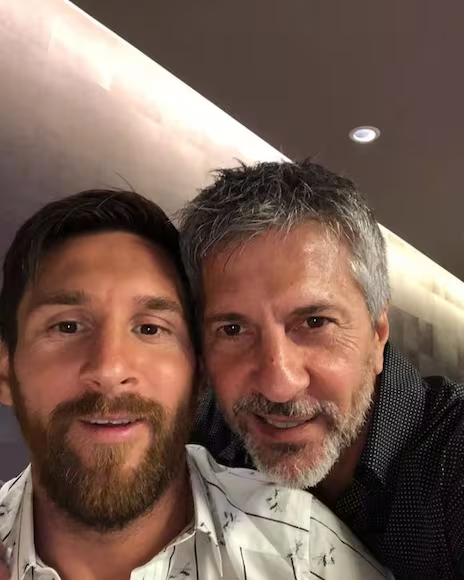
A Tribute to Jorge Messi and the Unbreakable Bond with His Son, Lionel
In the quiet hours of a Saturday morning in Rosario, the world lost a man whose name may not have always appeared in the headlines, but whose presence shaped one of the greatest stories in the history of football. Jorge Messi, father, mentor, agent, and lifelong confidant of Lionel Andrés Messi, passed away at the age of 68 after a long and private battle with illness. He leaves behind not only a family, but a legacy that lives in every goal, every trophy, and every quiet moment of determination that defined his son’s extraordinary career. Jorge was never just “Messi’s dad.”
He was the first person who truly saw the magic. In the dusty streets and small pitches of Rosario, long before the world knew the name Lionel Messi, Jorge recognized something rare in his slight, determined little boy. He was the one who drove him to training, who sat through endless matches, who believed when others saw only a child who needed growth hormones to continue playing.
When opportunity called from Barcelona, it was Jorge who made the leap across the ocean with his young son, leaving behind the familiar life in Argentina so that a dream could take root in a foreign land. That decision quiet, courageous, and complete changed football forever. For more than two decades, Jorge stood beside Lionel not only as a father but as his agent, his negotiator, his fiercest protector, and his most trusted voice. In an industry full of noise and shifting alliances, the father-son partnership remained constant. Advisors came and went.
Contracts grew more complex. Fame became overwhelming. Through it all, Jorge remained the steady hand. Lionel has said more than once that after every match, no matter how great the stage, he still looked for his father’s opinion. “I always needed my dad’s approval, ever since I was a kid.” Those words reveal the depth of a relationship built on more than success, it was built on trust, honesty, and an unbreakable emotional core.Jorge was there for the triumphs that will be remembered forever: the record Ballon d’Or wins, the Champions League nights, the Copa América, and the ultimate glory of the 2022 World Cup in Qatar, where he watched his son finally lift the trophy that had long been missing. He was also there in the difficult moments, the near-misses, the injuries, the weight of a nation’s expectations. When the world celebrated Lionel, Jorge was the quiet figure who had carried the early burdens so his son could fly. And when the world demanded more, Jorge was the one who helped shield his family and keep the focus on the game and the values that mattered. In recent months, as Jorge faced his illness, the Messi family asked for privacy and dignity. Even then, the public caught glimpses of the love that defined them. Lionel traveled home after the 2026 World Cup to spend precious time with his father.
The tears we saw on the pitch earlier in the tournament were not only about football, they were the tears of a son carrying the weight of love and worry. That same love now turns to grief. To the Messi family to Celia, to Rodrigo, Matías, María Sol, to Antonela, to the grandchildren, and especially to Lionel, the world sends its deepest condolences.
No words can ease the absence of a father. But know that Jorge’s influence will never leave the game. Every time Lionel steps onto the pitch, every time a young boy in Rosario or anywhere else dares to dream, a piece of Jorge Messi’s quiet strength walks with them.Jorge Messi did not simply raise a footballer. He helped raise a legend while remaining, at heart, a father who never stopped believing in his son. In an era of superstars and spectacle, their story remains refreshingly human: a father and son who faced the world together, who trusted each other completely, and who turned an ordinary family dream into something the entire planet could share.
Rest in peace, Jorge. Thank you for everything you gave to Lionel, and through him, to all of us who love the beautiful game. Your work is done. Your legacy is secure. And your son’s love for you will continue to shine in every touch of the ball.
Fuerza, Leo. Your dad is proud. We all are.
#Messi
She Chose to Walk Down the Aisle Bald—And It Became the Most Beautiful Moment of Her Life
For many brides, a wedding day is filled with months of preparation. Every detail is carefully planned, from the venue and flowers to the dress, hairstyle, and makeup. It is a day many people dream about for years—a celebration of love, family, and a new beginning.
For Dani Greenwood, however, the most important decision she made had nothing to do with decorations or fashion. It was a choice that reflected years of personal growth, resilience, and learning to embrace herself exactly as she is.
Dani has lived with alopecia universalis since childhood, a rare autoimmune condition that causes complete hair loss across the body. Losing her hair at such a young age brought challenges that many people never have to face. Throughout her childhood and teenage years, she often struggled with confidence, worrying about how others would react to her appearance.
Like many people living with alopecia, Dani turned to wigs. They became more than just a way to cover her head—they allowed her to express different sides of her personality. She enjoyed experimenting with various hairstyles and colors, and the wigs gave her confidence in situations where she felt self-conscious. They helped her navigate a world where hair is often closely linked to traditional ideas of beauty.
Even so, there were times when Dani wondered if people were seeing the real her or simply the version she presented while wearing a wig. Deep down, she hoped someone would one day love and accept her exactly as she was, without needing to hide any part of herself.
That hope became a reality when she met Jack Willis in 2018.
Unlike many first impressions, their relationship was built on openness and honesty from the beginning. Early in their relationship, Jack saw Dani without a wig and without makeup. Although Dani may have felt vulnerable in that moment, Jack's reaction gave her reassurance. He accepted her naturally and saw beyond her appearance.
To him, Dani was never defined by alopecia. He saw a caring, funny, compassionate, and confident woman whose personality mattered far more than whether she had hair.
That acceptance became a turning point in Dani's life. It strengthened her confidence and helped her realize she no longer needed to hide her condition to feel beautiful or worthy of love. She began embracing alopecia as simply one part of who she was rather than something that defined her.
As their relationship continued to grow, so did her confidence.
Eventually, Jack proposed, and the couple began planning their dream wedding in Greece. While choosing the venue, flowers, and dress brought excitement, Dani also faced a deeply personal decision that many brides never have to consider.
Should she wear a wig on her wedding day, or should she walk down the aisle completely bald?
It wasn't a simple choice. Weddings are among the most photographed days in a person's life, and society often places enormous expectations on how a bride should look. Bridal magazines, movies, and advertisements typically feature flowing hairstyles, elegant veils, and glamorous beauty standards.
For a moment, Dani considered following those expectations.
But then she asked herself an important question: if this day was meant to celebrate love and authenticity, why shouldn't she appear exactly as she truly was?
After giving it careful thought, Dani made a decision that felt right for her. She chose to walk down the aisle without wearing a wig.
It wasn't meant to challenge traditions or make headlines.
It was simply her way of embracing herself completely.
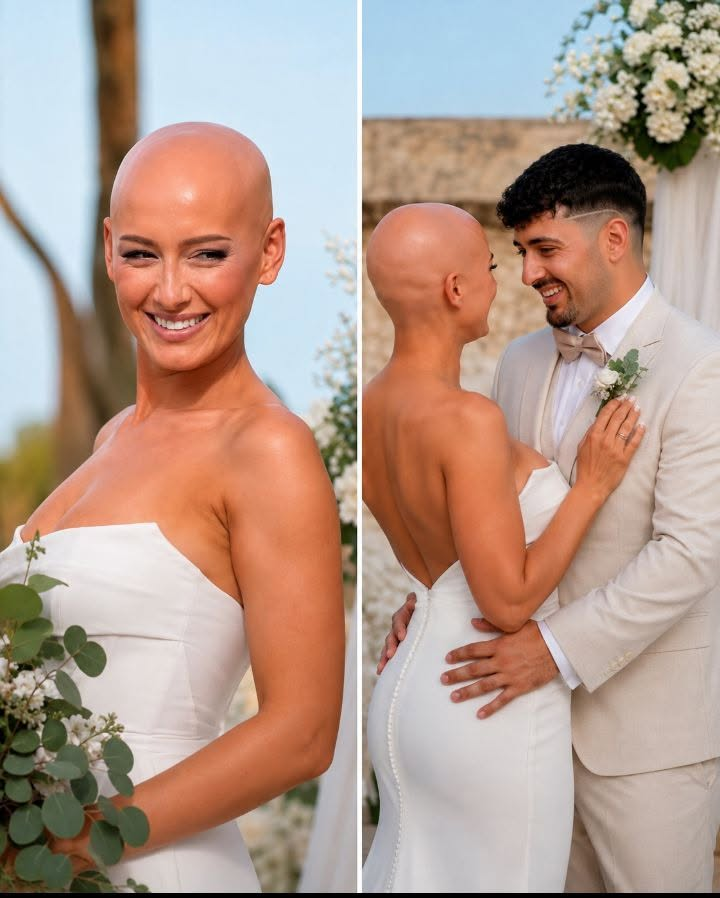
When the wedding day arrived, Dani wore her beautiful white gown with confidence. Her head remained uncovered as she walked toward Jack, surrounded by family, close friends, and the breathtaking scenery of Greece.
Instead of feeling nervous, she felt free.
Standing before the man who loved her exactly as she was, Dani realized she no longer needed to hide any part of herself. In that moment, she wasn't thinking about beauty standards or other people's opinions. She was focused on the promise she and Jack were making to one another.
The wedding photographs captured much more than a ceremony. They reflected genuine happiness, trust, and unconditional love. Every smile, every glance, and every embrace told the story of two people who valued authenticity above appearances.
For Dani, walking down the aisle without a wig represented years of healing and personal growth. It symbolized letting go of fear, embracing vulnerability, and believing that real beauty comes from confidence and self-acceptance rather than physical appearance.
After their wedding, Dani's story resonated with countless people around the world. Many individuals living with alopecia, cancer-related hair loss, or other visible differences found comfort and inspiration in her experience. Others saw her journey as a reminder that beauty isn't limited to one appearance or one definition.
Dani has also made it clear that her decision wasn't a rejection of wigs. She continues to appreciate the role wigs played in her life and recognizes that they gave her confidence and allowed her to express herself for many years.
Her wedding choice was simply personal.
It reflected where she was in her own journey of self-acceptance.
Her experience reminds us that everyone's relationship with appearance is different. Some people feel most confident wearing wigs, makeup, or other forms of self-expression. Others feel happiest embracing their natural appearance. Neither choice is right or wrong. What matters most is that the decision comes from personal confidence rather than fear or social pressure.
Today, Dani and Jack's story continue to inspire conversations about beauty, acceptance, and unconditional love. Their relationship demonstrates that genuine love isn't based on outward appearance but on honesty, kindness, trust, and mutual respect.
Their wedding wasn't memorable because the bride chose not to wear a wig.
It was memorable because it celebrated something far more meaningful—the freedom to be completely yourself in front of the person who loves you most.
In the end, Dani didn't need hair to feel like a beautiful bride.
She only needed the confidence to embrace her true self—and the love of someone who always saw her beauty exactly as she was.
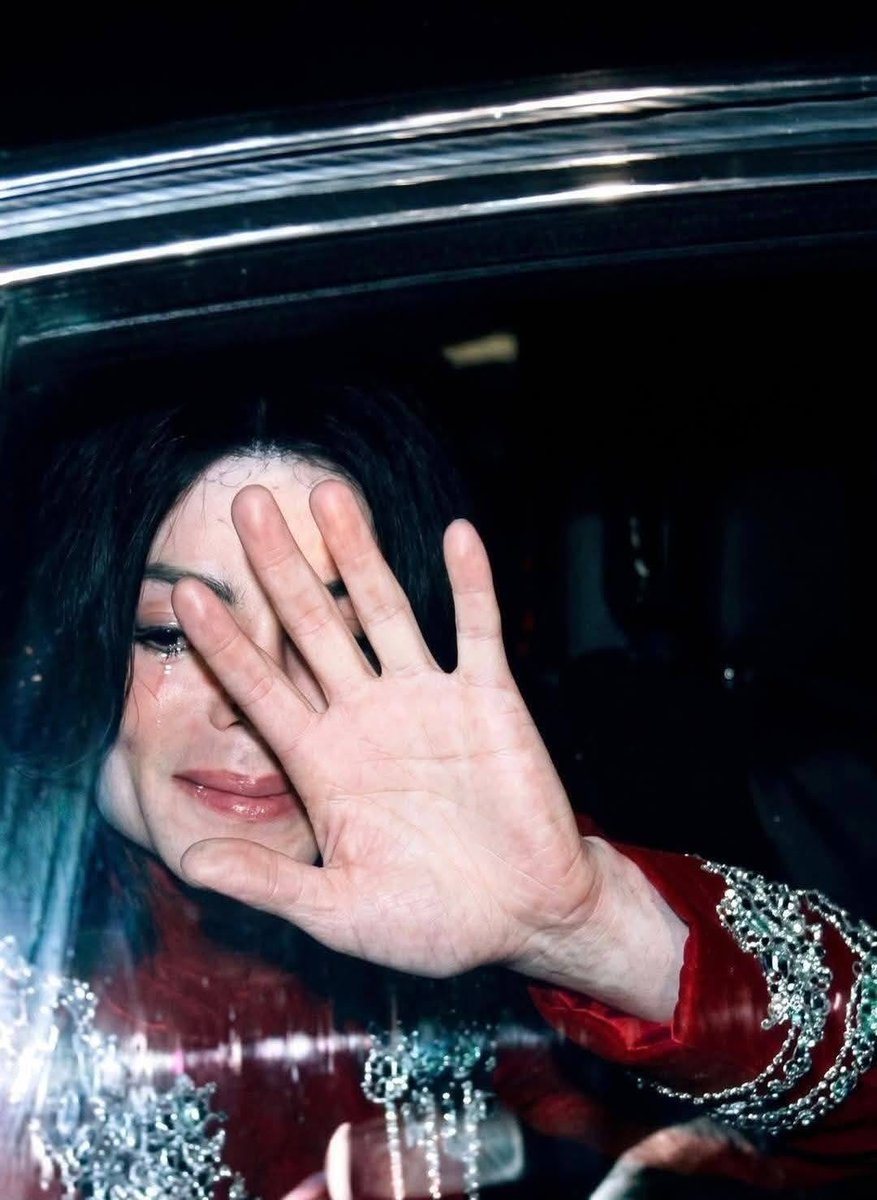
This photo shows Michael Jackson in a car at the 2002 MTV Video Music Awards, wearing an embellished red jacket and covering his face with his hand. The photo was taken by a paparazzi through the car window as the artist was returning from the awards ceremony.
Jackson was visibly shaken and shocked by the event, during which he misinterpreted the award as the Artist of the Millennium award, which led to media ridicule.
He is wearing the red, embellished military-style shirt he wore on stage that evening 📷📷
Remembering Micheal Jackson