Received several pings today from the ecosystem to understand this better and what it means for Indian semiconductor startups. Here is a simplistic thread on the AI hardware stack, @C2iSemi and India's role within it.
In the 1971 war, India lost a warship at sea. Its sonar had not been able to find the submarine that sank it.
India then tried to buy better sonar. The countries that made it would not sell.
So the Navy told one of its own officers to build it himself.
His name is Arogyaswami Paulraj.
He was born in Pollachi, a small town in Tamil Nadu. He joined the Indian Navy as a teenager and stayed for about 30 years.
The Navy spotted him early and sent him to the Indian Institute of Technology in Delhi for a master's degree. His professors told the Navy not to stop there. He finished a doctorate.
After the 1971 war he was given the sonar problem.
He had no foreign help, no foreign equipment and no permission to buy either. His team built the system from the ground up. It was called APSOH. It went into the fleet in 1983.
It was not a compromise. It is still considered one of the best sonars in the world.
He went on to set up 3 national research laboratories in India, in computing, artificial intelligence and military electronics. India gave him the Padma Bhushan.
Then he left the Navy and joined Stanford University in America as a postdoctoral researcher, starting again at the bottom.
While running wireless experiments there, he noticed something odd in his results about how signals could be separated from one another. He followed it.
What came out of it is called MIMO. In simple terms, instead of one antenna sending and one antenna receiving, you use several at both ends at once, and the signals stop fighting each other and start carrying far more data.
That is the foundation of every WiFi connection and every 4G and 5G phone on the planet.
The chairman of the Marconi Society put it plainly. Every WiFi router and 4G phone today uses MIMO technology pioneered by him.
He founded a company on it, which Intel bought. He founded another, which Broadcom bought. He holds around 80 patents.
He has the Marconi Prize, the IEEE Alexander Graham Bell Medal, the Faraday Medal, and a place in the United States National Inventors Hall of Fame.
The internet in your house is running on his idea right now, and almost nobody in this country knows his name.
looking to onboard someone who’s a solid product marketing hire and has dabbled with AI native / deeptech products
shoot your shot in the comments or tag someone who fits the bill
thinking of hosting 10 people in BLR next week who are working on questions around AGI, AI x science, and scientific discovery.
want to keep the room small enough that everyone can actually go deep.
if you're researching or building in this space, DM me a little about what you’re working on.
Most hiring problems aren't hiring problems, they're empathy problems.
Nearly every stuck search, ghosted candidate, or bad hire traces back to one side skipping the basic work of thinking from the other's chair.
🧵
on this note - we are hiring for the following roles:
1. Hydrodynamics engineer: everything multi-phase flow
2. Composites & Structures Engineer
3. Aerodynamics engineer / openfoam lover
4. Admin & Finance
I’m travelling to Bangalore from Saturday to Monday
Looking to meet folks who’ve either
1. Built something cool in robotics and/or automation
2. Has semiconductor process engineering experience
I’d love to discuss a new project I’m ideating on
DM me!
Fully support this important proposal from @demishassabis. The time for us all to act is now.
"...we must use this precious window before AGI arrives to shape this technology for the benefit of all humanity."
The hardest part of investing is doing nothing.
A lot of people just can't stand inaction.
Nicolai Tangen, who runs the world's largest sovereign wealth funds ($2 trillion), has a rule he calls the "inertia analysis."
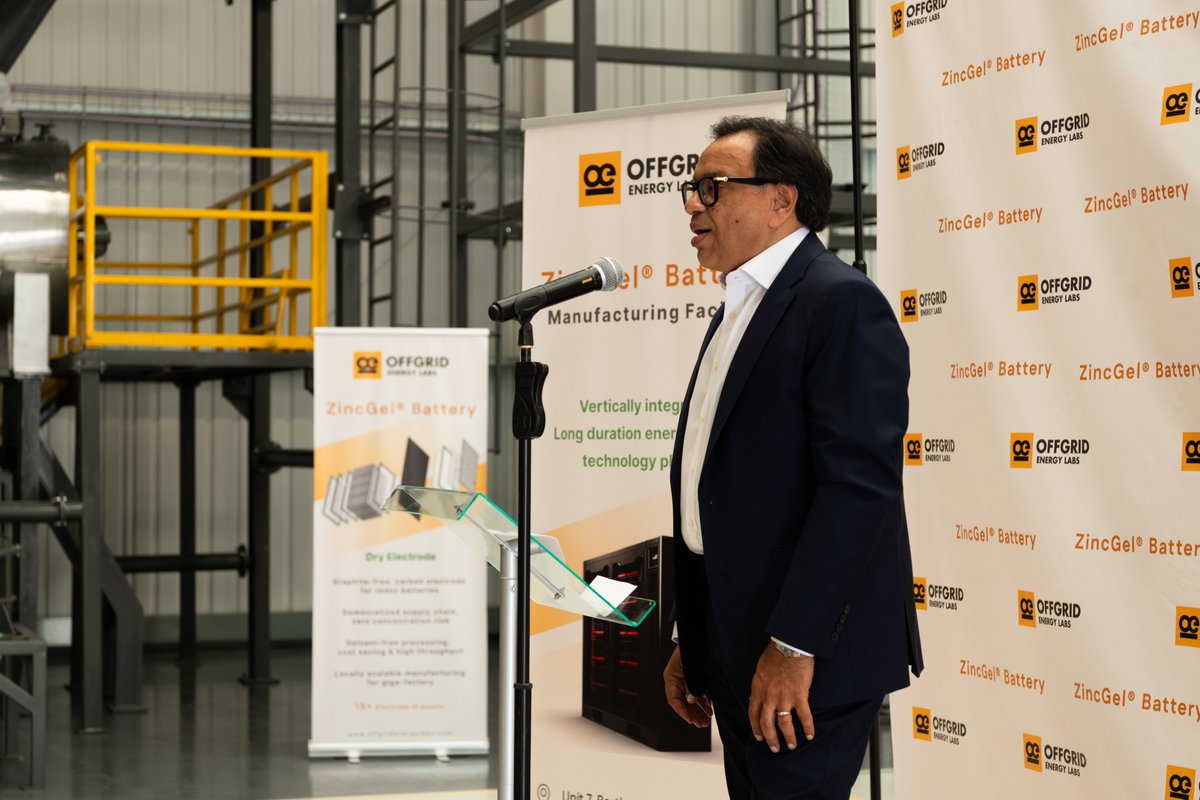
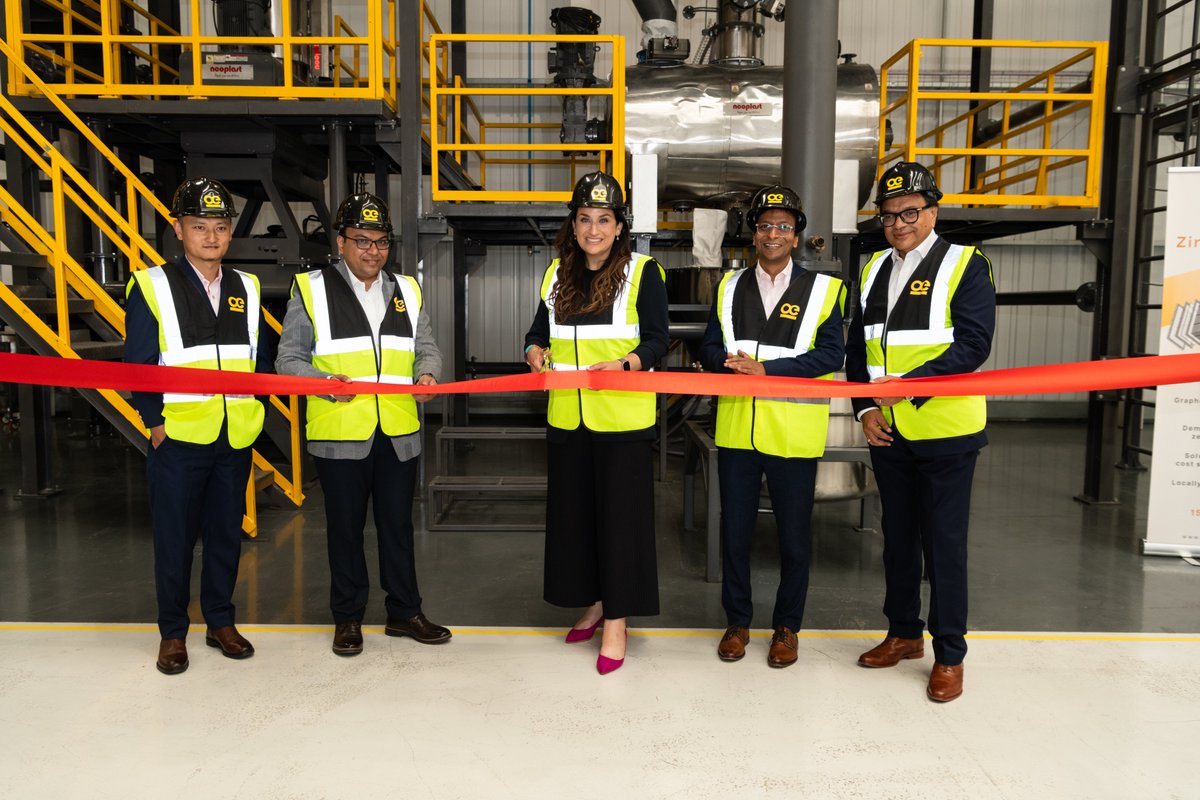
Some moments from a landmark day for Offgrid Energy Labs. The launch of our 10 MWh ZincGel® pilot manufacturing facility in Hook, Hampshire marks an important step in our journey to build safer, resilient and scalable energy storage solutions.
Thank you to everyone who joined us.