SmartBallot : Towards credible and Transparent Ballot
I have consistently believed that technology, combined with the creativity and resourcefulness of young Nigerians, can help reinforce our democracy and advance free, fair, and credible elections.
I am pleased to endorse SmartBallot (https://t.co/YgbAq2cLxE), a platform developed to facilitate grassroots mobilization, civic engagement, and election monitoring.
I urge our supporters and NDC candidates to register on SmartBallot and examine how its tools can assist them in organizing their communities, coordinating voters and polling unit agents, expanding grassroots engagement, and supporting transparent election monitoring.
Through the effective use of technology and collective action, we can reinforce our democratic institutions and help ensure that every vote is counted.
Credible elections require preparation, active participation, and peaceful vigilance. Let us make full use of every available resource to create a more organized, engaged, and empowered electorate.
A New Nigeria is Possible. -PO
Toxic and Bitter Politics.
Do you know that APC instructed her governors to sound a note of warning through their various commissioners of information in their respective states to instruct state owned Radio stations, and private Radio stations operating in their states not to accept or air any Peter Obi or NDC campaign jingles.
Failure to adhere, operational licenses should be revoked.
They said that Peter Obi's name or his plans towards a better Nigeria must not be allowed into the ears of the local people who depend more on radio for information.
It was an intentional strategic plan from the APC leadership.
Meanwhile Tinubu and the APC are enjoying unlimited Radio airtime campaign jingles 24/7 in almost all the 36 states in Nigeria, including the FCT.
Nigerians who listen to local Radio stations can confirm that it's only Tinubu's name and campaign jingles that is dominating all government and privately owned Radio stations in Nigeria today.
NIGERIANS, GO AND VERIFY (7)
LIFTING THE VULNERABLE : ANAMBRA’S BLUEPRINT FOR POVERTY ALLEVIATION AND SUSTAINABLE EMPOWERMENT (2006–2014)
Economic growth that does not translate into improved living conditions for ordinary citizens is incomplete. This is one of our fundamental concerns with President Bola Ahmed Tinubu's government. Development must ultimately be measured by its impact on human lives, particularly those of the poor and vulnerable. This was underpinned by the Anambra Integrated Development Strategy (ANIDS). We believed that infrastructure, education, healthcare, agriculture, and social protection must reinforce one another. Poverty was not merely a shortage of money; it was also a lack of access to opportunities, productive resources, and the basic conditions necessary for a decent life.
Our poverty alleviation strategy, therefore, went beyond temporary handouts. It focused on restoring dignity, creating economic opportunities, and equipping vulnerable citizens with the means to become self-reliant.
Our approach attracted recognition beyond Anambra. In May 2010, Magnus Kpakol, then National Coordinator of the National Poverty Eradication Programme (NAPEP), commended our commitment to poverty reduction, declaring: “We are prepared to support you in the excellent work you are doing in Anambra State.”
1. POVERTY MAPPING: KNOWING WHERE POVERTY LIVES
We recognised that poverty could not be effectively addressed without knowing where it was concentrated and what caused it. We, therefore, undertook a poverty-mapping exercise to identify the most deprived local government areas and communities.
The exercise revealed that some of our poorest communities were also important food-producing areas. Their challenges included poor access to markets, agricultural inputs, electricity, water, and other economic opportunities.
Areas including Anambra West, Orumba South, Awka North, and Ogbaru required particular attention. The findings informed our development priorities, enabling us to direct roads, agricultural support, and social interventions toward neglected communities.
2. EMPOWERING WOMEN, WIDOWS, AND COOPERATIVES
We recognised that rural women, widows, and indigent households bore a disproportionate burden of poverty. Across the 21 local government areas, we provided financial assistance and productive support to thousands of beneficiaries.
Our administration provided financial assistance to support the establishment and expansion of small businesses and farming activities. We also introduced revolving loan schemes to promote enterprise development, economic self-reliance, and improved livelihoods.
We distributed productive equipment, including sewing machines, generators, ovens, cookers, hair dryers, shoe-making machines, and welding equipment. The objective was to help beneficiaries establish sustainable livelihoods rather than remain dependent on government assistance.
We also promoted access to microcredit and cooperative financing to enable small entrepreneurs to expand their businesses, improve their incomes, and create employment.
Our philosophy was simple: rather than merely giving people money to survive today, the government should help them acquire the means to earn a living tomorrow.
3. AGRICULTURE AND FADAMA: MAKING RURAL COMMUNITIES PRODUCTIVE
Agriculture was central to our poverty-reduction strategy because many rural households depended on farming.
Through partnerships with the Federal Government, the World Bank, and other development partners, particularly under the FADAMA programme, we supported farmers with finance and productive assets.
In November 2009, our administration disbursed millions to FADAMA Community Associations across the state. By October 2010, the National FADAMA office was commending Anambra’s commitment. Its National Project Coordinator, Buka Tijjani, represented by Charles Ugwuona, described Anambra as the leading state in the programme.
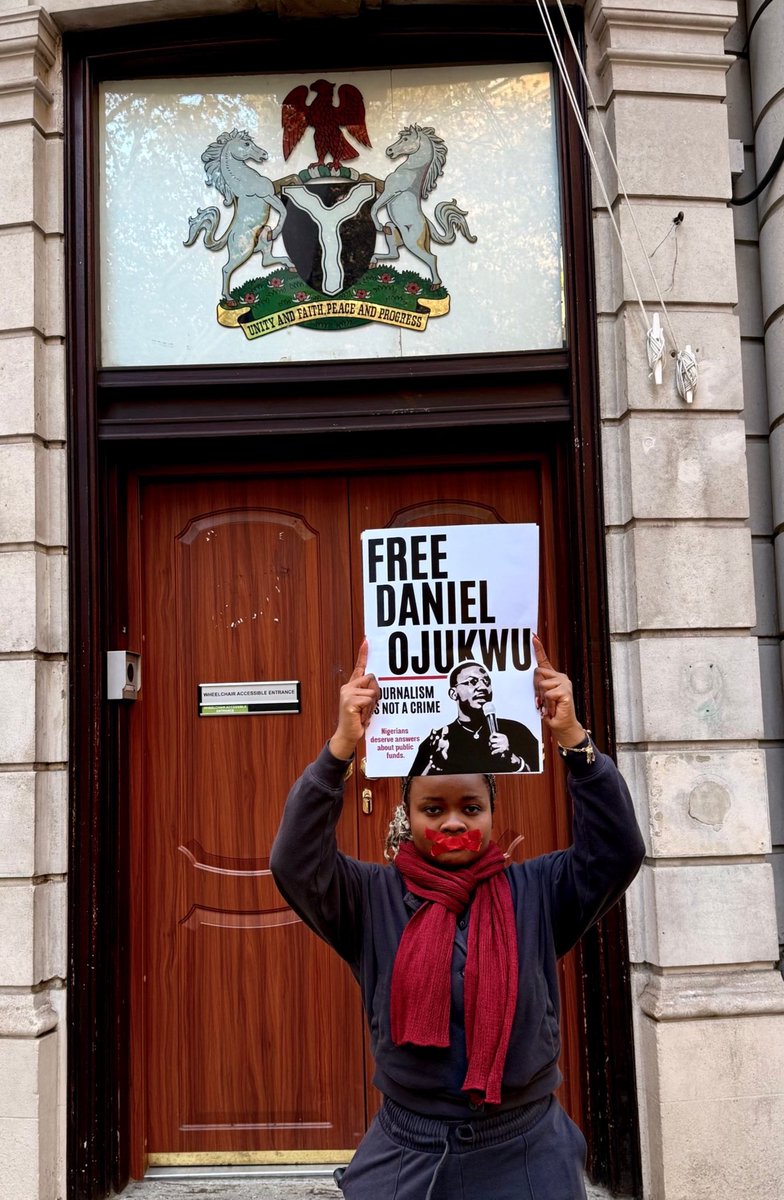
Daniel, I hope someone tells you that today, thousands of miles away from home, some people stood outside the Nigerian High Commission and called for your freedom.
You deserve justice, and no one should have to face injustice alone.
Even if the streets become empty, some of us will remain. We will do this again. And again. Until you are free. #FreeDanielOjukwu #Journalismisnotacrime
International Engagements to Strengthen Nigeria’s Democracy Continue.
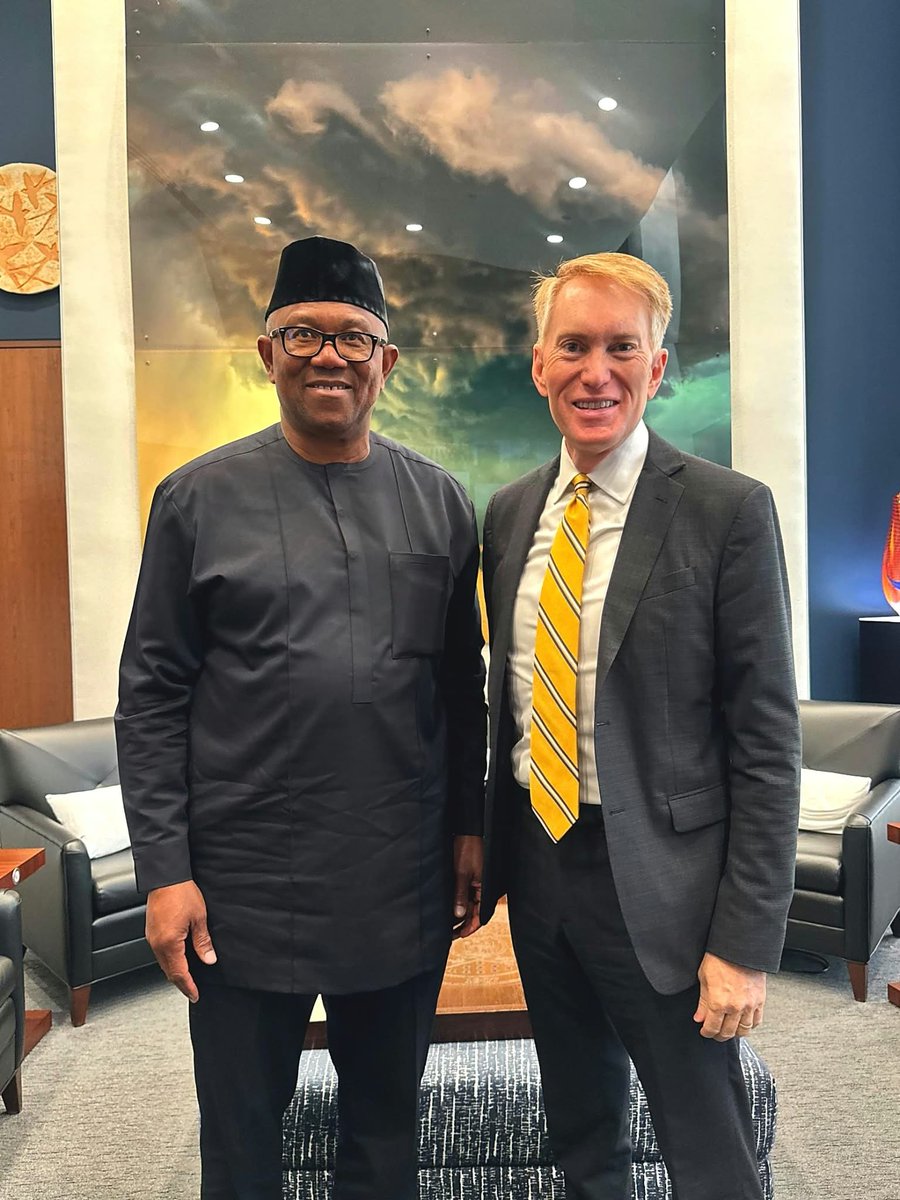
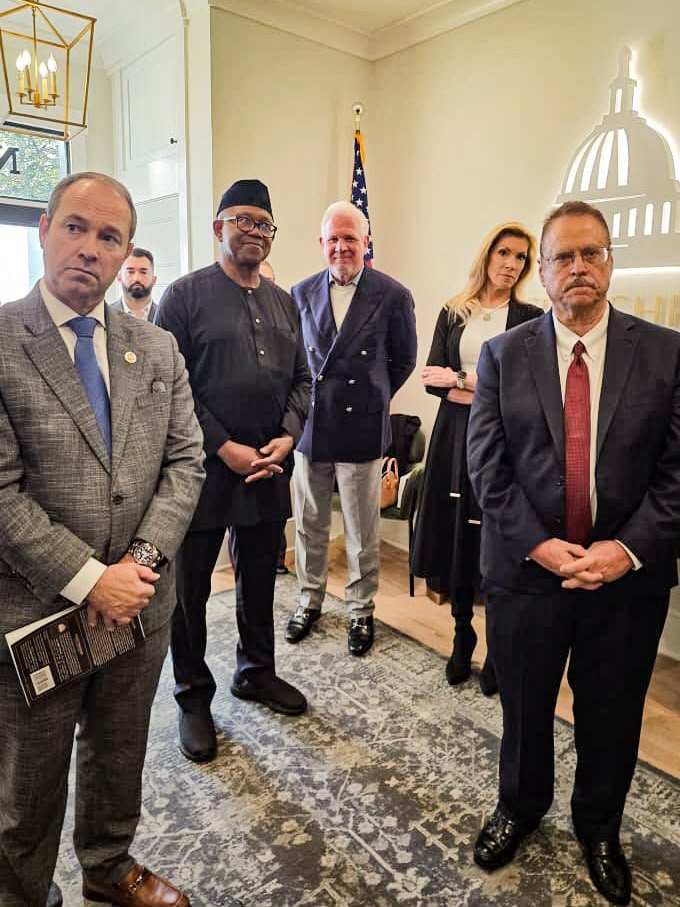
Yesterday, November 17, the second day of our engagements on Capitol Hill in Washington, D.C., we visited the United States Senate and met with some senators, including Senator James Lankford, who kindly invited me over to his office.
I am deeply grateful to Senator Lankford for his warm reception, generous time, and meaningful exchange of views on strengthening democratic institutions, fostering peace, and promoting our shared values.
Our conversations underscored the importance of international collaboration, effective governance, credible democratic processes, and the security and well-being of all Nigerians.
These engagements offer a further opportunity to deepen relationships and advance our shared vision of a peaceful, united, and prosperous Nigeria.
Our commitment to building a nation that serves every Nigerian remains steadfast.
A New Nigeria Is POssible! -PO
NIGERIANS, GO AND VERIFY (3)
Building the Future Through Education
Peter Obi
In the first two instalments of this series, I explained how we approached the task of building strong institutions and laying a solid foundation for the development of Anambra State. One of the most important institutions we invested in was education.
For me, education was not a political game or a convenient political promise. Even before I ventured into politics, I had always regarded it as the foundation of meaningful development and the most enduring investment any government can make in its people. I believe that the future of any society depends largely on the quality of its educational institutions, teachers, learning environment, and opportunities available to its young people.
This conviction informed our decision to invest across the entire educational spectrum, from primary schools to universities, technical institutions, and adult education.
Basic and Secondary Education
One of our first major decisions was to return mission and privately owned primary and secondary schools to their original proprietors while retaining government support. We also provided billions of naira to assist in rehabilitating the returned schools, restoring the partnership between government and religious institutions that had historically contributed to educational excellence.
This policy attracted international attention. Professor Paul Collier, the Oxford economist and World Bank consultant, led a World Bank-commissioned study of Anambra’s educational transformation. His team examined our decision to return schools to their original missionary owners while retaining government responsibility for funding teachers’ salaries and supporting infrastructure. The team described the partnership model as a revolution in public service delivery and recommended it as a model that could be replicated by other Nigerian states and developing countries. We believed then, as we do now, that government does not necessarily have to own every institution to discharge its responsibility effectively. What matters is ensuring that every child has access to quality education.
For those who claim that we built no schools, I invite them to verify our records. We constructed five-classroom blocks in virtually all of the 177 communities in Anambra State, one of the most extensive community-based school infrastructure programmes undertaken by any state government. The town union chairmen and community leaders of that period can attest to this.
We also renovated hundreds of dilapidated schools, including some where trees had literally grown through abandoned buildings. Comprehensive Secondary School, Onitsha, and Oraukwu Grammar School are examples.
Beyond infrastructure, we distributed approximately 40,000 computers to schools, including more than 22,500 HP laptops. We equipped secondary schools with Microsoft Academies and connected schools across the state to the internet. We supplied generators, established and stocked libraries, revived school sporting activities, and installed boreholes in over 300 schools, including all girls’ schools. We also provided funding to support sporting activities in all our secondary schools.
These technology investments attracted remarkable international recognition. Mr Fabrice Campoy, Managing Director of the Personal Systems Group at HP Inc., described our procurement and distribution of over 22,500 HP laptops as the biggest project of its kind in the Middle East and Africa. Similarly, Mr Ken Spann, then Country Manager and Head of Microsoft Nigeria, described the establishment of Microsoft Academies in more than 500 Anambra secondary schools as the most extensive deployment of its kind in Africa at the time.
WASHINGTON, DC : PRESENTING NIGERIA’S DEVELOPMENT AND DEMOCRATIC FUTURE ON THE GLOBAL STAGE.
Yesterday, Monday, November 16, I arrived in Washington, DC, for a series of significant meetings and engagements with congressional leaders from both the U.S. House of Representatives and the Senate, as well as other influential American figures. These discussions focused on vital matters affecting Nigeria’s development, the well-being of our people, and the future of our democracy.
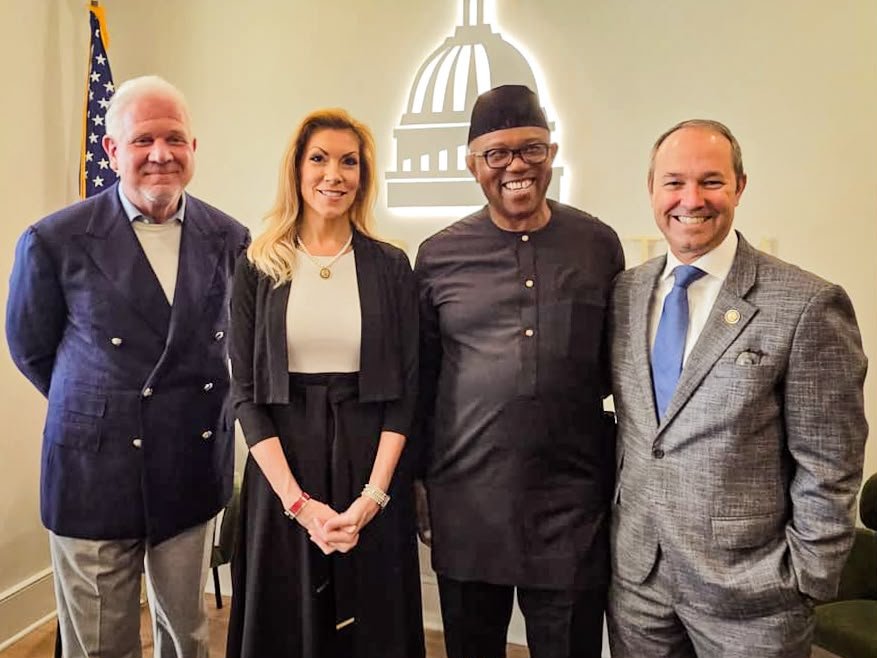
I began the day with a substantive interview with renowned American television commentator Glenn Beck. Our conversation addressed Nigeria’s challenges, the pressing need for accountable leadership, the responsible management of our vast human and natural resources, and the opportunities to establish Nigeria among the world’s leading nations.
I also met with prominent American leaders, including Congressman Marlin Stutzman, Congresswoman Beth Van Duyne, Congressman Todd Tiahrt, Suzanne Bock Grisham, retired U.S. Army Colonel Albert V. Short, and other esteemed stakeholders.
One of the day’s principal highlights was my address on Capitol Hill, during which I underscored the urgent importance of international cooperation and support for Nigeria’s advancement, particularly in the areas of national unity, security, economic prosperity, and the welfare of our citizens.
Our conversations also addressed the protection of Nigeria’s emerging democracy and the strengthening of democratic institutions to ensure elections are free, fair, transparent, and credible, accurately reflecting the will of the Nigerian people.
Nigeria has immense potential to emerge as a leading nation within the global community. What is urgently required is accountable leadership, responsible stewardship of our resources, resilient institutions, and an authentic commitment to the security, unity, and well-being of every Nigerian.
Throughout these engagements, my message remained unequivocal: Nigerians must determine Nigeria’s future. Every vote must be counted, the rights of every citizen must be safeguarded, and the people’s will must consistently prevail.
I remain encouraged by these engagements and firmly committed to working with Nigerians at home and in the diaspora, alongside our international partners, to build a peaceful, secure, united, and prosperous Nigeria.
Our journey continues. Our determination remains steadfast.
A New Nigeria is POssible! -PO
Peter Obi Storms Washington DC!
24 Hours Meetings on Capitol Hill, at the White House, and with U.S. Congressional leaders deliver one powerful demand: free, fair, and credible elections for Nigeria.
#NigeriaWillBeOK
NIGERIANS, GO AND VERIFY (2)
Building the Institutions of the State
Peter Obi
In Series 1, I explained the philosophy that guided our administration in Anambra State: governance as a public trust, anchored on character, competence, capacity, and compassion. I also introduced the Anambra Integrated Development Strategy (ANIDS), our comprehensive framework for achieving balanced and sustainable development across all sectors.
But a development vision, however noble, cannot succeed without strong institutions to drive it. Before the government could effectively deliver on its promises in education, healthcare, infrastructure, security, and other sectors, we had to first restore the machinery of government itself. We could not build a prosperous state on a cracked and unstable foundation.
This was why one of our foremost priorities under ANIDS was to rebuild, strengthen, and reposition the institutions of government. When I assumed office, the physical and administrative architecture of governance was in a deplorable condition. Our task was not simply to construct buildings but to restore the institutions, systems, and structures through which government could function effectively.
We therefore began systematically rebuilding the infrastructure of governance across the executive, legislature, judiciary, civil service, and local government system.
Restoring the Seat of Government
The Government House in Awka, the state capital, had been vandalised and burnt by reactionary forces in 2004. We therefore had to rebuild, re-equip, and furnish it, restoring its dignity and functionality as the seat of executive government.
In the same vein, we rehabilitated the Governor’s Lodge in Amawbia and constructed a new Governor’s Lodge in Onitsha. These investments were intended not merely to provide accommodation but to strengthen executive presence and facilitate effective governance across the state’s major administrative and commercial centres.
Strengthening the Legislature and Judiciary
We rehabilitated the Anambra State House of Assembly Complex in Awka, providing our lawmakers with a more conducive and decorous environment in which to discharge their constitutional responsibilities. We also provided legislators with vehicles to facilitate the effective performance of their legislative duties.
We recognised that a functioning democracy requires strong institutions, including an effective legislature and an independent judiciary, each operating within its constitutional mandate.
In strengthening the judiciary, we provided brand-new vehicles to High Court judges. This was the first time such provision had been made for them in the history of the state. We also provided vehicles to magistrates for the first time since the creation of Anambra State.
These interventions were intended to strengthen the administration of justice, improve mobility, and enable judicial officers to discharge their responsibilities more effectively.
Rebuilding the Civil Service: The Chief Jerome Udoji State Secretariat Complex
Before our administration, many Ministries, Departments, and Agencies (MDAs) operated from scattered rented apartments, while civil servants lacked a centralised and decent working environment. This untidy arrangement undermined coordination, efficiency, and the dignity of public service.
We addressed this situation by constructing the two-phase, ultra-modern Chief Jerome Udoji State Secretariat Complex, comprising Blocks 1 and 2. The project brought the MDAs together under one roof, improved administrative coordination, and provided civil servants with a more suitable environment in which to serve the people.
The complex was named after Chief Jerome Udoji, the first indigenous Chief Secretary (the equivalent of today’s Secretary to the State Government) of the Eastern Region during the First Republic. This was also a recognition of his contribution to public administration and the civil service tradition.
Soludo’s claim of never campaigning in a church is laughable. In 2021, before becoming governor, he was at Father Ebube Mmuonso’s church shamelessly begging for votes. 😭😂😂😂
PLAN TO END OBI'S CANDIDACY BY SUBTERFUGE: AN INVITATION TO ANARCHY
Ahead of the 2027 general elections, Nigerians are angry, the polity is overheated and the country is already on a tinder box due to APC's bad governance. This troubling situation must not be further exercabated. A stitch in time, save nine.
We have credible intelligence that some hawks within APC's corridors of power are scheming to use the judiciary to truncate Obi/Kwankwaso candidacy and that of most NDC candidates. Essentially, the mission is to use the technicality of a judicial ruling, perhaps, using even the apex court to stop Peter Obi and Kwankwaso and all NDC candidates from participating in the 2027 elections.
In the National Interest, this MUST NOT happen under any guise.
Our intel indicate that the recent judgment against the leadership of opposition ADC and Atiku Abubakar, is a precursor to a larger, carefully orchestrated plot. The plan is to have Atiku Abubakar restored to the race by the Court of Appeal, only for the Supreme Court to deliver a post-election judgment nullifying his candidature should he win.
Nigerians are already witnesses to the the evolving practice of reassignment of politically sensitive matters involving opposition parties to a recurring group of judges in Abuja. Taking that practice an inch further will likely have dire consequences.
In Peter Obi's case, we have clear indications that jittery Southern governors are now uncertain about delivering their promised landslide votes to President Tinubu, given recent visible pushback from the national electorate against the APC. As things stand, the governors feel that their collective plan to guarantee at the minimum 25% of the votes to the president in the South-East and most parts of the South-South and South West is unraveling fast and will be impossible to achieve with Peter Obi on the ballot.
Consequently, the plot is to deploy preemptive measures that would techinically/judicially exclude Peter Obi from the race, create voter apathy across the South and give the governors a free hand to execute their sinister agenda.
Those agents of destabilisation plotting this dangerous assault on our democracy are hereby advised to perish the thought of testing the resolve of the Nigerian people. They must not trigger anarchy in Nigeria. APC aparrachiks who boast of having 31 governors in their corner should have the courage to face the opposition candidates in a free, fair, and credible elections, rather than resort to judicial manipulation and political subterfuge.
Nigerians are watching, and watching very keenly! And the world is also watching Nigeria.
In the fullness of time, Nigeria will be OK.
Our aim was to create a state where public resources produced tangible public benefits, institutions existed to serve the people and development was assessed by the lives transformed rather than by the promises made. We therefore began by strengthening the institutions of government, rebuilding their ability to operate effectively and ensuring that they remained accountable to the public interest. Building on these foundations, we advanced development across multiple sectors through careful planning, responsible resource management and leadership grounded in accountability.
In Series 2, we will first consider the measures we took to restore and reinforce the institutions of the state and ensure that government served the people effectively. We will then review our initiatives and accomplishments in education and other essential sectors.
I assure Nigerians that the progress demonstrated in Anambra State was neither a one-time occurrence nor an experiment that cannot be repeated. It reflected a proven model of governance that we are ready to extend to the national level. What we accomplished in Anambra can also be accomplished in Nigeria. With capable leadership, effective planning, responsible management and accountable institutions, Nigeria, too, can work for all its citizens.
Go and verify. -PO
NIGERIANS, GO AND VERIFY (1)
Introduction: Governance as a Public Trust
Peter Obi
When I took office as Governor of Anambra State, our beloved state was at a critical juncture. Leadership had become increasingly disconnected from the people, and many of the essential institutions needed to support a modern society were weak, ineffective, or absent altogether. We understood that governance could not continue according to established habits. It needed to be reconceived as a solemn public trust founded on transparency, prudence, accountability, and demonstrable results.
Our governing philosophy rested on four principles: character, competence, capacity, and compassion. We understood that leadership was not a platform for self-promotion, political slogans, or the pursuit of personal acclaim. Its purpose was to improve the circumstances of ordinary citizens. It meant converting public resources into concrete benefits and ensuring that government’s foremost responsibility was to serve the people. Achieving this demanded more than good intentions; it required a clear vision, careful planning, and disciplined execution.
Among our earliest findings was that the state lacked a unified development plan to direct its priorities and determine how resources should be allocated. We therefore promptly created the Ministry of Economic Planning to establish the institutional foundation for deliberate, coordinated, and sustainable development. After completing the necessary groundwork and consultations, we launched the Anambra Integrated Development Strategy (ANIDS).
At that time, the Millennium Development Goals (MDGs) were being pursued worldwide across eight clearly defined priorities: eliminating extreme poverty and hunger; achieving universal primary education; advancing gender equality and empowering women; reducing child mortality; improving maternal health; combating HIV/AIDS, malaria and other diseases; promoting environmental sustainability; and fostering a global partnership for development.
We adopted ANIDS as our overarching development philosophy and strategic framework for advancing these objectives, tailoring them to the distinctive circumstances, needs and development priorities of Anambra State. Instead of viewing the MDGs as remote international benchmarks, we worked to convert their aims into practical policies, programs and measurable results that would produce tangible improvements in the lives of our people.
We also undertook a deliberate effort to redefine the state’s identity, changing its public image from ‘Home for All’ to ‘The Light of the Nation’. This was not merely a change in slogan; it reflected our resolve to restore public confidence in government, renew civic pride and show that Anambra could serve as a model of purposeful leadership and development.
The ANIDS Blueprint: A Comprehensive Framework for Development
ANIDS served as the foundation for our commitment to broad-based and balanced development. We did not accept the idea that government could focus on a single sector while leaving others behind. We recognized that education, healthcare, infrastructure, security, agriculture and capable public institutions were mutually dependent. Advancement in one area could not be sustained without commensurate progress elsewhere. Accordingly, we pursued development across every sector, guided by defined priorities, disciplined planning and prudent stewardship of public resources.
Central to this vision was the restoration of the dignity of the Anambra person. We understood that dignity could not be restored through rhetoric alone. It was evident in the condition of roads and other infrastructure, the availability of healthcare, the quality of education, the performance of public institutions and the way government treated its workers, pensioners and traditional institutions.
ATTACK ON SENATOR KWANKWASO’S CONVOY IN BICHI: I CALL FOR IMMEDIATE INVESTIGATION AND ARREST OF PERPETRATORS
I am deeply saddened by reports of the attack on the convoy of my brother and running mate, Senator Rabiu Musa Kwankwaso, and members of his entourage in Bichi Local Government Area of Kano State.
I strongly condemn this unfortunate incident. Reports indicate that several members of the entourage sustained injuries, while about seven vehicles were vandalised. This is unacceptable and must not be allowed to become part of our political culture.
Democracy is not warfare. Political differences should never be a reason to resort to violence, intimidation or the destruction of property. Every Nigerian, regardless of political affiliation, has the constitutional right to participate in the democratic process without fear of attack.
We must not allow violence to take the place of dialogue, nor intimidation to silence those who hold different political opinions. Our democracy can only grow when we respect one another, uphold the rule of law and recognise that political competition is not a battle against fellow Nigerians.
I therefore call on the Nigeria Police Force and all relevant security agencies to immediately investigate this incident, identify those responsible, including anyone found to have sponsored the attack, and ensure that they are brought to justice. No individual should be above the law, regardless of political position or influence.
I stand in solidarity with Senator Kwankwaso, the Kano State NDC leadership and everyone affected by this incident. I also wish those injured a speedy recovery.
Our commitment to building a new Nigeria remains unwavering. We believe that change must come through peaceful engagement, persuasion, ideas and the ballot, not violence.
Nigeria belongs to all of us. We may belong to different political parties, but we remain one people with a common destiny. No political ambition is worth the life of any Nigerian.
A new Nigeria is POssible. -PO
I made a website about @PeterObi. It details his entire life, his roots, offices held, source of wealth, documented donations, achievements as a governor, and more.
When they ask you what Peter Obi did as governor, send them https://t.co/MJy4SuUuXH
Retweet this to get it far!
LAGOS STATE_ : REAFFIRMING COMMITMENT TO PEACE, ELECTORAL INTEGRITY AMID POLITICAL INTIMIDATION
Yesterday, 12th November 2026, I arrived in Lagos from Abuja to attend the commendation service of my very dear elder brother, Chief Sir Okey Ezibe, KSC, which took place at Our Saviour’s Church, Tafawa Balewa Square, Lagos, as part of the activities leading to the funeral of the distinguished businessman and people-builder.
At the close of the service, I proceeded to Oregun to join our supporters and participants at the Lagos State edition of our ongoing series of town hall meetings across the country.
Earlier, I had been informed that a group of thugs had mobilised to attack participants who arrived early for the meeting. Let me reiterate that the political violence being enabled by certain political actors against our supporters is an ill wind that blows no one any good. Anarchy consumes everyone. We will remain law-abiding, even in the face of extreme provocation.
Despite the disruption and the concerns surrounding the event, we proceeded with our town hall meeting. As usual, participants raised important questions and concerns about reviving the economy, reducing the high cost of living, tackling endemic corruption, addressing insecurity, caring for vulnerable citizens, and protecting the integrity of our elections.
In my remarks, I emphasised that the first responsibility of any government is to secure the country and unite its people around a shared purpose. I also outlined our commitment to policies that will reduce the cost of living, improve the welfare of Nigerians, and aggressively invest in critical areas of development, particularly healthcare and education, while addressing poverty and the needs of vulnerable citizens.
On the forthcoming elections, I reminded participants that protecting the integrity of the electoral process is a shared responsibility. Every effort must be made to ensure that votes are properly protected, from the polling unit through ward collation to the final collation and declaration of results.
Our party, the NDC, will also fulfil the responsibility to deploy competent agents to polling units to observe and document the process.
I encouraged our people to eschew violence while remaining peaceful, vigilant, and resolute in defending their democratic rights.
I thank the organisers of the town hall meeting for their efforts. My appreciation also goes to our candidates in Lagos State for their continued dedication and to the good people of Lagos State for their participation and commitment to peaceful democratic engagement.
A new Nigeria is POssible. -PO
A NEW DIMENSION OF TOXIC POLITICS IN NIGERIA
The new dimension of toxic politics that Nigeria has developed since 2025,
I arrived at the airport at 7 a.m. this morning to board my flight to Enugu. There, I saw the Nigeria Under-17 girls' team, which had just arrived and was preparing to board its vehicle into town.
With genuine joy and enthusiasm, I asked my Protocol Officer, Jackie Wayas, to find out whether I could greet and welcome the team. I was informed that officials of the Nigerian Football Federation (NFF) had refused and had requested that I not approach them because, if I did, they would all lose their jobs.
Regrettably, this is not the first time I have been subjected to such treatment. On March 25, 2025, I was in Uyo for the World Cup qualifier. The governor warmly received me and welcomed me at the VIP stand. Following the match, other government officials went to greet the players, but I was again prevented from doing so. I was told by the officials that they would lose their jobs if I proceeded.
It is deeply troubling to witness the extent of toxic politics into which our nation has descended since 2025. Each year appears to bring further deterioration. This reflects how deeply Nigeria has been affected.
The new Nigeria we aspire to build must have no room for hostility, intimidation, or discrimination, regardless of political affiliation. It must be a Nigeria in which unity, mutual respect, and our shared humanity take precedence over political differences.
A new Nigeria is POssible. -PO