When Sigourney Weaver was sent the script of "Aliens" (1986), she had no idea that a sequel was being made for "Alien" (1979) as the studio didn't inform her. After reading the script, Weaver thought it was "Magnificent" and "The Greatest script" she had ever read. She was blown away by the humour, humanity and action. Cameron was initially afraid to meet Weaver as he feared she would be as stern and intimidating as her Ripley character. After their meeting he was relieved. He said, “She was just this wonderful person, and I was so relieved that she saw some value in the script and where I was proposing to take the character.” Cameron was open to some of the changes to the script mentioned by Weaver.
However, on the first day of the shoot, there was one hiccup. The shoot was in England and the sets were built. When Weaver arrived, she told Cameron that she was Anti-Gun advocate and she wasn't touching a gun. Cameron asked her, "Did you read the script?". She replied, "I read it. I understood there were guns in it, I just didn’t think Ripley had to pick up a gun except for a flamethrower.”
Realizing that the script would require a major rewrite if he couldn’t convince Weaver to use the machine gun, Cameron took Weaver behind the studio and had her fire off the weapon a few times. Cameron said, “I’ll never forget her blasting away with this thing. And then there was this kind of sly look over to me, like ‘This is fun.'”. Weaver said, “It just shows how addictive guns are." while noting that she felt ashamed of the pleasure she took in shooting the rounds.
("James Cameron and Sigourney Weaver on Their 40-Year Collaboration", Jim Hemphill, Indiewire, 2025)
John Wayne and Dean Martin while filming, The Sons of Katie Elder. The two had already made, Rio Bravo, and would be friends for the rest of their lives. Wayne would say he would "be a liar if I didn't tell you that I love Dean. He has been my friend for the best years of my life. He’s done for me what he’s done for millions of people all over the world because, like so many of you, I feel good every time I see him. I’m entertained by him, I laugh with him, as well as at him.”
During the filming John had his cancer scare and Dean remarked “Someone else would have laid around feeling sorry for himself for a year. But Duke, he just doesn’t know how to be sick. He’s recuperating the hard way. Me, when people see me, they sometimes say, ‘Oh, there goes Perry Como.’ But there’s only one John Wayne, and nobody makes any mistakes about that.”
She was 19 when she told the record label: release my ghost song or I walk. They thought she was bluffing. She wasn’t.
London, 1977.
Kate Bush sat across from executives at EMI Records—one of the most powerful music companies in the world. A teenager, newly signed, unknown, with no real leverage. Except for one thing: she knew exactly who she was.
The executives were uneasy. Kate had written a song they couldn’t understand. “Wuthering Heights,” inspired by Emily Brontë’s gothic novel about obsessive, consuming love. Sung from the ghostly voice of Catherine Earnshaw, longing to reunite with Heathcliff.
Her voice climbed into an operatic soprano range, unlike anything on radio. No guitars driving it, no disco rhythm, no familiar pop formula. Just something haunting, theatrical, and strange.
EMI wanted to hide it. Too unusual. Too high-pitched. Too literary. They had a safer single in mind—something predictable, something easier to sell.
Kate listened.
Then she said: “If you don’t release ‘Wuthering Heights’ as the single, I won’t release the album.”
The room went silent.
A nineteen-year-old girl threatening a major label.
That wasn’t how the industry worked in 1977. Female artists followed direction, trusted executives, adjusted their vision
Kate Bush refused.
EMI realized she meant it.
On January 20, 1978, “Wuthering Heights” was released.
Radio hosts didn’t know what to make of it. Listeners had never heard anything like it—a ghost singing across the moors, paired with a barefoot figure in a flowing red dress moving with eerie grace.
Critics were divided. Some dismissed it, others saw something new.
But the audience responded.
The song rose quickly through the UK charts.
By March, it reached No. 1—and stayed there for four weeks.
Kate Bush, at 19, became the first British female artist to top the charts with a song she wrote herself.
Not manufactured. Not assigned. Entirely hers.
She didn’t follow the system—she challenged it.
And that decision, made in a quiet room at nineteen, echoed far beyond that moment.
Because sometimes, the risk isn’t in being different—it’s in refusing to be anything else.
Roger Kumble on whether "Cruel Intentions" (1999) would have had the same impact had it released now instead of 1999:
"Interviewer: Roger, do you believe if 'Cruel Intentions' came out today in 2024, would it have the same effect and momentum with people that it did in 1999, or was there something about the turn of the century and our society then that made it such a perfect time for this film to be released?
Kumble: I don’t know how it would do today. We were pre-iPhones - we were still connecting with each other. We had cell phones. Somebody pointed out to me the whole Sebastian in the opening [scene], “There are pictures of me on the internet” - that was the first time they ever heard of something like that. Cruel Intentions sadly introduced that.
Interviewer: I think even if you would’ve done the scene with Sarah and Selma practicing how to kiss, it wouldn’t have had the pop culture moment now because of what we’ve been used to at this point.
Kumble: Yeah, now it’s done to death.
Looking back on the film, when somebody’s like, “Why do you think the film works?” - I think, objectively, I’m more of a comic director and I think like they gave a drama to a comedy director. If I was a dramatic director, I think the movie would have been a melodrama.
My film school education was I worked in a video store - and so, I saw everything and when I made this movie, I said I want to make it so you can’t put this in an aisle - a genre. It’s not a drama, it’s not a comedy, it’s not anything. That’s where I thought it would stand the test of time. It’s impossible to [label] - it really is."
(Roger Kumble's interview with Jeff Conway, Forbes, 2024)
A 50-year-old Chinese man, known as “Uncle Chen”, has recently gained international attention for his unique approach to marathon running. Chen has become a sensation in the running community for his ability to complete marathons in impressive times, all while chain-smoking.
In a recent event, the Xin’anjiang Marathon near Shanghai, Uncle Chen finished the grueling 26-mile race in just 3 hours and 28 minutes. This remarkable feat placed him 574th out of more than 1,500 competitors. What makes Uncle Chen’s achievement even more extraordinary is that he maintained his smoking habit throughout the race.
Interestingly, local media reports suggest that Uncle Chen only smokes when he runs. This unusual habit first brought him fame in 2017, when racegoers began referring to him as the "Smoking Brother".
Arnold Schwarzenegger on how this fight scene in "Total Recall" (1990) was filmed despite Sharon Stone having a serious neck trauma:
"Working with Sharon will always be a challenge. She is a sweetheart of a person when not on the set, but there are some actors who just need more attention. One violent scene was hard to film because I was supposed to grab her by the neck, and she freaked. “Don’t touch me! Don’t touch me!”
At first I figured that she hadn’t been brought up like a tomboy and tried to sympathize, but it was more than that. We found out that she’d had a serious neck trauma early in her life. I think she even had a scar.
“Sharon,” I said, “we all rehearsed this in the hotel room on Sunset. Paul was there, we all were there, going through scene by scene. Why did you never say, ‘By the way, when we get into the fight scene, it says here that you’re strangling me, I have a little hang-up about my neck’?
Then we could have worked around it step-by-step. I would gently put my hand on your neck, and then you let me know when I can squeeze tighter and when we can get a little rough. Because I’m the first one to understand.”
Paul calmed her down, and Sharon was willing to work through the scene. She wanted it to be a success; we just had to go through the difficult step first. That’s the way it was."
("Total Recall - My unbelievably True Life Story", Arnold Schwarzenegger, 2012)
Gaspar Noé explains why people remember the controversial scene in 'Irreversible' (2002) more & why a movie like 'Irreversible' can't be made today:
"Interviewer: Have you been frustrated by how much attention has been paid in the press to the r@*e scene in “Irréversible,” which is nearly 10 minutes long and shot in one take?
Noé: Yes, because I remember when I saw “Straw Dogs” by Sam Peckinpah, I walked out in the middle of the movie during the r@*e scene… It took me 10 years to rewatch the movie on VHS. Adrenaline fixes your memory.
If you go to a party, you will not remember how pleasant it was the night after. You were drunk, you were wasted. You don’t remember that. You remember the physical fight you had with someone who slapped you in the face. You remember that vividly. Violence generates adrenaline, and adrenaline fixes the memory. When people see a movie that contains moments of simulated violence, you’ll have an adrenaline rush, and those memories are much more printed in your memory. Women sometimes have more problems with the murder scene than the r@*e scene. Most men are not shocked by the murder scene.
Interviewer: This movie would not be made today.
Noé: Nowadays, it would be impossible to get such a movie financed […] People are afraid of being accused of misbehaving or whatever.
Interviewer: And you’d have an intimacy coordinator on set.
Noé: That doesn’t exist in France."
(Gaspar Noé's interview with Ryan Lattanzio, Indiewire, 2023)
After her captivating performance in the beloved film "Labyrinth," she married the man she had been infatuated with since she was 15 years old
In fact, her spouse, the talented actor Paul Bettany, has openly stated that he was completely captivated when he saw Jennifer Connelly on screen in "Labyrinth" when he was younger.
His admiration for her (in the most wholesome sense) was so profound that from that moment on, he envisioned her as his future wife
Fourteen years later, fate brought them together on the set of 'A Beautiful Mind'.
Despite sparks flying between them, they maintained a professional demeanor because they were both involved in other relationships at the time
However, the universe had another plan. The tragic events of 9/11 stirred something within Bettany. He immediately wanted to contact Jennifer and ensure her safety. Realizing that she was the first person he thought of in the midst of such disaster, he felt an irresistible urge to express his love for her. After frantically searching for her contact information, he called her and boldly proposed, "I'm in. Let's get married."
Responding to her declaration of love, he moved to New York, and the two exchanged vows and embarked on a marital bliss without the conventions of courtship
Roger Moore was 57 when A View to a Kill came out in 1985.
While on set, a beautiful lady approached Sir Roger, and introduced herself as the mother of the film’s “Bond Girl”, Tanya Roberts. Moore was delighted to talk to her and the two had a pleasant chat, but he was shocked when she told him her age. She was, in fact, younger than the James Bond actor himself.

Moore had already gotten quite weirded out by the age gap between the fictional spy he portrayed and the girls he romanced on-screen. Bond, he felt, was supposed to be a relatively young, energetic and debonair international man of mystery. Not a man in his late sixties; it’s not how Sir Ian Fleming described the character, and he felt it was wrong. Furthermore, the age gap between himself and the actresses had started to feel “disgusting” to Moore, himself father to a daughter in her twenties.
Meeting the mother of his co-star sealed the deal for Roger Moore and he decided right there and then that he had to hang up the tuxedo, put down the vodka martini and ride off into the sunset so a younger man could take over the role.
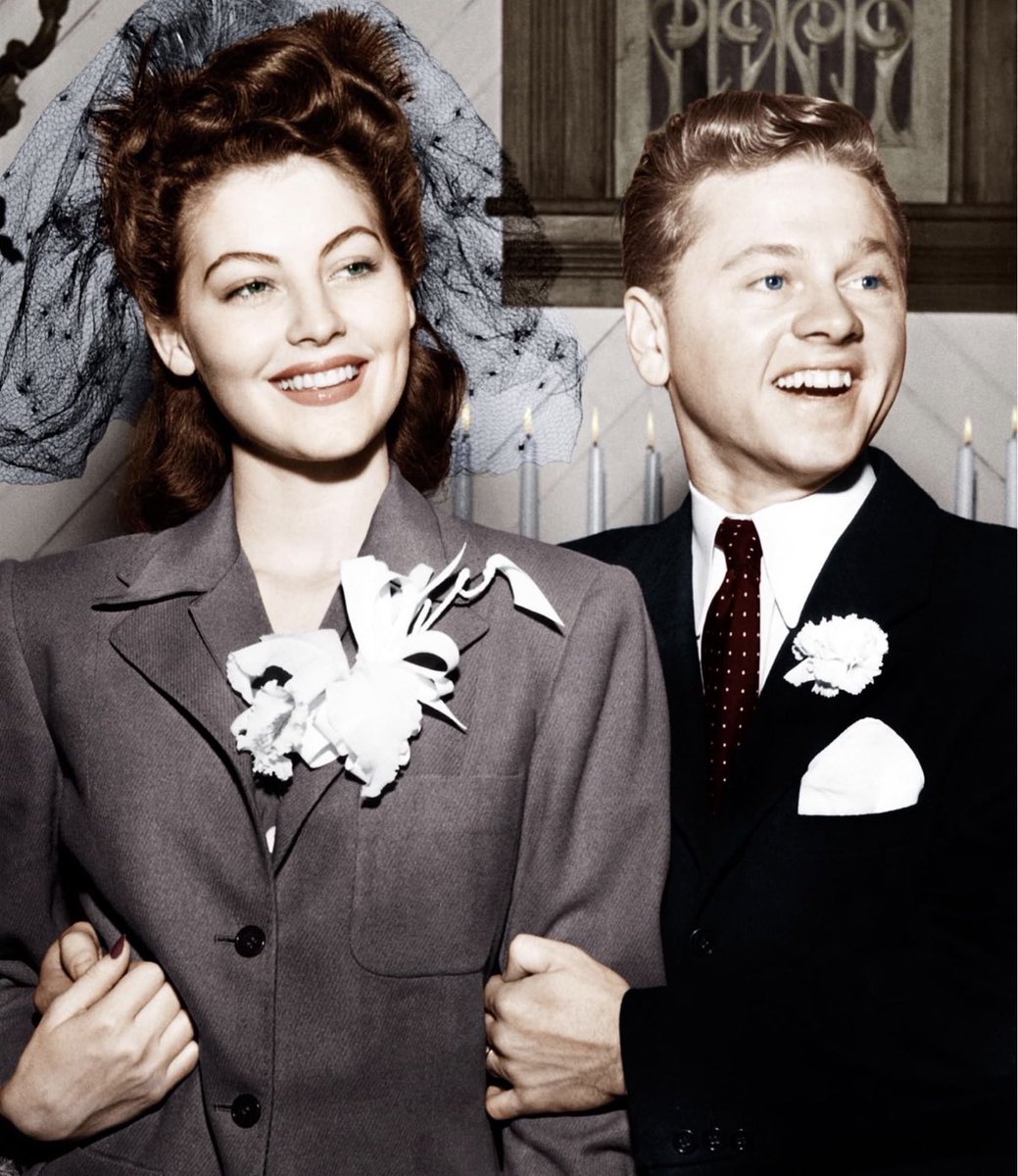
Mickey and Ava
In her autobiography “Tis Herself”, Maureen O’Hara wrote she overheard Ava Gardner talking to Lana Turner at a party about how much she detested
Mickey Rooney.
Ava told Lana she would marry Mickey for his money and to advance her career.
She would stay with Mickey for a year, clean him out, then divorce him.
Louis B Mayer warned Mickey not to marry Ava saying it would ruin his image.
Ava and Mickey tied the knot on May. 21, 1941. They divorced on January 10, 1942.
In 1957, the young Alain Fabien Maurice Marcel Delon joined the French Navy's parachute corps, and later served as a volunteer in the conflict with Indochina

His superiors almost always told him the same thing: "You're wasting your time here, you should try your luck as a model or film actor"...
So by 1957, as Alain Delon, he would debut in Quand la Femme s'en Mele (When the Devil Fails, He Sends the Woman), a police drama by Yves Allégret, and from there he would work with directors of the calibre of Clement, Melville, Visconti, Antonioni, Blier, or actors such as Gabin, Ventura, Belmondo (his great partner and friend), Lancaster or Bronson...
He would also share the screen with actresses of the calibre of Claudia Cardinale, Nathalie Delon or Romy Schneider, who was perhaps his greatest love.
Alain Delon was for women, what his compatriot Brigitte Bardot was for the men of her time, a sexual bomb, reachable only when they could see him in the cinema, not in vain did he achieve more than 134 million spectators around the world (60% of them, obviously women), reaching a record only equaled by the legendary Louis de Funes or his friend Jean-Paul Belmondo.
So many things were said about Delon: that he was gay and bisexual, just because he was a friend of Luchino Visconti, that he was a misogynist and an Apache with his lovers, that he made a pact with the devil not to grow old... about the latter, when he turned 60 and still looked 40, he was asked what his secret was, to which the Gallic actor, loose-lipped, said: "I just sleep a lot and make love at least twice a day, EVERY day, you should try it"...
Let these lines be a simple tribute to an actor who marked an era, the hearts of millions of women and became, definitively, a legend.
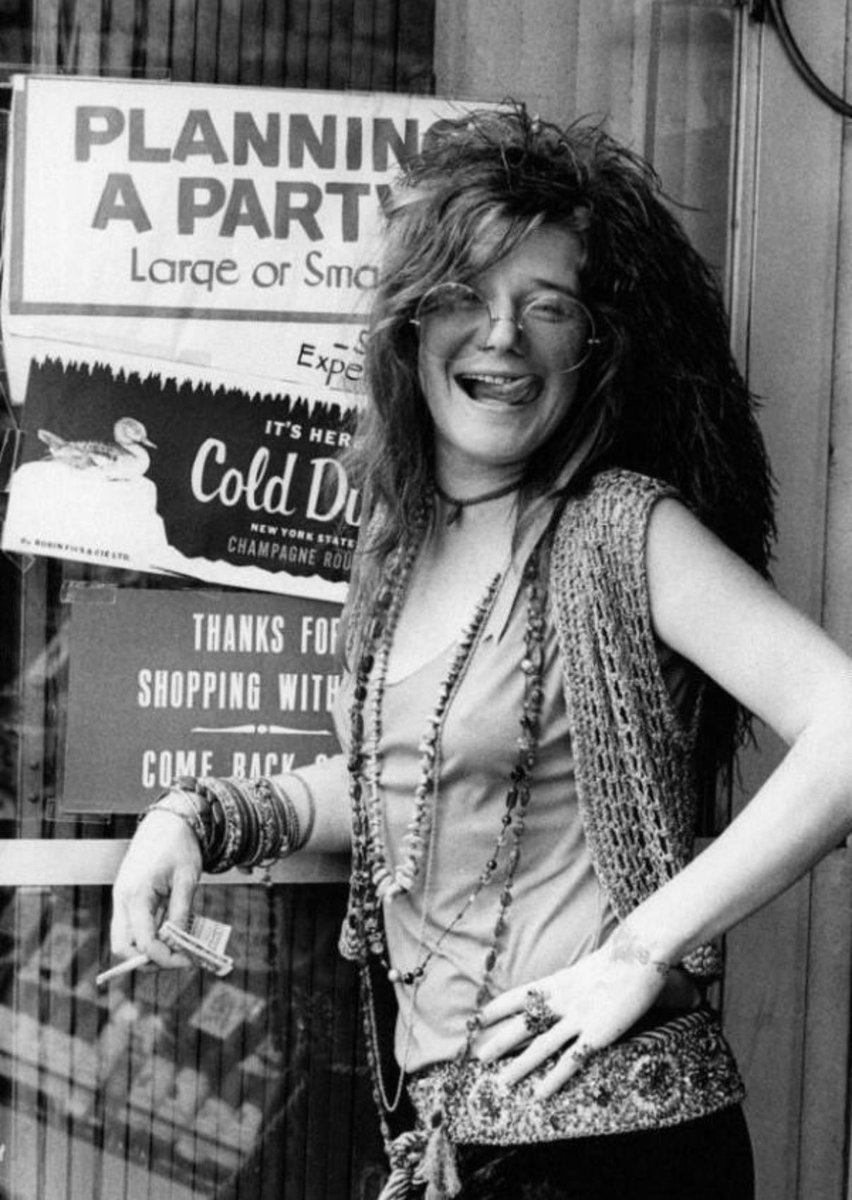
On October 4, 1970, rock star Janis Joplin was found dead in her Hollywood hotel room with cigarettes in one hand and a wad of cash in the other. Investigators ruled her death an accidental heroin overdose, claiming that Joplin must have shot up, gone down to the hotel lobby to buy cigarettes, and then returned to her room to die.
But one of Joplin's close friends, who had once overdosed herself, didn't believe that Joplin would've been capable of taking a lethal dose of heroin and then leaving the room to purchase cigarettes.
Kathetine Hepburn was a lady who never minced words, and could be absolutely savage in her comments. Scott Berg, Hepburn’s biographer, described how famously self-absorbed actor Warren Beatty talked about Hepburn in a not-very-nice way..
Nobody’s coming to this movie to see Hepburn,” Berg remembers Beatty telling him right before her scenes were to be shot. Beatty also referred to himself as “Warren Beatty, the movie star,” and later as “the world’s greatest living director in the world." He said all this without a shred of irony — he fully meant every word… still, he had wanted the legendary actress in his 1993 movie ‘Love Affair’ as even a man with his monumental ego realized on some level that attaching her name to the picture would help sell tickets.
Katherine Hepburn had dinner with Beatty and his then-newly-wed wife, Anette Bening. Someone asked aging Hollywood legend about the relationship of Beatty and Bening, intrigued as Beatty had famously been a bachelor for many decades. Hepburn quipped: “Well, they're both in love with the same man…”
Ghost ships have been a part of folklore for centuries, and stories of these eerie vessels have been passed down through generations.
These ships are often believed to be cursed, abandoned, or lost at sea, and sightings of them have been reported throughout history.
The earliest stories of ghost ships date back to ancient times, with tales of cursed vessels and haunted seas appearing in Greek and Roman mythology.
In Norse mythology, the ship Naglfar was said to be made entirely of the nails of the dead, and would sail to the final battle of Ragnarok.
In the Middle Ages, ghost ships were often associated with the Wild Hunt, a spectral procession of hunters and hounds that was said to portend death and disaster.
One of the most famous ghost ships in history is the Mary Celeste, a brigantine that was found adrift in the Atlantic Ocean in 1872 with no crew on board.
The ship was fully provisioned and in good condition, but the crew had vanished without a trace. The mystery of what happened to the crew of the Mary Celeste has never been solved, and the ship has become a popular subject of ghost stories and legends.
In more recent times, there have been several sightings of ghost ships that have captured the public’s imagination. The SS Valencia, a passenger steamer that sank off the coast of Vancouver Island in 1906, is said to haunt the waters to this day.
The Carroll A. Deering, a five-masted schooner that was found abandoned off the coast of North Carolina in 1921, is another famous ghost ship that has never been fully explained.
Satantango (1994)
"A film is just a film. What I want is for you to go to a cinema, sit in darkness, watch it & when you leave: how are you? Are you better? Do you feel stronger? Did you get something? Or are you just the same as you were when entering the cinema?"
— Béla Tarr
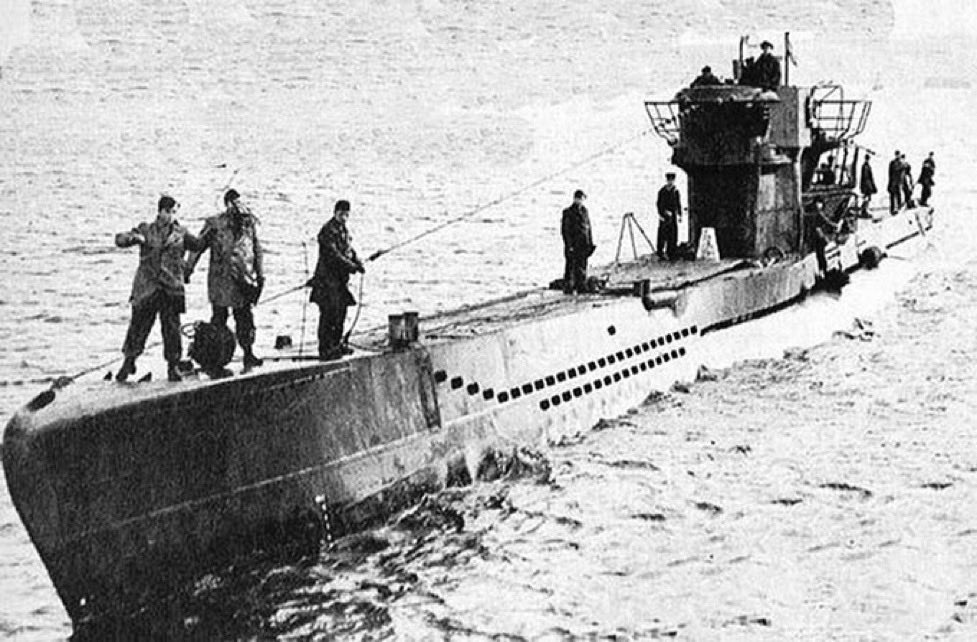
The WWII Submarine Sunk by a High-Tech Toilet.
In April 1945, the German submarine U-1206 was patrolling the depths of the North Sea, equipped with a revolutionary new feature: a high-pressure toilet.
Unlike standard submarines that stored waste in onboard tanks, this advanced piece of engineering allowed the crew to flush directly into the crushing pressure of the deep ocean. It was an incredibly complex system designed to save space and weight, but it came with a massive manual and required a specially trained toilet operator to pull a series of levers in the exact right sequence.
When the submarine's captain decided to use the facility without the specialist, things quickly spiraled out of control. After turning the wrong valve in the intricate mechanism, a highly pressurized stream of seawater and raw sewage suddenly rocketed into the cabin.
The catastrophic flooding quickly reached the vessel's massive battery banks located directly beneath the bathroom, triggering a violent chemical reaction that began rapidly filling the enclosed space with lethal chlorine gas.
Choking on the toxic fumes, the captain had no choice but to immediately order an emergency blow to the surface. The moment the compromised submarine broke the water, it was spotted by British patrol aircraft and heavily bombed, forcing the crew to abandon ship and scuttle the prized vessel.
It turns out the most dangerous leak on a submarine is the one you make yourself.
On May 18th, 2023, while leading a Chinese climber toward the summit of Mount Everest, Gelje Sherpa discovered a stranded Malaysian climber on the verge of death.
To save the climber’s life, Gelje persuaded his Chinese client to end his summit and descend to the Everest Base Camp, allowing him to focus on saving the stranded Malaysian climber’s life.
He wrapped him in a sleeping mattress, gave him oxygen, put him on his back, and hiked him 6 hours down the mountain to safe place
Bob Saget was found dead in his hotel room at the Ritz-Carlton in Orlando, Florida, on January 9, 2022. Initially, there was uncertainty surrounding the cause of his death, but the autopsy results, released several weeks later, revealed something far more disturbing: he had suffered severe blunt-force trauma to the head. The medical examiner found multiple skull fractures and extensive injuries to the brain, including bleeding on both sides of the brain. The findings shocked many people because the injuries were far more serious than most would expect from an ordinary bump to the head.
The extent of the damage raised questions about how such injuries could have occurred without anyone noticing. Some medical commentators pointed to the severity of the fractures and internal bleeding, comparing the injuries to those that can result from a significant fall or a forceful impact. However, the autopsy alone could not establish exactly how the injuries happened. Investigators ultimately concluded that Saget had most likely fallen backward and struck the back of his head. His death was officially ruled an accident caused by blunt-force head trauma.
What made the case particularly tragic was that Saget may not have realized how seriously he had injured himself. According to the official findings, he was found in bed the following day, and investigators found no evidence of foul play. His family also asked people to respect the medical examiner’s conclusions. Although the severity of his injuries understandably sparked speculation and questions, there has been no credible evidence of a cover-up or an attack. The case remains a heartbreaking reminder that a seemingly minor head injury can sometimes have devastating consequences.