When microlearning becomes an endless feed of disconnected bites, it starts to look a lot like scrolling dressed up as learning.
Microlearning itself can work. Short lessons built around a clear objective have legitimate uses. But a stream of unrelated facts, explainers and 30-second lessons creates a different pattern: learn something, swipe, change subjects, repeat.
Research suggests fragmentation matters. A 2025 meta-analysis of 71 studies linked greater short-form video use with poorer attention and inhibitory control. In 2026, experiments found fragmented short-video learning produced lower immediate memory accuracy and more forgetting than continuous long-form video.
Other experiments have found that switching between reading and social media messages can reduce comprehension. Short information is not the problem. Repeatedly switching context is.
Lydia keeps one subject at the center. Text, photography, maps, artifacts and sources deepen the same story instead of replacing it with another one.
The internet makes it easy to encounter information. Lydia gives you somewhere to stay with it.
Built for depth over distraction.
#Lydia #Microlearning #Learning #Reading #Attention
Lydia’s VR Reading Room takes reading off the screen and places it around you.
A first-of-its-kind reading experience, it turns the subject itself into the environment around the text.
Read about the Colosseum while standing inside it, with nothing else competing for your attention.
#VirtualReality #VR #Reading #History #ImmersiveExperience
The First Snowflake Photograph Was Taken by a 19-Year-Old Farmer in 1885
On Jan. 15, 1885, a 19-year-old farmer in Jericho, Vermont, became the first person to photograph a single snow crystal.
Wilson Bentley had been trying for years.
At 15, he began studying snow through a microscope. He tried drawing the crystals, but their structures were too intricate. Before he could finish, they melted. He wanted a permanent record.
At 17, Bentley persuaded his parents to buy him a bellows camera and microscope equipment. It cost $100. He knew almost nothing about photography and spent more than a year experimenting.
Snow gave him very little time. Bentley worked in the cold so the crystals would not melt. He caught falling flakes, moved them beneath the microscope with a feather and photographed them against a dark background. An exposure could take 90 seconds.
Then, in January 1885, one appeared on the plate. A snow crystal had left a permanent image.
Bentley spent the next 46 years photographing them. By the time he died in 1931, he had recorded more than 5,000 snow crystals and reported never finding two exactly alike. He also photographed frost, dew and other forms of water.
In 1903, he sent 500 snowflake prints to the Smithsonian for safekeeping. In 1931, Snow Crystals published more than 2,000 of his images (https://t.co/ssrrx7u8Kx).
The crystals themselves lasted minutes.
Bentley’s photographs have lasted more than a century.
#WilsonBentley #History #Photography #ScienceHistory #Snowflakes
Enjoy fascinating stories like this? We’re opening Lydia to a limited number of early readers with free, unlimited access. DM us or email us ([email protected]) for an invite.
In 1649, French engraver Claude Mellan formed the face of Christ from a single continuous line.
Beginning at the tip of the nose, the line spirals outward for roughly 150 meters. Mellan cut it into a copper plate with a burin, changing the tool’s angle and pressure as he worked. Deeper, wider sections produced shadow; shallower sections produced light. He used no cross-hatching.
The eyes, hair and beard were rendered by altering the thickness and spacing of that one groove.
The engraving is known as The Sudarium of Saint Veronica, or The Veil of Veronica. In later Christian tradition, Veronica wiped the face of Jesus as he carried the cross, and his image remained on the cloth.
At the bottom, Mellan engraved the Latin words Formatur unicus una: “The unique one made by one.”
The library is opening quietly.
We’re inviting a small group inside before launch. Send us a message if you’d like a private preview.
Built for depth over distraction. Made for curious minds.
#Lydia#DeepReading#DigitalWellbeing#LifelongLearning#History
In 1649, French engraver Claude Mellan formed the face of Christ from a single continuous line.
Beginning at the tip of the nose, the line spirals outward for roughly 150 meters. Mellan cut it into a copper plate with a burin, changing the tool’s angle and pressure as he worked. Deeper, wider sections produced shadow; shallower sections produced light. He used no cross-hatching.
The eyes, hair and beard were rendered by altering the thickness and spacing of that one groove.
The engraving is known as The Sudarium of Saint Veronica, or The Veil of Veronica. In later Christian tradition, Veronica wiped the face of Jesus as he carried the cross, and his image remained on the cloth.
At the bottom, Mellan engraved the Latin words Formatur unicus una: “The unique one made by one.”
On May 30, 1922, more than 50,000 people gathered for the dedication of the Lincoln Memorial.
Civil War veterans attended alongside Abraham Lincoln’s only surviving son, Robert Todd Lincoln. Tuskegee Institute President Robert Moton spoke, while Black attendees were seated separately.
Forty-one years later, Martin Luther King Jr. stood on those same steps and delivered “I Have a Dream.”
Gold Stater of Croesus
Lydia, c. 560–546 BC
Small enough to disappear in your palm, this coin marks a turning point in the history of currency.
Earlier Lydian coins were struck in electrum, an alloy of gold and silver. Its composition could vary, making the metal’s true value difficult to know.
Under King Croesus, Lydia began issuing separate coins of refined gold and silver. Known as Croeseids, they included the earliest known solid-gold coinage.
The face shows a lion confronting a bull. Surviving examples are remarkably small: a light gold stater in the British Museum measures just 16 millimeters across and weighs 8.035 grams.
A piece of precious metal could now carry a standardized value backed by a kingdom.
More than 2,500 years later, the basic idea remains.
Five People Went to Wrangel Island. Only Ada Came Back.
On Sept. 9, 1921, 23-year-old Ada Blackjack left Alaska for Wrangel Island with four men and a kitten named Vic. She had been hired as the expedition’s seamstress for $50 a month. Her son Bennett was living in an orphanage in Nome, and Ada needed the money to bring him home.
The group expected a relief ship in 1922, but it never reached the island. Supplies dwindled, and Lorne Knight developed scurvy. In January 1923, the other three men took the remaining sled dogs and set out across the sea ice toward Siberia for help.
They were never seen again.
Ada stayed behind with Knight and Vic. By June, Knight could no longer leave his bed. He died on June 23. Unable to move his body, Ada surrounded his sleeping bag with wooden boxes to keep animals away and moved into another tent.
She was now alone on Wrangel Island.
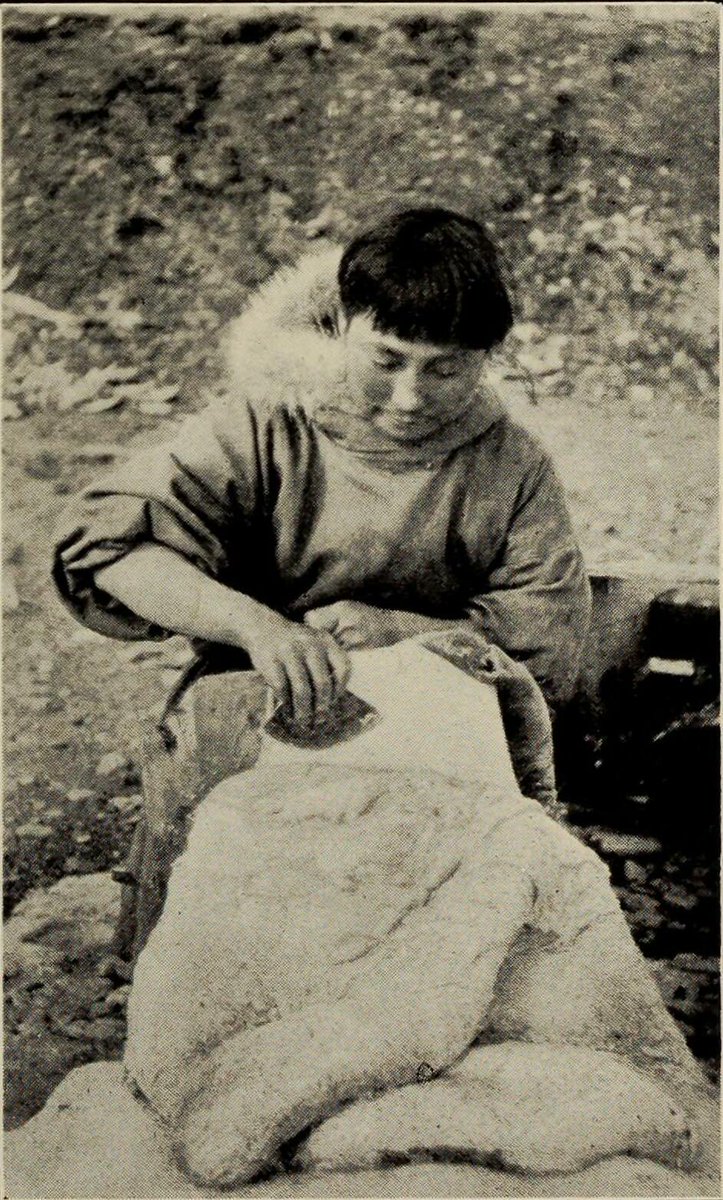
Ada learned to shoot and hunt, reinforced her shelter with driftwood and made a stove from empty kerosene cans. She built a lookout for polar bears and made a pair of moccasins for Bennett.
On Aug. 20, 1923, Ada wrote in her diary that she had opened the “last biscuit box.”
That same day, the rescue ship Donaldson reached Wrangel Island. Ada and Vic were taken aboard. Of the five people who landed there, Ada was the only survivor.
She had taken the job to bring Bennett home. A photograph from 1923 shows them together again.
#History #TrueStory #SurvivalStory #WomensHistory #ForgottenHistory
We are about to begin Augustine’s City of God, which we will read over the next 5 weeks. This will undoubtedly be one of our most important read-alongs so far.
The first discussion, focusing on Books 11,12, and 14, is on September 15, at noon ET. Please join us (remember, all sessions are recorded if you can’t make it live)!
Consider a paid subscription if you'd like to support us and join the discussions directly. It makes a huge difference to the time and resources we can dedicate to this.
You'll get:
- Live book club discussions (biweekly)
- Access to our incredible community chat
- Essays to guide you through the Great Books
- All past recordings, essays, and podcasts
- Ability to vote on what we read next
https://t.co/efQaicNvay
Welcome!
The Time America Tried to Build a Ring Around Earth
In 1963, the United States launched 480 million tiny copper wires into space in an attempt to build an artificial communications belt around Earth.
It was called Project West Ford.
At the height of the Cold War, long-distance communication had become a military problem. Undersea cables could be cut, while radio signals depended on an ionosphere that could be disrupted by solar activity or nuclear detonations.
Researchers at MIT Lincoln Laboratory proposed another option: build an artificial ionosphere.
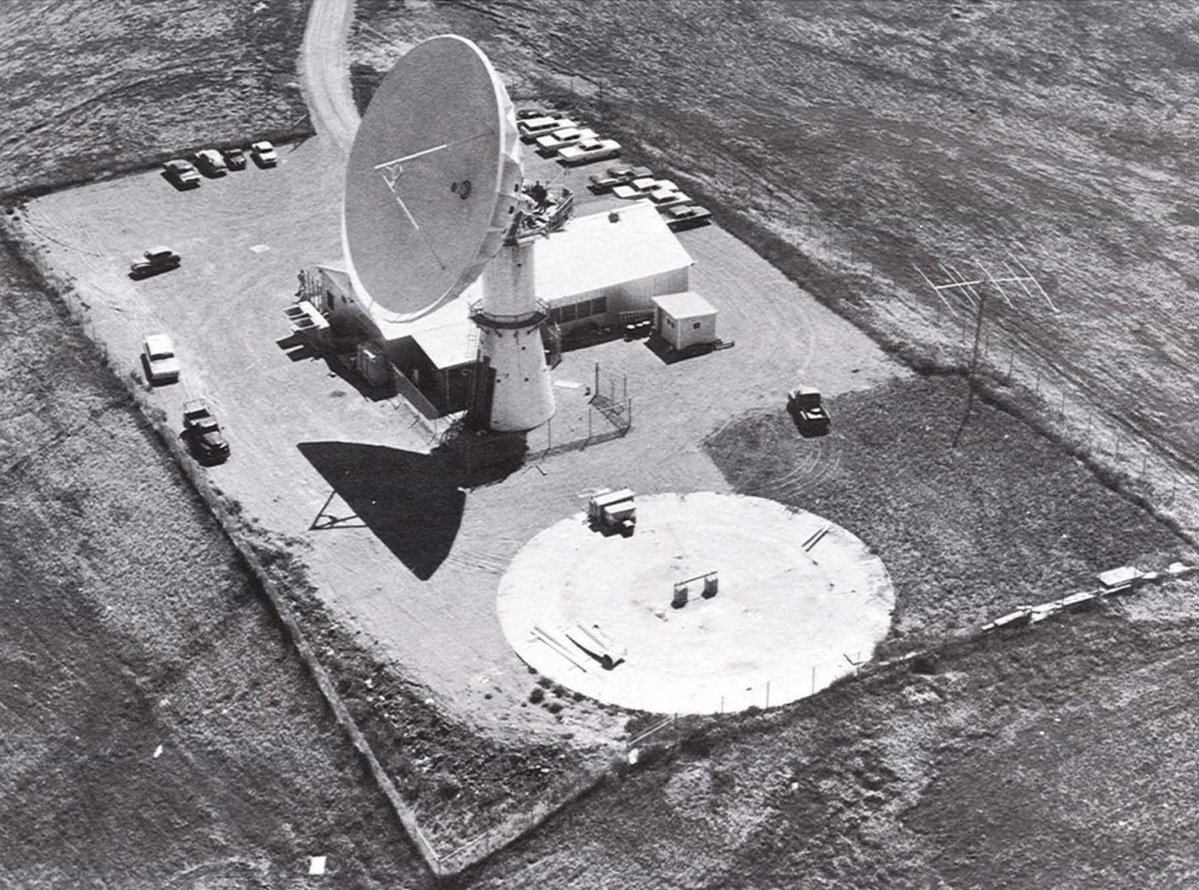
Their solution was hundreds of millions of copper dipoles, each just 0.7 inches long and barely thicker than a human hair. Released about 2,240 miles above Earth, they were designed to spread into a thin belt that could reflect radio signals between distant ground stations.
The first attempt in 1961 failed.
A second launch followed in May 1963. This time the copper dispersed successfully, and over the next 40 days the belt formed around Earth.
It worked.
Voice, teletype and digital data were transmitted between California and Massachusetts by bouncing signals off the artificial belt.
But the experiment raised another question: should anyone be able to place hundreds of millions of artificial objects into orbit?
Astronomers worried about interference with observations and the precedent West Ford might set for altering near-Earth space. Engineers had designed the dipoles to gradually fall back into the atmosphere, and by early 1966 the removal process was essentially complete.
By then, the idea was already obsolete.
Active communications satellites could receive, amplify and retransmit signals directly. There was no longer much reason to build a passive reflector around the planet.
For a brief period in the early 1960s, however, the United States had successfully created an artificial radio-reflecting belt around Earth from hundreds of millions of tiny pieces of copper wire.
It worked, and technology quickly passed it by.
Further reading: MIT Lincoln Laboratory, Thirty Years of Research and Development in Space Communications
https://t.co/K5fBnHqd2Q
#ColdWarHistory #SpaceHistory #EngineeringHistory #HistoryOfTechnology #SpaceAge
Born on this day in AD 208, Diadumenian became a Roman co-emperor at age nine.
His father, Macrinus, was proclaimed emperor three days after Caracalla’s assassination in April 217. The following month, soldiers at Zeugma on the Euphrates proclaimed the eight-year-old Diadumenian Caesar. Macrinus also gave him the name Antoninus, borrowing the prestige of Antoninus Pius, Marcus Aurelius and Caracalla.
At chariot races held in Rome on Diadumenian’s ninth birthday, the crowd denounced the regime and declared that Rome had no ruler.
When soldiers began defecting to the teenage challenger Elagabalus in May 218, Macrinus elevated his son to Augustus. Cassius Dio records that he promised the troops 20,000 sesterces per man, with 4,000 paid immediately. A rare silver coin struck with Diadumenian’s new title declared FELICITAS TEMPORVM: “the good fortune of the times.”
On June 8, Macrinus was defeated near Antioch. He sent Diadumenian east under escort, hoping the boy would find protection at the court of the Parthian king Artabanus.
Diadumenian was captured while passing through Zeugma, the same city where he had been proclaimed Caesar. He was executed shortly afterward, still nine. His reign as Augustus had lasted only a few weeks.
#AncientRome #RomanHistory #OnThisDay
Every Lydia Study has its own cinematic soundtrack, composed around the subject, place, era and atmosphere of the story.
For our Voyager Study, Interstellar Message is another way into the mission: sound designed to make the subject feel more present, immersive and memorable.
Turn the sound on and listen.
#Voyager #NASA #SpaceExploration #GoldenRecord #DeepSpace #SpaceHistory
The Skinner box wasn’t invented all at once. One of psychology’s most famous machines began because B.F. Skinner got tired of carrying rats.
The chamber let Skinner measure behavior under controlled conditions. A lever press could be recorded automatically while food was delivered on a chosen schedule, showing how reinforcement changed response rates over time.
During his Harvard research, Skinner first used an 8-foot wooden runway. After each run, he carried the rat back to the beginning. Over time, the apparatus became smaller and more automatic, eventually becoming a chamber with a lever, food magazine and recorder.
Then the food magazine jammed.
The rat kept pressing, but no food came. Skinner watched the recorder trace what he described as his first complete extinction curve. He later disconnected the magazine deliberately.
Another discovery came from a shortage of rat pellets. Skinner calculated his supply would run out by 10:30 Monday morning unless he spent Saturday making more. Instead, he changed the schedule so food became available once per minute. The pellets lasted, and the rats settled into stable response patterns.
In 1948, Skinner gave pigeons food at fixed intervals regardless of what they did. Six of eight developed repeated movements. He called it “superstition,” arguing that the birds behaved as though their actions caused the food.
Later experiments complicated that explanation, tying much of the behavior to timing and species-typical food seeking.
The food would have arrived either way. The pigeon turned anyway.
The chamber made behavior measurable one response at a time. But precise measurement did not always make its cause obvious.
#Psychology #History #Science #PsychologyFacts #DidYouKnow
The Photographs That Waited 33 Years in the Ice
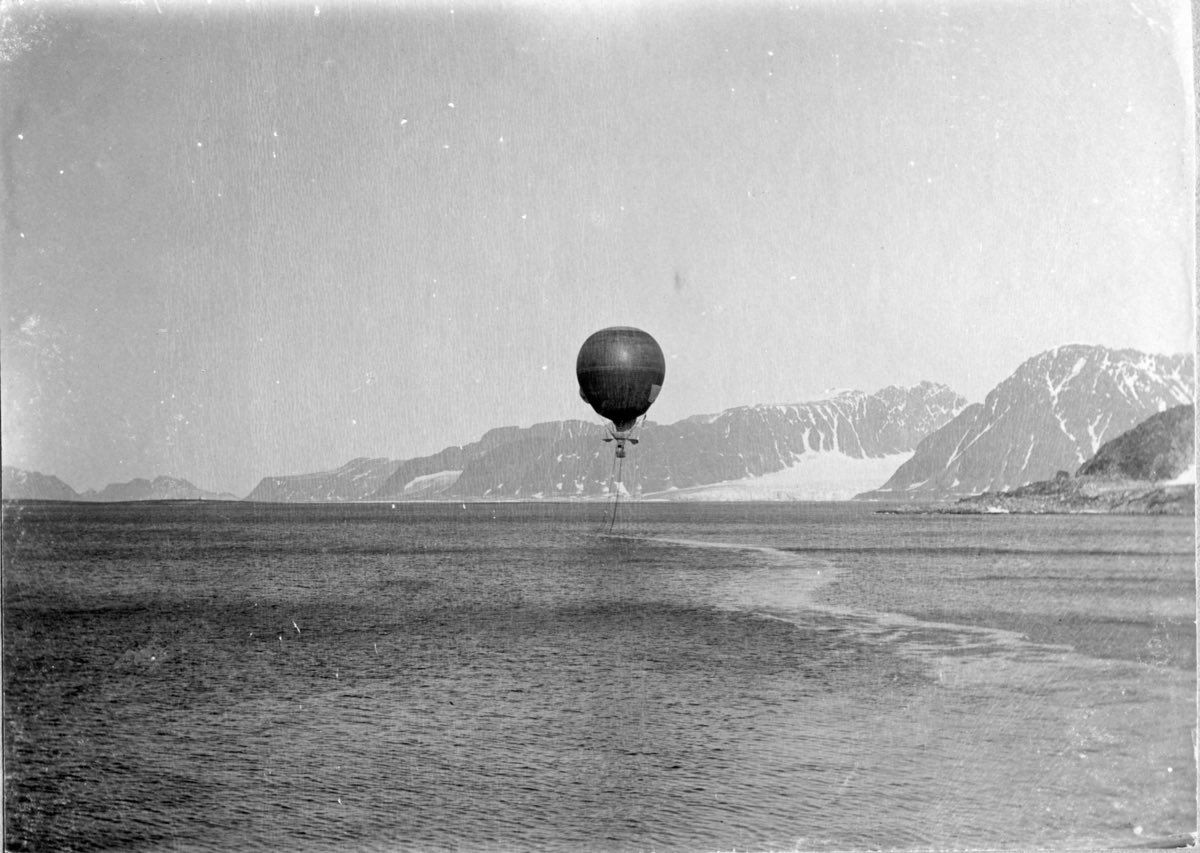
On July 11, 1897, three Swedish explorers rose from Danskøya in Svalbard aboard a hydrogen balloon called Örnen, Swedish for The Eagle.
Salomon August Andrée planned to cross the Arctic with Nils Strindberg and Knut Frænkel, passing over or near the North Pole before the wind carried them toward Russia or Canada. The steering plan failed within minutes.
Andrée intended to give the balloon limited control using long guide ropes dragged across the ice. During the launch, the lower sections of all three ropes were lost. The basket then dipped into the sea, forcing the men to throw eight bags of ballast overboard. Örnen was now essentially a free-flying balloon.
Less than three days later, the flight was over. Hydrogen escaped from the envelope while moisture and ice added weight. On July 14, Örnen came down on the pack ice at 82°56′ north, 29°52′ east. All three men survived.
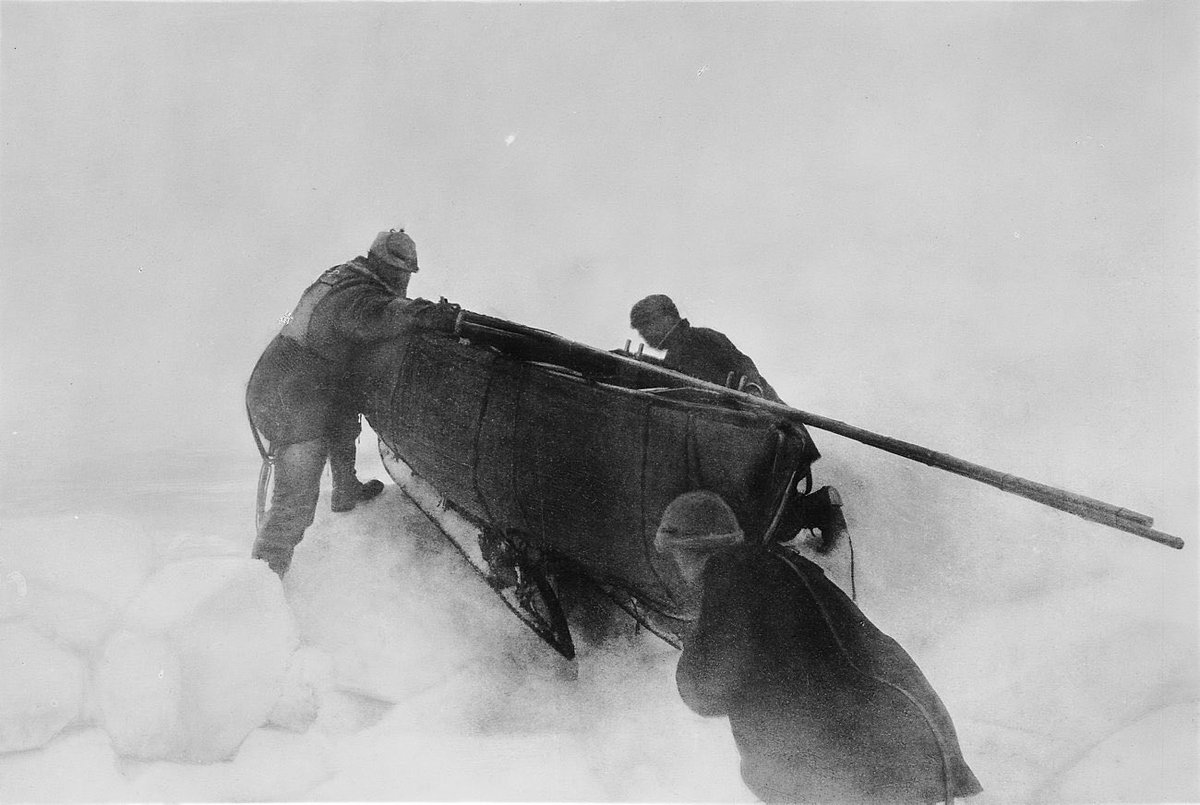
The rest of the journey would be on foot. They transferred food and instruments to heavy sledges, along with a collapsible boat, and began pulling everything south across the frozen ocean.
The ice beneath them was moving too. Progress made during the day could be partly erased by the drift beneath their feet.
Strindberg kept photographing. His camera had been brought to make an aerial record of the Arctic. It now recorded the collapsed balloon, the march over pressure ice, camp life and the boat they dragged behind them.
Twelve photographs from the landing site were later recognized as parts of a complete 360-degree panorama. Joined together, the surviving image is more than 10,000 pixels wide. The sequence was not identified as a panorama until research published in 2004.
Strindberg was 24 years old and engaged to Anna Charlier. He carried her photograph and wrote private messages to her in shorthand during the expedition. On July 25, Anna’s birthday, he wrote after 10 hours of pulling the sledges.
The men spent nearly three months on the drifting ice before reaching Kvitøya, or White Island, in early October. They established a camp and died soon afterward. The exact causes remain uncertain, and the surviving evidence has never settled the question.
No confirmed trace of them was found for 33 years.
On Aug. 6, 1930, members of the Norwegian Bratvaag expedition landed on Kvitøya and found the remains of the camp. Sections of the boat and other equipment were nearby. The diaries had survived, along with Strindberg’s camera and rolls of undeveloped film. Human remains were found among the camp debris.
The film was taken to Stockholm, where John Hertzberg of the Royal Institute of Technology was given the job of developing it. Strindberg had exposed roughly 240 frames. Hertzberg recovered images from 93.
Photographs taken in 1897 appeared for the first time in 1930.
They showed the balloon collapsed on the ice and the men hauling their equipment across it. Strindberg’s camera had survived, and so had its film.
Among his possessions was Anna’s photograph, carried from Sweden and recovered on Kvitøya 33 years later. His shorthand letters survived as well.
One was the message written on Anna’s birthday, July 25, 1897:
“We are sure to come home by and by.”
#History #HistoryFacts #HiddenHistory #HistoricalPhotography #ArcticHistory
Read Tenochtitlan by candlelight.
Candle Mode is one of Lydia’s immersive reading modes, changing the atmosphere around a Study without getting in the way of the text.
In 1521, the island city of Tenochtitlan stood in Lake Texcoco as Hernán Cortés, the Tlaxcalans, and other Indigenous allies laid siege to the Aztec capital.
It’s designed to help you stay with one subject long enough to understand it, instead of scrolling past it.
#Tenochtitlan #AztecHistory #Mesoamerica #WorldHistory #HistoryLovers