Last year, I created 5 murals for a really unique exhibition. I used neural networks to recreate a Chief, Chief Pamblo, that was never photographed. Its one of the first examples of AI being used for cultural restoration. Then I used my custom computational muralism pipelines to generate the Murals. The murals were over a billion pixels.
The artworks below were created in collaboration with the Nevada City Rancheria (NCR) Nisenan Tribe guided by CHIRP's Visibility Through Art (VTA) Initiative. This intentional and informed collaboration includes hours of consultation with the Tribe to best address their visibility needs. VTA is intended to generate Cultural awareness and build an understanding of the Nisenan through art.
https://t.co/AovrtXt6qq
#MilesDearling #Nisenan #CulturalRestoration #ChiefPamblo #Pamblo #visionaryart
PCIE gen 6 switches are due any day now too. 160 lanes, could hold 8 or 9 blackwells no problem. add more switches and you can run more cards.
ive been runing c-payne 100 lane on a little AM5 server board since march. it rips. just as fast as threadrippers for inference. my only regret was not buying more blackwells when they were cheap.
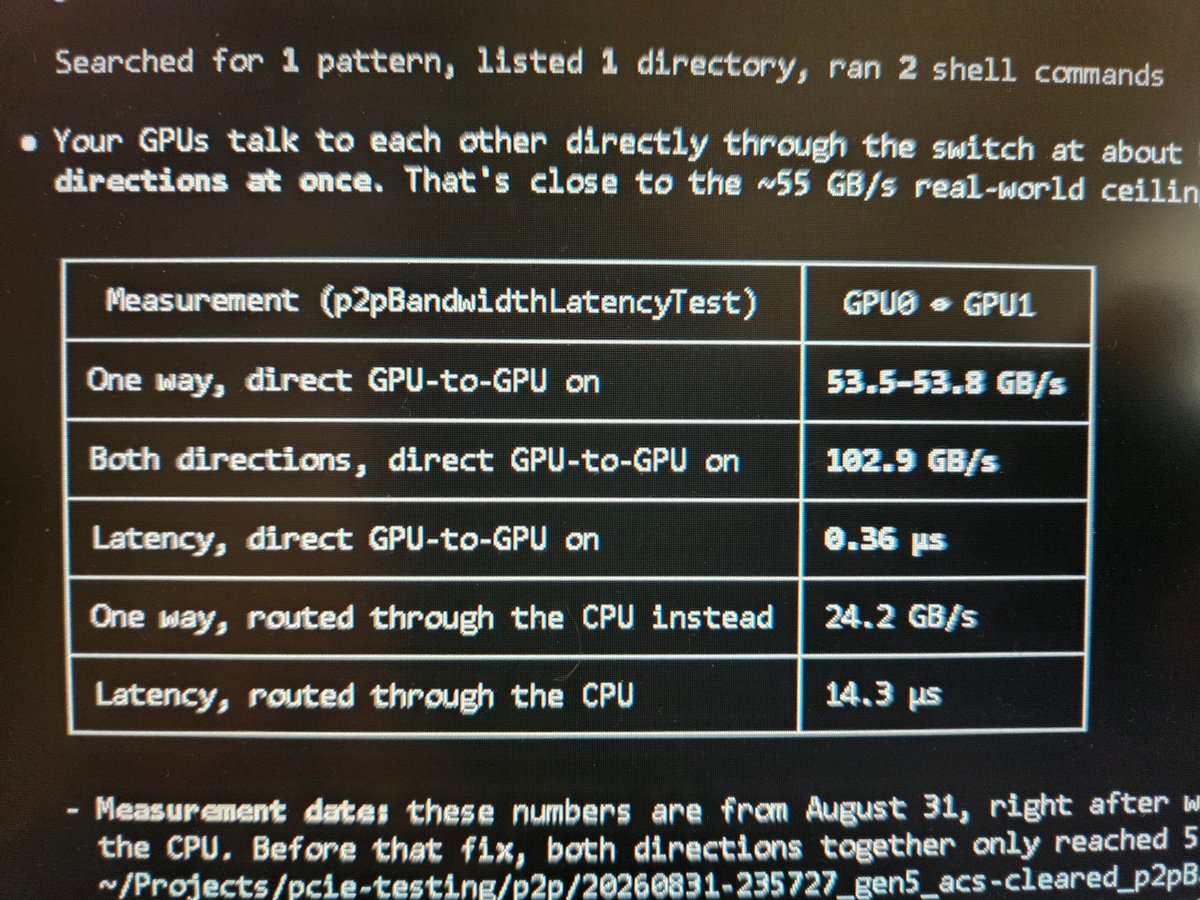
@kamilskowron Pcie topo on switches is fun and it works really well. Can run 8 blackwells at 16x P2P on a 160 lane switch. My GPUs are on a AM5 with only a single 16x uplink. Its Just as fast as threadrippers
Local AI in 2026 vs 2020.
Same energy. ~198x the intelligence.
Cables got worse (waiting on shorter cables). Benchmarks got better.
198 tok/s | Qwen3.5-122B | 2 GPUs | no NVLink
148 tok/s | MiniMax M2.5 229B | vLLM b12x
79 tok/s | Qwen3.5 397B | GGUF llama.cpp
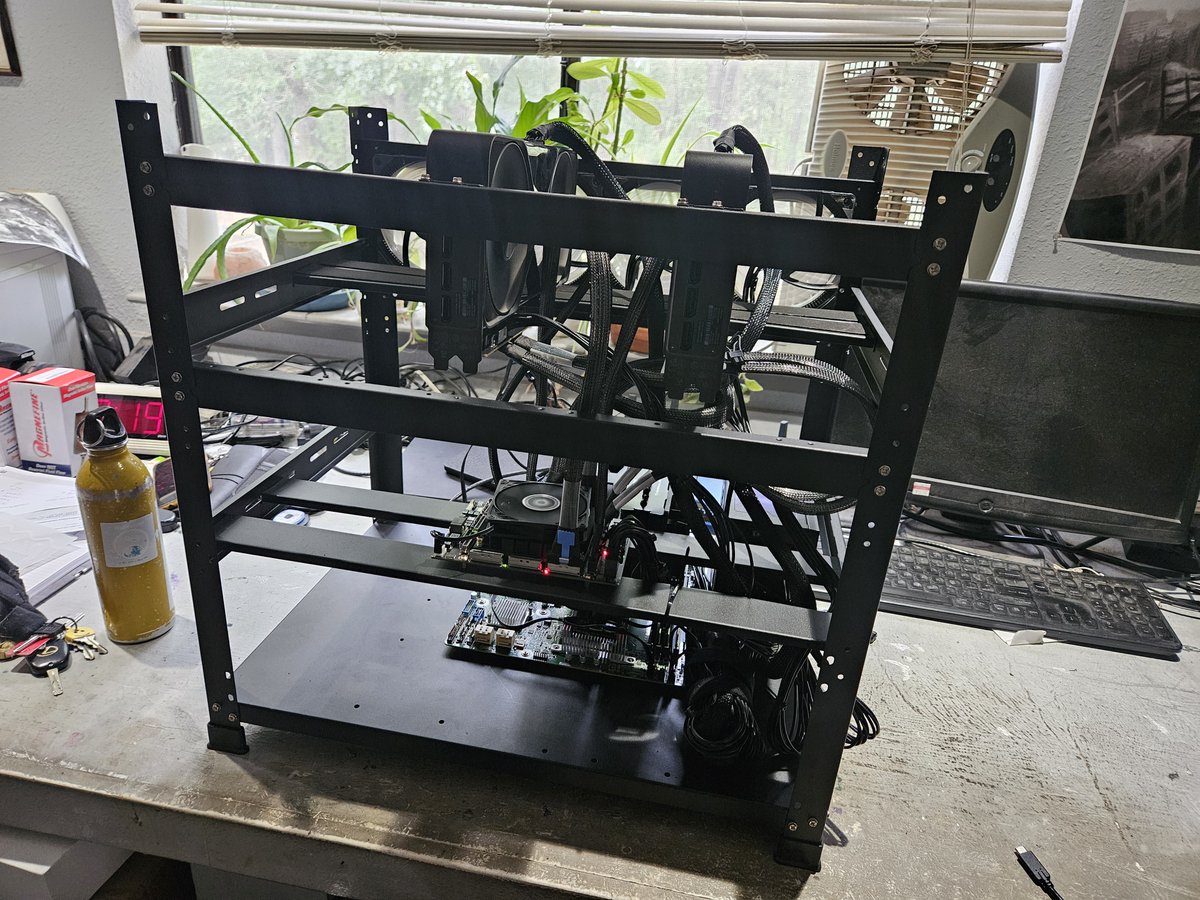
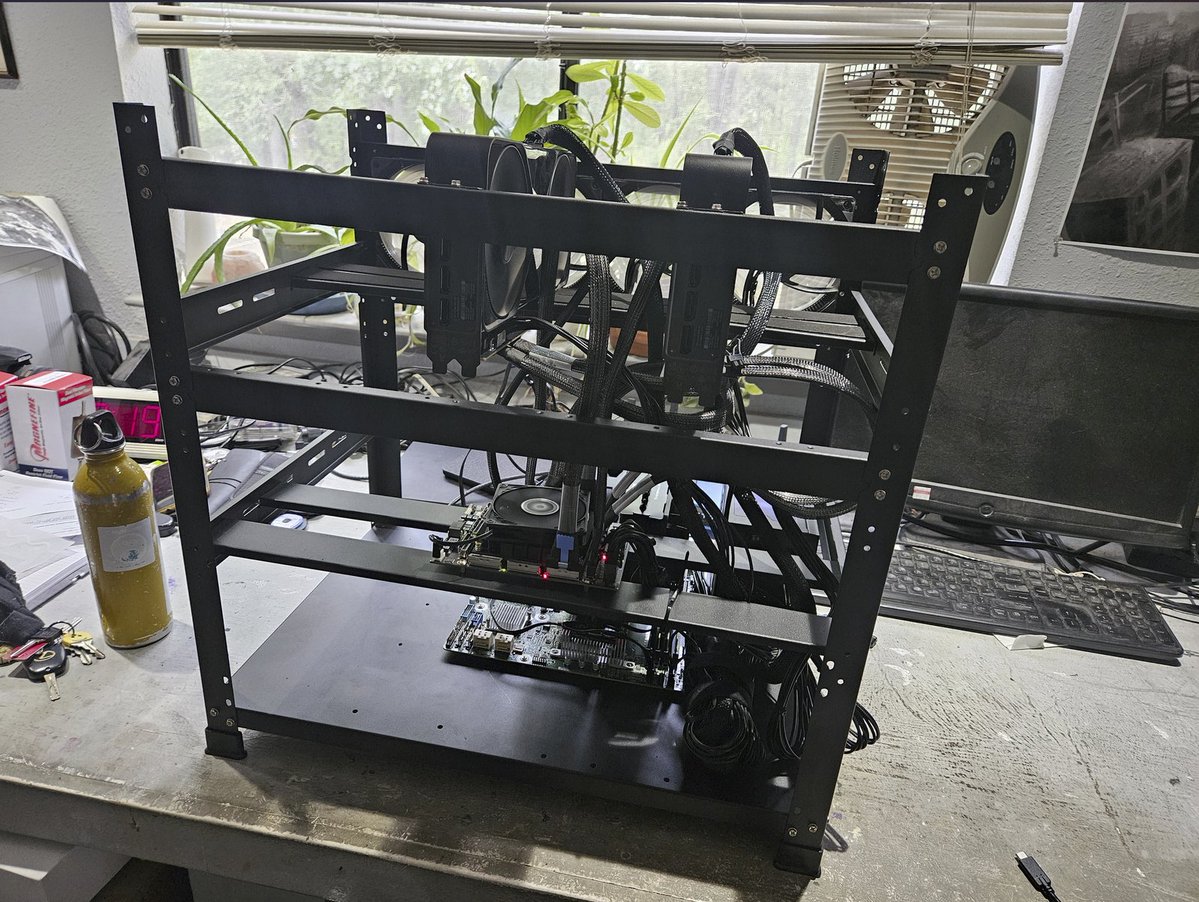
Build:
$2K AM5 ASRock Rack B650
$3K PCIe switch
2x RTX PRO 6000 Blackwell
Result:
Beats $33K Threadripper builds by ~18% on the same stack
Open-weight + local is not just speed.
It is:
• privacy
• data sovereignty
• control
Some work should never leave the machine.
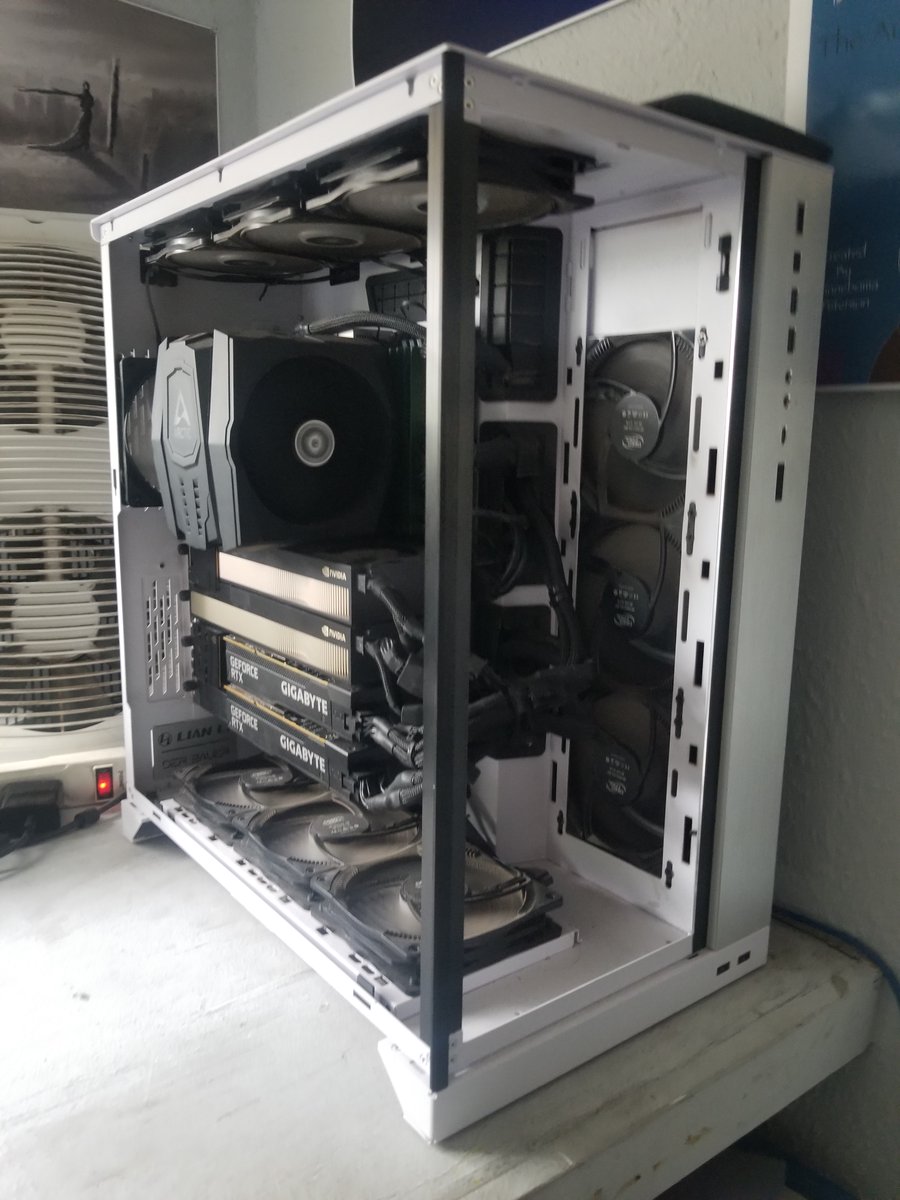
yeah its rough, i decided just to stay on my old gen4 threadripper. it already had 256gb ram. its a tiny bit slower for AI inference on blackwell 6000s- but paying for rd-dimm right now is crazy. thats like the cost of another blackwell 6000.
also playing around with AM5 servers soon. only 1 gen5pcie slot, but it might not matter for my workflows.
@gen_ericai i was using MJ before it was even named, helped build datasets they used for aesthetic fine tuning- but I haven't touched it in years. Its not a professional art tool. Switch to open models and black box API's.
We’ll see about the timeline. At a certain point it may not matter. For example, with image generation I can already produce commercial-quality work using NanoBanana Pro or open-source models such as Flux2 or Qwen. Raw image quality is comparable. The main difference is workflow control and platform restrictions (censorship). Open-source models perform far better when a project requires a high degree of control or multiple revision cycles. For simple probabilistic generation with minimal creative direction, black-box systems are sufficient. But for professional work, I need deterministic, iterative control loops.
@PurzBeats yeah! So true. im really interested in deterministic art systems with generative assistance. constantly inspired by the creativity of the community.