👉 Download VitalSun TODAY on iOS and Android: https://t.co/zOLiD65WpC
⠀
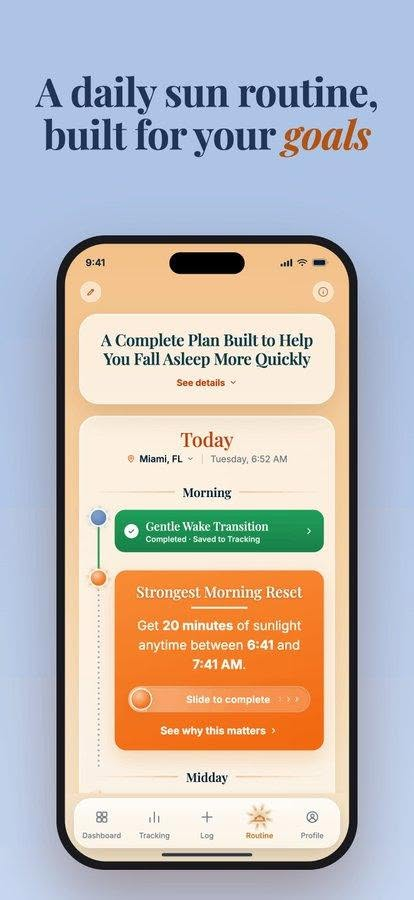
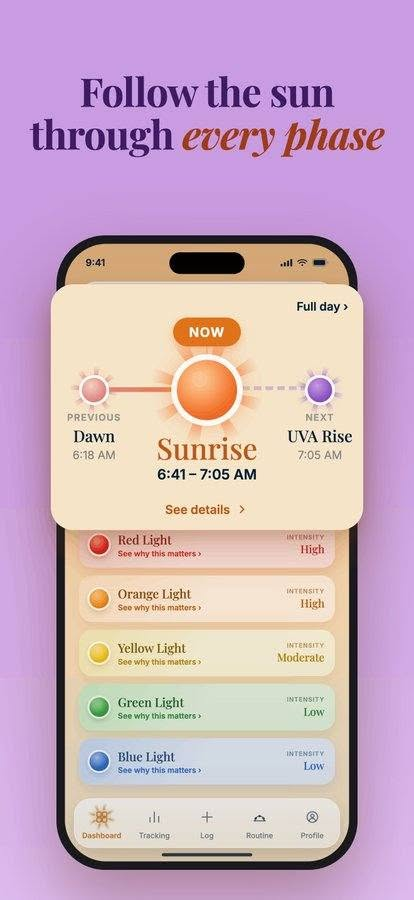
It tells you exactly when to get sunlight for better sleep, energy, and mood, based on your location and your day.
⠀
☀️ A personalized sun routine built around your schedule
📊 Live sunlight data showing what light is available right now
📈 Exposure tracking so you can see your habit build
⠀⠀
👉 Get it now: https://t.co/zOLiD65WpC
Things modern life replaced the sun with:
• Light boxes instead of sunrise
• LED bulbs instead of daylight
• Vitamin D pills instead of UVB
• Melatonin gummies instead of darkness
• Energy drinks instead of morning sunlight
• Red light panels instead of infrared
• Tanning beds instead of a slow summer tan
• Testosterone boosters instead of sun on your skin
• Treadmills instead of walks outside
• Alarm clocks instead of the sunrise
If sunlight came in a bottle, here's what the label would say:
⠀
☀️ SUNLIGHT
Full-Spectrum Daily Formula
⠀
Serving size: 10 to 30 minutes
Servings per day: As many as the sky allows
Price: Free
⠀
ACTIVE INGREDIENTS
⠀
UVB ........ Signals your skin to make vitamin D
UVA ........ Releases nitric oxide from your skin
Blue light ........ Sets your body clock
Red light ........ Supports your mitochondria
Near-infrared ........ Reaches deep into your tissue
⠀
SUPPORTS*
⠀
✔ Your body clock
✔ Healthy sleep timing
✔ Mood and alertness
✔ Healthy blood pressure
✔ Natural vitamin D production
✔ Skin that handles sun better over time
⠀
DIRECTIONS
⠀
Take once at sunrise, through the eyes, no sunglasses.
Take again around midday, on the skin, in small doses.
Optional final dose before sunset.
Cloudy days: take a little longer.
⠀
WARNINGS
⠀
⚠️ Do not take through a window. Effectiveness drops sharply.
⚠️ Do not stare directly at the source.
⚠️ Overdose causes burning. Build your dose up slowly.
⚠️ May cause better moods, earlier bedtimes and random urges to go outside.
⠀
*Unlike most supplements, this one has been tested on humans for about 300,000 years.
DAY 14: Circadian analysis of Rick Rubin @RickRubin
⠀
For decades, the most famous producer in music stayed up until 5am and slept until 2pm.
⠀
"I hated the sun," he said, "and I loved sleeping through the conflict part of the day."
⠀
He also weighed 318 pounds.
⠀
Then he flipped his entire life around. Now he starts every morning naked in the sun.
⠀
Let's break it down.
⠀
Sleep: 9/10
⠀
Today, he aims to be in bed by 10pm and says he usually falls asleep within about 15 minutes.
⠀
For a guy who used to go to bed at sunrise, that's a total transformation.
⠀
Nighttime darkness: 9/10
⠀
His evenings are protected. He's home with his family "99% of the time," talking, eating dinner, and watching wrestling or documentaries.
⠀
And he does it all wearing red glasses, which block the light that tells your brain it's still daytime.
⠀
His one rule: nothing work-related or stimulating at night.
⠀
Morning timing: 8/10
⠀
No early alarms here. But after he fixed his light, his wake-up time drifted earlier all on its own.
⠀
He now believes the best time to wake up is within the first three hours after sunrise.
⠀
Morning light: 10/10
⠀
His day starts by "going out into the sun as naked as possible."
⠀
He gets outside as soon as he wakes up and stays in the sun for about 20 minutes. Then he moves, often with an hour-long walk on the beach or a swim, and doesn't start work until late morning or early afternoon.
⠀
Daytime light: 8/10
⠀
His working hours happen in the studio. But his studios are famously open and close to nature, from Malibu to Hawaii to Costa Rica, where he recorded The Strokes' new album this year.
⠀
Evening light: 6/10
⠀
His evenings are calm and dim, which is great. But there's no sign of an outdoor sunset habit, the one easy win he's leaving on the table.
⠀
Travel: 7/10
⠀
Between Malibu, Hawaii and recording trips like Costa Rica, he moves around. But it's a few time zones, not the global grind some people on this board deal with.
⠀
Location: 9/10
⠀
Malibu and Hawaii. Sun nearly all year, ocean air and strong UVB, especially in Hawaii, where it never really goes away.
⠀
The bonus: fixing his light was step one of losing over 130 pounds
⠀
His health overhaul started with a doctor who changed his training and got him into the morning sun. He says that without that groundwork first, the diet that followed wouldn't have worked.
⠀
Overall: 8.3/10
⠀
The ultimate redemption arc. From 5am bedtimes and hating the sun to naked sunrises, and now he's tied for the top of the board.
⠀
Circadian leaderboard so far:
⠀
1. Gary Brecka: 8.3/10
1. Rick Rubin: 8.3/10
3. Andrew Huberman: 8.1/10
4. Tom Brady: 8.0/10
5. Bryan Johnson: 7.9/10
6. Mark Wahlberg: 6.7/10
7. LeBron James: 5.3/10
8. Sydney Sweeney: 5.0/10
9. Tom Hardy: 4.5/10
10. Donald Trump: 4.0/10
10. JD Vance: 4.0/10
12. Conor McGregor: 3.6/10
13. Elon Musk: 3.2/10
14. MrBeast: 3.0/10
⠀
Who should I break down next?
DAY 13: Circadian analysis of Tom Hardy @0fficialtomhard
⠀
He's 49, he just earned his jiu-jitsu brown belt, and he's been sober for over 20 years.
⠀
He also just lost one of the biggest TV jobs in Britain, partly for showing up late.
⠀
So how does Alfie Solomons do on light? Let's break it down.
⠀
Sleep: 5/10
⠀
Two things work in his favor. He's been sober since 2003, and alcohol is one of the fastest ways to wreck sleep. And training jiu-jitsu five days a week is a great way to tire out your body.
⠀
But by his own admission, he has "a very busy head." He says jiu-jitsu is one of the few things that lets him "meditate a bit and chill."
⠀
Nighttime darkness: 5/10
⠀
We don't know much about his nights. But between film shoots, gym sessions and a mind that won't quit, there's no sign of a dim, wind-down routine.
⠀
Morning timing: 2/10
⠀
Here's where it falls apart.
⠀
On Mad Max: Fury Road, a camera operator said Hardy "was notorious for never being on time in the morning. If the call time was in the morning, forget it." One morning, Charlize Theron sat in full costume from 8am and waited three hours for him.
⠀
The film's director, George Miller, later said Hardy "had to be coaxed out of his trailer."
⠀
A decade later, not much changed. In May, Paramount+ reportedly chose not to bring him back for MobLand's third season, with reports saying he'd been frequently late to set and holding up production.
⠀
That's the profile of a classic night owl. And a wake time that moves around drags your cortisol rise around with it.
⠀
Morning light: 4/10
⠀
If mornings are your weak spot, sunrise usually goes with them. No sign of a morning light habit here.
⠀
Daytime light: 6/10
⠀
Most of his free time is on the mats, which means hours indoors under gym lights.
⠀
But his job gets him out. He filmed much of MobLand's second season on London streets and by the River Thames, plus a week in sunny Mallorca. Location shoots beat a studio every time.
⠀
Evening light: 5/10
⠀
No sign of a sunset habit. His evenings seem to be split between sets and the gym.
⠀
Travel: 6/10
⠀
Mostly London-based, with trips that add up. Mallorca for filming in January, then New York in June, where he trained at Renzo Gracie's gym, five time zones west.
⠀
Location: 3/10
⠀
He's based in London, at about 51 degrees north. That means short, gray winters and almost no UVB from roughly October to March.
⠀
And he shot MobLand's second season right through the London winter, from November to March.
⠀
Overall: 4.5/10
⠀
Sober, disciplined on the mats and in incredible shape. But a London night owl whose late mornings have now cost him one of TV's biggest roles.
⠀
A few sunrises might have saved him a job.
⠀
Circadian leaderboard so far:
⠀
1. Gary Brecka: 8.3/10
2. Andrew Huberman: 8.1/10
3. Tom Brady: 8.0/10
4. Bryan Johnson: 7.9/10
5. Mark Wahlberg: 6.7/10
6. LeBron James: 5.3/10
7. Sydney Sweeney: 5.0/10
8. Tom Hardy: 4.5/10
9. Donald Trump: 4.0/10
9. JD Vance: 4.0/10
11. Conor McGregor: 3.6/10
12. Elon Musk: 3.2/10
13. MrBeast: 3.0/10
⠀
Who should I break down next?
Parts of your body that run on their own clock:
• Your liver
• Your pancreas
• Your gut
• Your kidneys
• Your fat cells
• Your muscles
• Your skin
• Your immune cells
• Your blood vessels
• Your hair follicles
• And the master clock in your brain that sunlight sets for all of them
Ever notice how lying in the sun feels almost addictive?
⠀
That's not in your head. Well, it is in your head, but it's chemistry.
⠀
Here's what sunlight is releasing in your body 👇
⠀
☀️ Beta-endorphin
The feel-good opioid
⠀
UV on your skin switches on a molecule called POMC, which splits into beta-endorphin, your body's own opioid.
⠀
It's so powerful that in mice, regular UV exposure made them seek out more UV, and blocking the opioid response triggered withdrawal-like symptoms.
⠀
That "I could lie here forever" feeling? This is a big part of it.
⠀
☀️ Dopamine
The motivation chemical
⠀
Bright light hitting your eyes boosts dopamine, the chemical behind drive and motivation.
⠀
That's part of why a sunny morning makes you want to get things done.
⠀
☀️ Enkephalins
The pain dimmers
⠀
Bright light activates a pathway in your brain that releases enkephalins, another natural painkiller. It's one reason people tend to handle pain better on long, bright days.
⠀
☀️ Nitric oxide
The relaxer
⠀
UVA releases nitric oxide stored in your skin. Your blood vessels relax and widen. That loose, heavy, melted-into-the-towel feeling has a chemical behind it.
⠀
☀️ Warmth from infrared
The deep heat
⠀
More than half of sunlight is red and infrared. It warms you from the inside in a way a space heater never quite does.
⠀
☀️ A calmer brain
The bonus
⠀
Walk instead of lie down, and the world streaming past your eyes quiets the part of your brain behind stress and anxiety.
⠀
So why would your body make sunlight feel this good?
⠀
Because it wants you to come back for more.
⠀
For most of human history, getting regular sun meant vitamin D, a set body clock, stronger skin and a better mood. Your brain evolved to reward you for it.
⠀
Just remember the one rule: enjoy it, but never burn.
Places in your body that respond to sunlight:
• The rods and cones you see with
• The clock-setting cells in your retina
• The cones that read the sunrise colors
• The UV sensor in your eyes
• The pigment cells in your skin
• The cholesterol in your skin that becomes vitamin D
• The nitric oxide stored in your skin
• The fat cells under your skin
• The mitochondria in your cells
• Tissue deep inside your body
1 doctor. 29 patients. 1 discovery that changed how we treat depression.
⠀
Here's the story of seasonal depression, told in 6 moments 👇
⠀
📍 Early 1980s
⠀
A young psychiatrist named Norman Rosenthal moves from sunny South Africa to New York.
⠀
Every winter, he slows down. Feels flat. Can't get things done.
⠀
Every spring, it lifts.
⠀
He starts to wonder: is it the light?
⠀
📍 1984
⠀
Rosenthal and his team study 29 people who fall into depression at the same time every year.
⠀
They spot a pattern. In winter, these patients:
⠀
😴 Sleep way more than usual
🍞 Eat more
🍝 Crave carbs
⠀
Some even feel better when they travel somewhere sunnier.
⠀
They give it a name: seasonal affective disorder. SAD.
⠀
📍 Also 1984
⠀
Their logic: if dark days cause it, add light.
⠀
They try bright artificial light on patients. It helps.
⠀
The light box is born.
⠀
📍 2005
⠀
A major review of the research confirms it. Bright light therapy works for seasonal depression.
⠀
📍 2016
⠀
Researchers ask a bigger question: does light help depression that has nothing to do with winter?
⠀
122 patients. 8 weeks. 30 minutes of bright light every morning.
⠀
How many saw their depression drop by half or more:
⠀
• Sugar pill: 33%
• Antidepressant alone: 29%
• Light alone: 50%
• Light + antidepressant: 76%
⠀
📍 2023
⠀
Over 86,000 people wear light sensors on their wrists.
⠀
The more daylight they got, the lower their risk of depression.
⠀
So why does light hit your mood so hard?
⠀
The light-sensing cells in your eyes don't just set your body clock. They're wired straight into the parts of your brain behind mood, motivation and dopamine.
⠀
And winter takes away light twice: shorter days, and more time stuck inside.
⠀
📍 Today
⠀
40 years later, we know light is one of the most powerful mood tools we have. And the best source is free.
⠀
☀️ Get outside every morning, even when it's gray
☀️ Grab more daylight at midday
☀️ If winter hits you hard, a light box can help, and so can talking to your doctor
⠀
It all started with one doctor noticing what the dark did to him.
Every cell in your body runs on tiny power plants. And some of the most important light they use is light you can't even see.
⠀
Here's how red and infrared light actually power your cells.
⠀
Your body runs on ATP
⠀
ATP is the energy currency your cells spend on everything: thinking, moving, healing, keeping your heart beating.
⠀
And you make a staggering amount of it. Roughly your own body weight in ATP, every single day.
⠀
Almost all of it comes from your mitochondria, the power plants inside your cells.
⠀
How mitochondria make energy
⠀
Inside each mitochondrion is an assembly line called the electron transport chain. Electrons get passed down a series of protein complexes, and as they move, they pump protons across a membrane, building up a charge, kind of like water stacking up behind a dam.
⠀
At the end of the line sits a tiny motor called ATP synthase. Protons rush through it, it spins, and every spin makes ATP.
⠀
Where the light comes in
⠀
There are two leading ideas for how red and infrared light speed this up.
⠀
Idea 1: unblocking the assembly line
⠀
One of those protein complexes, called cytochrome c oxidase, absorbs red and infrared light. It acts like a light sensor inside your mitochondria.
⠀
When that light hits it, it releases nitric oxide that's been clogging it up. Electrons flow more freely, the charge builds faster, and more ATP comes out the other end.
⠀
Idea 2: loosening the water around the motor
⠀
That spinning ATP motor sits in a tiny layer of water, and at that scale water is surprisingly thick, like stirring honey.
⠀
The idea is that infrared light makes that water less thick, so the motor spins faster and makes more ATP.
⠀
Researchers are still working out exactly which mechanism matters most, and it may be both.
⠀
What it does in real life
⠀
• One session of deep red light improved people's color vision for days, since your eyes are packed with mitochondria
• In people, 15 minutes of red light before a sugar drink cut the rise in blood sugar by about 28%, since busier mitochondria burn more fuel
• The effect works best in the morning, when mitochondria are most focused on making energy
⠀
And it reaches deep. Near-infrared from sunlight has been measured passing all the way through the human chest.
⠀
Why this matters for you
⠀
Mitochondria decline with age, and a lot of what we call aging tracks with that decline.
⠀
Meanwhile, most people spend their days under indoor LEDs that are heavy on blue light and missing almost all red and infrared.
⠀
Sunlight is the opposite. More than half of it is red and infrared, and at sunrise, it's almost all red and infrared with very little UV.
⠀
☀️ Get outside in the morning, when your mitochondria respond best
☀️ Let sunlight reach your skin, not just your eyes
☀️ Don't spend your whole day under red-free indoor light
The early bird special gets a lot of jokes. But science says the people eating dinner at 4:30 might be the smartest ones in the restaurant.
⠀
Here are 4 reasons an earlier dinner is better for you.
⠀
1. Your organs have their own clocks
⠀
Your liver, pancreas and gut each run on a daily schedule, and they're built to handle food during daylight hours.
⠀
When you eat late, you're asking them to work the night shift.
⠀
2. Your body handles sugar best earlier in the day
⠀
• Your body is best at handling sugar in the morning and the hours after
⠀
• As the evening goes on, that drops off
⠀
• So the same meal eaten late tends to push your blood sugar higher and get stored as fat more easily
⠀
3. Your digestion slows down at night
⠀
Your gut moves things along more slowly as it gets dark. A big meal right before bed means your body is still digesting when it's supposed to be winding down.
⠀
4. Night is for repair
⠀
When you stop eating early, your body has a long stretch overnight to switch from digesting into cleanup mode. It starts burning fat and making ketones, which help drive your body's repair work.
⠀
And it's not just theory. In one study, men with prediabetes ate all their meals within about 6 hours, with dinner in the early afternoon. Their insulin sensitivity improved, even though they didn't lose any weight.
⠀
Even some of the most health-obsessed people around eat this way. Bryan Johnson finishes his last meal before noon, and Mark Wahlberg is done eating by 6pm.
⠀
So go ahead and grab the early bird special. Your body was designed to eat when the sun is up.
The sunlight questions I get asked the most, answered:
⠀
1. "Does sunlight through a window count?"
⠀
Barely. Glass cuts the light way down and blocks most UV. One researcher estimates it's about 50 times less effective than just stepping outside.
⠀
2. "Do I need to look at the sun?"
⠀
No, and you shouldn't. Just face its general direction and let the sky's light reach your eyes. If it ever hurts to look at, look away.
⠀
3. "Do cloudy days count?"
⠀
Yes. A gray sky is still far brighter than any indoor room. You just need to stay out a little longer.
⠀
4. "How long do I need?"
⠀
In the morning, about 10 to 15 minutes on a clear day and closer to 20 or more when it's cloudy.
⠀
5. "Should I take my sunglasses off?"
⠀
For your morning session, yes, unless you genuinely need them. Sunglasses block a lot of the light your eyes use to set your body clock.
⠀
6. "What if I wake up before sunrise?"
⠀
Get outside as soon as the sun is up, whether that's on your way to work or at your first break. That's the signal your body is waiting for.
⠀
7. "Can I get vitamin D from morning sun?"
⠀
Not much. Your skin makes vitamin D from UVB, and UVB only shows up when the sun is high, usually around midday. Morning light is about your body clock.
⠀
8. "Can I get vitamin D in winter?"
⠀
Depends where you live. Farther from the equator, UVB can get weak or disappear for weeks or even months in winter.
⠀
9. "Can I overdose on vitamin D from the sun?"
⠀
No. Your skin caps how much it makes. Once it hits that limit, extra sun turns into other compounds instead.
⠀
10. "Does a light box replace the sun?"
⠀
It can help with brightness, especially on dark winter mornings. But it gives you one slice of light. The sun gives you the full spectrum, from UV to infrared.
⠀
11. "What about burning?"
⠀
Burning is the one thing to avoid. Build up your time gradually, and once you've had your dose, cover up or head into the shade.
⠀
Got a question that's not on here? Drop it below 👇
Tom Brady once said his favorite part of his Miami mansion is his vegetable garden. Turns out, he might be onto something bigger than tomatoes.
⠀
Here are 4 reasons your garden is secretly one of the best health habits you have.
⠀
1. It gets you out in the morning
⠀
The best time to water is early, and that's also when sunlight does the most for you.
⠀
• Morning sunlight sets your body clock for the whole day
⠀
• It clears out grogginess and gets your energy going
⠀
• And it starts a timer that helps you fall asleep that night
⠀
2. It's way brighter than you think
⠀
Even on a cloudy morning, your garden gives you at least 10,000 lux of light. Inside your house, it's around 500.
⠀
That's 20 times brighter, and your body notices every bit of it, even when your eyes don't.
⠀
3. It puts sunlight on your skin
⠀
Gardening means arms, hands and neck out in the open air.
⠀
• Sunlight on your skin releases nitric oxide, which relaxes your blood vessels and has been linked to lower blood pressure
⠀
• Around midday, when your shadow is shorter than you are tall, it's strong enough to make vitamin D
⠀
4. Even the shade counts
⠀
Working under a tree or by the fence?
⠀
• You're still surrounded by red and near infrared light bouncing off the leaves and everything around you
⠀
• That light goes deep into your body and helps your cells make energy
⠀
So next time someone asks why you spend so much time in the garden, you can tell them the vegetables are just a bonus.
⠀
Just build up your midday time slowly and never let yourself burn.
If reading menus has gotten harder or colors don't seem quite as sharp as they used to, here are 3 surprising things about your eyes and sunlight.
⠀
1. Your eyes are energy hogs
⠀
The back of your eye, the retina, is one of the most energy-hungry tissues in your whole body. It's packed with mitochondria, the tiny engines that power your cells.
⠀
Over the years, those engines slowly run down. And as they do, your vision slowly declines with them.
⠀
2. Red light can give them a boost
⠀
Researchers at University College London tried something simple. People looked at a deep red light for just a few minutes in the morning.
⠀
• Their vision improved, especially their ability to see colors and contrast
⠀
• The biggest improvements showed up in people over 40, whose eyes had already started to slow down
⠀
• Timing mattered, and the studies used morning exposure
⠀
Red and near infrared light help those tired mitochondria make more energy.
⠀
3. The best version wasn't a gadget
⠀
Later, the same researchers put old-fashioned incandescent desk lamps into an office lit with harsh LEDs. Those bulbs give off a full spread of red and infrared, about the closest thing to sunlight you can get indoors.
⠀
People's vision improved more than it did with a single red light, and the effect lasted about two months.
⠀
And the biggest source of that full spread of red and infrared is free. It shows up every morning.
⠀
So here's the simple version:
⠀
• Get outside in the morning sunlight
⠀
• Look out at things far away, like trees, the horizon or birds
⠀
• Swap some LED bulbs at home for warmer ones
⠀
• Never stare at the sun
⠀
Your eyes have been running on sunlight your whole life. They still are.
Ever notice your blood pressure tends to creep up in the winter? It's not just you, and it might not just be the cold.
⠀
Blood pressure follows the seasons. It's higher in winter, and it's higher the farther people live from the equator. For years, most people assumed that was all about the cold weather.
⠀
But researchers who tracked blood pressure in more than 342,000 patients across the US found something else going on. When they matched each reading to the actual UV levels outside:
⠀
• More UV meant lower blood pressure
⠀
• And that held up even after accounting for temperature
⠀
So less sunlight on its own was linked to higher blood pressure.
⠀
Here's why that might be.
⠀
Your skin holds stores of nitric oxide, a molecule that tells your blood vessels to relax and widen. When UVA from the sun hits your skin, it releases that nitric oxide into your blood.
⠀
In one study, when healthy adults were exposed to UVA, their blood pressure dropped and blood flow in their arms went up. And it had nothing to do with vitamin D.
⠀
So in winter, when you're bundled up and spending most of your time indoors, your skin is releasing a lot less of it.
⠀
A few simple ways to keep that going through the colder months:
⠀
• Get outside every day, even when it's chilly
⠀
• Let your face and hands get some sun whenever you can
⠀
• Take your walks in the middle of the day, when the sun is strongest
⠀
• On a sunny winter day, sit by an open window or out on the porch
⠀
And if you're managing your blood pressure, keep working with your doctor. Sunlight is something to add, not something to swap for your treatment.
Not getting enough sun may be responsible for about 340,000 deaths a year in the US alone.
⠀
That's the estimate from a 2020 review in a public health journal, written to warn doctors and health officials that too little sun has become a real public health problem.
⠀
In Europe, the estimate was 480,000 deaths a year.
⠀
The researchers linked too little sun to higher rates of:
⠀
• Breast cancer
• Colorectal cancer
• High blood pressure
• Heart disease
• Metabolic syndrome
• Multiple sclerosis
• Alzheimer's disease
• Asthma
• Type 1 diabetes
• Nearsightedness
⠀
Here's the twist
⠀
For years, everyone assumed vitamin D was how the sun did all this. But vitamin D pills haven't convincingly prevented these conditions in trials.
⠀
So the researchers suggest vitamin D levels may just be a marker of how much sun you get, not the thing doing the work.
⠀
Instead, they point to other ways sunlight acts on the body, like releasing nitric oxide from your skin and acting directly on your blood cells.
⠀
Their advice
⠀
If you live outside the tropics, make sure your skin actually gets sun. Build up gradually, never burn, and in strong summer sun, keep it to about 5 to 30 minutes a day depending on your skin type and the UV index.
⠀
We've spent decades fearing too much sun. This review argues too little sun deserves the same attention.
Magnesium might be the most popular sleep supplement right now. And it can help. But if your sleep is off, it's probably not the first thing to fix.
⠀
Here's why.
⠀
The most powerful thing deciding when your body wants to sleep isn't anything you swallow before bed. It's light, especially sunlight.
⠀
Every morning, sunlight in your eyes starts a timer in your brain. About 16 hours later, that timer makes you sleepy. Miss that morning sunlight, and your body has to guess when night is, and it usually guesses late.
⠀
Magnesium can help you relax and wind down. But it can't tell your body clock what time it is. Only light can do that.
⠀
So its best to get the behaviors right first:
⠀
• Get outside in the morning, within the first hour of waking
⠀
• Get as much daylight as you can during the day
⠀
• Keep your evenings dim
⠀
• Keep the same wake-up time every day
⠀
Then, if you're doing all of that and still struggling, a supplement like magnesium might be a good add-on.
⠀
Think of it like this. Sunlight builds the foundation for your sleep. Magnesium is the extra pillow on top.
If your sleep has changed over the years, you're not imagining it.
⠀
A lot of people notice it slowly. Getting sleepy earlier in the evening. Waking up at 4 or 5am and not being able to fall back asleep. Feeling thrown off for days after a trip or a late night that never used to bother them.
⠀
Here's what's going on.
⠀
• Melatonin, your sleep hormone, declines through your adult life and hits a low point around 60
⠀
• Its daily rhythm can get less steady over the years, too
⠀
• So your body clock becomes more sensitive to small changes, like a different meal time, a late night or travel
⠀
That's why the things that keep your clock steady matter more as the years go by. And the most powerful one is free.
⠀
According to Andrew Huberman, the strongest finding in sleep research on this is simple: get as much natural daylight as you safely can.
⠀
• Get outside in the morning, even for a short walk or a coffee on the porch
⠀
• If getting outside is hard, sit near a window in the morning instead, and open it if you can
⠀
• Keep your mornings bright and your evenings dim, with lamps instead of overhead lights
⠀
• Keep the same wake-up time every day, weekends included
⠀
And the benefits go beyond sleep:
⠀
• Sunlight on your skin releases nitric oxide, which relaxes your blood vessels and has been shown to lower blood pressure
⠀
• Getting outside every day gives your eyes the bright, far-away views they thrive on
⠀
• Morning sunlight lifts your mood and energy for the rest of the day
⠀
Your body changes over the years. The sun's effect on it doesn't.
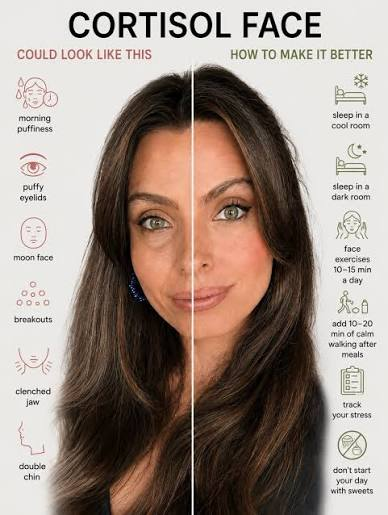
The "cortisol cocktail" is all over social media. Orange juice, coconut water and a pinch of salt to "fix your cortisol."
⠀
But here's the thing most of these videos miss: cortisol isn't the enemy. Timing is.
⠀
Cortisol is supposed to spike in the morning. That spike is your body's natural wake-up signal. It's what pulls you out of grogginess and gets your energy going for the day.
⠀
The problem is when that spike shows up at the wrong time. When your cortisol pulse drifts late into the evening, that's a signature of anxiety and depression.
⠀
So the real question isn't how to lower your cortisol. It's how to get it to land in the morning, where it belongs.
⠀
And the most powerful tool for that is free:
⠀
• In one study, bright light early in the morning raised cortisol by more than 50%, almost instantly
⠀
• The exact same light in the afternoon did nothing
⠀
• In another study, people who got bright light right after waking had about 35% more cortisol in the first hour than people who woke up in the dark
⠀
Your body is primed to respond to light in the morning in a way it simply isn't later in the day. Get sunlight early, and your cortisol spikes when it should. Skip it, and the whole curve can drift later.
⠀
So if you want to fix your cortisol, start with the free ingredient:
⠀
• Get outside within the first hour of waking
⠀
• Aim for 10 to 15 minutes if it's sunny, 20 or more if it's cloudy
⠀
• Keep your nights dim
⠀
Drink the mocktail if you like it. Just know the real cortisol fix comes from the sky.