LLMs are coming for average engineers first. And it's happening very fast.
They are not replacing great software engineers.
They are replacing the "engineers" who needed perfect tickets, five clarification meetings, and someone senior to explain the obvious. Someone who doesn't have critical thinking capabilities.
If your only skill is turning requirements into average code, bad news:
Claude Code or Cursor now does that faster, cheaper, and with no complaining.
Great engineers will be fine.
The rest are about to find out they were just expensive autocomplete.
MCPs are dead.
Not because AI agents do not need tools.
Because they do not need this new layer.
A good agent can already do the job.
It can write code.
It can call an API directly.
It can use a CLI.
CLI and direct APIs support progressive disclosure: the agent can start simple, inspect the results, and only ask for more when needed.
Turns out --help is a very good "protocol" on its own.
So what exactly is MCP adding?
In many cases: nothing.
Just one more wrapper. One more thing to maintain.
If an agent can already use APIs and CLIs, MCP is often redundant.
MCPs feel like a temporary phase that the industry will quietly move on from.
SaaS is dead.
We replaced all our subscriptions with "custom AI software".
Monthly spend dropped from $750 in SaaS to just $4570 in LLM tokens.
Big win.
As a bonus, the team now spends half their time fixing vibe-coded bugs instead of using working tools.
But at least we own the stack.
At some point you realize your agent doesn't need all that fancy stuff. It just needs SQLite.
Memory? SQLite.
Vector DB for RAG? SQLite.
Graph DB? SQLite.
Persistent state? SQLite.
System of record? SQLite.
Very advanced architecture, yes. One tiny file.
Let it sink.
🗞️ We just released one of two case studies with @IBM. The piece shows how legal teams under pressure, from rising contract volumes and complex regulations, can move from reactive to proactive with Dynamiq’s legal agent.
Readers will see real outcomes:
➛ 50% faster contract review
➛ 98% faster answers to business queries
➛ 90% faster clause identification
You'll also find out how the solution uses IBM @IBMwatsonx.data, IBM Granite, and watsonx Orchestrate to plug insights into business systems.
🔎 Read the case study: https://t.co/hnmjJIwJ9u
Now live in @IBM Agent Catalog: @DynamiqAGI agents. Among the first partners in IBM Agent Connect, and first with more than one agent.
⛑️ Medical Research: structured clinical reports from trusted sources
https://t.co/kM0OKN2tQE
👩⚖️ Legal Research: intake -> search -> structured memo/brief
https://t.co/cFwIiGQGDc
Agent Catalog access, per-API pricing, IBM Cloud billing.
🎥 Integration guide: https://t.co/2KtSolxOkW
🎥 Medical agent guide: https://t.co/SvxWGcBodY
🎥 Legal agent guide: https://t.co/U3R2JSF3b8
📢 Big update: you can now connect any #MCP server directly to agents in @DynamiqAGI! This means your agents can tap into custom tools, APIs, and data sources exposed via MCP, giving you more flexibility to design enterprise-grade AI workflows without workarounds.
We just published a new case study on how financial institutions can automate mortgage pre-approval using @DynamiqAGI together with @AmazonNova_ on @awscloud Bedrock.
In the article, we walk through how banks can design a 5-agent underwriting workflow (covering financial analysis, credit checks, property valuation, income verification, and senior risk review), enforce institution-specific policies at every decision point, and even plug in or mock Plaid/Experian data for testing.
You’ll also see how multi-agent orchestration with Nova improves explainability, speeds up reviews, and makes minutes-level pre-approvals possible without sacrificing compliance. If you’re curious about how AI agents are being applied to real financial workflows, this one’s worth a read.
👉 Read the case study: https://t.co/eJ9rlEVrYA
Do people realize that → symbol is not that common and easily typeable from a keyboard and is usually used by LLMs? Clean up your X posts at least a bit 😅
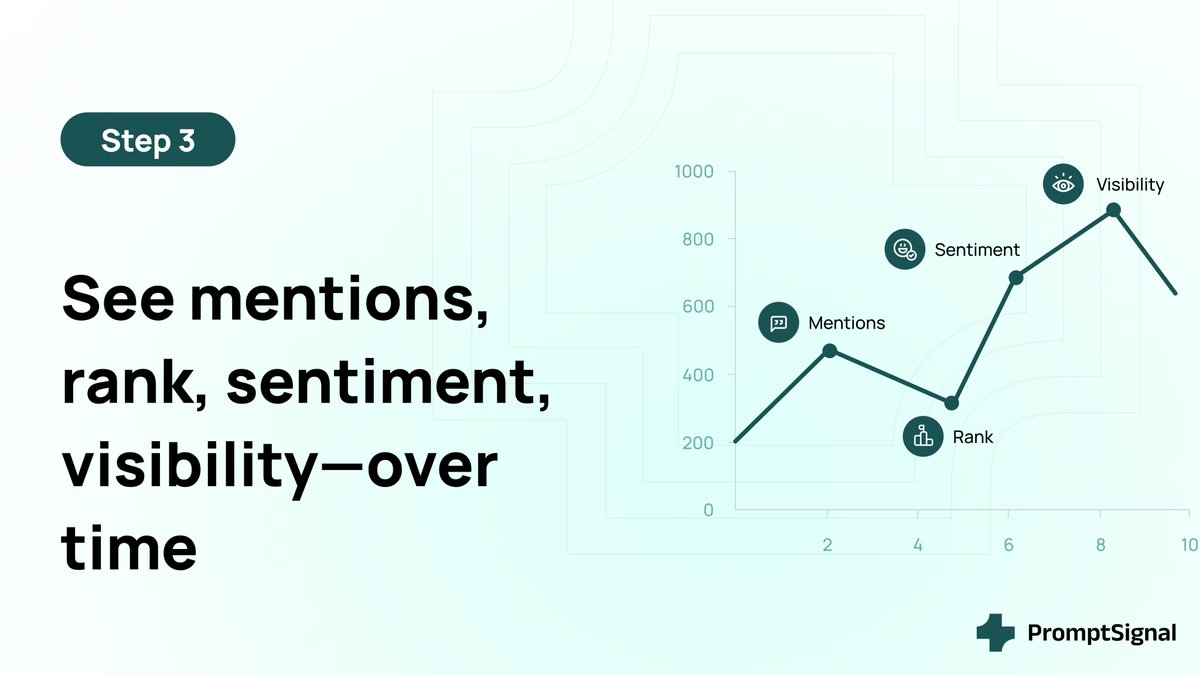
See how your brand appears in AI answers (@ChatGPT / @AnthropicAI / @GeminiApp / @perplexity_ai). Track mentions, rank, sentiment and visibility to name a few. 🔗 Check it out: https://t.co/X6WFf6dXeX
Recently I've been thinking more and more that LLMs pull us toward the average.
It's no secret they're trained to predict the next most likely word, so they favor high-probability, familiar phrasing.
If we then train new models on AI-written text, the tails of the distribution shrink and diversity drops further.
That's what we're seeing with the GPT-5 release: the model is great at complex questions, coding, and math, but users are asking for GPT-4o back, describing the new GPT-5 as uncreative or even "lobotomized".
GPT-5 is a strong upgrade on paper - new SOTA scores in math/coding/vision, but on real-world tasks it feels incremental.
After months on o3 (and with Gemini 2.5 Pro and Claude 4 Opus), the day-to-day diff is smaller than the charts suggest.