AP x Swatch generated massive hype.
It also generated police interventions and store closures.
At what point does unmanaged hype become a brand risk?
Full breakdown linked. Worth your time if you work in brand, luxury, or marketing strategy: https://t.co/3WsRXB2IuG
Everyone is optimizing for AI discovery.
Almost no one is asking what market logic AI is learning to run.
Those are very different strategic questions. Here is why the second one matters more.
Read more here: https://t.co/Nd6fyIdJIG
Everyone is chasing AI visibility.
GEO.
Discoverability.
Machine-readable content.
But visibility is downstream.
Before a machine finds your brand, it has already decided the logic of selection.
Read the full article here: https://t.co/75qMWWHRwi
Estée Lauder ends FY2025 at $14.33B in sales.
Puig at 5B euros.
ogether they look like category overlap.
But consumers do not buy categories.
That reframe changes everything about how to evaluate this deal
Read the full analysis here: https://t.co/fprSlBZjYm
Most companies say they are customer-centric.
Most product launch meetings lead with specs.
That gap is not an attitude problem. It is a structural one.
And there is a specific fix most organizations have not built yet.
Read it here: https://t.co/sy2ufvJHqh
Most companies think AI success is about tools.
It’s not.
The real bottleneck is system architecture and that changes how organizations compete.
Why workflow thinking limits AI impact in 2026: https://t.co/s0u9RzVhJF
Inflation is rising.
Big purchases are being cut.
And yet the $12 chocolate bar is selling well. This is not a contradiction.
It is a structural shift in how people buy status when traditional luxury moves out of reach.
Read more here: https://t.co/NXLtVGgyVi
A Bose speaker that gets dumber after an update is not a tech problem.
It is a brand problem.
Digital obsolescence does not feel like wear and tear.
It feels like a broken contract.
Read more here: https://t.co/8KjU106ZyY
Companies used to compete in categories.
Then customer journeys.
Now the leaders compete on owning demand spaces through interaction fields.
Uber's autonomous vehicle push only makes sense through that lens.
Full breakdown here: https://t.co/iuf56TybY8
Relevance vs. distinctiveness?
Maybe the wrong fight.
Strong brands don’t choose sides, they build systems.
Here’s the perspective challenging one of marketing’s biggest debates: https://t.co/r3WyrMsF1E
Nokia had dominant share, unmatched distribution, and strong execution.
Then it lost everything.
Not because execution failed.
Because the system changed and they kept optimizing the wrong one
Read more here: https://t.co/sZ0rWoCGwt
A growing brand portfolio can still destroy value.
The difference often comes down to how capital is allocated across brands.
Read the full article to explore the idea.
https://t.co/seHx9pgSQn
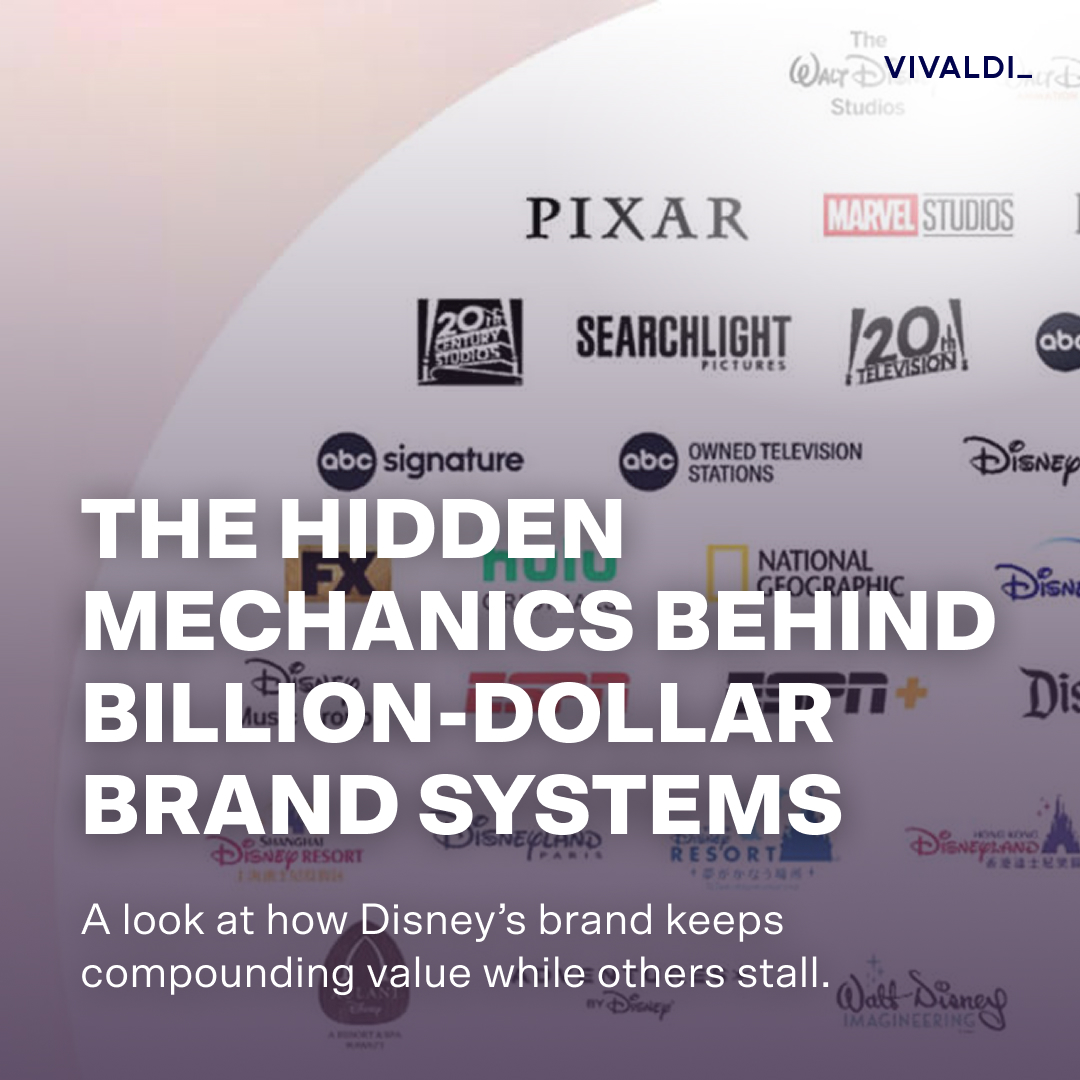
Disney’s brand keeps creating value because every part of its business fuels the rest.
Most brand portfolios don’t.
Curious why?
https://t.co/haygLhxRmn
At Davos, AI shifted from promise to reality.
Customers expect seamless experiences but most enterprises can’t deliver.
Discover the 5 strategic lessons leaders are acting on now.
Read the full story to see what business leaders learned at Davos: https://t.co/wALTr3d2Sj
Biologique Recherche has 150M euros in annual sales and 30% margins.
But the interesting M&A question is not the price.
It is what the buyer is actually acquiring, and whether they know how to protect it.
Read it here: https://t.co/IjPnYBeF8h
In the intent economy, growth is no longer something you push. It is something you orchestrate, organized around episodes, moments, and jobs to be done, where intent appears.
When that happens, the system responds.
https://t.co/5qoSPkJQ5m
High campaign ROI does not always mean strong strategy.
The real question may be whether marketing increases the company’s return on invested capital.
https://t.co/MPTVOHAtr0