A lot has been said about how we represent government fees on @atlys:
1. Every country calls its visas different names - SDF for Bhutan, ETA for Kenya etc. As a customer, it is very confusing to understand what these terms mean but it's easier to know that it's going to then Government directly. Hence we use "Government fees" everywhere. This is also based on numerous experiments, surveys and user research.
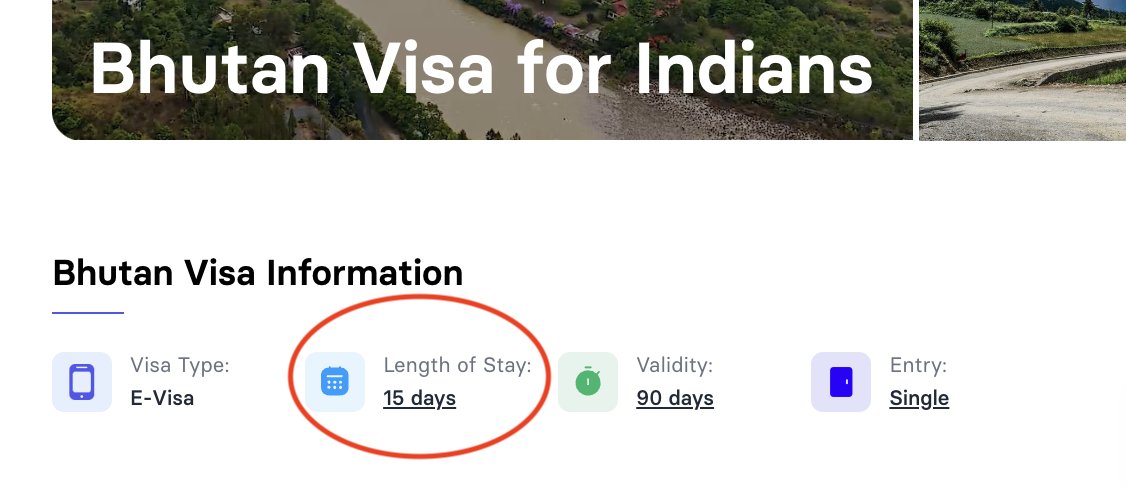
2. On Bhutan, we only offer a 15 day entry permit (SDF) currently. Hence, 1200 x 15 = 18k. On our page, we clarify a) it's 15 days only b) that it is SDF c) history of SDF and why it exists. If someone wants to go for shorter or longer time, they can apply directly. For many countries, Atlys still offers only one visa type yet. And i think there's nothing wrong with that.
Miss our recent workshop on low frequency marketplaces?
This was a great workshop where @viveckpkumar walked us through some of the specific challenges with low frequency marketplaces, strategies to grow them, & more.
The recording is now live!
https://t.co/uyWl5GlZMd
Hot take: the current way of the problem classification is outdated.
The "painkillers vs vitamins" is too naive a way to classify problems.
The BELT framework is more intuitive. Here’s how to apply it…
T - Transient problems are the ones that must be solved to achieve an enduring outcome.
Ie. In a mortgage app, the speed of securing a mortgage is a transient problem (a means to an end). However, securing a mortgage of lower interest is the enduring problem (desired outcome).
Four things none groom you when you are a PM to become a product leader.
1. How to set a vision?
2. How to strategize?
3. Recognizing culture
4. Decision-making under uncertainty
Credit: NCT was originally published by @reforge by @ravi_mehta and @natatouille
Follow me to know more about how to rewire your org and stakeholder into an accountability machine.
Hot take: Product roadmaps should be long-dead.
At my previous company, we’ve completely replaced them with something better, the NCT (Narrative, Commitments and Tasks) framework.
Here’s a quick snapshot of why it’s better (see image).
Solution: NCTs are flexible.
They accommodate different types of commitments and give you the latitude to express the spectrum of product management activities.