Miller &Trader - Rice and Pulses. Keen interest in all agro businesses. Views and charts are personal analysis.
Always open for a good chat
*Festina lente*
As per the market sources, the #India is set to ban #exports of #sugar amid a decline in production, During the current 2022-23 season, mills have so far dispatched around 58 LT for exports. The government has already capped sugar exports at 60 LT for the current season. The ban would, then, effectively apply only on 2 LT, but will have an impact on market sentiment and check any inflationary trend.
Since folks are worried about the expected El Nino and its impact on food prices in South Africa, I should make a few observations on this issue.
A major challenge that could confront South Africa's agricultural sector in a few months is a change in weather conditions from favourable rains to drier and hot conditions. This would be a switch from a prolonged period of La Niña to El Niño.
South Africa has had four seasons of La Niña induced heavy rains from 2019/20 to 2022/23. These above-normal rains supported agriculture leading to higher yields across various field crops, fruits and vegetables. The livestock industry also benefitted from improved grazing pasture. Importantly, having four consecutive La Niña seasons was an unusual occurrence.
The typical cycles are two seasons of higher rainfall followed by normal-drier seasons.
Excluding the current trend, the only other period in the recent past with three successive years of conducive weather conditions and a large crop harvest ran through the 2007/08, 2008/09, and 2009/10 production seasons. This period brought a sizeable agricultural yield to the country.
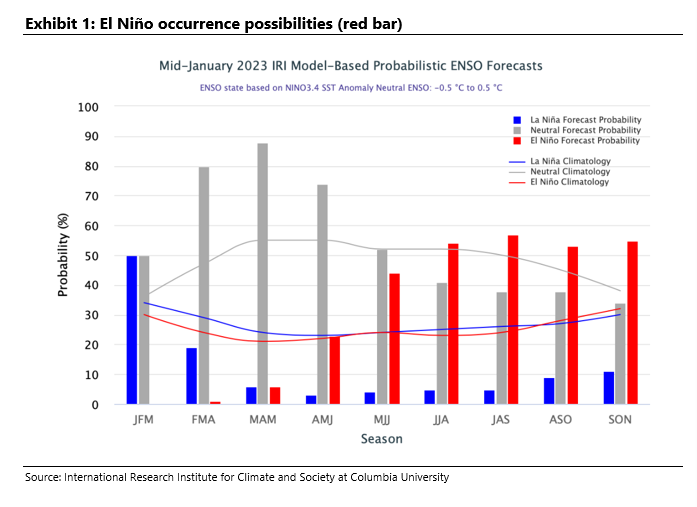
But the scientists at the International Research Institute for Climate and Society at Columbia University see a protentional occurrence of an El Niño later in the year – see the red bars in the chart.
This weather phenomenon would bring below-normal rainfall and hotter temperatures in South Africa. If it is intense, this could resemble the bleak agricultural conditions we witnessed during the last El Niño drought in the 2015/16 season, where staple crops such as maize dropped to 8,2 million tonnes, well below South Africa's consumption levels of 11,8 million tonnes.
This shortfall necessitated imports of maize to supplement domestic needs. Other field crops, fruits, vegetables and livestock also experienced severe losses.
But I doubt things will be this bad. So far, all indications indicate a weak El Nino and the soil moisture remains reasonably favourable across South Africa.
Thus, I remain optimistic that the 2023/24 agricultural season in South Africa should be okay, although crop yields could drop considerably from the levels of the past few years.
Also, one has always to remember that there will likely be a big crop in the world market brought by the changes in weather conditions.
If my view is correct, we shouldn't have a notable uptick in consumer food price inflation in 2024; if anything, we should see a softer pace than the expected 2023 levels.
@RailwaySeva The attendant on coach HA1 train no 18204 is drunk and has turned AC setting to the coldest, and even after repeated requests is not cooperating.
@RailwaySeva The attendant on coach HA1 train no 18204 is drunk and has turned AC setting to the coldest, and even after repeated requests is not cooperating.
A low is expected to form over the eastern BOB over the next couple of days then can strengthen to a depression and cyclonic storm this weekend. Cyclone can make landfall in N #AndhraPradesh, #Odisha or #WestBengal early next week. Storm can peak as a SCS or VSCS. #India
Expect rains in paddy harvesting season. Higher moisture content, excess brokens in milling will lead 5o loss of farmers income due to higher milling costs resulting from export ban.
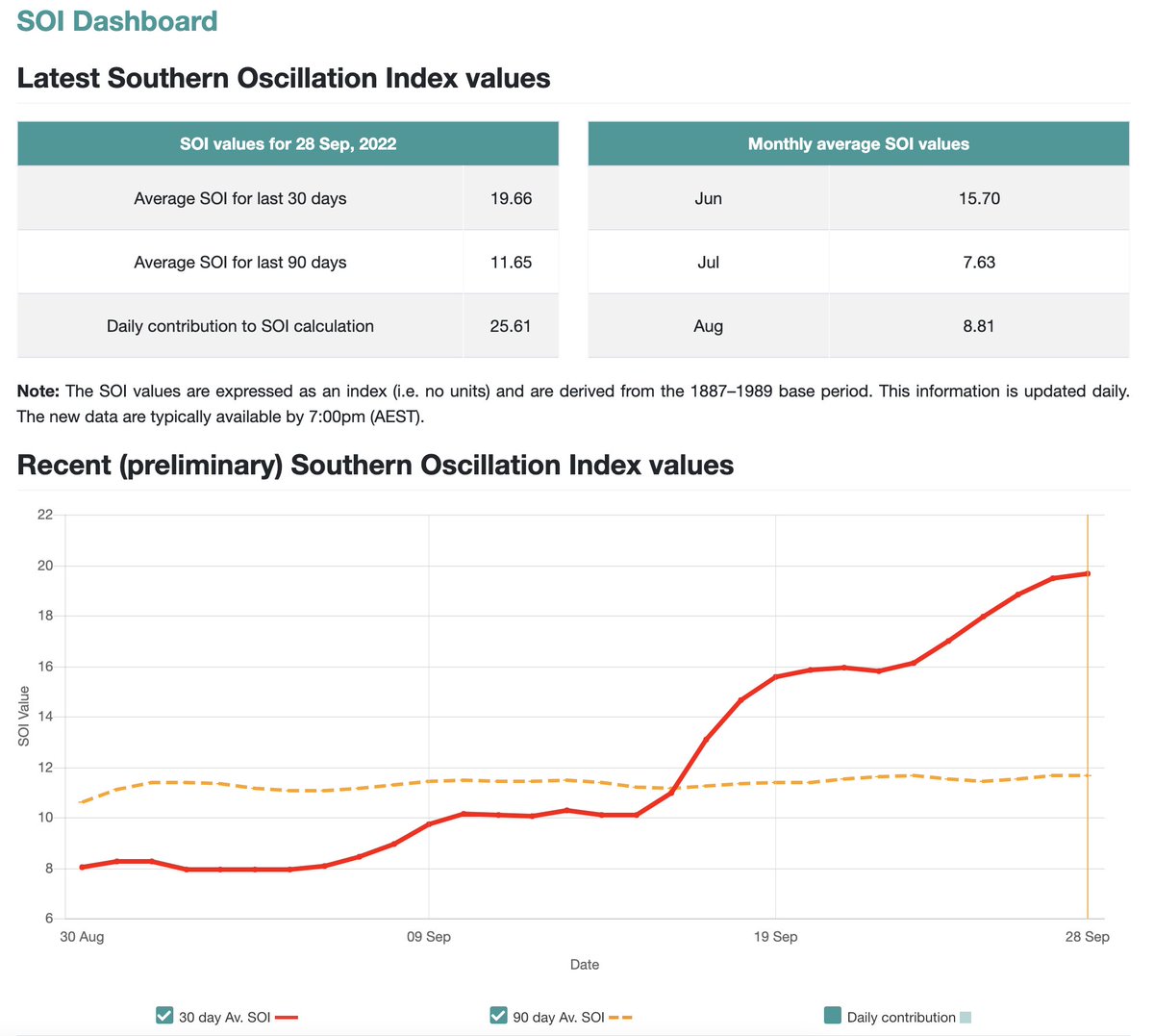
Southern Oscillation Index (SOI) is strongly + which is a sign of strengthening #LaNina. A strong +SOI in Sep usually means late onset of NE monsoon in S #India & leads to less rain early in season. Signal reverses late in season so persisting +SOI could mean good rains Dec/Jan.
A huge percentage of the global food supply relies heavily on just one pipeline carrying ammonia gas from Russia to Odessa. This Artificial fertilizer indirectly feeds billions of people. The pipeline is currently shut.
@kumarman145@IndianExpress Unavailability of Indian broken rice and costly Indian white rice will keep prices of wheat and corn elevated globally. Only Indian farmers will suffer as price of broken rice falls, price fetched by farmers for paddy will fall.
@gaurav_kochar Huge losses to Millers and farmers. Paddy prices drops from 1900/Q to 1700/Q. Millers could reduce workforce by 30% untill arrival of new crop.