Questioning broken systems, bad policies & unfair burdens.
The middle & lower class pays. The system decides.
A voice for middle & lower class. Only facts.
Should the religion of the school decide the minimum education a child gets?
I am a Hindu.
I still don’t want a Hindu child in a Vedic pathshala or a Muslim child in a madrasa getting a weaker academic education than a child in a regular school.
If the institution’s religion changes the standard, that is not equal education.
1/5👇
They can “shift” my name on a voter list. They can not shift Punjab’s fiscal collapse out of sight.
Instead of weaponising the state machinery against political opponents, the AAP government should answer for the state of Punjab’s finances.
Punjab’s fiscal policy is on the verge of collapse and I’ve explained exactly why in my post.
Punjab vs Haryana.
Two neighbouring states. Same region. Shared history.
But here’s the uncomfortable question:
Why is Haryana building an economy around jobs, industry and investment while Punjab is increasingly debating subsidies, welfare and debt?
One is trying to expand economic opportunity.
The other is carrying a growing fiscal burden.
Are we building an economy or just building a bigger bill for the next generation?
Let’s look at the numbers.
Disaster relief, housing, ₹1,051 crore projects good.
But one uncomfortable question:
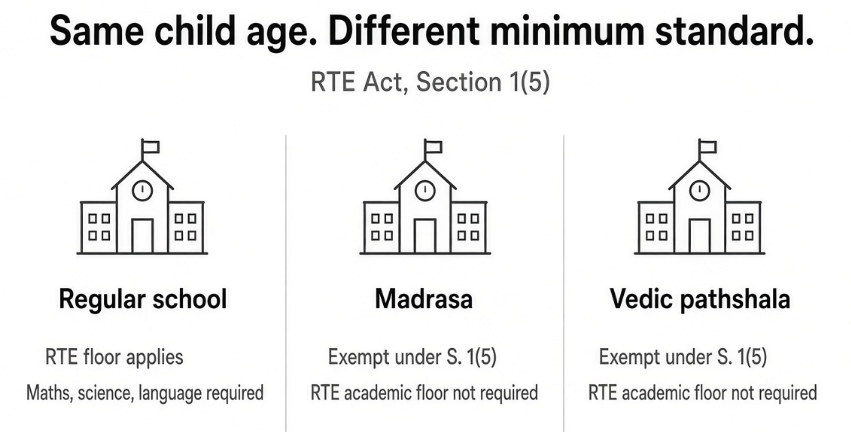
Will a child in a madrasa or Vedic pathshala get the same minimum standard of maths, science, language and basic education as a child in a regular school?
Development isn’t just roads and buildings. It’s building capable children too.
See my analysis :
Should the religion of the school decide the minimum education a child gets?
I am a Hindu.
I still don’t want a Hindu child in a Vedic pathshala or a Muslim child in a madrasa getting a weaker academic education than a child in a regular school.
If the institution’s religion changes the standard, that is not equal education.
1/5👇
The answer shouldn’t depend on which religious symbol is above the classroom.
Vedic pathshala
Madrasa
Regular school
Different traditions are fine. Different minimum academic standards are not.
If we truly care about a child’s future, the academic floor must be equal.
Should the religion of the school decide the minimum education a child gets?
I am a Hindu.
I still don’t want a Hindu child in a Vedic pathshala or a Muslim child in a madrasa getting a weaker academic education than a child in a regular school.
If the institution’s religion changes the standard, that is not equal education.
1/5👇
5/5
Imagine three classrooms:
- Regular school
- Vedic pathshala
- Madrasa
Should all three have to ensure a minimum level of maths, science, language, and basic skills?
Same floor. Every child. Every institution.
If you want an exemption, argue for it for both.
If you want a standard, demand it from both.
Which one are you actually defending?
7.8% growth is worth celebrating.
But if we are talking about India’s strength, we should also ask: Are we giving every child the education needed to contribute to that growth?
Regular schools, madrasas, Vedic pathshalas growth needs human capital, and human capital needs a common academic floor.
See my analysis :
Should the religion of the school decide the minimum education a child gets?
I am a Hindu.
I still don’t want a Hindu child in a Vedic pathshala or a Muslim child in a madrasa getting a weaker academic education than a child in a regular school.
If the institution’s religion changes the standard, that is not equal education.
1/5👇
Strong ministers matter. But strong institutions matter even more.
If India wants to compete globally for the next 25 years, every child needs a strong educational foundation whether they study in a regular school, madrasa or Vedic pathshala.
Global ambitions need equal educational standards at home.
See my post :
Should the religion of the school decide the minimum education a child gets?
I am a Hindu.
I still don’t want a Hindu child in a Vedic pathshala or a Muslim child in a madrasa getting a weaker academic education than a child in a regular school.
If the institution’s religion changes the standard, that is not equal education.
1/5👇
@narendramodi Every drop matters. So does every child’s education.
If we want a future-ready India, madrasas, Vedic pathshalas and regular schools must all give children a strong academic foundation.
Water security needs innovation. Human capital needs equal standards too.
Should the religion of the school decide the minimum education a child gets?
I am a Hindu.
I still don’t want a Hindu child in a Vedic pathshala or a Muslim child in a madrasa getting a weaker academic education than a child in a regular school.
If the institution’s religion changes the standard, that is not equal education.
1/5👇
Strong diplomacy matters, but India’s biggest long-term strength is its children.
If we are planning for the next 25 years, we also need to ask: Are children in every classroom getting the education they need for that future?
Madrasas, Vedic pathshalas or regular schools religious identity should not decide a child’s academic floor.
See my post :
Should the religion of the school decide the minimum education a child gets?
I am a Hindu.
I still don’t want a Hindu child in a Vedic pathshala or a Muslim child in a madrasa getting a weaker academic education than a child in a regular school.
If the institution’s religion changes the standard, that is not equal education.
1/5👇
@SchoolThikKroJP If BJP demands equal standards, apply them to every religious institution. If it demands exemptions, apply that principle equally too.
The test is not Hindu or Muslim.
@SchoolThikKroJP I am not arguing against religious education. I am arguing that religious education should not determine the minimum academic education a child receives.