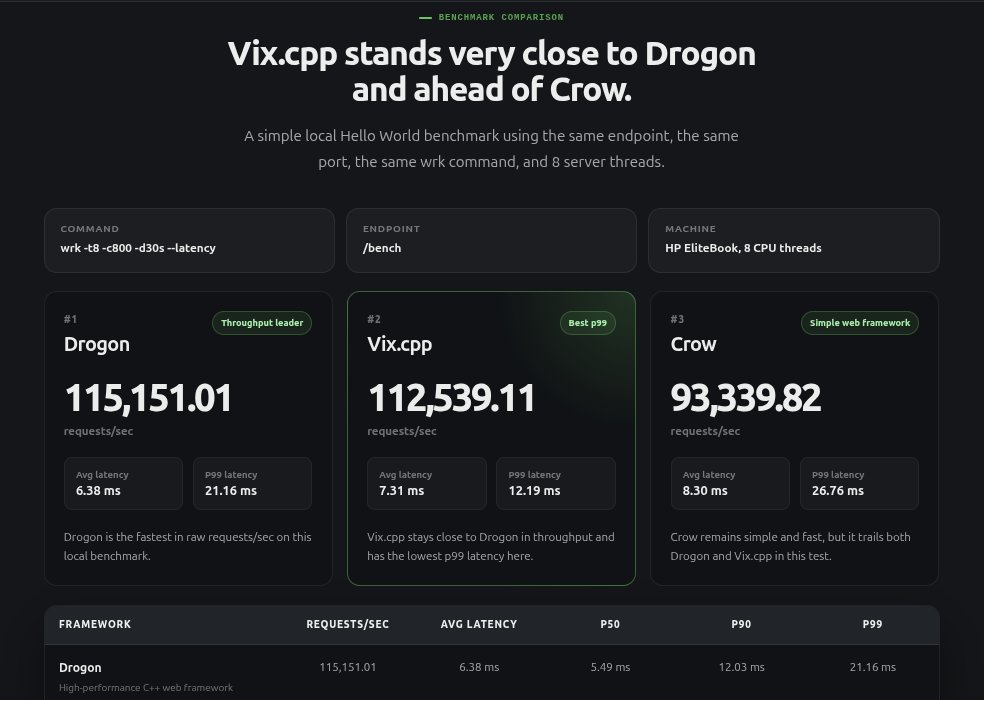
Vix.cpp v2.7.0 benchmark update.
On a local HP EliteBook, Vix.cpp reaches 112k req/s on a simple /bench endpoint.
Very close to Drogon in raw throughput, ahead of Crow, and with the best p99 latency in this run.
https://t.co/IdmH5j9aOc
C++ builds shouldn’t require memorizing a pile of separate tools.
vix build brings presets, warnings, sanitizers, cross-compilation, caching, parallel jobs, dependency support, diagnostics, and CMake integration behind one command.
One build interface, from a single C++ file to a full project.
https://t.co/ycw6lCXwv4
#cplusplus #cpp #VixCpp #opensource
C++ concurrency gets difficult fast. A good abstraction should make it easier without hiding how the work actually runs.
Vix ThreadPool provides task execution, futures, cancellation, priorities, structured work, parallel algorithms, periodic tasks, and runtime statistics on top of a pool of C++ worker threads.
https://t.co/e5MtnCQX11
#cplusplus #cpp #VixCpp #opensource
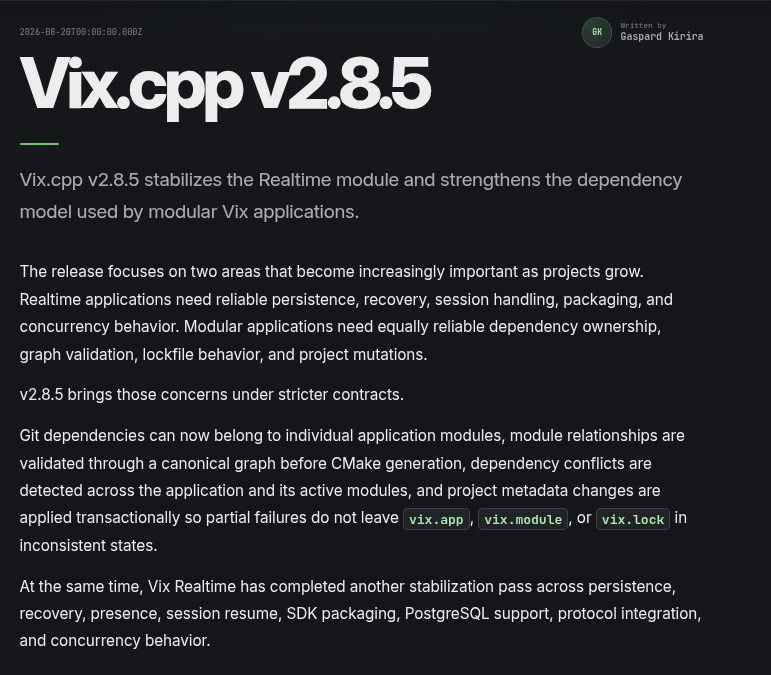
C++ infrastructure gets harder as projects grow. Vix.cpp v2.8.5 focuses on making that growth safer.
This release strengthens Realtime across persistence, recovery, sessions, PostgreSQL, packaging, and concurrency, while tightening dependency handling for modular Vix applications.
Release notes: https://t.co/r6qkvA3WhK
#cplusplus #cpp #VixCpp #opensource
C++ can build modern web backends without feeling stuck in the past.
Vix.cpp keeps things simple: middleware, automatic HTTP compression, clean APIs, and native performance.
The web stack doesn’t have to belong only to JavaScript, Go, or Rust.
C++ belongs here too.
Working on Vix.cpp performance.
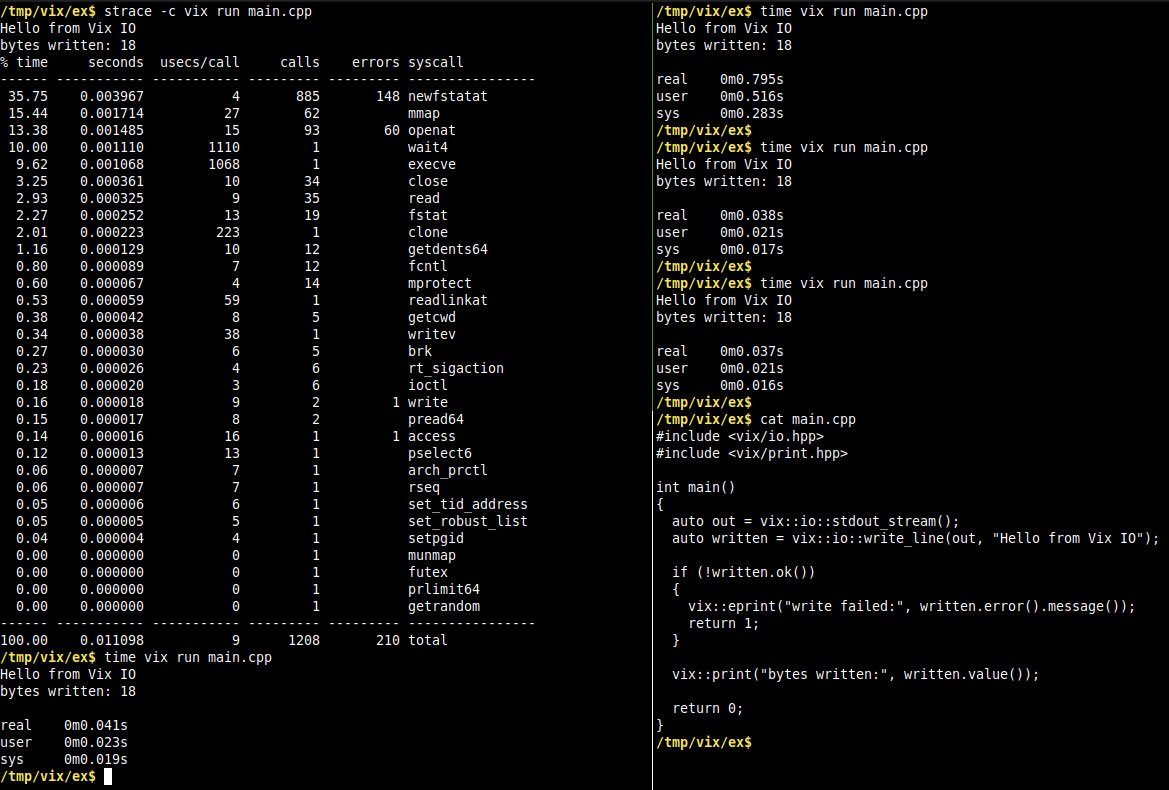
A cold vix run main.cpp takes ~0.8s, but once cached the same C++ file now runs in ~https://t.co/gmZCz7otaf CMake.
No Ninja. No dependency probing on the warm path. Just validate the cache and run the binary.
Making C++ iteration feel instant. ⚡
C++ iteration can be fast.
vix run hello.cpp → 64ms warm
Vix.cpp HTTP app → 713ms warm g++ compiling the same Hello World → 407ms
No scripting language. Still C++.
https://t.co/bWawDh8oyu
Improving the vix build experience in Vix.cpp.
Build output is now live, cleaner and actually useful: compile errors, linker errors, source locations and human-readable hints without drowning developers in raw compiler noise.
C++ tooling should help you understand what went wrong, not make debugging harder.
Vix.cpp v2.8.3 is out.
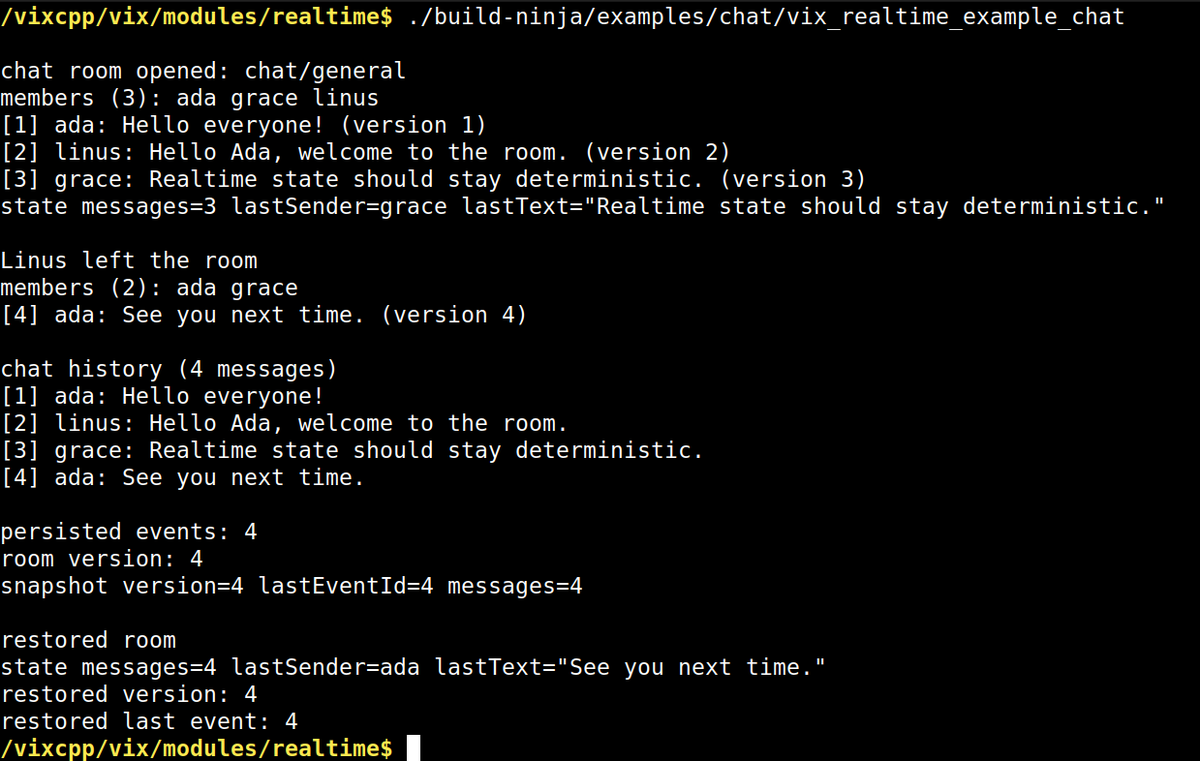
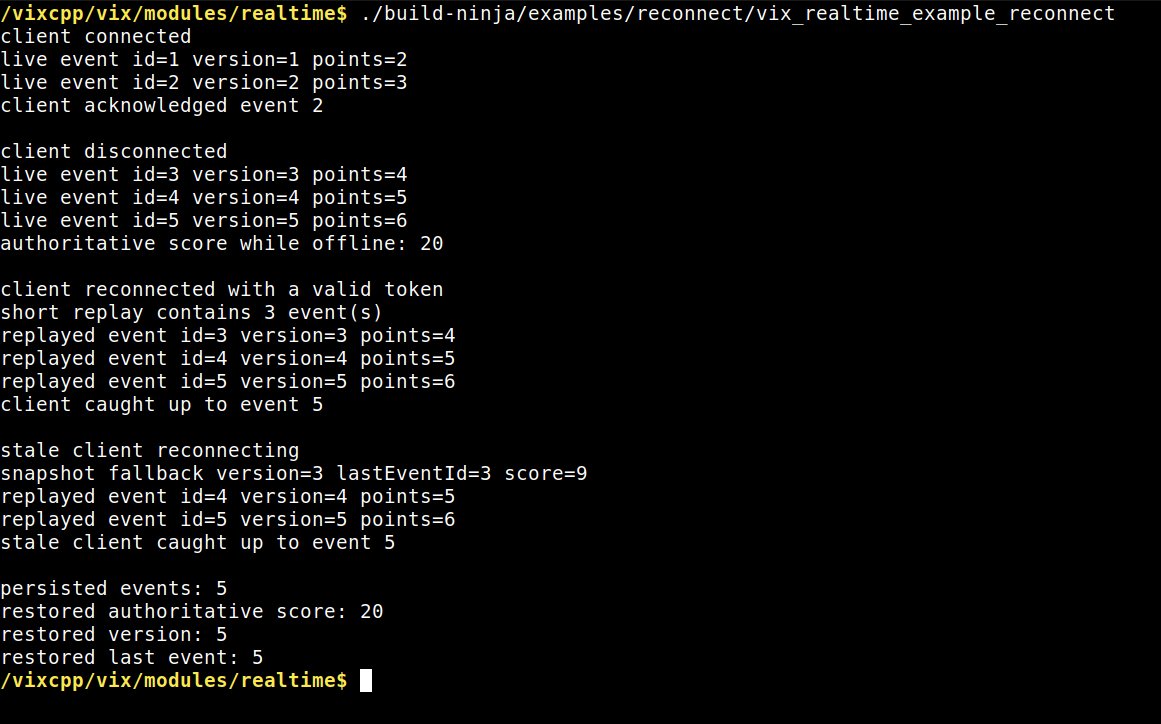
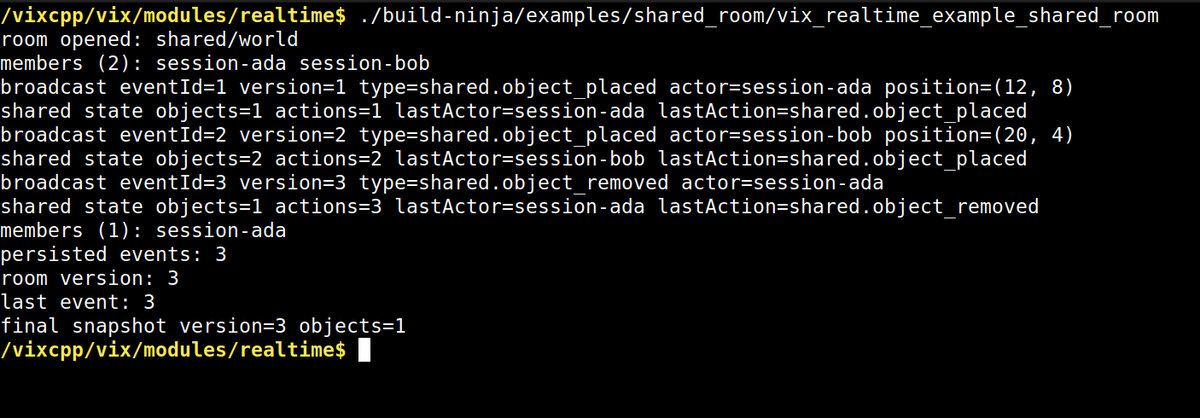
Introducing vix::realtime for stateful realtime C++ apps: rooms, deterministic events, snapshots, replay, sessions and reconnection.
v2.8.3 is the first stable v2.8 release.
https://t.co/9SA1ZFlQLi
Vix.cpp v2.8.3 is out.
Introducing vix::realtime for stateful realtime C++ apps: rooms, deterministic events, snapshots, replay, sessions and reconnection.
v2.8.3 is the first stable v2.8 release.
https://t.co/9SA1ZFlQLi
I fixed two major animation bugs in Orelunza’s humanoid system.
The character was sliding without moving its body, while the hands kept rotating endlessly.
The cause: animations were bound to the wrong skeleton root, and manual quaternion updates were accumulating every frame.
Now Mixamo animations correctly drive the active skeleton: walk, run, strafe, jump, fall and landing all work naturally.
Built with Vix.cpp/C++ + Three.js.
https://t.co/v9r5QeglFZ
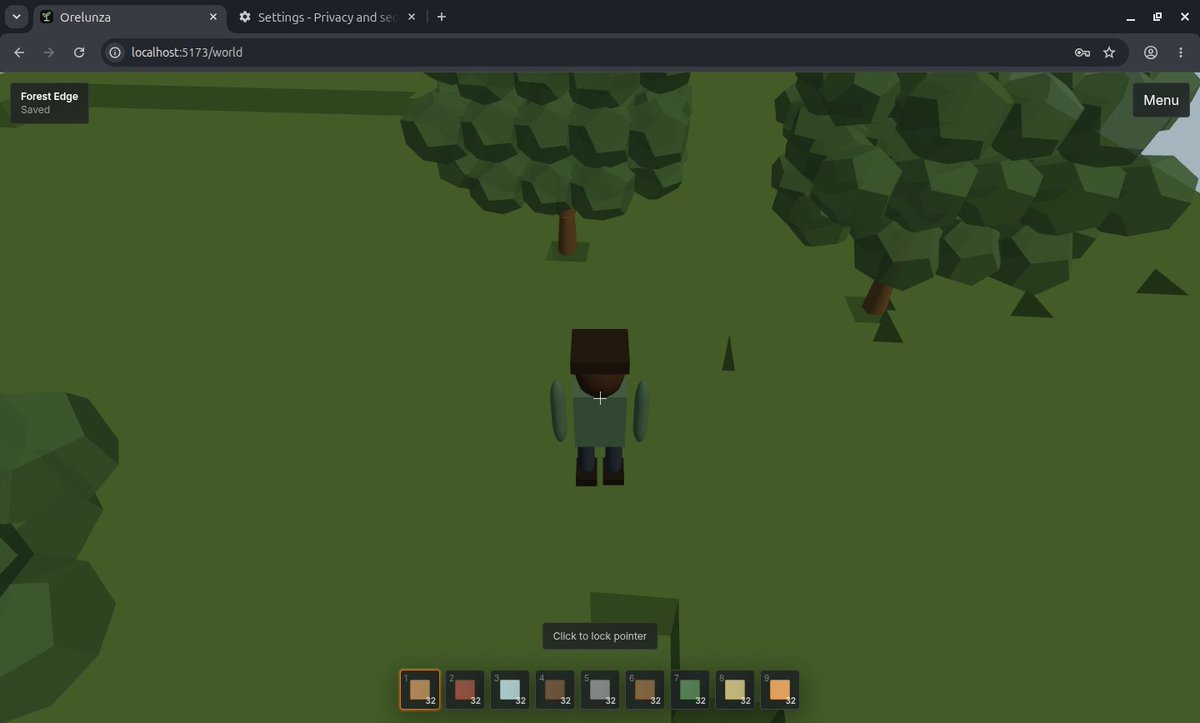
I’m building Orelunza, a peaceful 3D world powered by Vix.cpp and C++ on the backend, with Three.js rendering the game in the browser.
Today I made the world much faster by fixing the engine’s real bottlenecks: distant chunks were not fully released, collisions could generate terrain during a frame, and the frontend received too many updates.
Now Orelunza keeps only 3×3 active chunks, uses local collision checks, throttles Vix.cpp API synchronization, reuses memory, and runs a single lightweight game loop.
The result: faster movement, a smoother camera, fewer draw calls, and a much more responsive world.
GitHub: https://t.co/v9r5QeglFZ
C++ is powerful, but building real applications with it still feels harder than it should.
Vix.cpp tries to improve that experience by bringing the missing pieces together:
modules, packages, project structure, tests, app runtime, backend tools, and a cleaner developer experience.
Not to replace C++.
To make C++ easier to use for modern software.
#cpp #cplusplus #Vixcpp
Vix.cpp v2.8 is taking shape with a new vix::realtime module.
Stateful rooms. Deterministic commands and events. Sessions. Snapshots. Replay. Reconnection. Snapshot fallback. Optional WebSocket transport.
The first examples are already working: counter, shared room, chat, and reconnect.
Not more surface area for the sake of it.
Stronger building blocks for real C++ applications.
Depth over surface area.
C++ is the language everyone insults until they need speed, control, native binaries, or something that still works 20 years later.
The problem is not C++.
The problem is that we accepted the pain around it as normal.
For my first post, I’m sharing a letter @NVIDIA signed on why open models matter.
AI will transform every industry, power every company, and be built by every country.
Open models strengthen safety and cybersecurity, accelerate innovation and diffusion, and enable sovereignty.
The world needs both frontier closed models and frontier open models.
https://t.co/AUKzoQ5Ikb
Vix.cpp is open for contributors.
We’ve added detailed issues across the DB, ORM, and JSON modules covering testing, security, performance, CI, APIs, documentation, fuzzing, and cross-platform support.
Pick an issue and help us improve modern C++ tooling:
https://t.co/Low4u2s8NN
#cplusplus #cpp #opensource
Ivi.php v2.0.0 is out.
The official application skeleton has been completely rebuilt for modular web and console applications with PHP 8.2+.
Bootstrapping, service providers, DI, configuration, console commands, HTTP entry point, and database support.
https://t.co/PgTVY35haC
C++ tools should be extensible without turning the core into a monolith.
Vix.cpp v2.7.7 introduces package-based Vix Note extensions, custom cell runtimes, extension management, a modernized Reply editor, and more reliable global CLI installs.
https://t.co/WErmbAb1ZI
C++ tooling is easier to trust when the engineering stays visible.
The Vix.cpp Engineering Blog brings together architecture notes, build-system internals, runtime benchmarks, diagnostics, and complete release histories.
https://t.co/SE1IwXBkpz