.@nyulangone is a recipient of an Oculomics grant from the @NIH_CommonFund (partially #NEIfunded). The plan is to investigate how OCT can be used to detect neurological diseases like Parkinson’s, Alzheimer’s & more.
@vjsriniv@NYULangoneEye
More: https://t.co/jM2vXf2FfE
Dr. Huang co-invented an imaging technology that routinely helps prevent blindness and is increasingly used to diagnose and treat conditions of the heart, brain, skin and more. #Lasker2023#LaskerAwards https://t.co/e6HpOGLo4p
Visible light OCT can now image macular pigments (MPs), potent absorbers of harmful blue light. Read about the first localization of MPs to Henle's fiber layer in the living human retina! #OSA_OL@NYULangoneEye#aging
https://t.co/WuQty6pZLD
A team led by @NYULangoneEye's Dr. Vivek J. Srinivasan (@vjsriniv) used visible light OCT to gain new insights into retinal regions such as band 2 that can ultimately help improve diagnostic capabilities and treatments for retinal disorders.
Read more: https://t.co/vAObarRJrT
Authors report imaging rod photoreceptors in the aging mouse eye from soma to synapse for the first time. Also, authors find that visible light Optical Coherence Tomography uncovers yet another retinal band. https://t.co/aWioMBE96C @NYULangoneEye@ch21pooja@vjsriniv
Yet another retinal band uncovered by @ch21pooja and @AaronKho4 in the living eye with visible light OCT! Now six new retinal features...and counting. Read here about our latest discovery on rod spherule synapses: https://t.co/L4p2L8YGcI
@NYULangoneEye@nyugrossman@AAOjournal
Ph.D. fellowship - We are seeking a doctoral student to join our research group at @UniStavanger. We are interested in developing bacterial polymeric biomaterials for biomedical applications.
RTs would be highly appreciated :)
Here is the advertisement
https://t.co/QHRJtVMYC0
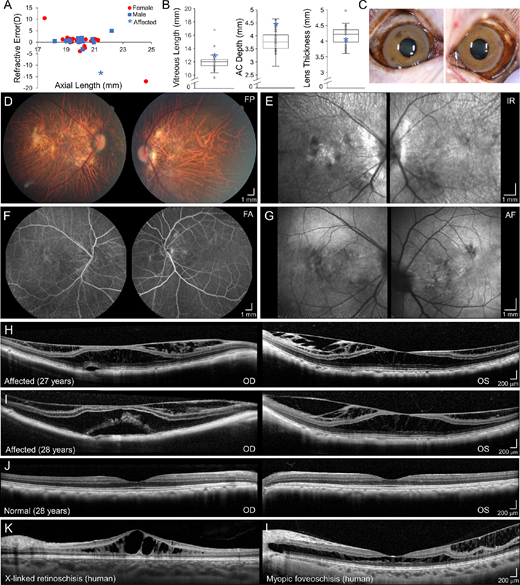
Glenn Yiu et al. @ucd_eyecenter@NatEyeInstitute@bcmhouston characterized a primate model of myopic foveoschisis by clinical examination & imaging followed by morphologic, cellular, and transcriptional profiling of retinal tissues and genetic analysis.
https://t.co/qSyhn0C147
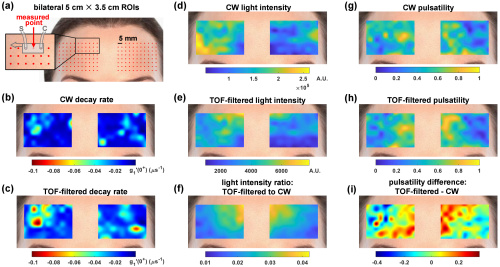
Outlook on the future of interferometric diffuse optics: https://t.co/aLJxwCwXFY.
We look forward to disseminating these exciting technologies to the community through @ucdavisNCIBT!
Rolling out a new preprint on 2nd Gen dual-channel visible light optical coherence tomography. 👇👇https://t.co/riUNjXNwnW Several years in making, too. We learned first hand balancing resolution and imaging range is challenging in clinics. We proposed a solution for it.
We designed the first linear-in-k VIS-OCT spectrometer. The roll-off is wavelength independent, and the performance (7.2dB over the entire imaging depth) is at the theoretical limit for FDOCT. All of the components are off-the-shelf items.
Largest clinical study so far with visible light OCT. Several years in making, and perhaps the most challenging project that I have had so far, technically and practically. Shout out to @WeiyeSong and all authors! Scattering Spectroscopy in the human eye has bright future!
Just out in @ARVOtvst-More subcellular detail revealed by visible light OCT: myoid-ellipsoid boundary and band 2a for cones as well as band 2b for rods! What will we find next?
Read here: https://t.co/3UC6P6g0uy
@NYULangoneEye@NYUImaging@UCDavisBME