Tem gente que realmente abraçou o epiteto "Papista" que os protestantes nos deram. Eles realmente aderem ao "Papismo" de corpo e alma.
Eu não sei vocês, caras, mas a minha religião se chama CATOLICISMO.
A ridícula agitação nas redes contra a FSSPX é existencial. O mero fato de a FSSPX "estar aí" põe para o católico hoje um desafio de consciência. É um desafio duro que, se for aceito, leva a consequências amargas -- que a maioria das pessoas não está preparada para enfrentar. A FSSPX se torna, pois, o bode expiatório para o alívio existencial e a paz de consciência. O modernismo, por exemplo, é um inimigo facilmente reconhecível: todos sabem que ele está fora da Igreja. A FSSPX é o contrário: todos sentem, no fundo, que ela está certa. Todos sabem que, diante dela, um problema vital precisa ser resolvido. Isso dói, ameaça, desestabiliza, e, se todos sabem que o Vaticano não irá resolver, então só resta uma solução: fazê-la sumir.
Don Davide Pagliarani replies to Pope Leo's Decree of excommunication
We asked for bread from our father. We received a stone.
We had asked for a fish. We received a serpent.
We asked for an egg. We received a scorpion
"We had asked to be instructed and confirmed in the faith of all time; instead, we have been declared schismatic a second time."
Pope Leo has not acted as a father, but as an anti-father towards the faithful of the SSPX
https://t.co/0DV6dFrmCX
« Nous ne sommes ni schismatiques ni excommuniés, ni contre le Pape. Nous ne sommes pas contre l'Église catholique. Nous n'avons pas créé une Église parallèle. C'est absurde. Nous sommes ce que nous avons toujours été : des catholiques qui continuent d'être catholiques ».
Monseigneur Marcel Lefebvre, 1984.
Durin the Ottoman period, the Muslim Turks, in order to terrorize the Greeks, impaled and roasted alive Athanasios Diakos. But, they gave him a chance: "Will you become a Turk, Diakos? Will you change your faith? Will you pray in the mosque and abandon the church?"
He replied to them: "Go away, you and your faith, may you perish, you renegades! I was born a Greek, and as a Greek I shall die."
According to eyewitness accounts from the time, two Turks lit a fire next to the stable and placed an iron grate and a large copper cauldron filled with oil over it. Then they lifted Diakos, still bound as he was, and made him sit on an old wooden stool. They raised his legs. The Turks began to mock him, asking him various questions. For every negative nod, they drove nails into his feet. Afterwards, they took the boiling oil and first poured it over his bare feet.
When they saw that he did not react, they tore his clothing and began pouring it on his back and chest. He groaned silently in pain, and the soldiers, under orders not to kill him, used needles to burst the blisters that had formed on his skin from the boiling oil. This continued for hours, until the next morning.
Exhausted as he was, they dragged him through the town to execute him. His execution was carried out in public view with the permission of Halil Bey, so that the Greeks would be warned about what would happen to anyone who dared to revolt. Testimonies state that even Diakos’s mother was present at his torture.
After tying him backwards onto a saddle with his legs spread apart, the executioner began pushing the sharp tip of a wooden stake into his groin area and then slowly drove it deeper, going all the way through his body until it emerged near his right ear. The executioner moved carefully, as he had orders not to kill him quickly; with every push of the stake, Diakos’s screams confirmed he was still alive.
Once the executioner had finished his work, the Turks tied the body tightly with the stake so that the skin would not tear, and they propped him up, almost upright, against a tree.
As he was dying, it is said that he uttered these sorrowful verses: "Look at the time Death has chosen to take me, now, when the branches are blossoming and the earth brings forth grass."
Halil Bey gave the order to light a fire beneath him and to turn him slowly, so that he would be roasted alive like an animal. After many hours of torture, the Greek chieftain passed away on April 24, 1821. However, this had the opposite effect from what the Turks had expected.
When the Greeks learned of his story and his martyrdom, they were filled with even greater rage and strength to liberate themselves from the barbarous Muslims and Islam.
Athanasios Diakos is one of the most important heroes in the Greek history.
Reminder: the Crusades were a response to over 400 years of Islamic aggression against Christians and Europe.
632: Muhammad dies.
635: Muslims conquer the Christian city of Damascus.
636: Muslims conquer the Christian city of Antioch.
637: Muslims conquer the Holy Land.
639: Muslims conquer the first Christian country Armenia.
641: Muslims conquer the Coptic Christian country of Egypt.
650: Muslim armies reach southern Italy and Cyprus, taking thousands of captives as "slaves" and "concubines."
711: Muslims invade Spain, and by 715, they have overrun most of it.
717: Muslims besiege Constantinople but are repelled.
730: Muslims invade France, only to be stopped by Charles Martel at the Battle of Tours.
792: The ruler of Al-Andalus calls for the invasion of France, and Muslim armies are assembled to attack it again, but they are repelled.
827: Muslims invade Sicily and Italy, persecuting monks. Sicily remains under Islamic rule until 1092.
846: Muslims invade Rome and force the Pope to pay tribute.
848: A third invasion of France occurs, and they are repelled for the third time.
909: Muslims occupy Sardinia.
937: The Church of the Holy Sepulcher is burned down by Muslims, and more churches in Jerusalem are destroyed.
1009: Destruction of the Church of the Resurrection in Jerusalem.
1012: Beginning of al-Hakim’s oppressive decrees against Christians.
1071: Turkish Muslims attack the Byzantines and occupy much of Anatolia.
1094: Byzantine emperor Alexios I Komnenos asks Western Christendom for help against Muslim Turkish invasions.
1095: Pope Urban II finally declares the First Crusade.
Today, the Mass was denied to me in Ávila (Spain). I am the chaplain of a pilgrimage group from the United States. This pilgrims usually attend the Traditional Latin Mass, so they wanted to be accompanied by a priest who would celebrate in the Old Rite. We had the chapel booked, but we were told that this rite required authorization from the Bishop.
I went to the Episcopal Curia to request the authorization, so the Mass could take place. However, the Bishop, not to me personally, but through the Vicar General, categorically stated: “That Mass is prohibited in this diocese.” Prohibited why? And by what authority? Has this rite been abrogated?
I was going to celebrate it in a chapel with the group of pilgrims. What harm could possibly come to the world? The rite is exactly the same one used in the convents of the Discalced Carmelites, stemming from the reform of Saint Teresa of Ávila and Saint John of the Cross. The rite was good for those great saints, but now it is bad for us?
The Code of Canon Law - Canon 932 §1 - prohibits Masses outside of sacred places, except in cases of necessity: “The Eucharistic celebration must be carried out in a sacred place unless, in a particular case, necessity requires otherwise; in that case, it must be celebrated in a decent place.”
In this case, there was no necessity to celebrate the Mass in a hotel room, since we were surrounded by chapels and churches with beautiful altars (that are almost never used). The necessity was created by the Bishop himself, who, instead of promoting sacred things, decided to prohibit them.
Who benefited from the Mass being celebrated in a profane place? Was Our Lord more praised in a hotel room than He would have been in a church? Were the souls of the faithful more edified by seeing a table serving as an altar?
It is normal for people to be scandalized by these tyrannical and anti-pastoral decisions, especially from those who claim that everyone is welcome in the Church. But not everyone is. That is quite clear.
I have gone through several similar episodes before and remained silent. But this must be denounced, this cannot be the normal state of the Church. Pope Leo must act quickly to put an end to these abuses of authority.
The manifold evils in the world are due to the fact that the majority of men have thrust Jesus Christ and his holy law out of their lives; that these had no place either in private affairs or in politics.
For as long as individuals and states refuse to submit to the rule of our Saviour, there will be no hopeful prospect of a lasting peace among nations.
– Pope Pius XI (Quas Primas: On the Feast of Christ the King)
@IMPERATORAUS "For the average person, all problems date to World War II; for the more informed, to World War I; for the genuine historian, to the French Revolution."
- Erik von Kuehnelt-Leddihn.
“La nueva misa, aún dicha con piedad y con el respeto de las normas litúrgicas, está impregnada de espíritu protestante. Esa misa lleva dentro un veneno pernicioso para la fe.”
Monseñor Lefebvre
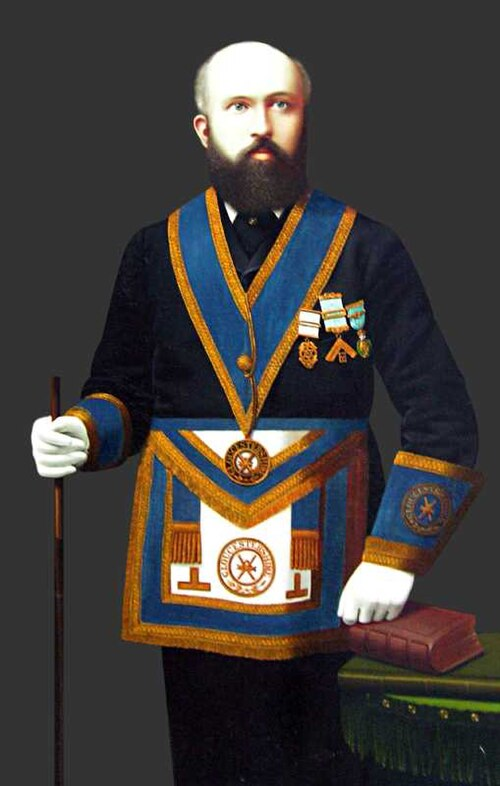
Léon XIII : « Le but fondamental et l'esprit de la secte maçonnique avaient été mis en pleine lumière par la manifestation évidente de ses agissements, la connaissance de ses principes, l'exposition de ses règles, de ses rites et de leurs commentaires auxquels, plus d'une fois, s'étaient ajoutés les témoignages de ses propres adeptes. En présence de ces faits, il était tout simple que ce Siège apostolique dénonçât publiquement la secte des francs-maçons comme une association criminelle, non moins pernicieuse aux intérêts du christianisme qu'à ceux de la société civile. Il édicta donc contre elle les peines les plus graves dont l'Église a coutume de frapper les coupables et interdit de s'y affilier. »
Encyclique Humanum Genus (20 avril 1884).