https://t.co/xfuYbIZPV0
Imagine an Edu system in which, instd of recving info and learning to crack exams, children learn to think, ask qns and pursue their own ans. In his keynote talk at EduIntech 2020 (Cbe), Dr. KP Mohanan, co-founder of @ThinQ_Ed envisions Education 5.0
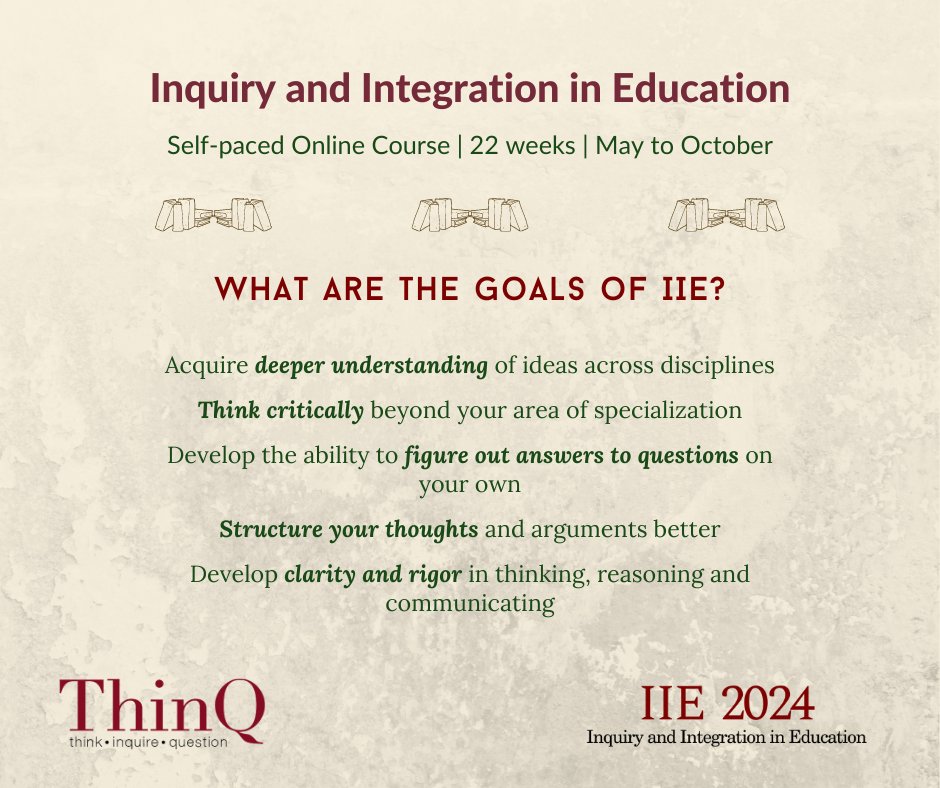
Applications for ThinQ's online course, Inquiry and Integration in Education, close on April 27th!
To learn more and to apply, visit https://t.co/SDpJyJCDKK
🔬Join us for a webinar exploring the science behind a classic experiment.
Let's think beyond textbook explanations! Develop your critical thinking skills with us on Saturday, April 6th, 11 am on YouTube.
Don't miss it! #ScienceWebinar#CriticalThinking#ThinQEducation 🕯💡🧠
The Center for Energy Storage & Conversion .@SastraUniv invites application from prospective students for admission to its PhD programme. See attached for more details. @sankar_devaraj
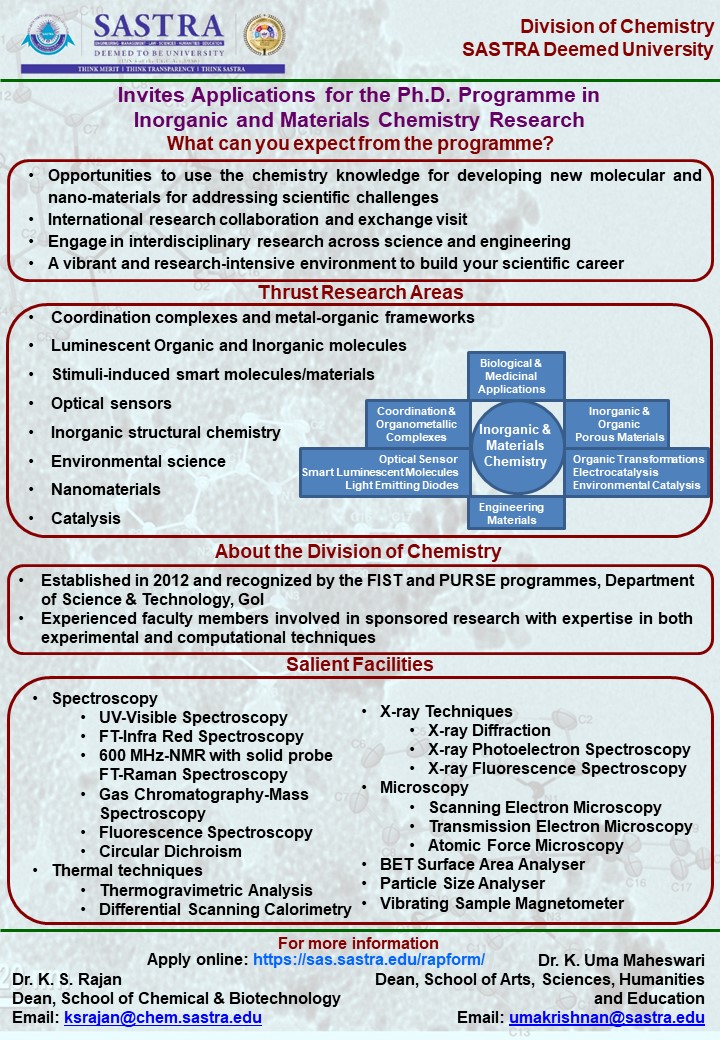
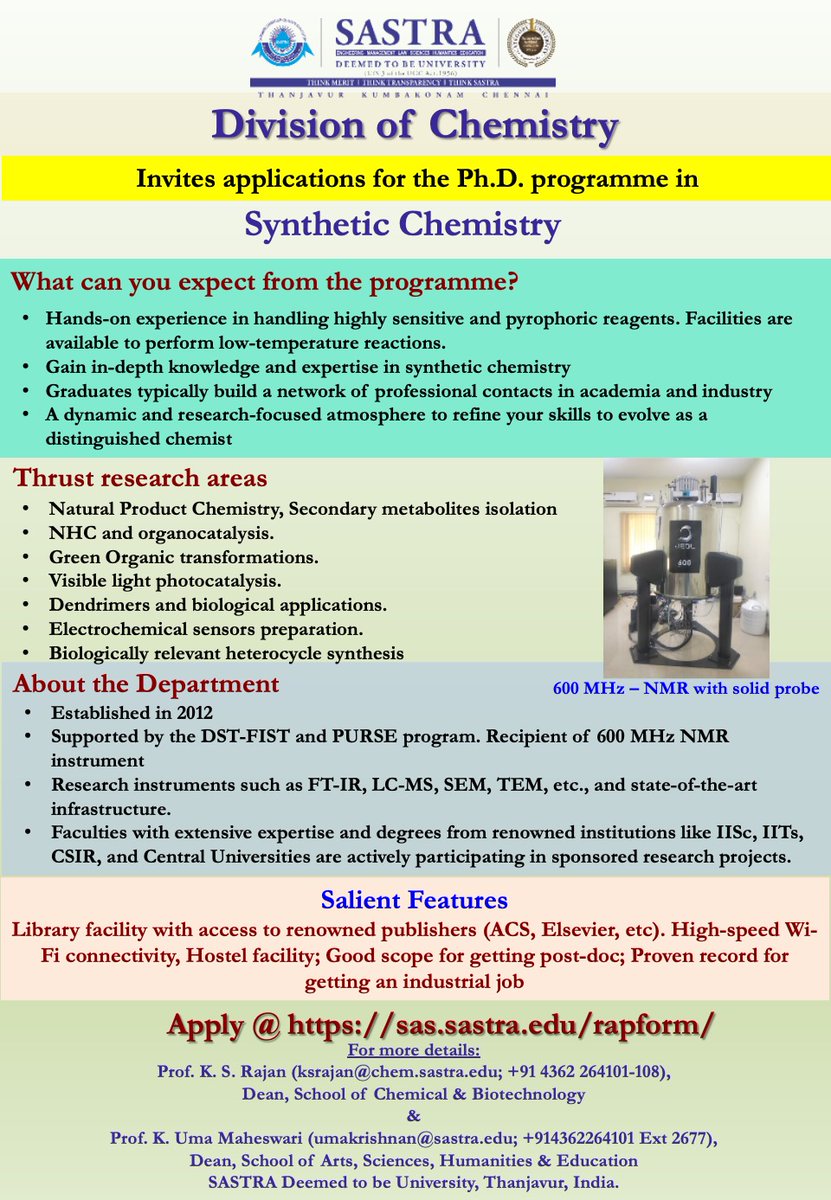
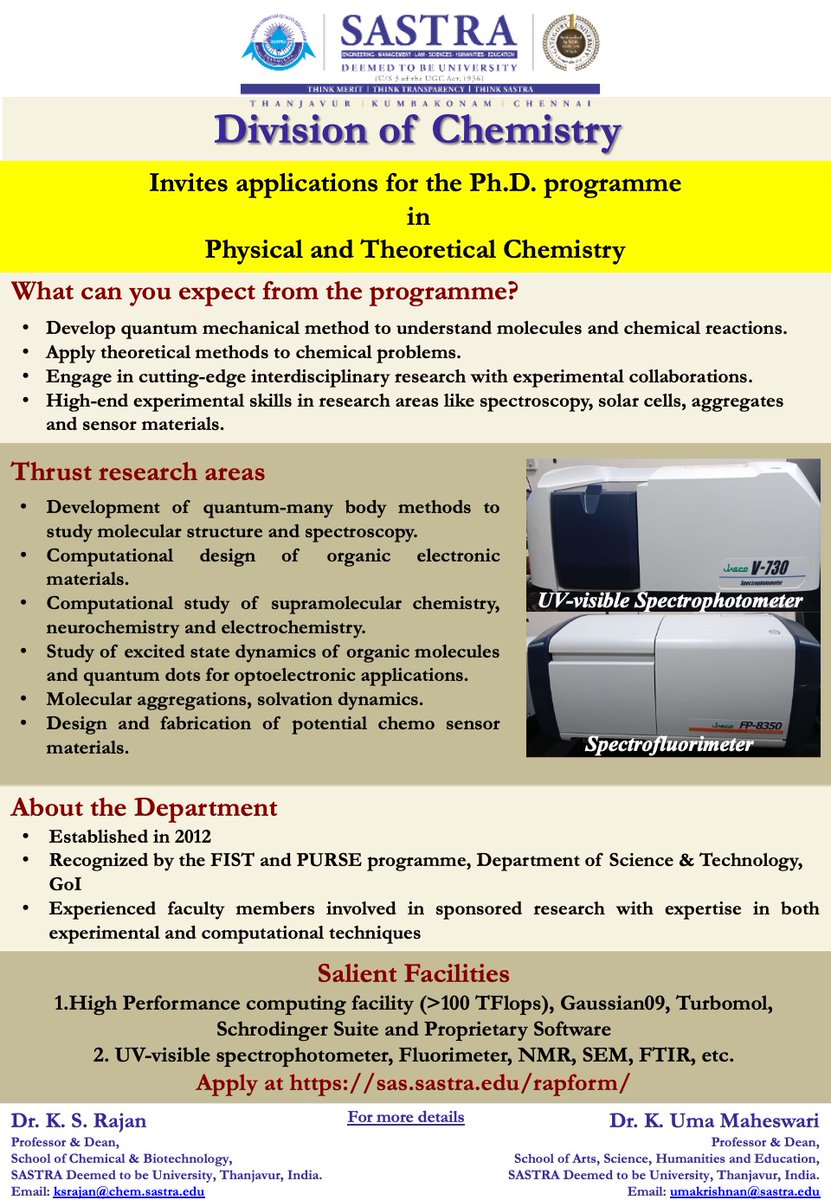
The Division of Chemistry @SastraUniv invites applications from prospective students for admission to its PhD programme in various research themes. See attached for details.
The Division of Biotechnology .@SastraUniv invites applications from prospective PhD students for admission its PhD programme. For more details, see attached.
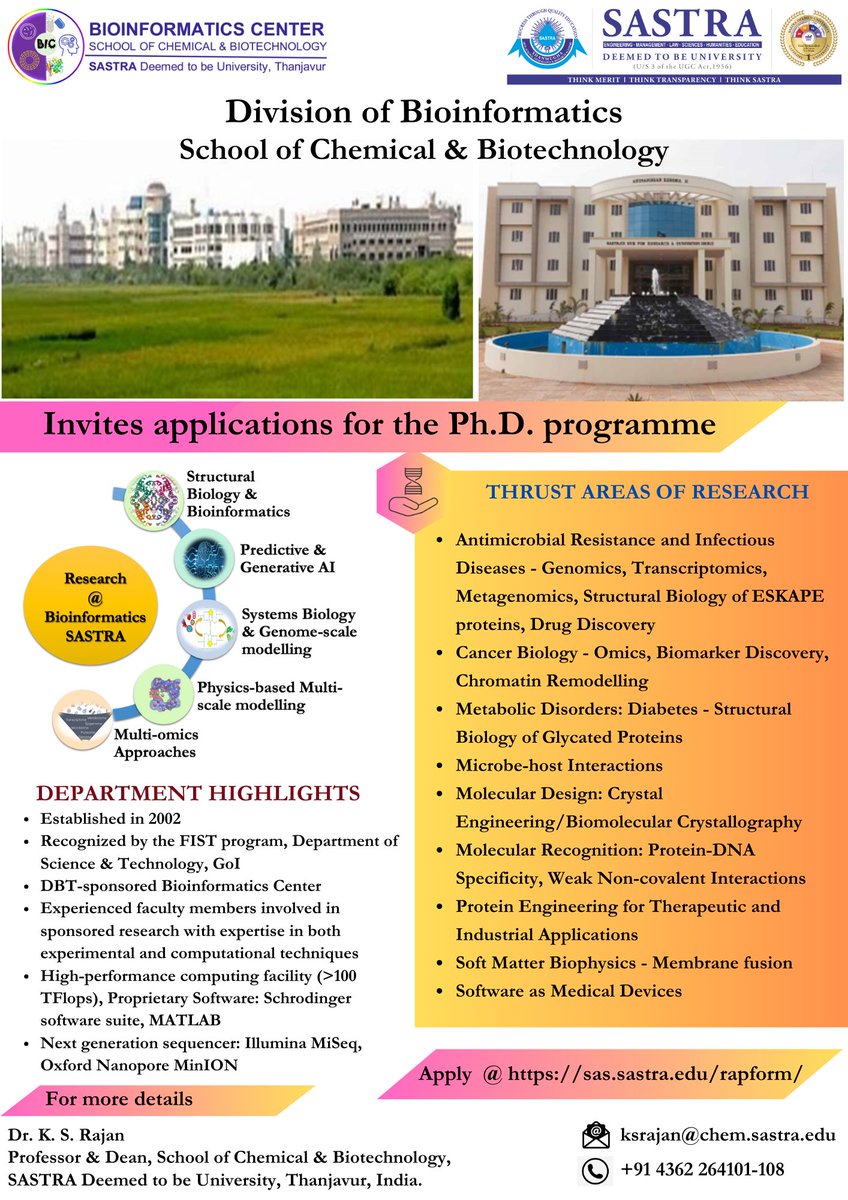
The Division of Bioinformatics .@SastraUniv invites applications from prospective students for admission to its PhD programme. Enroll for a vibrant research experience and chisel yourself as a fine researcher!
The Division of Bioinformatics .@SastraUniv invites applications from prospective students for admission to its PhD programme. Enroll for a vibrant research experience and chisel yourself as a fine researcher!
The Division of Bioinformatics .@SastraUniv invites applications from prospective students for admission to its PhD programme. Enroll for a vibrant research experience and chisel yourself as a fine researcher!
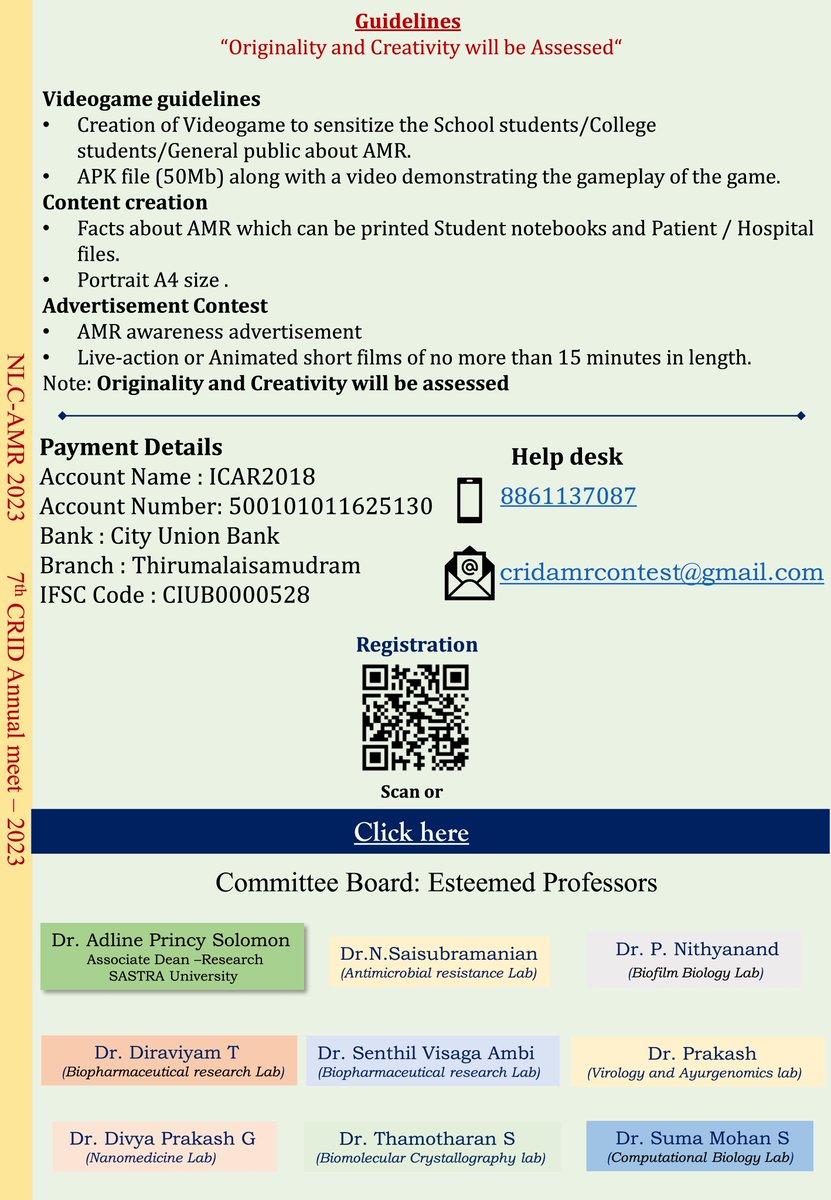
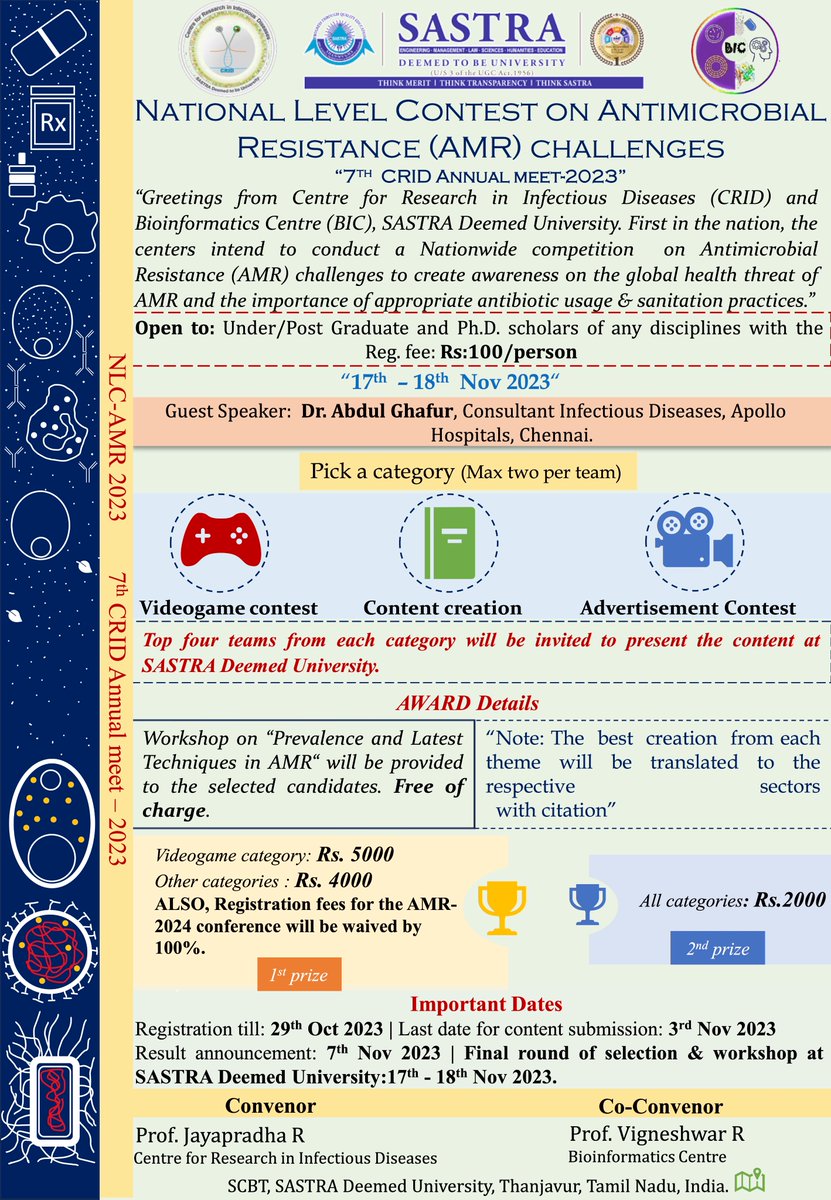
CRID & BIC at .@SastraUniv conducts Ntnl-lvl Contest on AMR Challenges - Invite all students to participate and show your creative talents towards addressing a public health crisis - create videogame/poster/advertisement. See attached poster for more details.
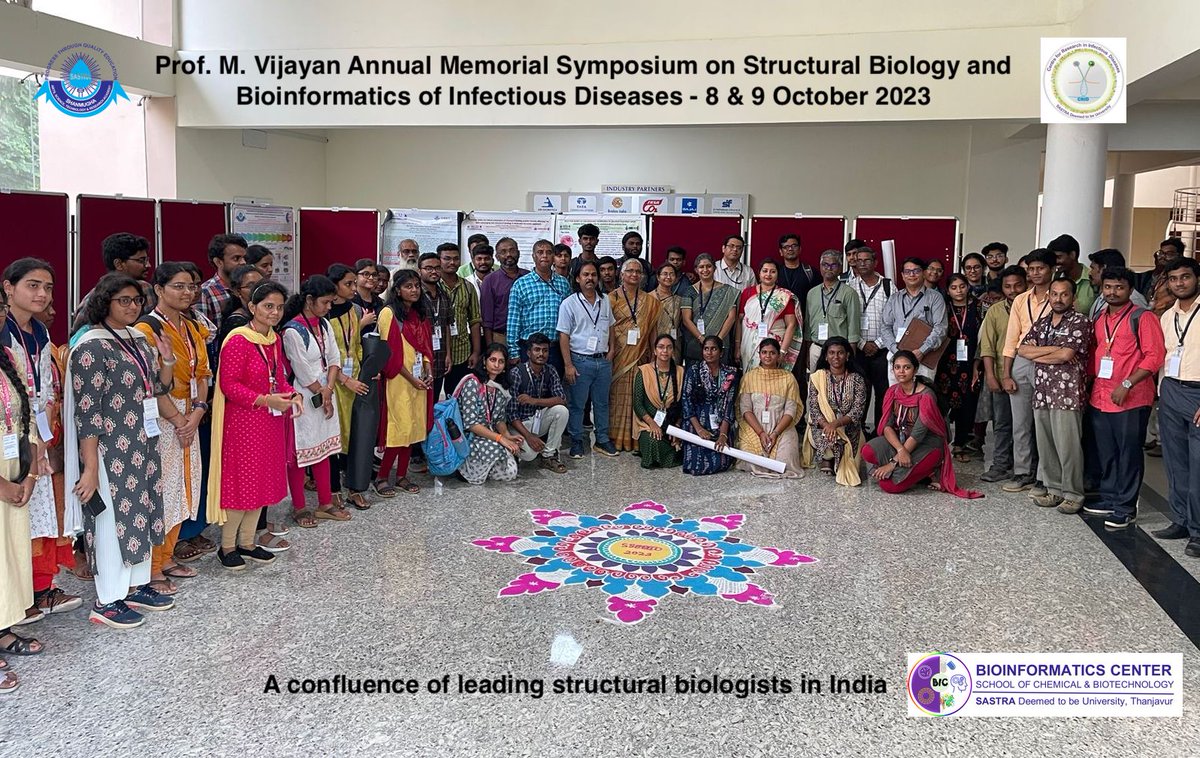
Interacting and sharing of experiences with the younger generation is something that scientists cherish - speakers at the Prof. M. Vijayan Annual Memorial Symposium @SastraUniv were no exception!!
With the inauguration of the Prof. M. Vijayan Memorial Symposium and the First Memorial Lecture by Prof. Shekhar C. Mande, @SastraUniv witnessed the confluence of leading structural biologists in India interacting with the young, enthusiastic and aspiring student participants.
It turns out that sparkling water and raisins are *fascinating*. My daughter and I happened upon this effect playing together in the kitchen a long time ago, and I couldn't help but explore the system more deeply... 1/n https://t.co/wNBX7nnGJS
@IRCTCofficial@RailMinIndia@RailwaySeva PNR 8706077627. Train was late by more than 8 h. Filed TDR when I came to know about it, and took alternative means to reach my destination. IRCTC has repudiated my TDR claim saying it is not in their rules.
100+ faculty and students benefited from the Schrodinger life science and materials science workshop at @SastraUniv . The five-day, hands-on program provided a valuable opportunity to enhance computational research skills.
Day 25 of great biology papers.
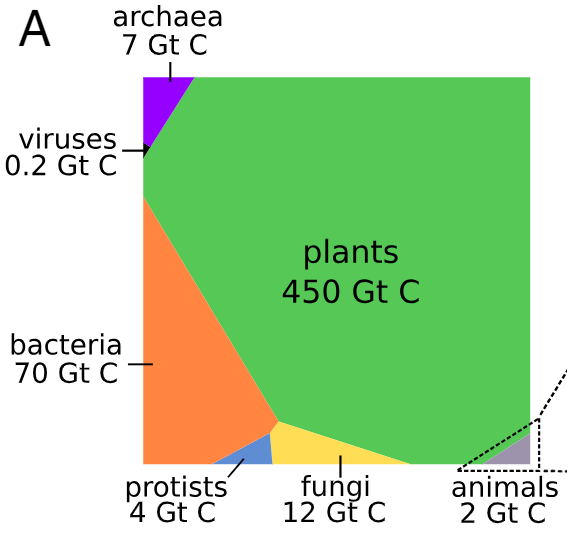
"The biomass distribution on Earth" & "Cell Biology by the Numbers."
These texts defined my own journey as a biologist. They taught me about life across scales & to think of cells as physical, quantifiable entities.
***
Paper #1: https://t.co/44f0sqvytz
There are 550 gigatons (that is, billions of tons) of carbon biomass. Bacteria account for 15% of global biomass, and the vast majority of that fraction comes from microbes living in the ocean's deep subsurface, which stretches from 50 meters to thousands of meters below the surface. Only about 10% of all bacterial biomass is from microbes on land. About 80% of total biomass is plants.
This paper is well-known. So you should also check out its spiritual successor, "The Anthropocene by the Numbers," which quantifies man-made materials and shows how "the mass of human-made materials now equals the dry weight of all living matter on the planet." (https://t.co/bEdasqd3TP)
***
Paper #2: https://t.co/TrQCVEGW1H
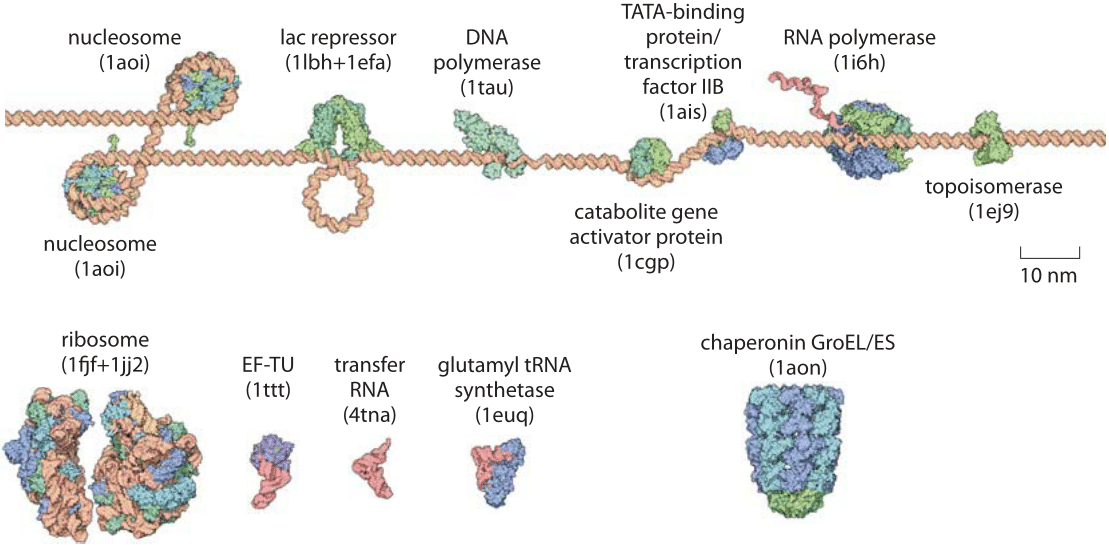
This is my favorite textbook of all time. It's free to read, and contains beautiful illustrations by David Goodsell.
The book introduces the sizes, concentrations, energies, rates, and errors of a living cell, and also walks through many of these calculations, step-by-step. I recommend it to anyone trying to move into biology.