🚨 THE US REGULATORY SYSTEM JUST BROKE
In 48 hours, SpaceX goes public at $1.77 TRILLION - the biggest IPO ever
I've been trading for over a decade, and I have never seen them rewrite the rulebook like this
Nasdaq, MSCI, and the biggest brokers in America all bent their own rules for ONE private company
That doesn't happen by accident
Let me show you exactly what they did:
First, Fidelity dropped its minimum account size from $500,000 to $2,000
A 99.6% cut
Think about that:
The most exclusive door on Wall Street, thrown wide open to millions of small investors - days before the biggest debut in history.
Ask yourself one question
Why do they suddenly want YOU in?
Because somebody needs people to sell to.
SpaceX reserved 30% of the deal for retail
THREE TIMES the normal share
And even then, most people didn't get a full allocation.
So to grab more at Thursday's open, they're dumping everything else TODAY to raise cash.
That's half of the selling you're seeing.
The other half? The smart money front-running July.
Here's the trick:
SpaceX doesn't join the Nasdaq 100 on day one.
It joins 15 days later, because Nasdaq cut its own waiting period from 3 months to 15 days
Just for this.
The moment it joins, every QQQ fund on Earth is FORCED to buy.
$22–27 billion in automatic buying.
Translation: imagine 50 buses all forced to pull into the same gas station on the same morning.
The funds know the stampede is coming.
So they're selling now to free up cash for it. Retail selling. Institutions selling. At the exact same time.
THAT is your selloff.
Now here's the part nobody will say out loud:
When the most connected money on the planet builds a $1.7T exit door and hands the keys to the smallest investors in the market…
That's NOT generosity
That's distribution at the top.
We've seen this movie twice:
➮ 2000 Dotcom
➮ 2021 SPAC mania
Insiders cash out at insane valuations while the crowd chases the hype.
The math ain't mathing.
So you've got two choices in the next 48 hours:
Chase the most expensive IPO in history at the open…
Or read the prospectus and realize you might BE the exit.
The next few days will be INSANE, but don't worry - I'll break down every move as it happens, like I always do.
Like it or not, I called every major top and bottom of the last decade publicly. I'll call this one too.
Many people are going to wish they followed me before June 12, 2026.
Soon, you'll understand why.
The Holy Trinity is dead. Sadly due to the Orchard Pool exploit, I had to dump our entire $ZEC bag.
- While I think it's extremely unlikely of any minting, it cannot be formally cryptographically proved impossible
- The privacy from AI, govt, big tech narrative demands perfection not improbability
- I read about the exploit yday, and didn't appreciate how it violated my narrative mental map. The 30% dump, made me rethink, and I had to take profit on the entire position
- We will consistently re-evaluate our thinking and if my assumptions are proven incorrect, will rebuy, hopefully at lower prices.
- Privacy is priceless and I have no issue eating humble pie and rebuying much higher.
We still hold $WLD and are excited for Lord Elon to pump our bags.
Feels like Vietnam passes Singapore as SEA's tech hub in the next decade.
Younger demo, lower cost, state leaning in, overseas Vietnamese capital coming home.
Perfect storm.
Just met with a digital assets lead of a Tier 1 bank in NYC, here's the top takeaways.
1. They are "all-in" on stablecoins for payments and wanting to build fintech applications on crypto rails. Its a very clear usecase and easy sales pitch to most of their divisions internally and the value prop is easy to see: 24/7 global payments for a fraction of the cost of a wire transfer. Easy.
2. They are not thinking about perps and Hyperliquid. Not one bit. Perps and trading onchain is something that they understand is coming, specifically 24/7 markets, but when I brought up Hyperliquid, Lighter, Variational, was not really in their scope.
3. They are however interested in tokenization and see it as a credible threat to their business as it stands.
4. CLARITY worries them, and they are just *now* taking stablecoins seriously. Why? Well, of course, because the worry of losing customer deposits.
5. They are actively investing serious amounts of capital into fintech teams and neobanks, albeit they are very early and still trying to figure it all out.
Stablecoins are just tokenization for dollars.
So why have stablecoins exploded and tokenization for commodities and securities hasn't followed as quickly?
We need CLARITY and we need better onchain compliance solutions from both startups and incumbents.
In crypto and defi (ie in honest markets), when a component fails, those closest to the component—whether wildly negligent or innocent victim—suffer the loss, and are burdened with that responsibility. Unequal, but proper.
In tradfi and banking (ie in coercively manipulated markets), when a component fails, the entire society is forced under the burden of its resolution. Costs are socialized. Equal, but improper.
The former, with time, becomes self-correcting, self-improving, and crucially, retains vitality. The latter, regardless of time, becomes stagnant and soulless, and here everyone can wallow in an equivalent grey.
Any man of agency should prefer the former, taking care over that to which he is proximate. It is from this that the virtue of markets emerges.
The DeFi hack wave is just starting. Here's what comes next: 🧵
> Hacks continue. AI scans any public contract for vulnerabilities. Source code on GitHub isn't required.
>Teams drain their own protocols under the cover of the hack wave.
> TVL drops across DeFi. Less fees, less revenue, less buybacks. Governance tokens underperform the market.
> Money flows back to CEXes. Binance and Coinbase don't have new attack vectors right now. Ironic, since DeFi was supposed to be the safer option.
> Governments tighten rules. Licensing, KYC], whitelists, etc. They never miss a window like this.
How do you survive this?
Here's why DeFi protocols keep getting hacked one after another 🧵
Every smart contract ever deployed is public code. For years, that was fine - understanding a complex protocol took mass expertise and time. The bugs were always there, but the cost of finding them was extremely high.
AI collapsed the cost of code analysis. Finding exploits got 100x cheaper. Writing flawless code stayed just as expensive.
And most contracts are never revisited for new potential attack vectors. Upgrading a live protocol means expensive new audits, new risk, new liability. No dev team wants to touch working code. So the bugs just sit there.
The math has flipped: attacking is cheap, defending is expensive. Use AI to find an exploit, test it on a fork, and if it works - the risk of getting caught is near zero. Most exploiters walk away clean through mixers and bridges.
Assume every contract with a vulnerability will eventually be exploited. The only real defense is formal verification - mathematically proving that the code can only do what it was designed to do, before it ever gets deployed.
Until the tooling for that becomes standard, DeFi is entering its darkest chapter
Kelp DAO appears to have been exploited for $293 MILLION in the last hour, making it the biggest DeFi hack of 2026.
And it's far from being the only one this month.
Over $600M stolen from DeFi in the last 2 weeks across over 10 different protocols, and AI is only making it easier for hackers.
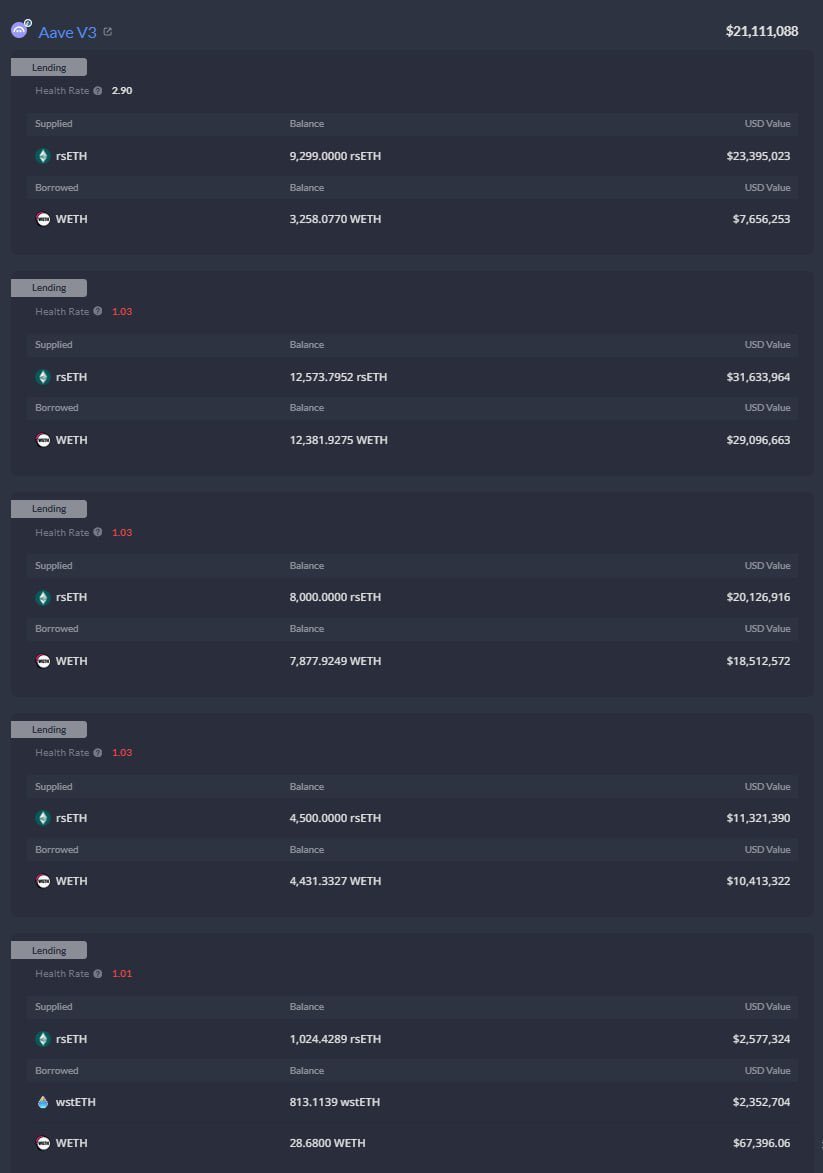
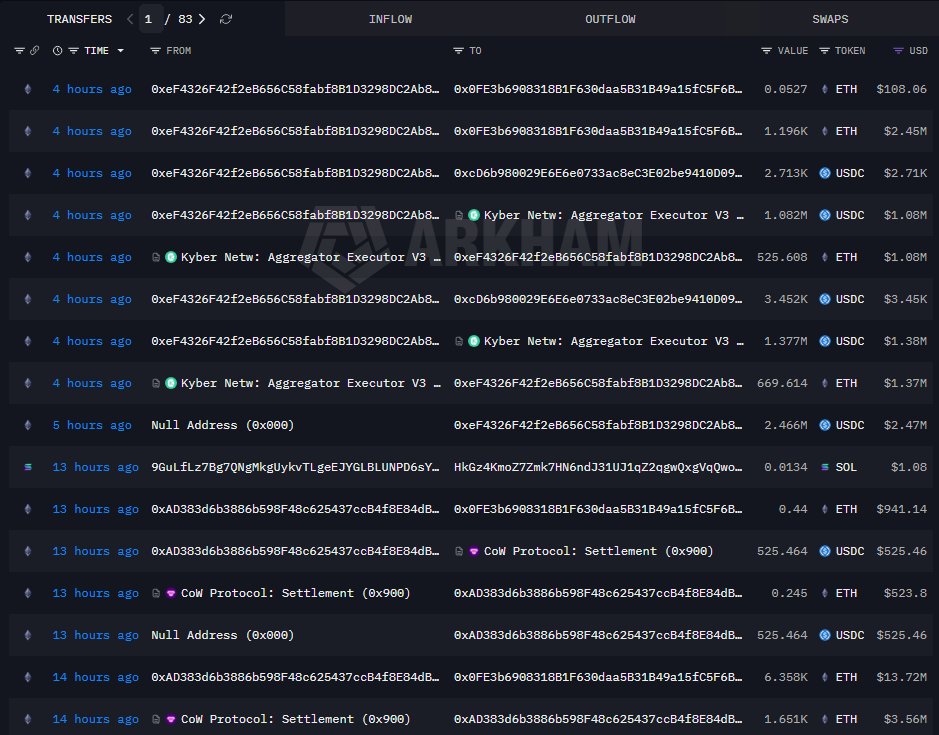
> Kelp DAO: attacker exploited the LayerZero bridge to drain 116,500 rsETH ($293M), then used it as collateral on Aave to borrow ETH, leaving Aave with bad debt as $AAVE dumps.
> Drift Protocol: $285M drained by North Korean hackers using AI powered social engineering, they spent months building trust with insiders before executing in 12 minutes.
> Rhea Finance: $18M stolen through fake token pools that tricked the protocol's oracle into approving withdrawals.
> Grinex: $15M stolen, sanctioned Russian exchange suspended all operations and blamed "Western intelligence".
> Hyperbridge: attacker minted 1 billion fake bridged DOT with a notional value over $1B, but only extracted about $237K because liquidity was thin.
> BSC TMM pool: $1.67M drained through reserve manipulation.
> Aethir: $423K lost in an access control exploit on their GPU network.
> Dango: $410K stolen through a smart contract bug in their bridge aggregator.
> Silo Finance: $392K gone from a misconfigured oracle.
> CoW Swap: frontend hijacked through DNS attack, site redirected to a phishing page.
> Zerion: hit by North Korean social engineering, credentials stolen.
The attack surface is expanding faster than the defenses.
This is only going to get worse.
We’re building the orchestration layer between global stablecoin liquidity and local banking rails, making it easier for wallets, neobanks, PSPs, and fintech builders to launch pay-ins, payouts, and embedded finance flows across APAC & Global.
✔️ If you’re exploring:
• Stablecoin payment use cases
• Local payout infrastructure
• Wallet / neobank enablement
• Cross-border settlement
• Partnership opportunities in APAC & Global
We’d love to connect at Money20/20 Asia.
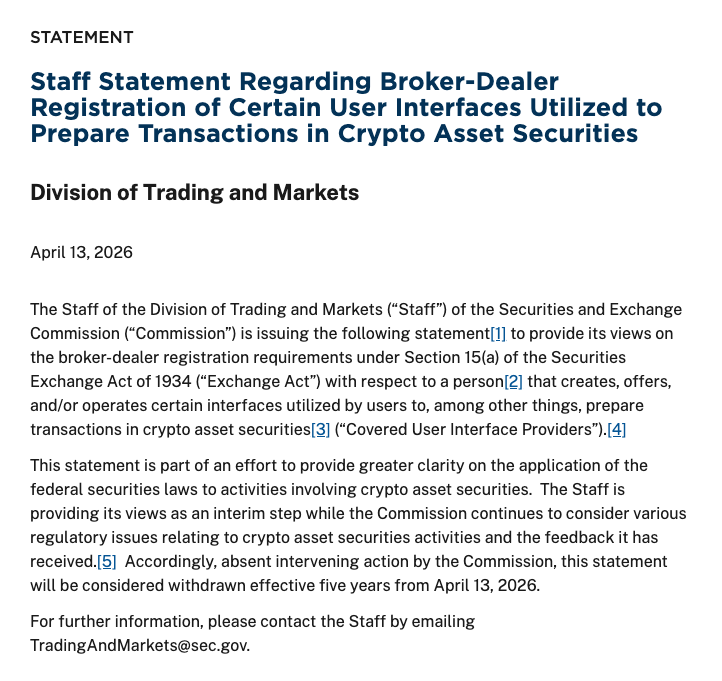
NEW 🚨: As part of Project Crypto, the Division of Trading and Markets issued a staff statement providing its views on broker-dealer registration requirements in connection with certain interfaces used to prepare transactions in crypto asset securities.
https://t.co/8jCwFOJZcw
I'm going to make some obvious points.
(1) Blowing up all the oil infrastructure in the Middle East is an insane idea, and may well result in a global economic crash and humanitarian crisis unrivaled in the lives of those now living. We're talking about the price of everything everywhere rising, from food to gas, at a moment when inflation was already high. All of that will be laid at the feet of the authors of this war.
(2) The antebellum status quo of Feb 27, 2026 was just not that bad, but we're unlikely to return to it. Expect indefinite, long-term, ongoing disruptions to everything out of the Middle East.
(3) Also assume tech financing crashes for the indefinite future. The genius plan to get the Gulf states caught in the crossfire has incinerated much of the funding for LPs, for datacenters, and for IPOs. Anyone in tech who supported this war may soon learn the meaning of "force majeure" as funding gets yanked.
(4) Many capital allocators will instead be allocating much further down Maslow's hierarchy of needs, towards useful basic things like food and energy.
(5) It's fortunate that all those progressives yelled about the "climate crisis." Yes, their reasoning about timelines was wrong, and much of the money was wasted in graft, but the result was right: we all need energy independence from the Middle East, pronto. It's also fortunate that Elon and China autistically took climate seriously. Now they're going to need to ship a billion solar panels, electric vehicles, batteries, nuclear power plants, and the like to get everyone off oil, immediately.
(6) It's not just an oil and gas problem, of course. It's also a fertilizer problem, and a chemical precursor problem. Maybe some new sources will come online at the new prices, but it takes time to dial stuff up, particularly at this scale, so shortages are almost a certainty.
That said, China has actually scaled up coal-to-chemicals[a,c] (C2C), and there's also something more sci-fi called Power-to-X[b] which turns arbitrary power + water + air into hydrocarbons. But all of that will need to get accelerated. I have a background in chemical engineering so may start funding things in this area.
(7) Ultimately, this war is going to result in tremendous blame for anyone associated with it. It's a no-win scenario to blow up this much infrastructure for so many people. Simply not worth it for whatever objective they thought they were going to attain. But unless you're actually in a position to stop the madness, the pragmatic thing to do is: scramble to mitigate the fallout to yourself, your business, and your people.
[a]: https://t.co/ITat4tmAFd
[b]: https://t.co/bWwiSQcgyt
[c]: https://t.co/FQCqMhy5d3
Surprised at the offense capabilities of Iran after getting hammered and airstrike non-stop for 18 days.
It seem like they are able to fight on longer than expected.
Asia’s oil reserve buffers:
🇯🇵 Japan: 254 days
🇰🇷 South Korea: 208 days
🇨🇳 China: 200 days
🇮🇳 India: 74 days
🇹🇭 Thailand: 61 days
🇵🇭 Philippines: 60 days
🇮🇩 Indonesia: 20 days
🇻🇳 Vietnam: 15 days
If Iran wins, it's the end of five eras.
1991-2026: the unipolar era
1974-2026: the petrodollar era
1945-2026: the postwar era
1776-2026: the union era
1492-2026: the Western era
Specifically, the end of the petrodollar (1974) would also be the end of the unipolar moment (1991) and the postwar order (1945). It would mark the moment when Eurasian powers were once again dominant over Western powers (1492). Finally, a rapid crash in the dollar's purchasing power coupled with military defeat could well break apart the American union (1776).
Few seem to viscerally understand just how dependent America is on money printing. But the end of the petrodollar is the end of Keynesianism as we know it.
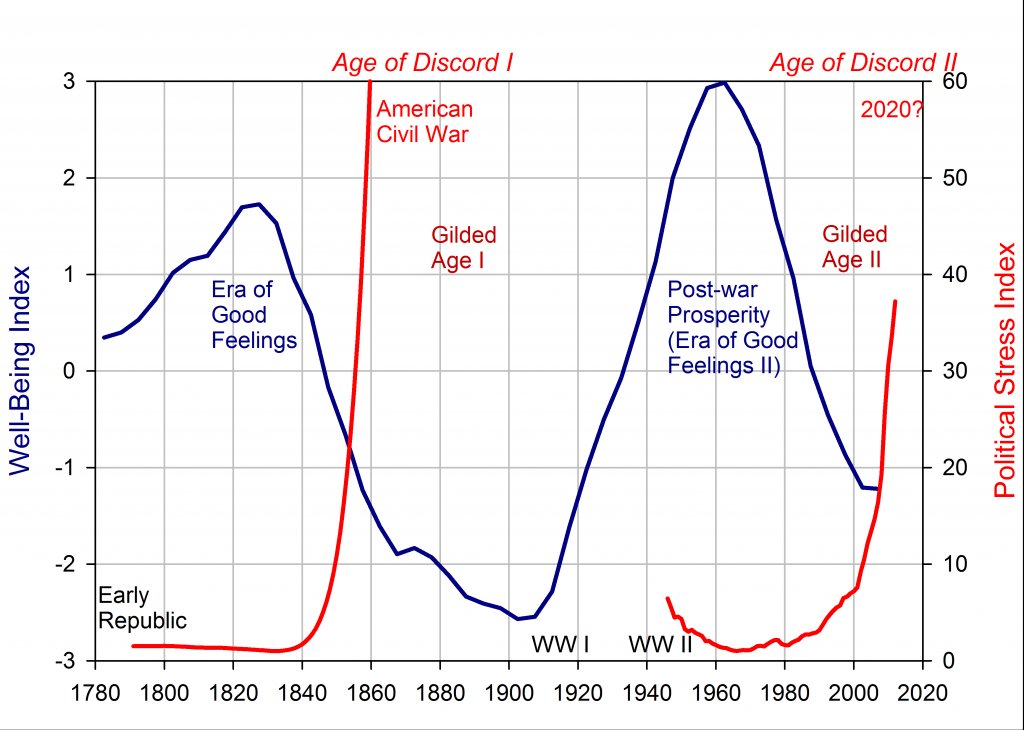
And if there's a sudden cost-of-living spike on top of pre-existing levels of political polarization, which are already near Civil War levels...we could see the scenarios that Dalio, the Fourth Turning, and Turchin have described.








![balajis's tweet photo. I'm going to make some obvious points.
(1) Blowing up all the oil infrastructure in the Middle East is an insane idea, and may well result in a global economic crash and humanitarian crisis unrivaled in the lives of those now living. We're talking about the price of everything everywhere rising, from food to gas, at a moment when inflation was already high. All of that will be laid at the feet of the authors of this war.
(2) The antebellum status quo of Feb 27, 2026 was just not that bad, but we're unlikely to return to it. Expect indefinite, long-term, ongoing disruptions to everything out of the Middle East.
(3) Also assume tech financing crashes for the indefinite future. The genius plan to get the Gulf states caught in the crossfire has incinerated much of the funding for LPs, for datacenters, and for IPOs. Anyone in tech who supported this war may soon learn the meaning of "force majeure" as funding gets yanked.
(4) Many capital allocators will instead be allocating much further down Maslow's hierarchy of needs, towards useful basic things like food and energy.
(5) It's fortunate that all those progressives yelled about the "climate crisis." Yes, their reasoning about timelines was wrong, and much of the money was wasted in graft, but the result was right: we all need energy independence from the Middle East, pronto. It's also fortunate that Elon and China autistically took climate seriously. Now they're going to need to ship a billion solar panels, electric vehicles, batteries, nuclear power plants, and the like to get everyone off oil, immediately.
(6) It's not just an oil and gas problem, of course. It's also a fertilizer problem, and a chemical precursor problem. Maybe some new sources will come online at the new prices, but it takes time to dial stuff up, particularly at this scale, so shortages are almost a certainty.
That said, China has actually scaled up coal-to-chemicals[a,c] (C2C), and there's also something more sci-fi called Power-to-X[b] which turns arbitrary power + water + air into hydrocarbons. But all of that will need to get accelerated. I have a background in chemical engineering so may start funding things in this area.
(7) Ultimately, this war is going to result in tremendous blame for anyone associated with it. It's a no-win scenario to blow up this much infrastructure for so many people. Simply not worth it for whatever objective they thought they were going to attain. But unless you're actually in a position to stop the madness, the pragmatic thing to do is: scramble to mitigate the fallout to yourself, your business, and your people.
[a]: https://t.co/ITat4tmAFd
[b]: https://t.co/bWwiSQcgyt
[c]: https://t.co/FQCqMhy5d3](https://pbs.twimg.com/media/HDujYp7bwAA5DuR.png)