Today, Ripple is breaking into the $120T corporate treasury payments market with the $1B acquisition of GTreasury.
The past few years have reminded this industry why payments, first and foremost, is THE primary use case for crypto and blockchain. Payments are where Ripple first started for exactly these reasons – the infrastructure is complex, siloed and inefficient, but as we know, perfectly positioned to benefit from decentralized financial technologies.
Astounding amounts of cash are trapped in outdated payments systems, creating friction, unnecessary costs, and barriers to entering new markets. GTreasury has been serving some of the most well known brands for decades – and now together with Ripple, we’ll be able to help CFOs manage all their assets, include stablecoins, tokenized deposits, etc at scale around the world, as well as put their idle capital to work with repo markets via Hidden Road.
The opportunity is here, and we’re diving right in. It’s happening!
https://t.co/GCXS6QqNqt
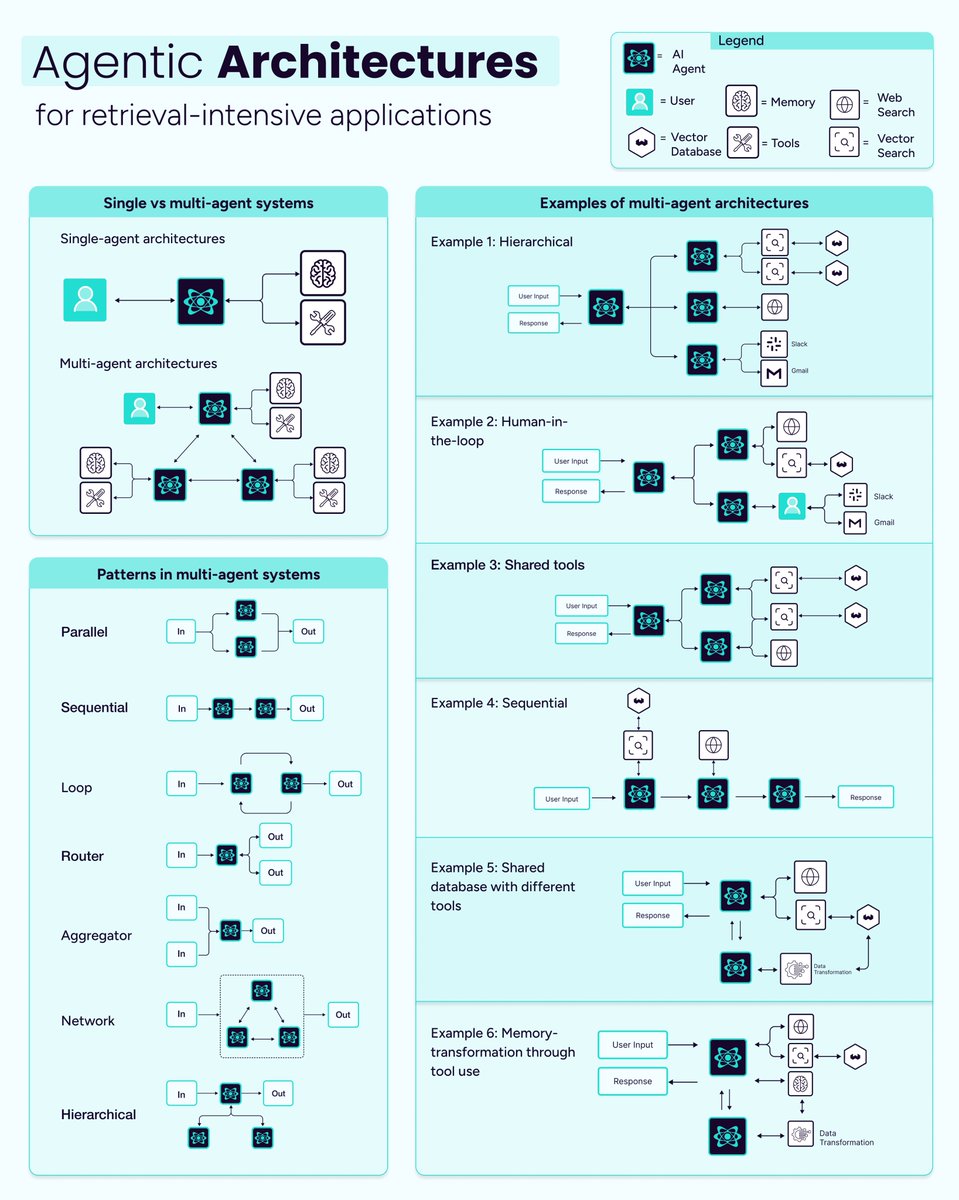
Multi-agent architectures are the FUTURE
Here are 6 different types:
𝟭. 𝗛𝗶𝗲𝗿𝗮𝗿𝗰𝗵𝗶𝗰𝗮𝗹 (𝗩𝗲𝗿𝘁𝗶𝗰𝗮𝗹) 𝗔𝗿𝗰𝗵𝗶𝘁𝗲𝗰𝘁𝘂𝗿𝗲
A supervisor agent orchestrates multiple specialized agents.
𝘌𝘹𝘢𝘮𝘱𝘭𝘦:
• One agent retrieves information from internal data sources
• Another agent specializes in public information from web searches
• A third agent specializes in retrieving information from personal accounts (email, chat)
𝟮. 𝗛𝘂𝗺𝗮𝗻-𝗶𝗻-𝘁𝗵𝗲-𝗟𝗼𝗼𝗽 𝗔𝗿𝗰𝗵𝗶𝘁𝗲𝗰𝘁𝘂𝗿𝗲
Incorporates human verification before proceeding to next actions, used when handling sensitive information.
𝟯/𝟱. 𝗡𝗲𝘁𝘄𝗼𝗿𝗸 (𝗛𝗼𝗿𝗶𝘇𝗼𝗻𝘁𝗮𝗹) 𝗔𝗿𝗰𝗵𝗶𝘁𝗲𝗰𝘁𝘂𝗿𝗲
Agents communicate directly with one another in a many-to-many fashion. Forms a decentralized network without strict hierarchical structure.
𝟰. 𝗦𝗲��𝘂𝗲𝗻𝘁𝗶𝗮𝗹 𝗔𝗿𝗰𝗵𝗶𝘁𝗲𝗰𝘁𝘂𝗿𝗲
Agents process tasks in sequence, where one agent's output becomes input for the next.
𝘌𝘹𝘢𝘮𝘱𝘭𝘦: Three sequential agents where:
• First query agent retrieves information from vector search
• Second query agent retrieves additional information from web search based on first agent's findings
• Final generation agent creates a response using information from both query agents
𝟱. 𝗗𝗮𝘁𝗮 𝗧𝗿𝗮𝗻𝘀𝗳𝗼𝗿𝗺𝗮𝘁𝗶𝗼𝗻 𝗔𝗿𝗰𝗵𝗶𝘁𝗲𝗰𝘁𝘂𝗿𝗲
Includes agents dedicated to transforming data.
𝘌𝘹𝘢𝘮𝘱𝘭𝘦:
• A transformation agent that enriches data at insert-time or transforms existing collections
There are also some other patterns that can be combined with these architectures:
• 𝗟𝗼𝗼𝗽 𝗽𝗮𝘁𝘁𝗲𝗿𝗻: Iterative cycles for continuous improvement
• 𝗣𝗮𝗿𝗮𝗹𝗹𝗲𝗹 𝗽𝗮����𝘁𝗲𝗿𝗻: Multiple agents working simultaneously on different parts of a task
• 𝗥𝗼𝘂𝘁𝗲𝗿 𝗽𝗮𝘁𝘁𝗲𝗿𝗻: A central router determining which agents to invoke
• 𝗔𝗴𝗴𝗿𝗲𝗴𝗮𝘁𝗼𝗿/𝘀𝘆𝗻𝘁𝗵𝗲𝘀𝗶𝘇𝗲𝗿 𝗽𝗮𝘁𝘁𝗲𝗿𝗻: Collecting and synthesizing outputs from multiple agents
Check out this ebook for more info: https://t.co/pfM1lcp3SC