I don't know if you've noticed, but there's a wave of mass psychosis rolling through tech Twitter, very similar to what we experienced in spring 2023 and spring 2020 (interesting that the periodicity is exactly 3 years)
But the vibes are much darker now than they were last time
@greenstanion@carl_feynman@sarah_cone I had the same problem in understanding. AsI understand, in the two electrode version, the steady state is not equal concentration inside and outside. It is less concentration inside than outside, so that's the difference between the two situations. "distance" to equil. Is diff.
When I was about 14, we went to a company that manufactured oxygen sensors. You dip this probe into beer, sewage, or canned food a-stewing, and it tells you how much oxygen is in the slurry. It's got two electrodes, and there's some kind of electrochemical reaction that releases exactly one electron for each oxygen molecule consumed. Measuring the electric current lets you measure the oxygen concentration. However, the electrodes are delicate, and don't work if they're not clean. So they're inside a tiny compartment covered with a membrane of oxygen-porous but everything-else-proof plastic. The oxygen has to diffuse through the plastic before it can be consumed at the electrodes. The current is determined by the rate of diffusion. Gunk on the membrane can slow down diffusion, causing it to read an incorrect low concentration. And when you take the sensor from fresh air and dip it into something, it can take a long time to consume all the oxygen in the compartment and start reading the actual flow.
So my dad suggested the following. Put a third electrode in the compartment, that regenerates one O2 molecule for each one consumed. Now the speed of diffusion doesn't matter because the oxygen isn't getting consumed. You're reading the concentration at the electrodes directly without affecting it. If the concentration around the sensor drops, oxygen can diffuse out of the compartment, instead of waiting for the oxygen to be consumed. And gunk on the membrane will slow down the reading, but it's still perfectly accurate.
We went back next year and saw them manufacturing the three-electrode sensors. IIRC, my father didn't have any good ideas that year.
@carl_feynman A.I. Alignment: what about "a firewall" of less intelligent A.I.'s that control more intelligent A.I.'s as a sort of "social control" based on game theory in some way. People can control the less intelligent A.I.'s a sort of bridge to the more intelligent A.I.
Thought experiment:
Imagine a world in which everyone could build their own nuclear weapon. It is obvious that in such a world, "mutually assured destruction" would cease to work. This is what we are up against w.r.t. A.I.
@KillaMinga needle -> amplifier -> woofer, the needle just takes up the pattern of oscillation that eventually - via the amplifier - drives the speakers in the same oscillation.
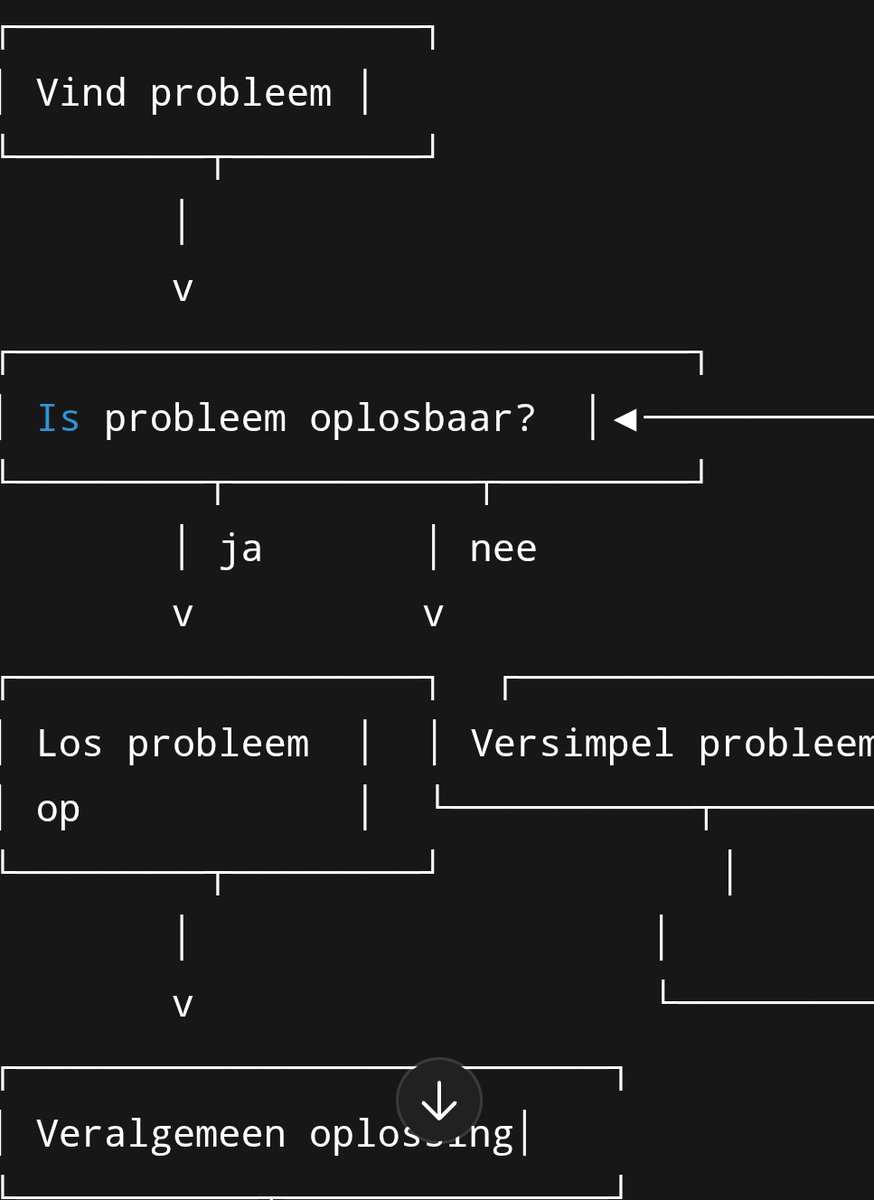
@ThomasVanRiet2 Ik vind het raar dat nooit wordt uitgelegd dat "het problem solving algoritme" nooit wordt uitgelegd. (Er wordt zelfs nooit uitgelegd dat er enerzijds problemen zijn en anderzijds oplossingen).
@MeanestMan@getjonwithit To me it connotes a difference, imagine you see a movie one evening and then the next day you have a task: write an essay about it. Another guy sees another movie and writes a "better" essay.
Imagine saying "My mind just didn't work that way". Maybe it was just the movie?
@ECDenFan@getjonwithit To give an analogy: it's kind of like saying that some people's tongue anatomy are better suited for certain languages than other. That's basically false. Everyone's tongue can speak any human language. Maybe with a little bit more effort (interest/intuition)
@ECDenFan@getjonwithit Because "the mind" and "a specific subject" are on vastly different levels of abstraction. Do you believe someone "has a mind for gardening"? vs someone who has "a mind for cooking"? I don't.
@getjonwithit this seems to me to be at odds with your proven problem solving inclination. The moment you saw his solution, you understood it. Then what makes you think he hadn't already seen this problem or a very similar one?
@getjonwithit I'm surprised that someone like you would say "my brain just didn't work that way", come on man! As if there is some magical quality in his brain that allows him to solve that specific problem in that way. He just happened to have the right mathematical tool in his subconscious.