People get strangely angry when I question the calorie model.
I’ve spent years studying nutrition and functional medicine, so this is coming from education, not ignorance.
Energy matters. Nobody is denying that.
But you do not eat calories.
You eat food.
You do not literally burn calories.
Your body processes food.
That is why 2000 calories of steak, eggs, and butter eaten once or twice a day does not act the same as 2000 calories of cereal, toast, muffins, and biscuits eaten six times a day.
Every time you eat, insulin goes up.
Six meals, six insulin spikes.
One or two meals, far fewer.
That matters.
Protein also takes more energy to digest.
It fills you up more.
You eat less without fighting yourself all day.
Human biology is regulated by hormones, appetite signals, digestion, and food quality, not just arithmetic.
So calorie counting “works” because you are eating less food.
That is it.
You are attaching a number to food and using that number to control how much food you eat.
The number did not do anything.
The food did.
Then people stop counting, eat more food again, and put the weight back on.
If calories were all that mattered, six sugary meals would do the same thing as one or two meals of eggs and steak.
They do not.
That is the part people do not want to admit.
Exactly. Government misspending can occur because there is a decoupling of the action-consequences link. A violation of the most fundamental law of nature.
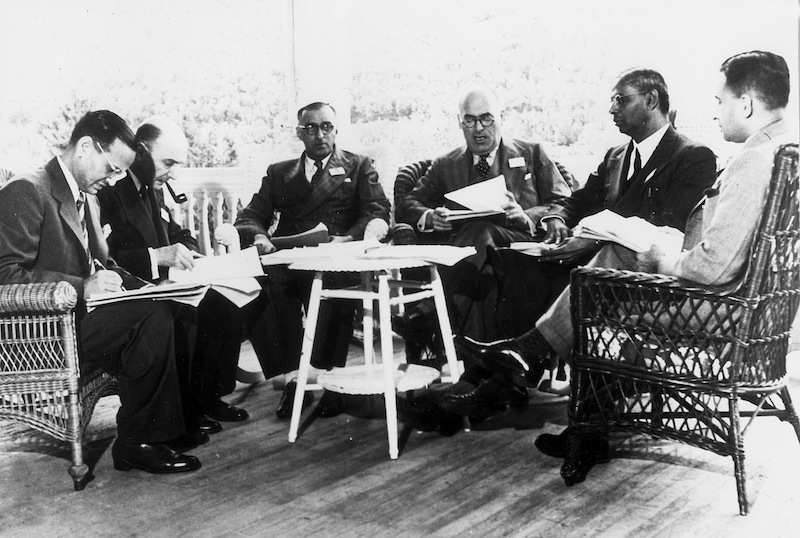
The most consequential monetary fraud in human history happened in a New Hampshire resort hotel over three weeks in July 1944. Bretton Woods did not establish the dollar as good as gold: it created the appearance of gold backing while eliminating any mechanism to enforce it.
Here's what actually transpired: 44 nations gathered at Mount Washington Hotel and agreed to peg their currencies to the dollar at fixed exchange rates. The dollar, in turn, would remain convertible to gold at $35 per ounce. But only foreign central banks could make this exchange, not you. American citizens had already lost gold convertibility in 1933 when Roosevelt criminalized gold ownership. The Bretton Woods delegates constructed a system where the dollar appeared backed by gold while simultaneously ensuring no market discipline could constrain American monetary policy.
Sound money advocates immediately recognized the fatal flaw. The U.S. could print dollars without limit, export them worldwide, and foreign governments would treat them as equivalent to gold reserves. Meanwhile, domestic Americans faced legal prohibition from testing this convertibility. The system created what French economist Jacques Rueff called "deficits without tears" for America: you could run perpetual trade deficits by simply printing more dollars.
The charade lasted exactly 27 years. By 1971, foreign central banks held $80 billion in dollar claims against America's $10 billion gold stock. When France and other nations began demanding actual gold delivery, Nixon slammed the window shut on August 15, 1971. No consultation. No negotiation.
The architects designed Bretton Woods not as a gold standard, but as a transition mechanism to permanent fiat currency dominance under American monetary hegemony. Gold convertibility was always meant to be temporary.
The Soviet Union launched Sputnik in 1957 using rocket engines reverse-engineered from captured German V-2 technology and guidance systems stolen from American aerospace companies. You won't find this inconvenient truth in most history textbooks, but the entire Soviet space program was built on a foundation of Western innovation acquired through espionage and theft.
The KGB's Line X program systematically pilfered American semiconductor designs, computer architectures, and materials science breakthroughs throughout the 1960s and 70s. Soviet engineers couldn't independently develop reliable integrated circuits, so they simply copied Intel's designs chip by chip. When NASA invented new heat-resistant materials for spacecraft, Soviet agents stole the formulas within months. The pattern repeats endlessly: the West innovates, the Soviets steal.
Central planning can allocate stolen blueprints efficiently enough. It can mobilize vast resources to copy existing technology. Breakthrough innovations require entrepreneurs risking their own capital on uncertain ventures, competing fiercely for profits, and facing real consequences for failure. Soviet engineers worked for guaranteed salaries whether their rockets exploded or succeeded.
The market process rewards genuine discovery through price signals and profit opportunities that no planner can replicate or predict. Private property, competition, and the profit motive drive technological progress. The Soviets could steal American microprocessors but they could never recreate Silicon Valley's entrepreneurial ecosystem.
The moment Western governments stopped sharing technology and tightened security, Soviet innovation collapsed. Their space program stagnated while private American companies began launching reusable rockets and planning Mars missions.
Any return to ice age conditions could trigger a crisis unmatched in all human history.
Earth is still technically in an ice age and average global temperatures of around 15°C degrees are still much lower than the long-term global average of 16°C to 18°C A global warming scare has been running for 40 years, yet 10% of the world's total land area is still covered by glacial ice.
From a human perspective, the combined land area of every town and city on earth is still only 3% of the total.
Ice covers an area of 15 million square kilometers (5.8 million square miles), roughly a third of its full extent during the peak of the Last Glacial Maximum (26,000 to 19,000 years ago). This was the most recent time in Earth's history when global ice sheets were at their greatest extent.
The Antarctic ice sheet is still the largest and thickest ice formation on Earth by far, reaching up to 4.8 kilometres (about 3 miles) in depth. It holds 90% of the world's ice by volume & accounts for around 85% of total global glacial ice cover. Antarctica spans roughly 14 million square kilometers (5.4 million square miles) and covers about 8.3% of the total land surface.
Land area is only 28% of earth's surface. The oceans cover 72% to an average depth of 2.3 miles, forests cover 31% and deserts 33%. The oceans contain 86% of the global carbon reservoir and 91% of all retained heat energy; by contrast, the atmosphere holds a mere 1 to 2% of each.
The past 40 years has featured a global warming campaign raising fears of an impending climate crisis, chiefly based on forecasts of soaring temperatures and a global climate crisis. However, the fact remains that the Earth is still technically in an ice age, with ice cover at both poles all year round. We still live in the Quaternary Glaciation, which has lasted 2.58 million years.
The Quaternary Glaciation is a more severely cold extension of the Late Cenozoic Ice Age, which has lasted for 34 million years, since the time of the original glaciation of Antarctica. The chief causes were due to orbital anomalies (the Milankovitch cycles), the isolation of the Antarctic continent when Australia and South America shifted northward, as part of global tectonic changes.
The last great ice age that was similar to today was the Karoo Ice Age (also known as the Late Paleozoic Icehouse), spanning approximately 360 to 260 million years. This is one of the five major ice ages in Earth's history.
All modern human societies and every meaningful invention has occurred during the current Holocene warm interglacial period, beginning 11,700 years ago. The previous warm interglacial was the Eemian (130,000 to 115,000 years ago). Temperatures in the Eemian were also 2°C warmer than today and African megafauna and crocodiles lived in the Thames valley.
The generally accepted average extent of ice age interglacials is around 15,000 years.
So perhaps we should be considering our next move if the next glaciation comes early.
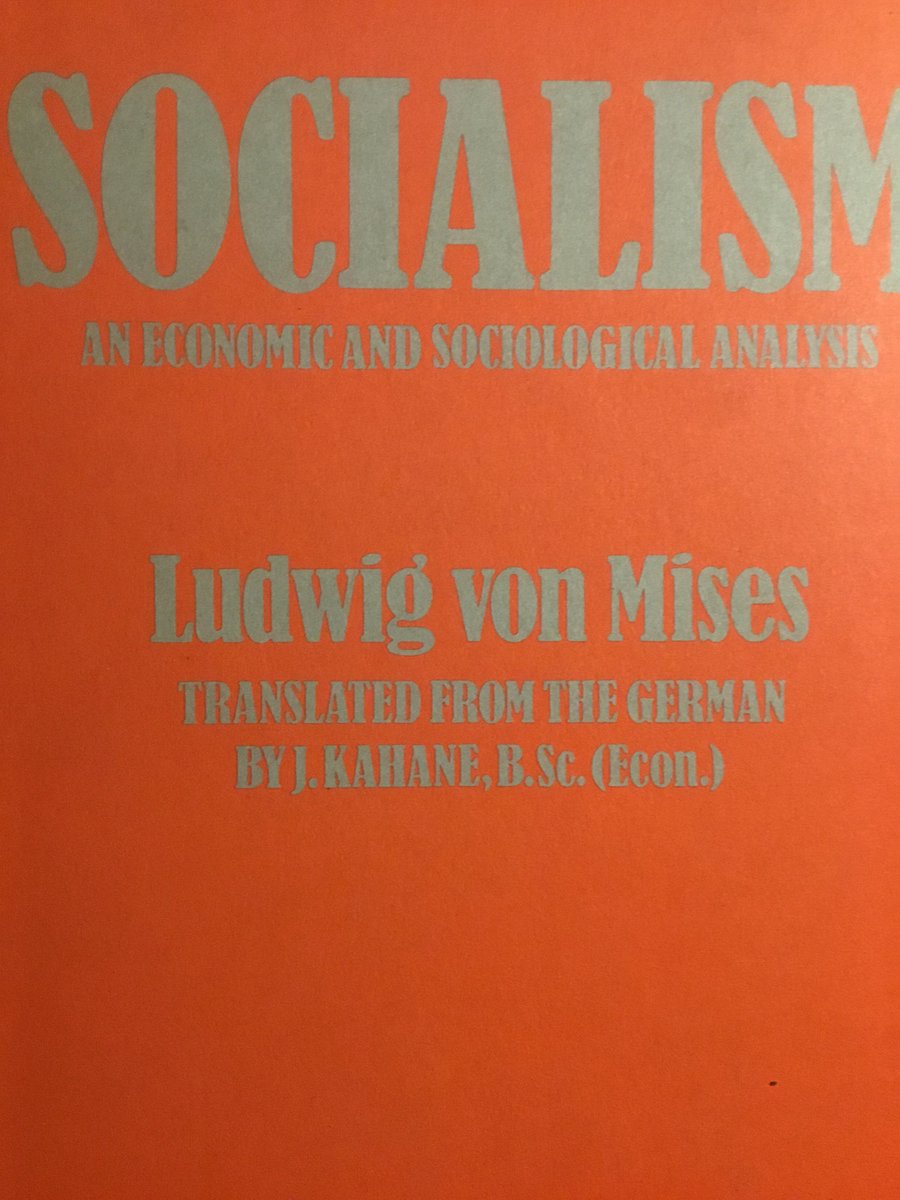
While Western intellectuals spent the 1970s and 80s gushing over Soviet "achievements," Ludwig von Mises had already written the empire's obituary decades earlier. In 1920, he published his devastating critique of socialist calculation, proving that rational economic planning becomes impossible without market prices. The academic establishment ignored him. The Soviets dismissed him as a capitalist propagandist.
You cannot allocate resources efficiently when you have destroyed the price mechanism. When the state owns all means of production, it eliminates the very market signals that coordinate human action. No central planner, regardless of intelligence or computing power, can substitute for the decentralized knowledge that emerges from voluntary exchange.
The proof arrived exactly as Mises predicted. By the 1980s, Soviet grocery stores sat empty while millions of bureaucrats shuffled paper in Moscow offices. Factory managers produced worthless goods because they responded to arbitrary quotas rather than consumer demand. The entire system collapsed under the weight of its own contradictions in 1991, stunning the same Western economists who had spent decades praising Soviet growth statistics.
Meanwhile, Paul Samuelson was still teaching students in 1989 that the Soviet economy might overtake America's. The New York Times continued publishing editorials about the resilience of socialist planning.
Mises got it right because he understood human action and the impossibility of calculation without private property. The establishment economists got it wrong because they confused mathematical models with economic reality. They treated human beings as equations instead of purposeful actors making choices under uncertainty.
The 1920-21 depression was the sharpest economic contraction in American history, yet you've probably never heard of it. Industrial production collapsed 32%. Unemployment spiked from 4% to 12% in twelve months. By every measure, this downturn dwarfed the initial shock of 1929.
President Warren Harding faced enormous pressure to "do something." Labor leaders demanded public works programs. Businessmen begged for bailouts and trade protection. Treasury Secretary Andrew Mellon advised Harding to slash government spending and let wages fall. Commerce Secretary Herbert Hoover (yes, that Hoover) pushed for massive federal intervention.
Harding chose Mellon. The federal budget dropped from $6.4 billion to $3.2 billion in two years. No stimulus packages. No bailouts. No alphabet soup of new agencies. Government employment fell 40%. When you let markets clear, they clear fast.
The recovery started in July 1921. By 1923, unemployment had dropped to 2.4% and industrial production reached new highs. The entire episode lasted eighteen months from peak to full recovery. Compare that to Japan's lost decade of intervention, or the European debt crisis that dragged on for years, or our own jobless recovery after 2008.
Most economics textbooks omit this episode because liquidating malinvestments and allowing price adjustments works exactly as free market theory predicts: a fact that destroys the Keynesian narrative that government must spend its way out of recessions. Politicians today claim they learned the lessons of the 1930s, but they studiously ignore the more important lesson of 1921.
Shouting from the sidelines isn't an economic strategy. True growth doesn't happen by replacing one form of top-down federal control with another wrapped in a different flag. The solution to stagnation is less government, pure and simple.
Watch here: https://t.co/c5yeq6TjjE
#cdnpoli #libertarian #politics #madmax #ppc
“El socialismo es un error intelectual porque pretende organizar mediante coacción lo que solo puede coordinarse mediante libertad.”
- Prof. Jesús Huerta de Soto -
Socialism is the only idea that can fail spectacularly for over a century and still attract new followers. Millions suffer the consequences, historians document the results, economies collapse, and someone always says, “That wasn’t real socialism.”
Repeating the same experiment and expecting a different outcome isn’t idealism. It’s denial.
George H. W. Bush awarding F. A. Hayek the Presidential Medal of Freedom in 1991
“We honor Professor Friedrich von Hayek for a lifetime of looking beyond the horizon. At a time when many saw socialism as ordained by history, he foresaw freedom’s triumph.”
“Over 40 years ago, Professor von Hayek wrote that ‘The Road to Serfdom’ was not the road to the future or to the political and economic freedom of man.”
“A Nobel laureate, he is widely credited as one of the most influential economic writers of our century.”
“Professor von Hayek is revered by the free people of Central and Eastern Europe as a true visionary, and recognized worldwide as a revolutionary in intellectual and political thought.”
“How magnificent it must be for him to witness his ideas validated before the eyes of the world. We salute him.”
PM Carney: “We just launched Canada’s new AI Strategy: AI For All.”
AI for all?
You mean in the same way that we have ‘healthcare for all’ - where 1 in 7 people in Canada don’t have a family doctor & average wait time for specialist treatment tops 6 months?
I feel like educating kids well can be boiled down to simply this:
A child who fails at something real has learned more than a child who succeeds at something fake.