This year’s Nobel Prize in Economic Sciences goes to Joel Mokyr, Philippe Aghion, and Peter Howitt. Why?
Because they explained something we often take for granted:
Why the modern world keeps getting richer.
The answer?
Innovation.
Let’s break it down 👇
For most of human history, economic growth was flat.📜 Better tools came and went.
📉 Gains in income vanished in the next famine, war, or plague.
⏳ Progress existed, but it didn’t compound.
Then came something different.
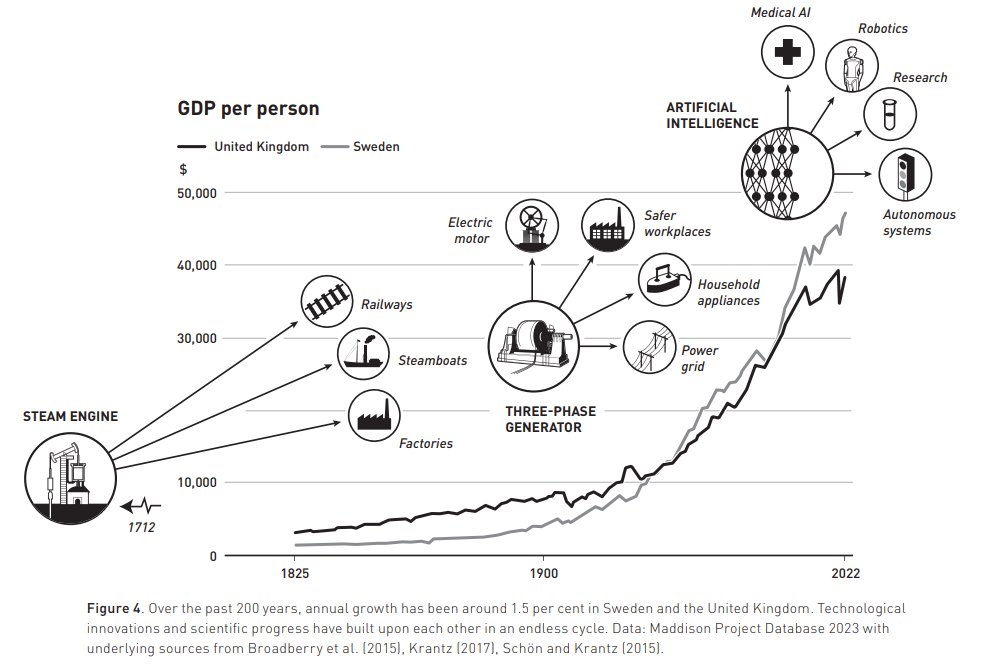
Over the last 200 years, growth didn’t just happen - it sustained.
Year after year.
Decade after decade.
Enough to lift billions out of poverty.
The question is:
Why now?
Why us?
Why did growth suddenly stick?
That’s where this year’s laureates come in.
🧠 Joel Mokyr (historian of ideas).
📈 Philippe Aghion & Peter Howitt (economic theorists).
Each uncovered a different piece of the puzzle:
How innovation became self-reinforcing.
How new ideas sparked lasting prosperity.
📚 Mokyr’s insight:
Progress doesn’t just need invention.
It needs explanation.
In the past, people stumbled onto new techniques - but didn’t know why they worked.
Without a scientific foundation, progress fizzled out.
But once societies embraced science, openness, and curiosity?
Innovation became exponential.
⚙️ Aghion & Howitt’s insight:
They built the modern theory of creative destruction.
When a better product enters the market, old ones fail.
That’s creative - it builds new industries.
That’s destructive - it kills outdated ones.
It’s uncomfortable.
It creates winners and losers.
But it’s also the engine of growth.
Together, their work explains the cycle of innovation:
🧪 New ideas are born
⚔️ Old tech is disrupted
📈 Productivity improves
🔁 And the cycle begins again…
If - and this is key - society allows it.
Because innovation doesn’t just happen.
It can be:
– Blocked by incumbents.
– Crushed by rigid systems.
– Slowed by fear of change.
That’s why the laureates warn:
Growth isn’t guaranteed.
Stagnation is always one bad decision away.
Their message for 2025 is loud and clear:
If we want a better future, we must protect:
✅ Scientific inquiry
✅ Open societies
✅ Competitive markets
✅ Risk-taking and reinvention
That’s how we keep building forward.
This Nobel Prize isn’t about the past.
It’s about the future we still have to build.
🚀 Growth isn’t magic.
🧠 It’s powered by ideas.
🧱 Sustained by science.
⚖️ Protected by good policy.
And without it, we go nowhere.
#JuegosOlimpicos
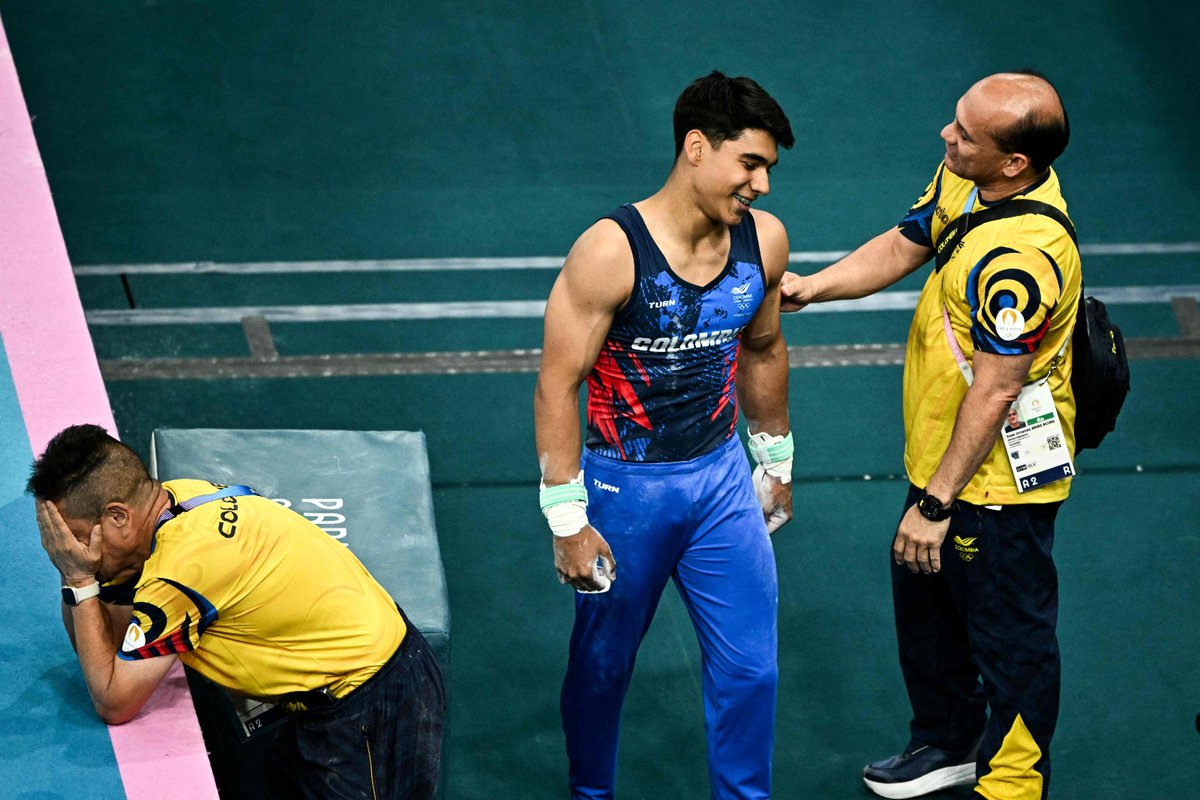
“Ver que un niño de estrato 1 pueda salir adelante y ser campeón suramericano, panamericano y mundial, para mí esa es la felicidad… no la tiene ni Ardila Lule”
Él es Jairo Ruíz, el profe de Ángel Barajas. Nos enseña una de las funciones sociales del deporte. #Paris2024
#OrgulloColombiano
Vean completo el video Los Inforamantes
https://t.co/0NfdCCsmWA
¿Y quién es ese hombre entre lágrimas? En medio de la alegría por la medalla de plata, no nos quedamos callados. Y vamos con un homenaje hecho a trinos para Jairo Ruiz, ese entrenador bravo (como el Norte 🔴⚫️) y exigente que hoy lloró con Angel barajas en #PARIS2024 ¡Vamos!
🚨⚡️Los medallistas olímpicos de ping pong de China (oro), Corea del Norte (plata) y Corea del Sur (bronce) ofrecieron la mejor imagen de los Juegos Olímpicos de París: decidieron hacerse un 'selfie' juntos en el podio pese a las tensiones entre sus gobiernos
Men's Team Final at the #Paris2024#Olympics:
🥇 Japan 🇯🇵 259.594
🥈 China 🇨🇳 259.062
🥉 USA 🇺🇸 257.793
Congratulations to Japan, the new Olympic team champions in #Gymnastics!
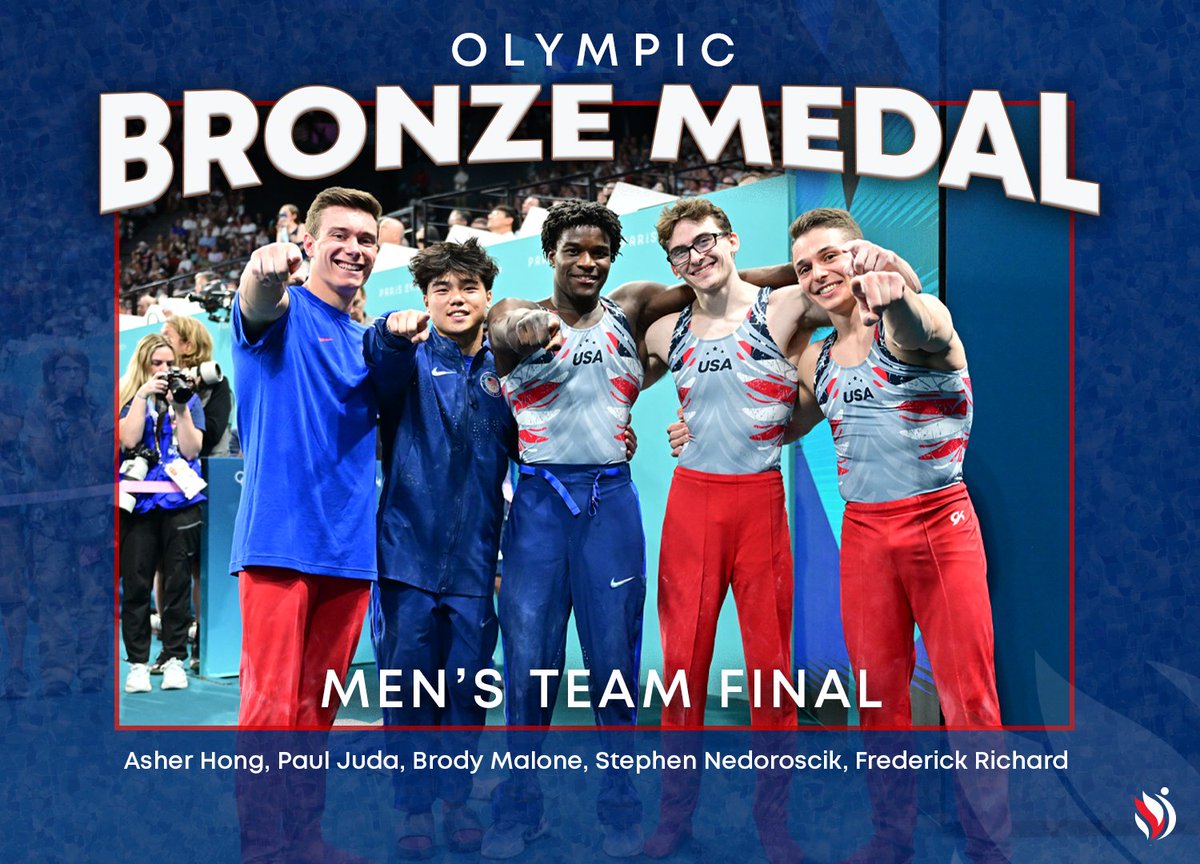
OLYMPIC BRONZE MEDALISTS! 🥉
For the first time since 2008, the U.S. Men are taking home hardware in the Olympic Team Competition! Congratulations to Asher, Paul, Brody, Stephen & Frederick - you are Olympic Medalists!
Jade Carey will be the last for vault.
Suni Lee will be the last for bars.
Rebeca Andrade will be last for beam.
Jordan Chiles will be the last for floor.