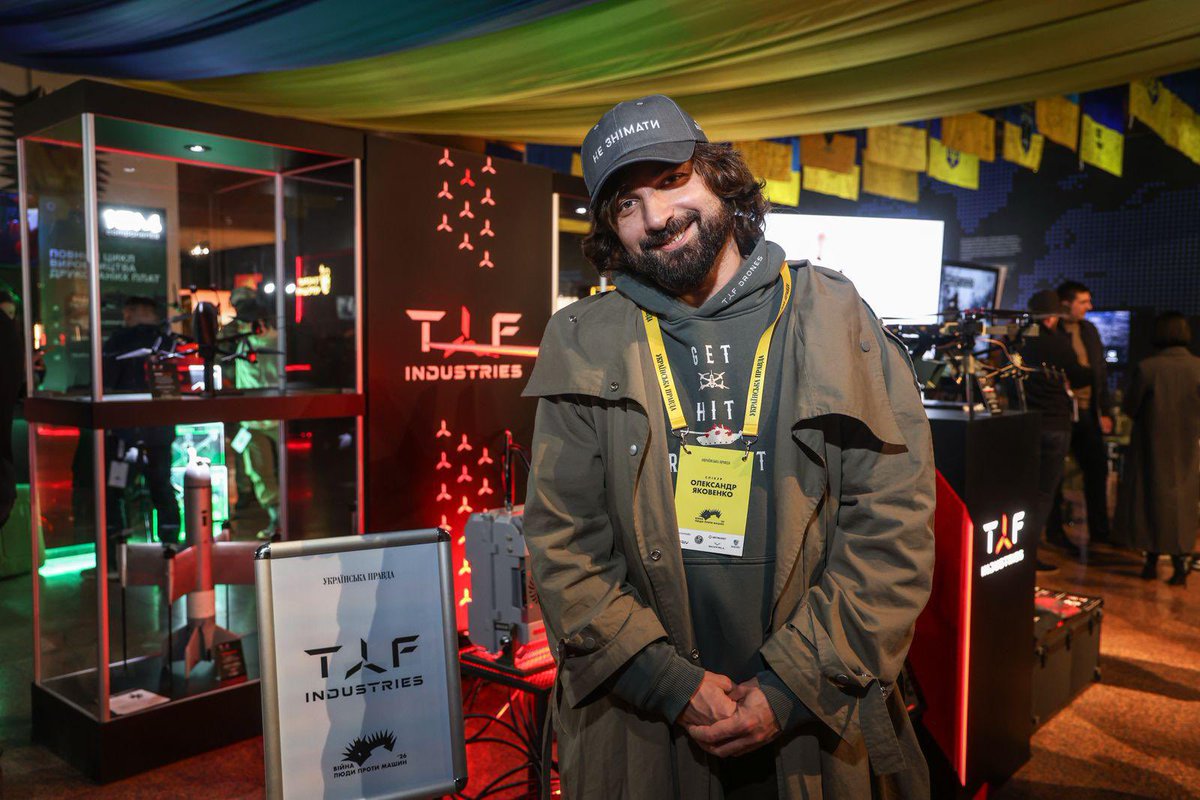
Essentially, Putin turned on full Churchill's "we shall never surrender" mode in so many countries, and certainly in Ukraine. If that was the plan, well, then you sow what you reap. I don't think he can deepthroat as much as he insist on.
@nyknicks What a win for the history books. Incredible comeback. I love this young Spurs team as someone who just loves basketball but I don't think you can come back from this. Wow
@allenanalysis Lol. Imagine what will happen when he goes to watch World Cup game, with all those foreign fans stranded on a poor public transport system.. World Cup is gonna be interesting test of US ability to deliver under stress with the whole world watching.
Would Ukrainians support the participation of the Armed Forces of Ukraine in defending other European countries if russia attacks them?
Rating Group found out that the absolute majority of Ukrainians would support the participation of Ukrainian troops in defending the Baltic states, Moldova, Finland, and Poland in the event of a russian attack.
Lithuania: 63% – would support, 33% – would not support
Latvia: 62% – would support, 33% – would not
Estonia: 61% – would support, 33% – would not
Moldova: 60% – would support, 35% – would not
Finland: 59% – would support, 33% – would not
Poland: 58% – would support, 37% – would not.
"The stronger Ukrainians' emotional connection to the EU grows, the more they support the Defence Forces assistance to other countries in the event of a russian attack."
A friend in need is a friend indeed.
Via @DShulga
This one is special.
Grit has a lot of emotion, time and money invested into this axe.
I’ve invested around 30 hours into the engraving.
Our aim?
Raise $30k to provide STING interceptors to the 105th Border Guards.
This may be our last ride.
Help us finish with a bang.
@ThePrimeagen This UX can be this crappy only if the UX team were pussy enough to agree with this or there were no UX team at all. Either way, let them know I am for hire.
@nypost Yes, my friend Rajesh can back me up! The pretty white woman wanted to have threesome and roll around in a much delicious curry with us and get very naked. He need $1 million too. We tell truth, swear on Krishna and blue six arm elephant.
Really interesting🧵with insights covering DeepSeek V4 paper.
Long context efficiency looks unreal, will definitely experiment with flash version, could become a new driver model for local openclaw setups.
first impressions: 2 new attention types is super cool, mHC expected, pro and flash versions about as expected, muon is awesome as usual, the long context efficiency is bonkers
Imagine every pixel on your screen, streamed live directly from a model. No HTML, no layout engine, no code. Just exactly what you want to see.
@eddiejiao_obj, @drewocarr and I built a prototype to see how this could actually work, and set out to make it real. We're calling it Flipbook. (1/5)
Obviously he’s evil or whatever but when I found out Trump watches AI slop of himself all day as god or a fighter pilot or hulk I thought man that must be so badass. To be dying going insane and hopped up on Stims and old as fuck and watching videos of yourself as Jesus all day
when you watch a movie and some catastrophic failure happens in some system and the computer says like "containment breached" and you're like well how bad could it be if the UX has a specific error state for that flow
17-year-old math prodigy gave his entire prize to Ukraine — an incredible act of generosity.
Skomantas Urbonas won Norway’s national math olympiad and donated the entire award to support Ukraine’s army and healthcare.
15,000 kroner. He simply took it and gave it away.
“I’ve always believed that evil wins when good people do nothing. That’s why I chose to act,” he said.
He’s from Lithuania. His courage speaks louder than words.
A huge thank you to him—and to his parents—for raising such a remarkable human being.
@MsMelChen There are more than one way to live and perceive life. Europeans are different from Americans in many ways, we value morals over money first of all. Americans seem to put emphasis on material things, and this is how this country runs - on quick acting, to never lose opportunity.
On point! And this is why Lithuania would be better off diverting some of Rheinmetal investment into TAF. And to local startups instead of US contractors. @GitanasNauseda, take notes.
Dear Mr. Armin Papperger, CEO of Rheinmetall,
When you referred to Ukrainian drone manufacturers as “Ukrainian housewives with 3D printers” you revealed just how deeply the European defense establishment still fails to understand the nature of modern warfare.
This is not about emotion. It is about battlefield reality. Here are the facts your industry refuses to acknowledge:
In 2025 alone, Ukrainian drones carried out 819,737 confirmed strikes. They caused 90 percent of all Russian combat losses, more than all other weapons systems combined.
TAF alone produces up to 100к FPV drones monthly. In any given 90-day period, my company’s products alone achieve more confirmed strikes than your entire fleet of equipment has across its full combat history in every conflict. And most importantly, I built this company and achieved these results in two years, not fifty. Think about that.
Our drones generate more kinetic effect in three months than your flagship platforms have in half a century.
Why? Because the battlefield has changed, and your business model has not.
•Russian electronic warfare has made GPS-guided Western munitions such as Excalibur and GMLRS nearly ineffective.
•Expensive and complex systems designed for wars with air superiority and traditional peer-to-peer combat have become easy prey for drones costing $500, attacking them from above.
•The cost-to-effect ratio has been turned upside down: one 120 mm Rheinmetall shell or one anti-tank missile costs more than a dozen of our drones, and yet our drones still win.
This is not a “Lego game.” It is industrial Darwinism in real time. We iterate every week. We print parts in basements and ship 100к strike systems per month, while your engineers still require three to five years and hundreds of millions of euros in certification costs for even a minor upgrade.
The war in Ukraine is not a temporary anomaly. It is the first true drone-industrial war. And it has already proven that outdated European platforms, no matter how expensive or “serious” they may seem, are becoming less and less relevant unless they integrate the very technologies you mock.
So when you say, “this is not innovation,” I hear something else: “We do not want to admit that the future is being written in Ukrainian workshops, not in Düsseldorf boardrooms.”
#MadeByHousewives is trending for a reason. Because these “housewives” destroy more enemy equipment every month than entire European armies do in full campaigns. And they do it while your industry continues to sell 20th-century solutions at 21st prices.
The invitation remains open, Mr. Papperger. Stop laughing at the kitchen table. Come and learn how tomorrow’s war is actually being fought. Because the next time someone asks, “Who needs tanks in the age of drones?”, the answer may be simpler than you think: Whoever still believes in 1979 will lose to whoever is building in 2026.
With respect, but with facts,
Oleksandr Yakovenko “Ukrainian housewives”
Founder TAF
@Mzandthropic@Edyy55@FT Europe is not your concern. Worry about your own shit hole. Europe thrived for millenias, through wars, hunger, "3rd world invasions", "old population" and we will thrive far into the future. Let's hope your young and "innovative" country can celebrate at least 500 birthday.
@MiamiHEAT Allowing any team to score 53 in 12 minutes is simply embarrassing. I understand Boston has some talent but wtf is Spo doing? Why are fans even going to these games? Or is the "product of NBA" not appealing to anyone nowadays if team plays proper defence?
@Edyy55@FT This is exactly what needs to happen immediately. All current contracts should be stopped, diverting money to European contractors. Trump wants cold war with EU, so be it. Enough is enough of this backstabbing by US. Sell their bonds, send dollar nosediving. Europe has the cards.
Today is a monumentous day for quantum computing and cryptography. Two breakthrough papers just landed (links in next tweet). Both papers improve Shor's algorithm, infamous for cracking RSA and elliptic curve cryptography. The two results compound, optimising separate layers of the quantum stack. The results are shocking. I expect a narrative shift and a further R&D boost toward post-quantum cryptography.
The first paper is by Google Quantum AI. They tackle the (logical) Shor algorithm, tailoring it to crack Bitcoin and Ethereum signatures. The algorithm runs on ~1K logical qubits for the 256-bit elliptic curve secp256k1. Due to the low circuit depth, a fast superconducting computer would recover private keys in minutes. I'm grateful to have joined as a late paper co-author, in large part for the chance to interact with experts and the alpha gleaned from internal discussions.
The second paper is by a stealthy startup called Oratomic, with ex-Google and prominent Caltech faculty. Their starting point is Google's improvements to the logical quantum circuit. They then apply improvements at the physical layer, with tricks specific to neutral atom quantum computers. The result estimates that 26,000 atomic qubits are sufficient to break 256-bit elliptic curve signatures. This would be roughly a 40x improvement in physical qubit count over previous state-of-the-art. On the flip side, a single Shor run would take ~10 days due to the relatively slow speed of neutral atoms.
Below are my key takeaways. As a disclaimer, I am not a quantum expert. Time is needed for the results to be properly vetted. Based on my interactions with the team, I have faith the Google Quantum AI results are conservative. The Oratomic paper is much harder for me to assess, especially because of the use of more exotic qLDPC codes. I will take it with a grain of salt until the dust settles.
→ q-day: My confidence in q-day by 2032 has shot up significantly. IMO there's at least a 10% chance that by 2032 a quantum computer recovers a secp256k1 ECDSA private key from an exposed public key. While a cryptographically-relevant quantum computer (CRQC) before 2030 still feels unlikely, now is undoubtedly the time to start preparing.
→ censorship: The Google paper uses a zero-knowledge (ZK) proof to demonstrate the algorithm's existence without leaking actual optimisations. From now on, assume state-of-the-art algorithms will be censored. There may be self-censorship for moral or commercial reasons, or because of government pressure. A blackout in academic publications would be a tell-tale sign.
→ cracking time: A superconducting quantum computer, the type Google is building, could crack keys in minutes. This is because the optimised quantum circuit is just 100M Toffoli gates, which is surprisingly shallow. (Toffoli gates are hard because they require production of so-called "magic states".) Toffoli gates would consume ~10 microseconds on a superconducting platform, totalling ~1,000 sec of Shor runtime.
→ latency optimisations: Two latency optimisations bring key cracking time to single-digit minutes. The first parallelises computation across quantum devices. The second involves feeding the pubkey to the quantum computer mid-flight, after a generic setup phase.
→ fast- and slow-clock: At first approximation there are two families of quantum computers. The fast-clock flavour, which includes superconducting and photonic architectures, runs at roughly 100 kHz. The slow-clock flavour, which includes trapped ion and neutral atom architectures, runs roughly 1,000x slower (~100 Hz, or ~1 week to crack a single key).
→ qubit count: The size-optimised variant of the algorithm runs on 1,200 logical qubits. On a superconducting computer with surface code error correction that's roughly 500K physical qubits, a 400:1 physical-to-logical ratio. The surface code is conservative, assuming only four-way nearest-neighbour grid connectivity. It was demonstrated last year by Google on a real quantum computer.
→ future gains: Low-hanging fruit is still being picked, with at least one of the Google optimisations resulting from a surprisingly simple observation. Interestingly, AI was not (yet!) tasked to find optimisations. This was also the first time authors such as Craig Gidney attacked elliptic curves (as opposed to RSA). Shor logical qubit count could plausibly go under 1K soonish.
→ error correction: The physical-to-logical ratio for superconducting computers could go under 100:1. For superconducting computers that would be mean ~100K physical qubits for a CRQC, two orders of magnitude away from state of the art. Neutral atoms quantum computers are amenable to error correcting codes other than the surface code. While much slower to run, they can bring down the physical to logical qubit ratio closer to 10:1.
→ Bitcoin PoW: Commercially-viable Bitcoin PoW via Grover's algorithm is not happening any time soon. We're talking decades, possibly centuries away. This observation should help focus the discussion on ECDSA and Schnorr. (Side note: as unofficial Bitcoin security researcher, I still believe Bitcoin PoW is cooked due to the dwindling security budget.)
→ team quality: The folks at Google Quantum AI are the real deal. Craig Gidney (@CraigGidney) is arguably the world's top quantum circuit optimisooor. Just last year he squeezed 10x out of Shor for RSA, bringing the physical qubit count down from 10M to 1M. Special thanks to the Google team for patiently answering all my newb questions with detailed, fact-based answers. I was expecting some hype, but found none.