At the young age of eleven, Dr K S Rajanna's life took a challenging turn when he lost his hands and feet to Polio.
Instead of letting these limitations define him, he found inspiration in his own resilience and dedicated himself to empowering others facing similar challenges.
His tireless efforts in social service were recognised by the Karnataka government in 2013, appointing him as the State Commissioner for the Disabled.
And in 2024, his remarkable contributions were further honoured with the prestigious Padma Shri award.
#DrRajanna #Inspiration #SocialWork #PadmaShri #PolioAwarness
[Dr. Rajanna, Polio, Disability rights activist, Padma Shri, Social worker, Inspiration]
Instead of watching Netflix tonight.
Spend a day mastering Claude here: https://t.co/Vn60ElPZ2i
→ Level 1 - 24 min: The basics.
Claude For Dummies: https://t.co/HNa5MrCLVU
Claude Setup: https://t.co/jw2qdIcjnh
→ Level 2 - 1 hour: Real workflows.
Claude Cowork: https://t.co/uWTpOI3Woc
Claude for teams: https://t.co/qxlcqhf8bM
Claude Design: https://t.co/ZY8Fg5D2ea
Cowork + Projects: https://t.co/Q7AN9CZAbO
Claude for slides: https://t.co/L0bPMgXci6
Claude Skills: https://t.co/6cHYYfjXEA
→ Level 3 - 3.5 hours: The pro moves.
Avoid sycophancy: https://t.co/5i8xSJBGUl
Claude Code: https://t.co/UgE9xBXVbE
Claude 101: https://t.co/OvBmlvnVqL
Stop hitting Claude limits: https://t.co/j5fEzSH5br
Stop Prompting: https://t.co/j1LATSJiat
→ Level 4 - 8 hours: Expert mode.
Claude Computer: https://t.co/TxYuHPjgbV
Build with Claude API: https://t.co/RcCbfNjlzz
Pro tip: Don't binge it. Do one level per sitting.
Actually apply each guide before moving to the next
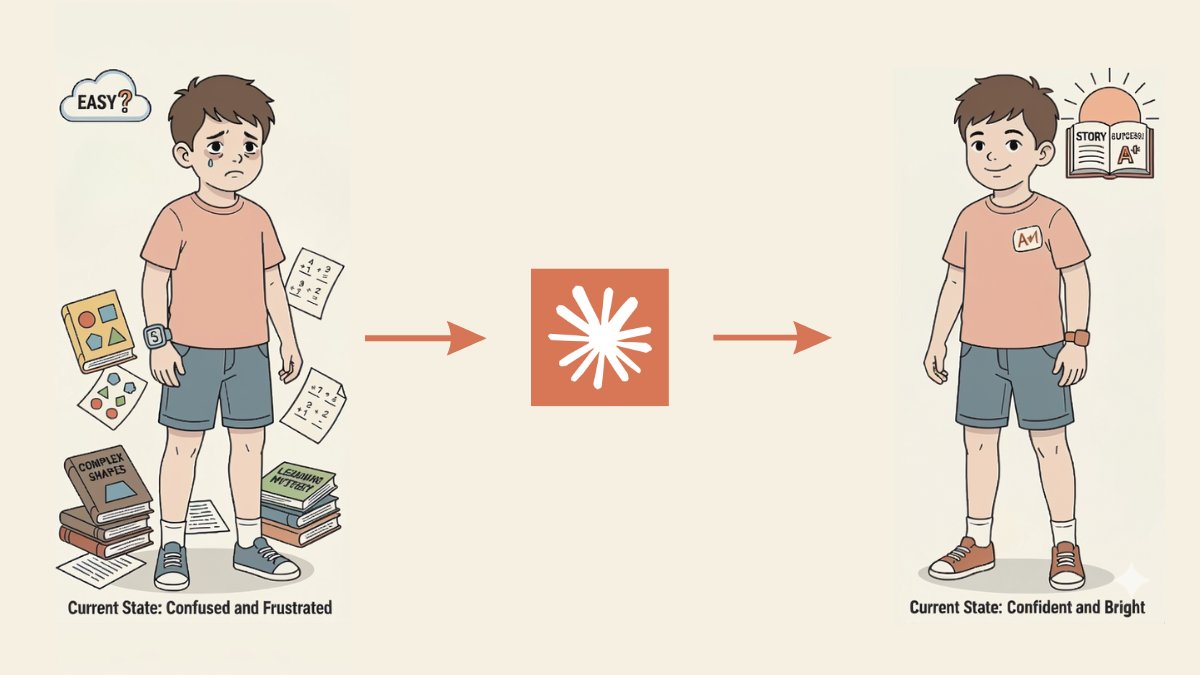
Claude can now teach your kids any school subject like a $100/hour private tutor from Khan Academy. For free.
Here are 12 prompts that explain math, science, history, and English at any grade level in minutes:
(Save this before it disappears)
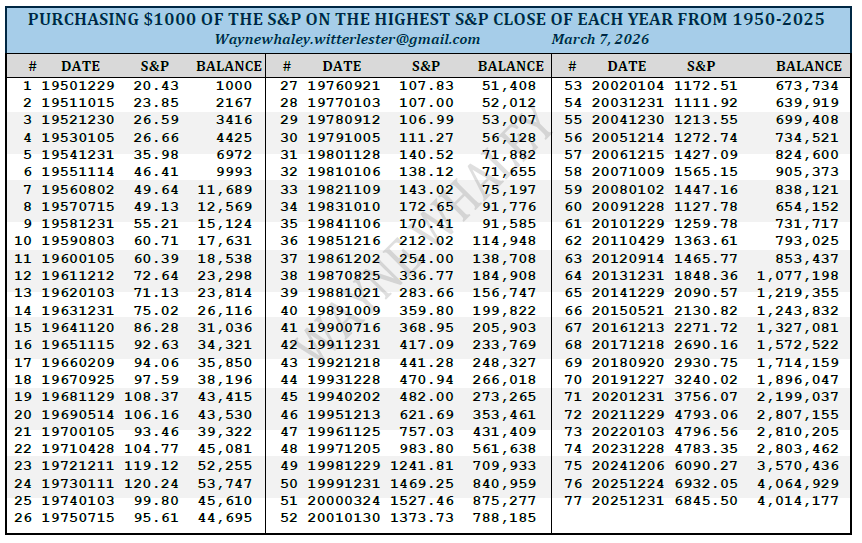
BUYING THE HIGH OF EVERY YEAR OVER A 76 YEAR LIFE TIME - The Worst Possible Market Timing Possible
Given that technical and seasonal studies are currently taking a back seat to geopolitical variables, I thought a good week to dust off and update this study.
In this investment simulation, an investor buys $1000 of the S&P on the worst possible Buy Date of each year, that being the High of each year, 76 purchases from 1950 thorough 2025, a proposed 76 year lifetime that corresponds to my S&P database.
Even with the worst possible market timing possible, the $76,000 of purchases grows to $4,014,177 over the 76 year test period.
And consider, your investment would have fared much better if
1) I had attempted to account for the annual dividend participation and
2) You had simply dollar cost averaged rather than attempting to time the market,
easily growing to well over five million.
The two important variables contributing to the performance are,
1) The S&P was positive in 73.% (56-20) of those 76 years for an avg 9.58% annual return, and
2) You chose to never sell.
There were actually four rolling decades since 1950 in which the S&P was negative, 1965-74, 1968-77, 1999-2008 and 2000-2009, so investors over the last 76 years, looking out less than a decade, did have some risk of lost capital.
There were three 50% Bear Markets during the 76 years investment period, 1973-74, 2000-02, and 2008 and had you begun this program at the onset of any of those three, you were behind the eight ball for several years, particularly 2000-2008 which was hit with the 2000 Dot Com bubble burst, 9/11 in 2001 and the Banking Crisis in 2008.
As well, there is no guarantee that all Bear Markets in the next century will be limited to 50%.
But again, reminding one that this was a worst case -market timing example possible. History suggest one is well advised to make a plan, stick to it, automate if possible so you don't deviate.
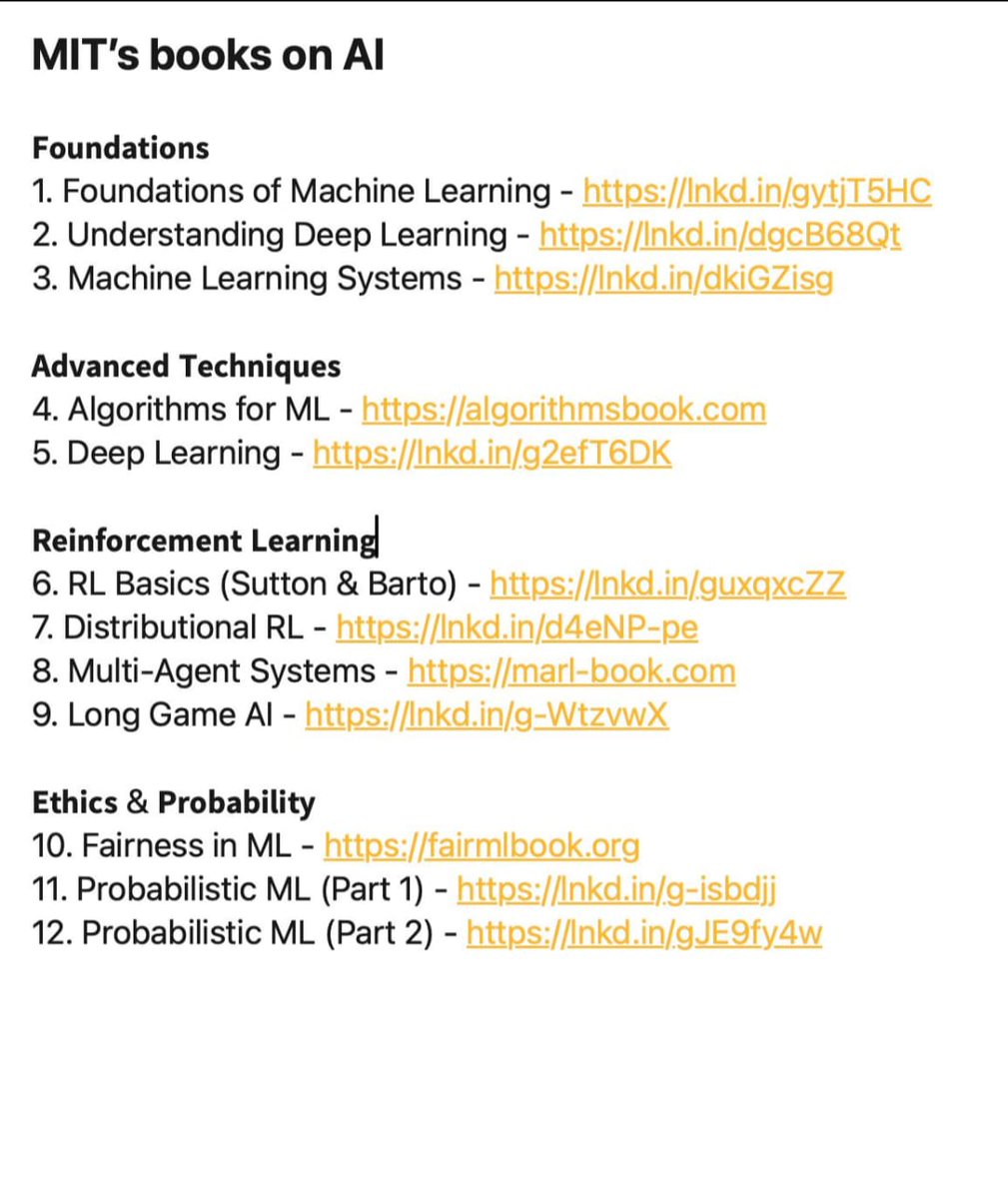
BREAKING: MIT just mass released their Al library for free. (Links included)
I went through these and honestly... this is better than most paid courses I've seen.
Here's the full list of books:
Foundations
1. Foundations of Machine Learning Core algorithms explained. Theory meets practice.
2. Understanding Deep Learning Neural networks demystified. Visual explanations included.
3. Machine Learning Systems Production-ready architecture. System design principles.
Advanced Techniques
4. Algorithms for ML Computational thinking simplified. Decision-making frameworks.
5. Deep Learning The definitive textbook. Covers everything deeply.
Reinforcement Learning
6. RL Basics (Sutton & Barto) The classic. Agent training fundamentals.
7. Distributional RL Beyond expected rewards. Advanced theory.
8. Multi-Agent Systems Agents working together. Coordination and competition.
9. Long Game Al Strategic agent design. Future-focused thinking.
Ethics & Probability
10. Fairness in ML Bias detection. Responsible Al practices.
11. Probabilistic ML (Part 1 & 2)
Links: https://t.co/AhDqm9x1QC
Most people pay thousands for bootcamps that teach half of this.
Bookmark it. Start anywhere. Just start.
Repost for others Follow for more insights on Al Agents.
MIT's books on Al
Foundations
1. Foundations of Machine Learning - https://t.co/HxbXfsDIl6
2. Understanding Deep Learning - https://t.co/AyeQav2yzN
3. Machine Learning Systems - https://t.co/0AxGtjBFwA
Advanced Techniques
4. Algorithms for ML - https://t.co/LOjFeK1hut
5. Deep Learning - https://t.co/Ztmu7X6gNM
Reinforcement Learning
6. RL Basics (Sutton & Barto) - https://t.co/HAWxL28df1
7. Distributional RL - https://t.co/VB1zBuSzag
8. Multi-Agent Systems - https://t.co/3tWqJaimYn
9. Long Game Al - https://t.co/vYDuy1XKT2
Ethics & Probability
10. Fairness in ML - https://t.co/B4lAj2ivpF
11. Probabilistic ML (Part 1) - https://t.co/folJrX24sf
12. Probabilistic ML (Part 2) - https://t.co/BMOjc8qSqZ
Time for the infamous 2 1/2 day rule....??
I abhor market timing, but it is my experience that when $hit happens, the market peaks and reverses 2.5 days after ignition.
Day 1 is shock
Day 2 is panic, prayer and a call from Risk
Mid-Day 3, capitulation and the position is closed out
My view is that buying and holding real estate is not an effective investment strategy in our current economic environment, for a few reasons.
1) Real estate is more interest rate sensitive than it is inflation sensitive, so given our current circumstances it is likely to go down in real terms
2) It is a fixed asset that is easy to tax, which limits its impacts on your ability to diversify
3) Real estate is nailed down, so investing in it makes it more difficult to move money from one place to another
That’s my view, in a nutshell. I’m curious to hear if you agree.
#GovernmentDebt #debt #principles