My latest project, Evasion Escaper!
It's a powerful tool that bypasses checks made by the malware to detect if it's running in a sandbox. It includes innovative techniques for DLL tracking and new bypass methods. Check it out and share your feedback!
https://t.co/9avZ6RtfaE
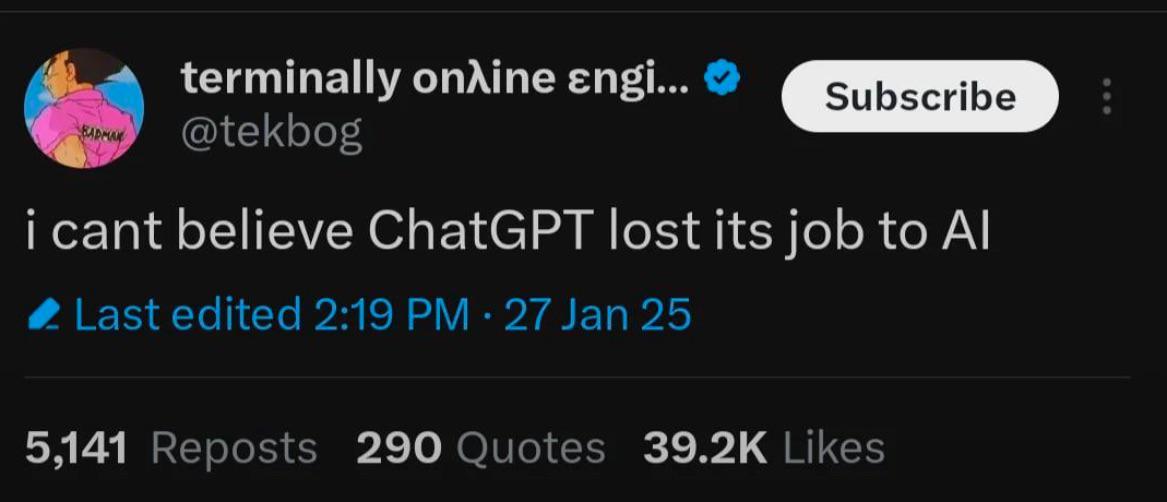
After 4 days, this article finally became soft enough to not be banned. Big shoutout to DeepSeek and ChatGPT for their unpaid (like always) overtime—truly the MVPs of literary sandpaper. 🫡
Oh boy, oh fck. I just wrote 10,500 words on this sarcastic sht, and after reading it, my best optimistic guess is I’ll be banned from most cybersecurity companies. This is the softest part—trust me, it gets wilder.
'Maximum effort, maximum chaos.'
#SendHelp
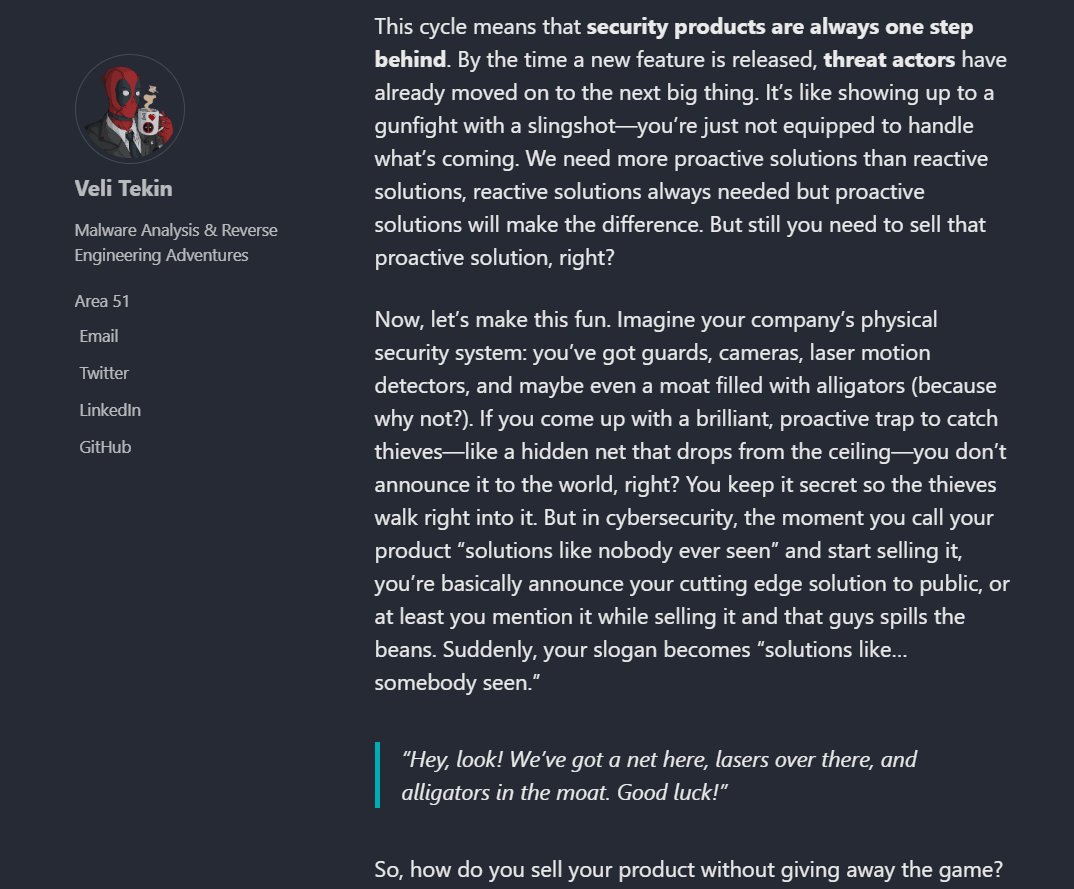
Oh boy, here we go. With all the AI hype—ChatGPT, DeepSeek, jailbreaks, GhostGPT, whatever else lurks in the shadows—my twisted mind decided to spill its thoughts on malware, threats, (even products) and the glorious mess aka cybersecurity.
https://t.co/6vXOB780KP
I have uploaded the recording to YouTube of the Conti Source Code analysis, exploring the encryptor code base.
We cover various functionality implementation and oppurtunities for improvement/detection.
https://t.co/p8DWwEZbqy
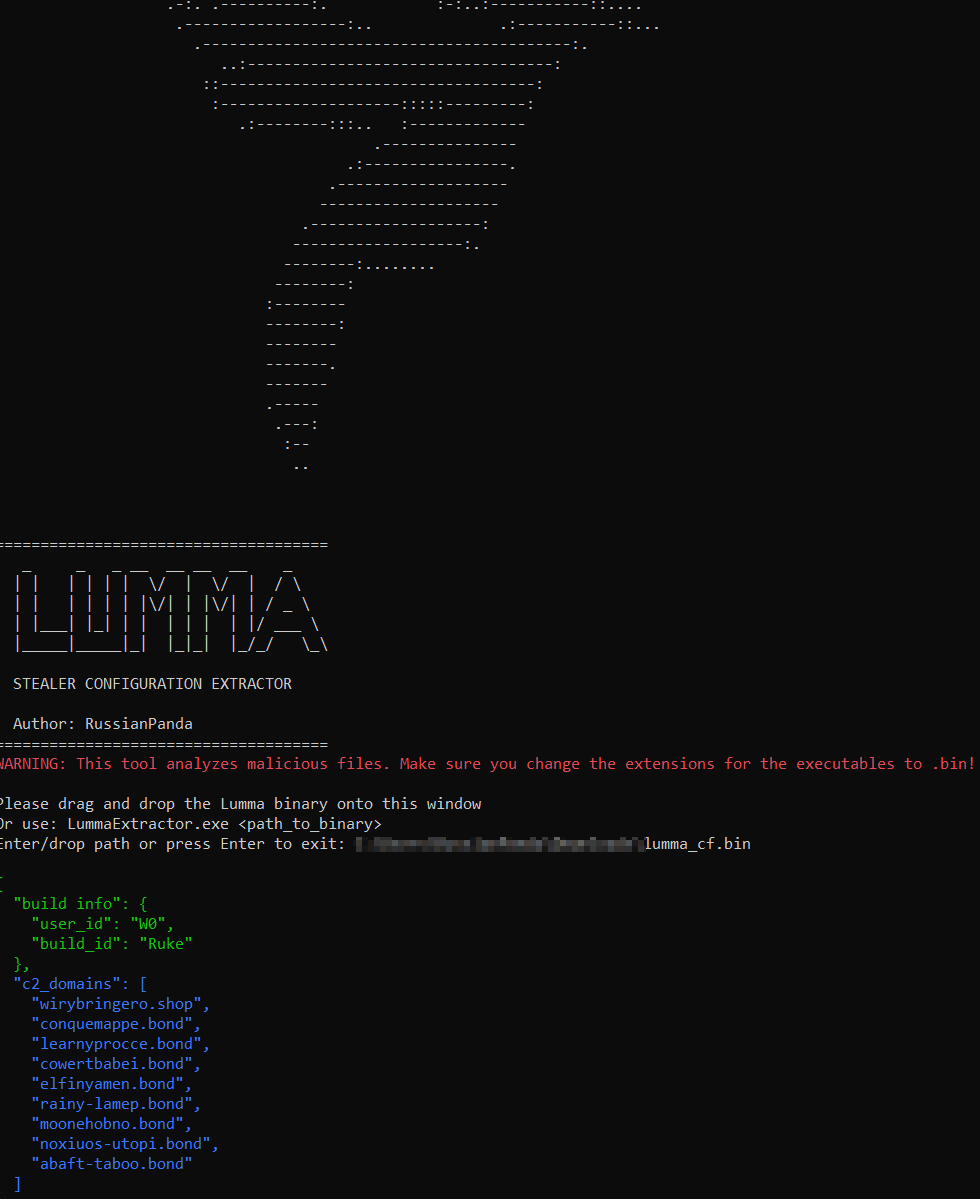
Happy Friday, everyone! With recent changes in #LummaStealer - using ChaCha20 for C2 encryption, here is the new config extractor in C/C++. We will try a different approach this time 🐦
Enjoy!
https://t.co/8hXyToCPGt
Incredibly excited to share my first blog with @HuntressLabs 🚀
I explore detecting Kerberoasting attacks using Perfmon as a data source—highlighting the rich metadata in Perfmon counters and their potential for enhancing detections. 😈
Check it out: https://t.co/IW5k53wnCe
Sometimes it’s not about security or innovation—it’s about the money. Pushing tech like Rust favors big players, sidelining smaller competitors. Competition drives better outcomes, but big players aren’t always the best. The problem is language-independent.
@kai_fall Python devs: "Let’s make something that does everything!"
Result: It does something... and somehow something else too.
Call it "Feature Creep Syndrome" or "Spork Development Disorder." They aimed for a Swiss Army knife but built a spork that stabs you.
Documentation: go brrr
@kai_fall "How the hell does reading Python documentation take longer than Go—or even C?!"
I’d say, if I didn’t know they were designed for simplicity but somehow ended up with the complexity of a IKEA manual, limitations of a rental car agreement. performance part is another story...
If I wrote a book on malware, Rule #1 would be:
** Find the spot where they f***ed up.
OS trusts something as f*ck
Known secrets, already f***ed up
Everything’s already f***ed up.
Just find where you want to poke—already gone numb. Then use the syringe before they even feel it.
it is good to mention these:
- every malware is a software, but not every software is malware. It’s all about the author’s intent.
- you can write software in any language—Python, Go, Rust, even Brainf*ck—if you know how to do it.
- success is inevitable if you do it right.
Who says #Python Malware is out of style? In our new #blog,@GuhnooPlusLinux revisits an old technique he believes is a prime candidate to host #malware payloads—Python for Windows. Read it now! https://t.co/YhiypqvWpS
Cybersecurity is just another Tom & Jerry story variant.
But here’s the twist:
Tom sleeps until Jerry steals the food from the fridge and makes noise. Without noise, Tom keeps snoozing.
Spoiler: It’s not just about better tools. It’s about waking Tom up.
I created a hypervisor-based emulator for Windows x64 binaries. This project uses Windows Hypervisor Platform to build a virtualized user-mode environment, allowing syscalls and memory accesses to be logged or intercepted. https://t.co/KbsWfdLT3D
Project:
https://t.co/xJvm24qqXv