For those of you interested in state-space models, @canyon289 is starting (on 1/21) a reading group on this topic based on my book chapter, and will also dive into our dynamax JAX library. Sign up at https://t.co/9xrHHvUS8I
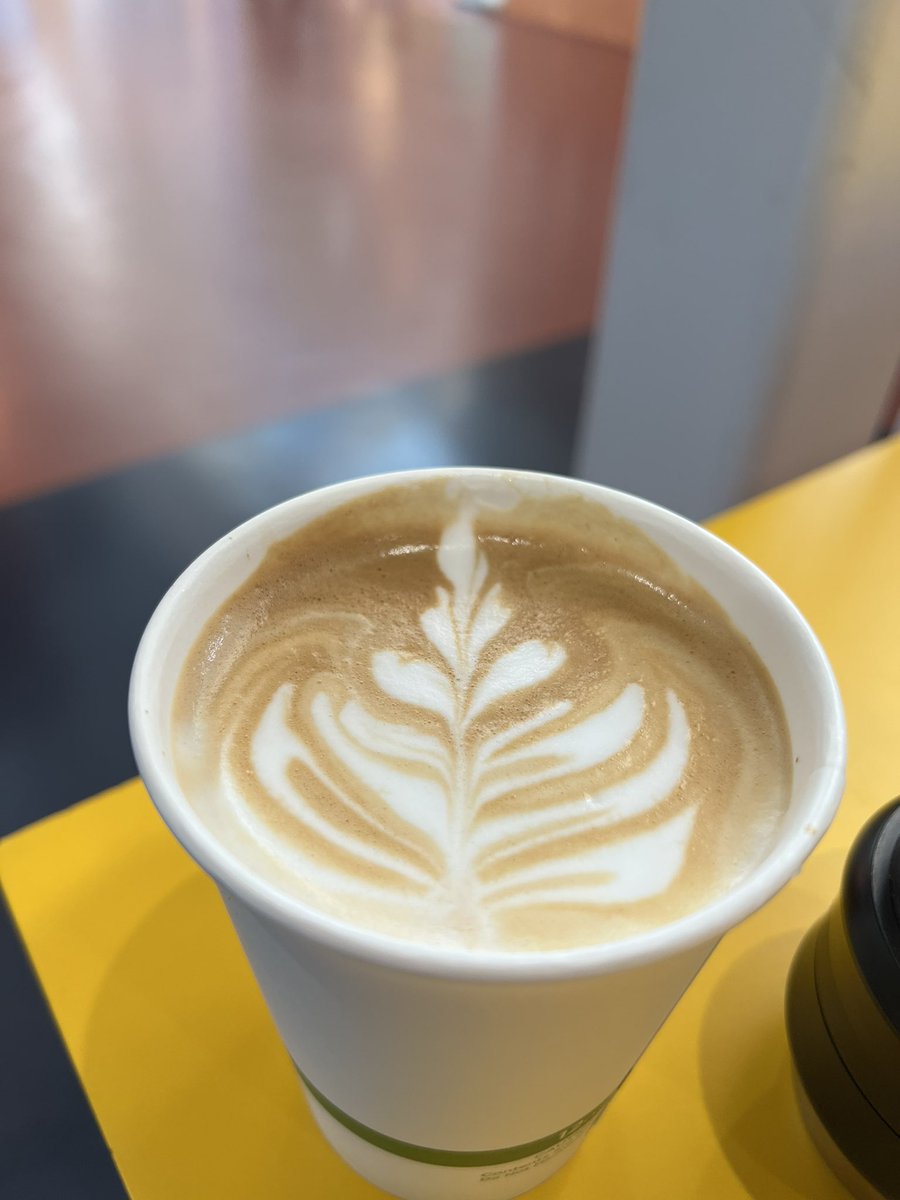
Found the best coffee so far in 2022 at Pittsburgh. It used to be my go to coffee place during my phd, but indeed it has very excellent quality compared to many coffee places in Bay Area!
Glad to share that our work "Transformers4Rec: Bridging the Gap between NLP and Sequential / Session-Based Recommendation" is accepted at #RecSys2021!
The work was started during my internship at NVIDIA and it has been great to work with awesome colleagues in Merlin team!
Very excited to have the paper "Transformers4Rec: Bridging the Gap between NLP and Sequential / Session-Based Recommendation" by @NVIDIA Merlin team accepted at @ACMRecSys! This year acceptance rate was just 18%.
Thanks to my co-authors @Even_Oldridge@SaraRabhi5@ak_ronay@vxdp
My team spoke very highly about this blog (and they're also wondering if self-supervised learning could eliminate the need for labeling entirely) so I gave it a read. It was a very well-written, thorough overview of SSL. What stands out the most was it was written by Dr. LeCun,
Our new paper accepted at AI in Medicine (AIME) 2021 conf is online https://t.co/zXjrPvvNZQ What's new? When you have event sequence data with high variability like ones form EHRs, do fine-tuning with past history of its own on-the-fly. It will greatly increase predictability.
My favorite topic is “Debugging Neural Nets”. It contains many practical tips you will need to unblock yourself when a NN model doesn’t perform. https://t.co/KhhKvdovgE
One of the greatest courses that covers both high-level overviews and low-level details on lots of important topics in neural nets & nlp! I took it 2017 and really liked it, especially the quiz. It was a big push to read all the key papers of each topic.
2021 version of CMU "Neural Networks for NLP" slides (https://t.co/X2rd0eHNiW) and videos (https://t.co/6Yi2cZmOLE) are being posted in real time! Check it out for a comprehensive graduate-level class on NLP! New this year: assignment on implementing parts of your own NN toolkit.
Want to come work with @benfrederickson, @karlhigley and me building open source tools for recommender systems? We're looking for someone with a good knowledge of the @TensorFlow TFX ecosystem to help us integrate our tools and accelerate it on GPU. https://t.co/dlHmNQIC0v
Loved this Multimodal Machine Learning Course by Louis-Philippe Morency and and @pliang279 at @LTIatCMU! https://t.co/tlQmDHmgRR Great to have such resources available online.
In the midst of COVID... we present a new yet classical machine learning method to predict upcoming hypotension for ICU patients - at @Crit_Care. Differences? 1) More data-driven, 2) We tried hard to make it implementable. https://t.co/kOYvwPY6o1
After long searching and debugging, I figured out that I need to have z=x+y.detach(). Setting y.requires_grad=False was not enough. Meanwhile, I found this article very informative to understand the error: https://t.co/XDBMyfNla0
indeed, it was to fix this error: "RuntimeError: leaf variable has been moved into the graph interior" where I have z=x+y, where x is from a model that I want to update its params and y is from another **fixed** model.