Introducing https://t.co/gIuyiMibn6, a new way to launch @pumpfun tokens paired with $wBTC.
CA: 8oRgfRS6DZMJrV73TV9dqTiTb91SfQbF6PtjtDp9pump
Every token launches through a standard @pumpfun bonding curve, with its creator fees assigned at launch to a generated fee vault.
Creator rewards are auto-claimed every minute and split 50 / 50:
- 50% buys the token
- 50% buys $wBTC
Both buys execute through Jupiter on the open market, then both sides are deposited into a Raydium liquidity pool for that pair.
The cycle runs every minute. As volume increases, more creator rewards are converted into both the token and $wBTC, then added back to the pool so liquidity compounds over time.
https://t.co/gIuyiMibn6
Finishing up editing a video walking through the full mechanism.
Also made a few changes to how the pools are built and maintained so each cycle can add deeper liquidity more cleanly as the market moves.
Lots of stuff being pushed out later today!
Please give this a watch and tag @blknoiz06!
I tried to explain everything at a beginner level, so even if you’ve never touched liquidity pools, creator rewards, or onchain programs before, it should make sense.
Really appreciate all the support over the last few days. I’m pushing a full frontend revamp later today with a cleaner UI, live buyback and burn tracking, and a better way to visualize how the mechanism works.
Hey @blknoiz06, please watch this video.
You have been talking about the need for launchpads to support deeper liquidity as tokens reach larger market caps, so traders can size into them onchain without getting destroyed by slippage.
I have built a compounding liquidity model that does exactly that.
Every token launches through a @pumpfun bonding curve paired with $wBTC. Its creator rewards are auto-claimed every minute, used to buy both sides of the pair through Jupiter, and added into a Raydium liquidity pool.
The more volume the token generates, the more liquidity that market builds around itself.
This is not just a token paired with Bitcoin. It is a launch model where trading activity continuously strengthens the pool underneath the market.
I would genuinely like you to look at the mechanism and tell me what you think.
https://t.co/gIuyiMibn6
Appreciate this. Spent the last 2 hours tightening up the keeper and some frontend fixes.
Also working on a few videos to explain the mechanism properly, because the idea is simple once you see the full flow.
$wBTC
So far, 14.17 SOL in creator fees has been claimed, with 13.44 SOL already deployed into Bitcoin-paired liquidity.
This is what liquidity built from volume looks like.
More volume. More liquidity. Deeper markets.
solana:8oRgfRS6DZMJrV73TV9dqTiTb91SfQbF6PtjtDp9pump
You can track the wBTC / cbBTC pool here:
https://t.co/97EW2pgkvc
The system is now running flawlessly as intended. As volume increases, more creator rewards are claimed, more of both sides are added to the pool, and liquidity continues to deepen over time.
@blknoiz06, you asked for a model that helps stronger tokens support deeper liquidity. We built one.
Restarting the keeper bot now. It looks like the process paused during deployment, so creator rewards temporarily stopped cycling into the pool.
Buybacks should resume momentarily.
In the meantime, please familiarize yourself with how the mechanism works and watch the video below. I tried to explain the full process as clearly as possible.
Hey @blknoiz06, please watch this video.
You have been talking about the need for launchpads to support deeper liquidity as tokens reach larger market caps, so traders can size into them onchain without getting destroyed by slippage.
I have built a compounding liquidity model that does exactly that.
Every token launches through a @pumpfun bonding curve paired with $wBTC. Its creator rewards are auto-claimed every minute, used to buy both sides of the pair through Jupiter, and added into a Raydium liquidity pool.
The more volume the token generates, the more liquidity that market builds around itself.
This is not just a token paired with Bitcoin. It is a launch model where trading activity continuously strengthens the pool underneath the market.
I would genuinely like you to look at the mechanism and tell me what you think.
https://t.co/gIuyiMibn6
$wBTC is the first memecoin paired with Bitcoin liquidity that compounds from its own trading volume.
As volume increases, creator fees continuously add more of both assets to the pool, creating deeper liquidity and a stronger Bitcoin-denominated base over time.
The pool only gets deeper as the system runs.
Hey @blknoiz06, please watch this video.
You have been talking about the need for launchpads to support deeper liquidity as tokens reach larger market caps, so traders can size into them onchain without getting destroyed by slippage.
I have built a compounding liquidity model that does exactly that.
Every token launches through a @pumpfun bonding curve paired with $wBTC. Its creator rewards are auto-claimed every minute, used to buy both sides of the pair through Jupiter, and added into a Raydium liquidity pool.
The more volume the token generates, the more liquidity that market builds around itself.
This is not just a token paired with Bitcoin. It is a launch model where trading activity continuously strengthens the pool underneath the market.
I would genuinely like you to look at the mechanism and tell me what you think.
https://t.co/gIuyiMibn6
Editing a video to explain the full mechanism.
This is the first launch model where every token builds its own Bitcoin-paired liquidity pool from the creator rewards it generates.
As trading continues, more wrapped BTC is added to the pool, creating deeper liquidity and a stronger base for the market over time.
I want people to use the tech, test it, and see the model working onchain. I’m going to do everything I can to bring more attention to it.
You can view every liquidity cycle onchain.
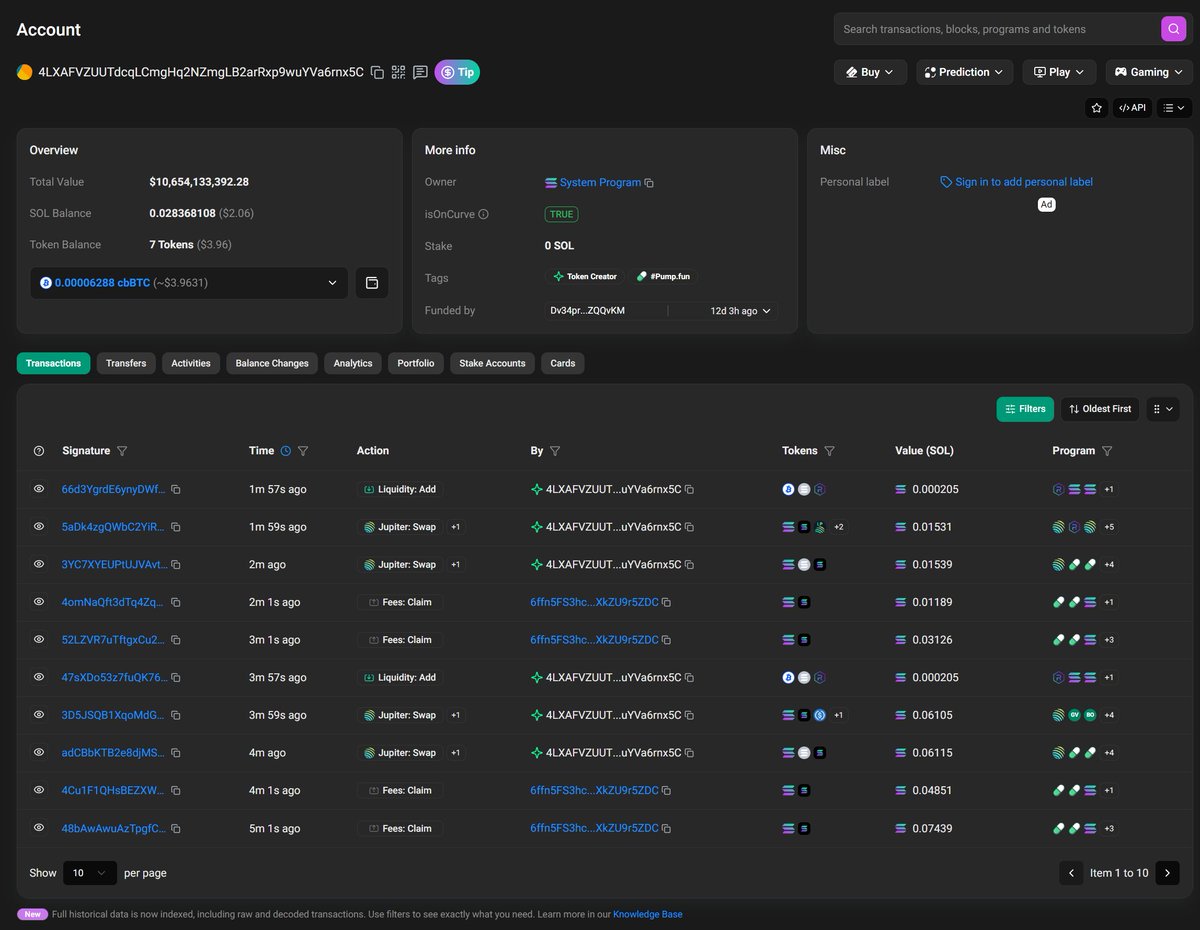
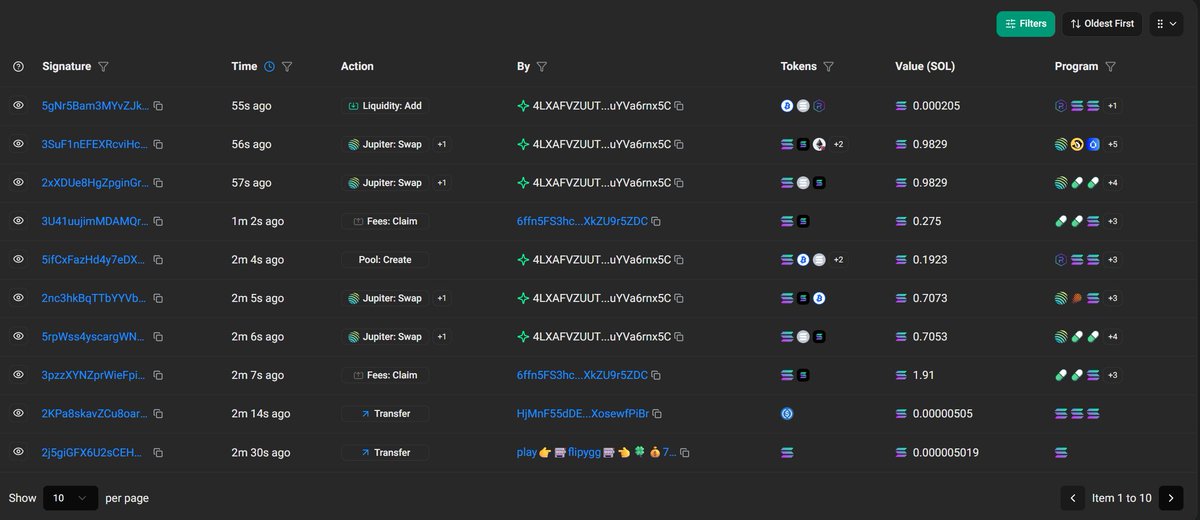
The keeper account below is responsible for claiming creator rewards, routing buys through Jupiter, and adding both sides of the pair to the Raydium pool:
https://t.co/cUlb93TZGw
Each cycle is fully transparent. You can see the rewards being claimed, the token and $wBTC being purchased on the open market, and the resulting liquidity being deposited into the pool.
The tech is live. The keeper is running. Every cycle strengthens the market.
The pool is now indexed on @Raydium, so you can track its TVL in real time.
Every trade generates creator rewards that are used to add more of both assets to the pool, continuously deepening liquidity around the $TOKEN / $wBTC market.
The tech is working. Will be going live on @pumpfun to show the full cycle running onchain.
https://t.co/97EW2pgkvc
Once @Raydium indexes the pool, you’ll be able to track its total TVL here:
https://t.co/b9XJZgRE5T
Indexing may take a few minutes.
Pool create tx: https://t.co/ZY6ohJGF1X
Tek is tekking.
You can watch the automated buys execute through Jupiter on the open market here: https://t.co/kO74CKfGP4
Every minute, creator rewards are auto-claimed, 50% buys the token, 50% buys $wBTC, and both sides are added to the pool.
Keeper bot is now running.
Creator fees are auto-claimed every minute. The “dev buys” you see are the keeper working in real time, with 50% of the fees buying the token and 50% buying $wBTC through Jupiter.
Both assets are then added to the Raydium liquidity pool.
Introducing https://t.co/gIuyiMibn6, a new way to launch @pumpfun tokens paired with $wBTC.
CA: 8oRgfRS6DZMJrV73TV9dqTiTb91SfQbF6PtjtDp9pump
Every token launches through a standard @pumpfun bonding curve, with its creator fees assigned at launch to a generated fee vault.
Creator rewards are auto-claimed every minute and split 50 / 50:
- 50% buys the token
- 50% buys $wBTC
Both buys execute through Jupiter on the open market, then both sides are deposited into a Raydium liquidity pool for that pair.
The cycle runs every minute. As volume increases, more creator rewards are converted into both the token and $wBTC, then added back to the pool so liquidity compounds over time.
https://t.co/gIuyiMibn6