“Invitation to a comprehensive CT-based screening for subclinical CVD did not decrease death over 7 years among men aged 60–64 years but did increase severe bleeding. Because the trial was powered for events over 10 years, further follow-up is needed.” The paper's conclusion does not discuss statins. The study aims to determine whether screening is effective; it does not address the efficacy of statins.
A system that can summarize patient information is great, and systems like Epic are already testing it.
The problem is noise and underdetermination. Clinical medicine is messy, with too many possible causes and too few signals (clinical or lab values). It is an inverse problem! The more complicated the history, the lower the SNR, the higher the uncertainty.
Clinicians pick up on cues, learn what to disregard as irrelevant data points, and learn what to offer the patient depending on their state, desires, and support system.
A lot of judgment that a machine would probably struggle to replicate. We do RCTs for a reason, rather than reasoning from principles alone. Engineering solutions do not work in the messy world of clinical medicine.
Claude broke the coding barrier for me and let me create interactive teaching artifacts. That said, the fear of inaccuracies is very real, which is why output should be validated.
Not using interactive and visual elements in lectures and presentations is a wasted opportunity.
Visualizing gaze control is hard. If adding an interactive element slightly improves understanding, we should do it.
Elements for a Successful Long-term EEG Wearable: A Clinician Perspective
Epilepsy is a common chronic neurological disorder. The treatment involves the use of medications and, in cases of failure, devices and surgery. Despite all efforts, including newer medications, the percentage of patients with refractory epilepsy continues to hover around one-third.
Refractory epilepsy is defined when a patient fails to respond to two well-dosed and well-chosen antiseizure medications. At this time, a discussion about alternative palliative options becomes central to the physician-patient dialogue. Surgery is invasive but needed in some cases; devices can help in others, and studies have shown a cumulative effect.
In the meantime, clinicians continue to manage patients’ medications as they remain the primary method of treating epilepsy.
Technological advancements have allowed the introduction of ultra-portable and ultra-long-term EEG recording devices, which patients can wear for extended periods with minimal discomfort and with purportedly good signal quality.
Such devices, if successful, will represent a paradigm shift in epilepsy care. In addition to objective and accurate seizure tracking, they may provide a forecasting or predictive mechanism to trigger the patient to administer rescue medication for an imminent seizure or advise the patient not to engage in high-risk activities. The psychological, medical, legal, and social factors related to epilepsy and seizures are complex, and such systems may affect all aspects of a patient’s life—not only through seizure prevention as stated earlier.
Start-up companies are using technological advancements to develop creative solutions for EEG monitoring devices. Despite the excitement and available technology, these devices will fail if they do not take into account current health system requirements and clinician workflow.
Below are the key requirements for a successful device:
EEG Scalp Coverage: Must involve areas that are implicated in disabling seizures.
High Accuracy: Needs to achieve a very small false detection rate to avoid alarm fatigue.
Device Design: Should be small, lightweight, have a long battery life (lasting weeks), and be skin-friendly.
Companion Application: Requires an intuitive, user-friendly application.
Physician User Interface: Must be intuitive and apply similar design principles as currently available EEG reading software.
Data Processing: Should focus on reducing the amount of raw data presented; multiday data represents a high burden, necessitating a manageable amount of data for manual review.
Seizure Detection Review: Must offer a clear representation of all seizure detections for clinicians to review, ensuring that major consequences are not solely dependent on machine analysis.
Systemic Considerations: Should address issues regarding data privacy, continuous use of patient data for training, and billing early on, as success is unlikely if insurance does not cover it.
Work in progress. I am trying to see if the OpenAI real-time API is good enough to be used as a standardized patient in student evaluation. The cost is relatively high; The quality needs to improve. The audio recording was not great!
#AI#neurotwitter
Congratulations to the 2025 CAM Award (Cosimo Ajmone-Marsan) winners, Dr. France Fung et al! Check out their article on continuous EEG monitoring in critically ill children, and how stratification by risk can suggest optimal duration to detect seizures: https://t.co/G3YATga73t
The health system in #Gaza continues to be systematically degraded.
Hospitals have turned into battlefields.
Diseases are rampant. Famine is looming. Water is at a trickle.
I join @iascch principals in calling for an immediate ceasefire.
@AMahajanMD@PedsNeuroMD Research output does not correlate very well with teaching skills. The problem is a lot of motivated physicians who have the potential to contribute to the training of the next generation of physicians, feel under appreciated as there is no objective measure to show their work.
AI is changing healthcare in amazing ways. As doctors, let's use it wisely. The future is bright and it's coming fast. Can't wait to see what's next! #MEDTECH#NeuroTwitter#ArtificialIntelligence
https://t.co/v0CHT2fOM3
Congrats to own @detroitneurons@waynemedicine Dr. Robert Lisak on being honored with the Giant of MS Award. A is truly fitting descriptor of his immense contributions to the field of multiple sclerosis @neurology_live
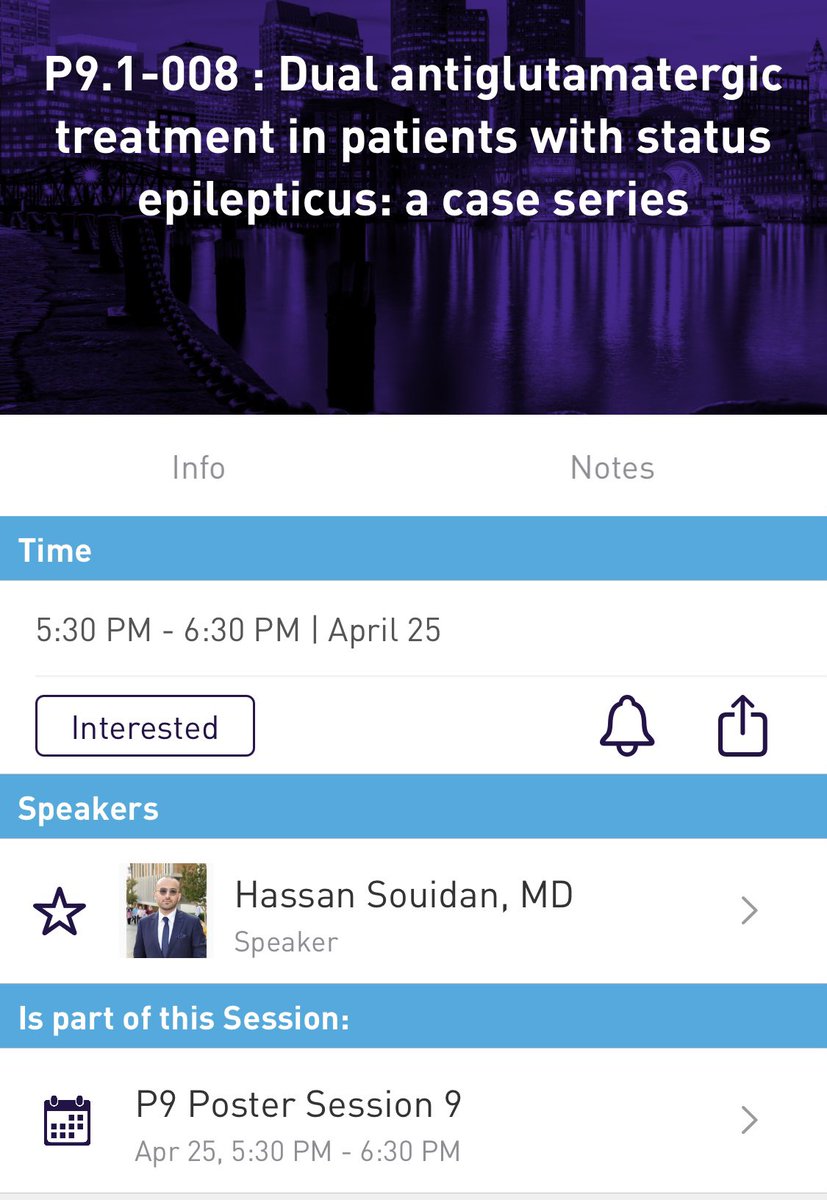
Join us at the AANAM to learn about our case series on dual antiglutamatergic therapy in status epilepticus ” @ #AAN2023#Boston💫
Looking forward to meeting everyone and picking your 🧠
See you all there!
#NeuroTwitter#Epilepsy#MedEd@DetroitNeurons
I do believe that we need solutions to address the time spent in documentation and the lack of standardization. such solutions will help in building better AI models with enhanced clinical utility. #NeuroTwitter#ArtificialIntelligence
"Overall, physicians spend 15.5 hours per week on paperwork and administration"
An outstanding example of why generative AI (co-pilot for healthcare) can have a profound impact addressing burnout even without clinical decision support use cases: https://t.co/HUEi0o8uhL
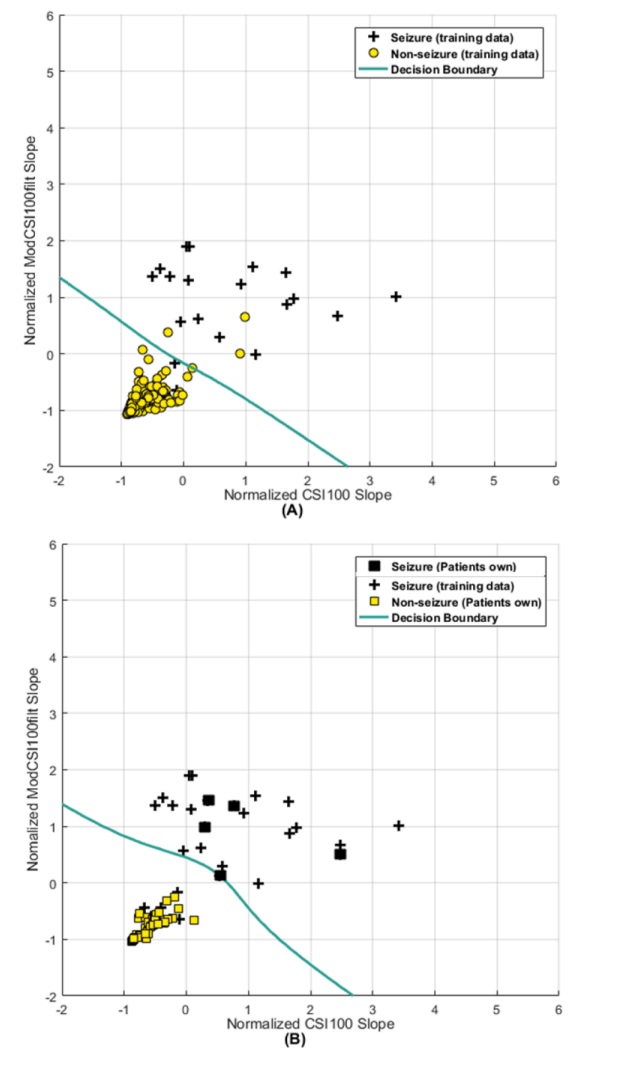
Personalized seizure detection using logistic regression machine learning based on wearable ECG-device.
The patient-adaptive algorithm outperformed both the generic approach and the previously published patient-tailored method.
https://t.co/RSiEVFkJdr
#epilepsy#wearables