THERE MUST BE A LIMIT
Elections can be tough. Political competition can be very tough. But there is a line between fighting for votes and trying to remove an opponent from the electoral process itself.
Timur Turlov’s campaign accused me of bribery, corruption and improper financial influence because of a transparent sponsorship agreement supporting German chess. They then went further and demanded the exclusion not only of me as a candidate for FIDE President, but also of the German Chess Federation.
The FIDE Electoral Commission has now ruled that both requests were inadmissible: I‘m not excluded. Germany is not excluded. No interim measures have been imposed.
This matters not only because the attempt to remove me from the election failed. One of the most respected chess federations in the world was dragged into this dispute, and its reputation was put at risk purely as part of a political fight against an opponent.
That is not how this should work. Neither Germany nor any other national federation should become an instrument in an election campaign, or collateral damage in an attempt to eliminate a candidate.
The remaining ethics allegations have not yet been decided on their merits and may still be referred to the Ethics and Disciplinary Commission. I am fully prepared to defend our position there. But one thing has already happened: the attempt to use these allegations as a way to change the field of candidates has failed.
And this is where the fundamental line must be drawn. Candidates should compete on their programmes, their teams, their experience and their vision for the future of FIDE. They can argue. They can criticise each other. They can run a tough campaign. But elections should not be decided through attempts to remove an opponent by administrative means and place a national federation under attack in the process.
Timur Turlov wants to lead FIDE. Then he should be prepared to win this election through the votes of the federations, not through attempts to exclude those who stand against him. I am ready for that kind of election.
Let the federations compare us.
Let the federations decide.
And let the winner be the candidate they genuinely trust with the future of FIDE.
I am very pleased to announce that Aleksi Olander, President of the Finnish Chess Federation, is joining our team.
Aleksi represents exactly the kind of new-generation leadership that international chess needs: young, accomplished, internationally minded, and experienced in both chess governance and business.
His connection to chess goes back to the age of seven. Since then, he has experienced our sport from almost every perspective - as a player, tournament organizer, arbiter, journalist, federation board member, and now President of the Finnish Chess Federation.
Beyond chess, Aleksi holds an MSc in Economics and is a shareholder of Finland’s largest industrial piping company. This combination of chess expertise, economic understanding, and real-world management experience gives him a perspective that is extremely valuable for the future of FIDE.
Chess is at a turning point. The way people play, follow, organize, finance, and experience our sport is changing rapidly. FIDE cannot simply react to these developments - it must be capable of leading them.
We need a federation that combines the experience of established chess leaders with the energy, ideas, technological understanding, and professional standards of a new generation.
Aleksi embodies that combination.
I am proud to welcome him to our team as we work to build a more modern, professional, transparent, and ambitious FIDE.
Welcome to the team, Aleksi.
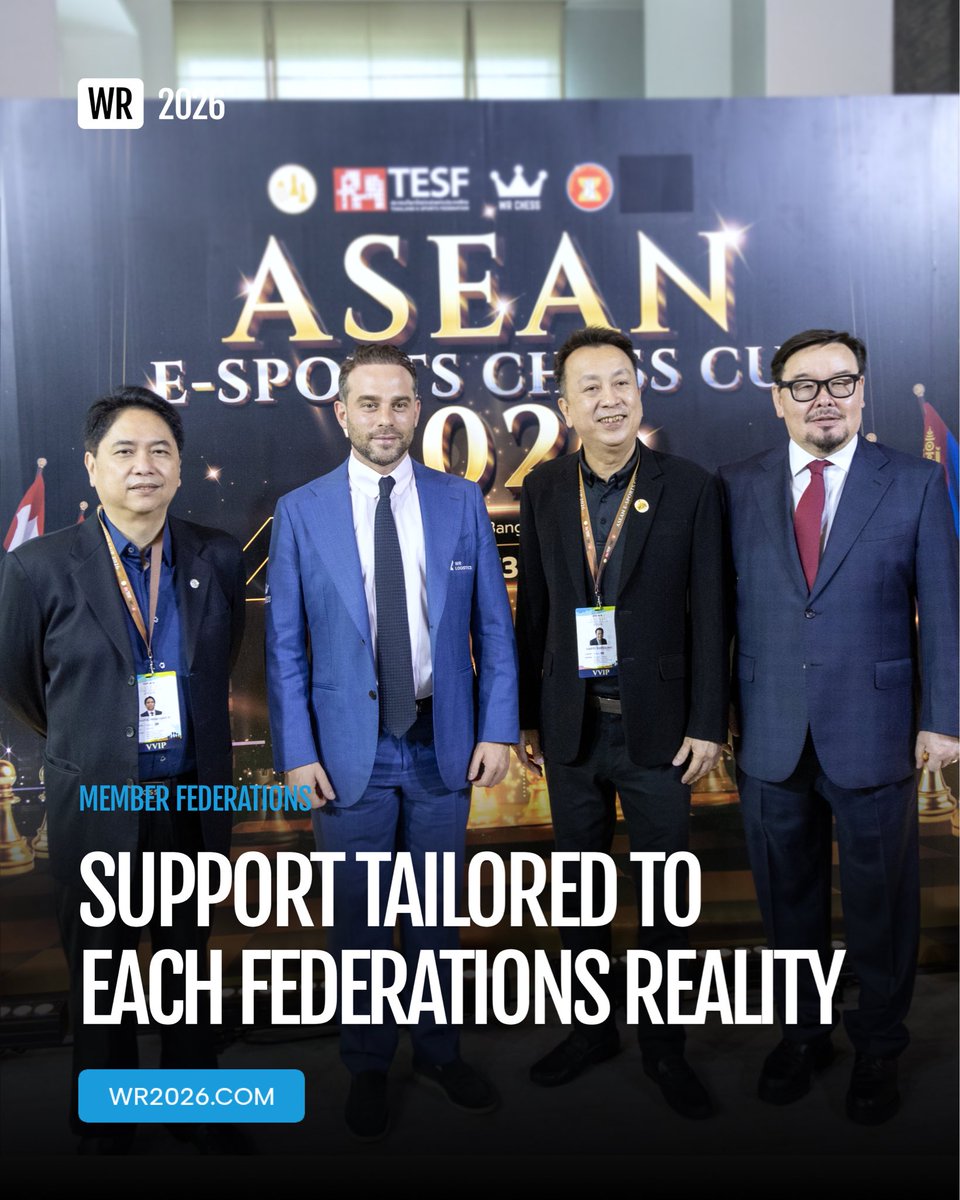
A federation with thousands of players, sponsors and full-time staff does not need the same support as a small federation run by volunteers. Treating them as if they do may be convenient for the system, but it does not help the federations.
Wadim's programme proposes a different approach: start with what each federation actually needs. For some, that may be equipment. For others, training, digital services, help securing official recognition or a long-term development plan.
That is what putting federations first should mean in practice: listening to them and providing support that reflects their reality.
Dear colleagues, dear friends of chess,
While reviewing the officially published FIDE electoral documents, my team discovered a deeply concerning fact: the status of delegates from 13 national federations who are entitled to vote in the upcoming FIDE Presidential Election is still marked as “Pending case in front of FIDE Electoral Commission.”
We are talking about 13 votes - a number that could potentially have a significant impact on the outcome of the election.
For this reason, yesterday I submitted a formal request to the FIDE Electoral Commission demanding full information regarding the grounds for each of these 13 pending cases, the relevant complaints and documentation, as well as clarification on when and how the final decisions will be made.
This situation causes me serious concern.
We must exclude even the possibility that decisions concerning the right of national federations to participate in the election could be used as an instrument to influence its outcome. This is precisely why maximum transparency, equal treatment of all federations and candidates, and strict compliance with the electoral regulations are essential.
FIDE does not belong to individuals or to particular groups. FIDE belongs to the entire global chess family.
Our unity is built on democratic principles, respect for every national federation, and equality of votes. No personal or political ambitions can be placed above these principles.
I call upon all national federations to pay close attention to this situation and to demand full transparency regarding these 13 pending cases.
13 federations. 13 votes. Only days remain before the election.
The chess world has the right to know what is happening.
And together, we must protect FIDE.
FIDE sets the rules that shape chess world. But what rules should govern its own leadership?
Term limits are not about one president or one election. They define how FIDE should be governed in the future.
What do you think?
In 2020, a television drama about chess became an entertainment phenomenon: 62 million households chose to watch The Queen's Gambit in its first 28 days, and it reached the Netflix top 10 in 92 countries.
Two years later, Lionel Messi and Cristiano Ronaldo were pictured opposite each other across a chessboard in a Louis Vuitton campaign: even the position on the board was real, taken from a 2017 encounter between Magnus Carlsen and Hikaru Nakamura.
Neither came from the traditional world of tournaments and clubs. Yet both showed how easily chess can move beyond it.
For Wadim Rosenstein, the lesson is straightforward. Chess does not have to search for an audience. Much of that audience is already there. Some play online every day. Others follow leading players and major events. By March 2026, https://t.co/VrwKVQnear had reached 250 million members.
The difficulty is that these different parts of chess do not always connect. An online player may know little about the main over-the-board tournaments. A child learning chess at school may have no idea where to play next. The opportunity is to make it easier for people to explore more of the sport if they want to.
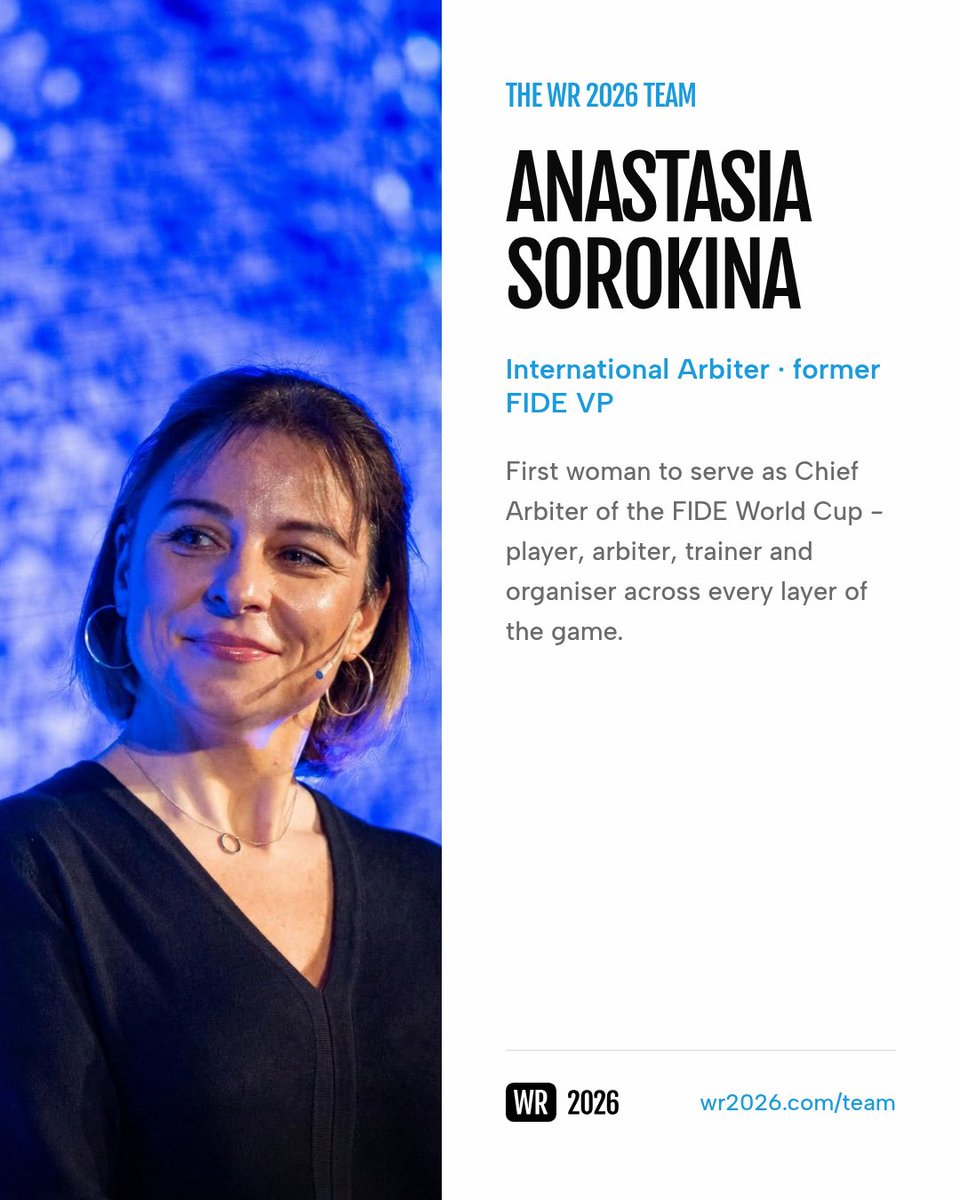
Anastasia Sorokina - International Arbiter, former FIDE Vice-President.
An Australian chess official and lifelong chess professional, Ms Sorokina holds the FIDE titles of Woman International Master (2001), International Arbiter (2002), FIDE Trainer (2005) and International Organiser (2018) - a rare combination spanning competitive play, officiating, coaching and event management.
Ms Sorokina has officiated at the highest level of international chess, serving as Chief Arbiter of three Women's World Chess Championship Matches, the Candidates Tournament 2022, and Deputy Chief Arbiter of the 2024 World Championship Match. In 2025, she became the first woman in history to serve as Chief Arbiter of the FIDE World Cup. She received the Best Arbiter - Woman award at the 2024 FIDE 100 Awards.
She was elected FIDE Vice-President for the 2018-2022 term, and from 2022 to 2026 chaired the FIDE Commission for Women's Chess, leading the development of international women's chess initiatives and social-impact programmes across the world.
Her profile brings something distinctive to the team: hands-on expertise across every layer of the game, as a player, arbiter, trainer, organiser and administrator.
I’m speechless…
When we organised the first Bughouse tournament, I honestly didn’t imagine that one day I would receive a picture like this from the Philippines.
Just look at them! So many young people in one room, playing chess, competing, laughing and simply enjoying themselves.
This is probably the best thing that can happen to an idea: you start something in one place, and then people thousands of kilometres away take it, make it their own and bring even more people into chess.
Congratulations to everyone in the Philippines who made this happen! 🇵🇭❤️
And a huge thank you to all the young players who came to play. This photo genuinely made my day.
Wadim Rosenstein's professional life started early. As a teenager he began working in sales and client relations while continuing his education. He studied business administration in Germany and later completed an Executive MBA in St. Gallen. While still studying, he founded Business and Trade Solutions in Düsseldorf in 2011; WR Group followed in 2014 and today operates internationally across more than 70 countries.
Those years have shaped the way he talks about leadership. He does not believe the person at the top should control every decision. His preference is to put good people in the right positions, give them responsibility and think several moves ahead about how an organisation should function without depending entirely on one individual.
During the campaign, he has made a point of meeting national federations directly and listening to their priorities. His approach to FIDE is the same one that has guided his work elsewhere. He believes FIDE should be closer to its member federations, more attentive to their needs, and more effective in turning their concerns into practical decisions.
Yesterday in Paris, the Esports World Cup showed how far chess can travel on a global stage.
Later at Blitz Society, the boards were still full and people still wanted one more game.
That contrast matters.
Esports. Online chess. Clubs. Schools. Federations. Major events.
They are not competing versions of chess. They are different doors into the same game.
I believe FIDE’s responsibility is to make sure those doors lead somewhere.
However people discover chess, we should give them a reason to stay.
#WR2026 #EWC2026
If a federation has to chase five people to get one answer, the system is not working.
Professional management means that every issue has an owner, every promise has a deadline, and every federation knows where it stands. Getting an answer should not depend on whom you happen to know. And important work should not disappear when someone leaves office.
FIDE does not need more bureaucracy. It needs less confusion, faster decisions and people who take responsibility for getting things done.
That is how a global federation should work.
Gordon Tang — Candidate for Deputy President.
Born in Shantou, Guangdong, Gordon began his sporting life as a professional windsurfer. Sport was his first school of leadership, and it has remained central to his life ever since.
Today, Gordon serves as Executive Vice President of the Olympic Council of Asia and Chair of its Esports, Martial Arts and Mind Sports Committee. He is also Vice-President of the Cambodian Olympic Committee, President of the Cambodia Sailing Federation and President of the Asian Mixed Martial Arts Association.
His work in mind sports is especially relevant to chess. As founder of the Asian Mind Sports Association @asianmindsports, Gordon has supported disciplines including Chess, Xiangqi, Go and Bridge, helping to strengthen their place within Asia's sports, educational and cultural landscape.
Within WR 2026, Gordon's Olympic Movement experience, Asian sport leadership and institutional knowledge add a new dimension to the campaign, extending its reach beyond the chess world into the broader Olympic and Asian sporting landscape.
Merci, Saint-Tropez ❤️
Two days. One incredible leg of the tour.
To the volunteers, the warm local people and businesses, fans of Saint-Tropez, our broadcasting team, everyone working behind the scenes, and of course — the players:
THANK YOU! None of this happens without every one of you.
Next 🔜
The Grand Final in Rosenstein Palace, Stuttgart on November 22-23.
Today in Switzerland, close to the headquarters of the International Olympic Committee, I had a very good meeting with @OtabekUmarov77, Vice President of the Olympic Council of Asia and a member of our WR2026 team for the FIDE elections.
Given where we were, it felt like the right place to talk about something that matters deeply to both of us: the future of chess as a global sport.
Otabek brings extensive experience from the international sports movement and a genuine commitment to developing chess. I am proud to have him on our team.
Uzbekistan has become one of the strongest examples of what can happen when a country truly believes in chess. Its extraordinary generation of young players, continued investment in the game and the hosting of the upcoming Chess Olympiad all reflect a long-term vision for our sport.
That commitment goes even further. Uzbekistan is providing substantial support for the flights and accommodation of participating delegations at the Olympiad. This will help federations from across the world take part, regardless of their financial circumstances.
Otabek and I spoke not only about the next Olympiad, but also about where chess should be in 10 or 20 years: stronger federations, greater opportunities for young players, more investment in development and a far stronger position for chess within the international sporting community. There could hardly have been a more appropriate place for this conversation than here, close to the heart of the Olympic movement.
But chess cannot strengthen its position in international sport unless FIDE itself is trusted. That means a FIDE free from scandals and corruption. That is why I am running - to bring stability, predictability and professionalism to the organisation.
We have a lot of work ahead of us, but we also share a clear ambition for how far chess can go.
🇯🇲 IAN G. WILKINSON KC JOINS OUR TEAM
I am proud to announce Ian G. Wilkinson, King’s Counsel (KC), of Jamaica as a Vice-Presidential candidate on my ticket for the 2026 FIDE elections.
Ian represents the leadership we want for FIDE: experience, independence, integrity and a lifetime of service to chess.
One of the Caribbean’s leading lawyers - or, as I like to call him, a “2800 lawyer” - Ian has also built an extraordinary record in chess.
♟️ Nine terms as President of the Jamaica Chess Federation
♟️ FIDE Vice-President, 2018–2022
♟️ FIDE Ethics Commission, 2006–2014
♟️ FIDE Constitutional Commission since 2018
♟️ 11 consecutive Chess Olympiads, from Bled 2002 to Budapest 2024
♟️ Three-time Jamaican Seniors Chess Champion
Under his leadership, Jamaican chess has grown significantly, with thousands of new federation members and successful Chess-in-Schools and Chess-in-Prisons programmes. He has also contributed to the development of chess federations across the English-speaking Caribbean.
Ian knows chess as a player, federation president, FIDE official, lawyer and delegate.
Most importantly, we share a fundamental belief: FIDE belongs to its federations. Every federation deserves to be heard, respected and given the opportunity to develop.
Welcome to the team, Ian! 🇯🇲🤝♟️
Together, we will work for a stronger, more transparent and more united FIDE.
Gens una sumus.
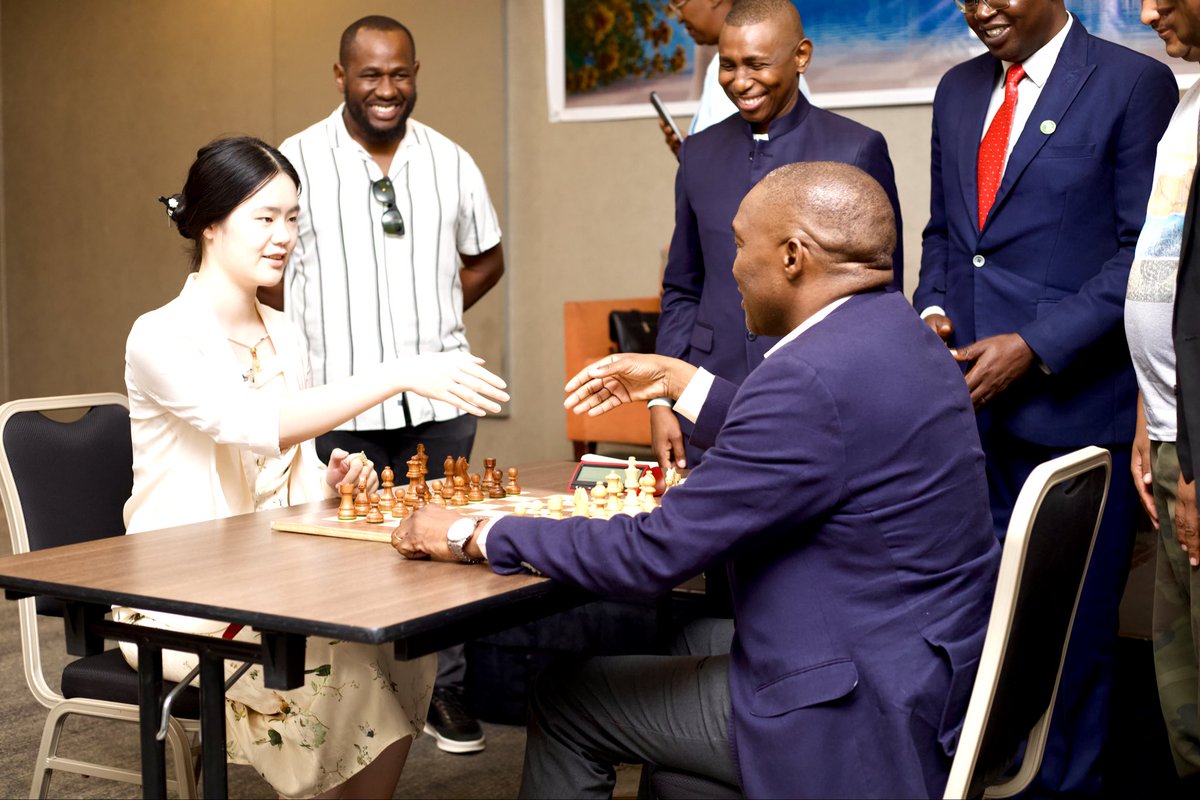
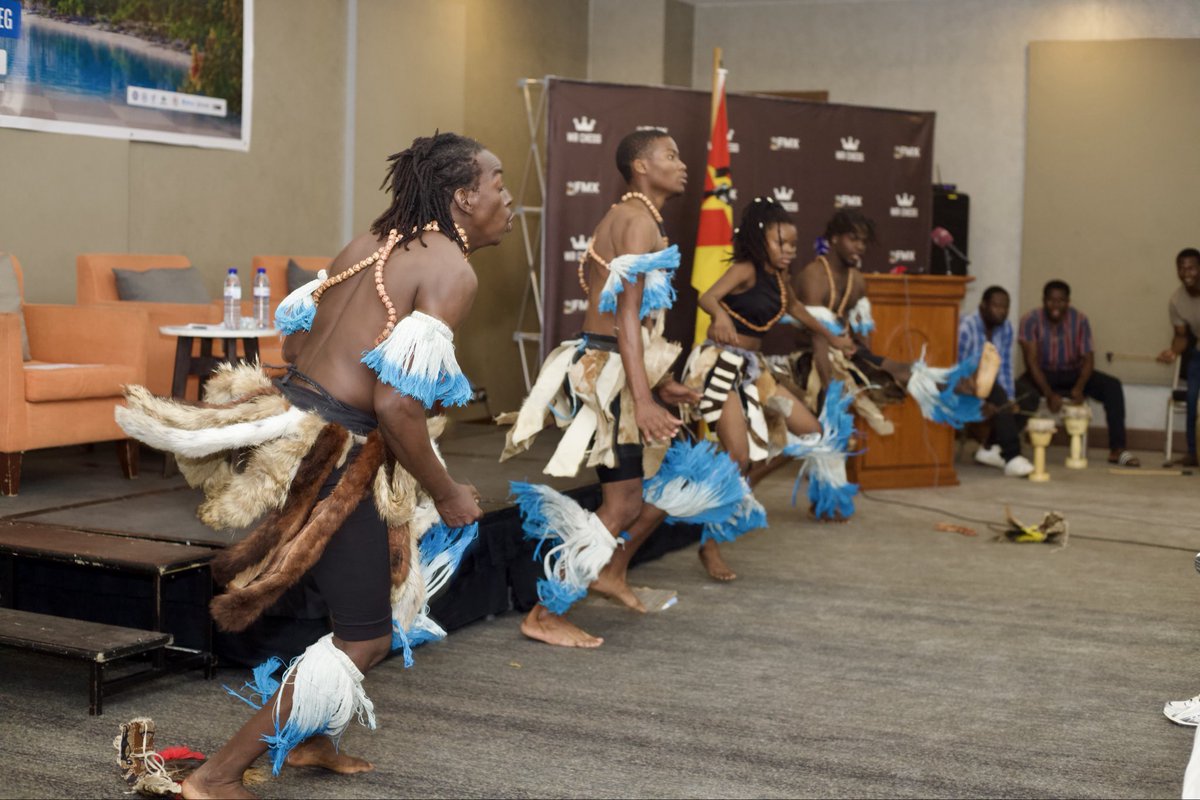
A very special moment at the opening ceremony of the WR Chess Women's Chess Tour-Africas Leg at the Radisson Blu Hotel in Maputo, Mozambique. The top seed of the event, Women's World no.4 Zhu Jiner made the ceremonial move and played against the Mr. Julio Mendes, Permanent Secretary of the Ministry of Youth and Sports of Mozambique!
#chess #chessbaseindia #mozambique #wrchess #womeninchess
I am proud to announce that Otabek Umarov @OtabekUmarov77 joins our #WR2026 team.
Otabek represents exactly what I believe the future of international sport needs: a new generation of leaders who combine ambition with real governance experience.
As First Vice President of the National Olympic Committee of Uzbekistan and Vice President of the Olympic Council of Asia for Central Asia, Otabek already carries significant responsibility within the international sports movement. In 2026, he also became the first representative from Central Asia to join the FIA Senate, giving him experience at one of the highest governance levels in international sport.
He understands how governments, national sports institutions and international federations work together and how strong structures can turn ambition into results.
Our campaign is not only about changing FIDE. It is about building the next generation of sports leadership.
New people. New energy. Strong governance. A global vision.
I am very happy to welcome Otabek to our team.
The future of chess needs the future of leadership.