Producer yang tarik filem sendiri -(Finas). Thank you officially bagi statement 💪🏻
Ok so untuk cast, director, penonton….jawapan dah dapat…so kita move on ya. #staypositive
Let’s goo-Next! 🎬💫
But-Kat Singapore Konspirasi is still playing in cinemas ..tak ditarik ya 🎬💫
Alhamdulillah... digital nomad sejak resigned gov 2010 lagi.. reach 7 figs pertama pada 2015.. then siap bina banglo 4500sqf di shah alam 2018.. selain trade crypto juga develop apps, software, system & chatbot untuk sme comp maupun market luar... Mostly paid with crypto, tax-free assets.
Yang penting semuanya setup zero debt.. mmg financially freedom takde hutang loan bank.. nada...
Actually tak perlu belajar tinggi master phd pun nak financially freedom.. bahkan aku pernah ajar sorang phd holder ni pasal financial intelligence.. 🤣
Mesti ramai marah² statement ni...
Peduli apa.. poket masing².. teruskan bayar tax berjela².. malas den nak explain...🤣
RTM will end the broadcast of its channels on Astro's satellite and OTT platforms from July 1, marking the end of a nearly 30-year collaboration.
The move follows the failure of both parties to reach a pricing agreement that met their financial requirements, despite prolonged negotiations over rental rates and service fees, RTM said.
🧵1
A Japanese TV crew filmed a 24 year old software engineer named Kimura Futo as a national role model for surviving on the average salary of 30 thousand dollars a year. They followed him home. Tiny apartment. He told the camera his comfortable room temperature is 29 degrees because the air conditioner costs too much.
The clip pulled 3 million views in 48 hours. Every Japanese viewer in their twenties shared it as proof you can live well on a small salary. Every Japanese parent shared it as proof their kid was doing fine.
Then someone in the comments wrote: pause the video at 1:16.
Pause at 1:16. Ignore his face. Ignore the bowl. Look at the laptop screen behind the bottle of soy sauce.
That tab is not his bank account. That is a live wallet.
gabagool22. $868,862 profit. Joined October 2025.
→ https://t.co/62AOSjwBrr
He told the TV crew he survives on 30 thousand dollars a year. The wallet on his desk had made $868K in 4 months. 28,620 positions. All BTC. All 15 minute windows. All green.
The comment section turned into a detective board. Someone slowed the video to 0.5x. Screenshotted every frame where the laptop was visible. Stitched them together. Reconstructed the full wallet page from 4 seconds of background footage.
Entry prices between 2 and 10 cents. Payouts in the thousands. Not one red row in 28,620 entries.
Biggest single win: $4,696. From a 15 minute window on a Tuesday morning.
The 29 degrees was not because the air conditioner costs too much. The 29 degrees was so the TV crew would believe him. He runs the air conditioner full blast every other day. He just turned it off the morning the camera came over.
The bowl on the floor was not dinner. The dinner was upstairs. He bought the bowl from the convenience store an hour before filming.
The shoes with holes were one specific pair he kept under the bed for moments like this. The rest of the closet was full.
He was not a role model for surviving on 30 thousand dollars a year. He was a role model for hiding $868K from a TV crew that wanted a feel good story about poor young engineers.
The original segment got 3 million views. The zoom on the laptop got another 1.5 million.
The Japanese audience is still sharing the clip. Still proud. Still saving on air conditioning. Still believing.
He is still trading. The agent is still running. The bowl is back on the convenience store shelf.
The country with the better TV story has the smaller wallet. The man with the smaller story has the bigger wallet. He just had to pretend to be poor for one afternoon.
Fun fact:
Quentin Tarantino discovered The 5.6.7.8’s after hearing them play in a secondhand clothing store in Tokyo… and immediately flew them out to star in Kill Bill.
In the final game of his career, Japanese legend Tomoaki Makino and his manager decided to let his wife get subbed in wearing his shirt and take a penalty in honor of him😭
A friend told me that Singapore's HDB is a form of wealth transfer by their government.
I didn't know what he meant. Wealth transfer from who, to who, and how?
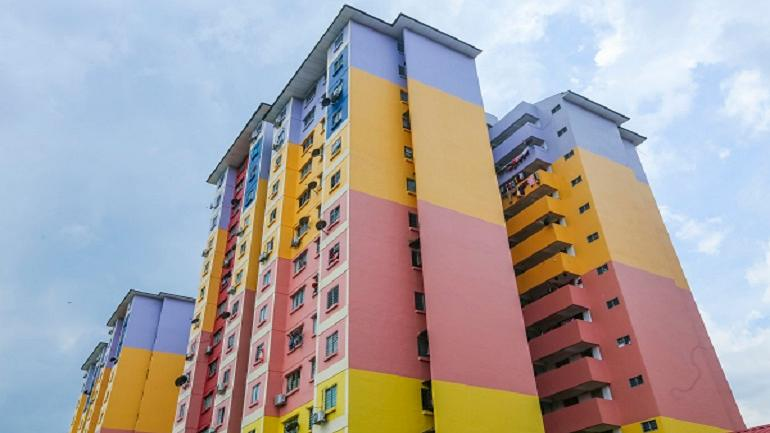
We have PPR in Malaysia. Isn't that just our version of HDB?
The more I dug, the less true that turned out to be.
Start with who each system is for.
PPR is welfare. The income cap is RM3,000 per month. Earn RM3,500 and you do not qualify. It is for the bottom half of B40.
HDB is the default. Around 80 percent of Singaporeans live in HDB flats. The income ceiling for new flats goes up to SGD 14,000 per month, roughly RM48,000. Almost everyone qualifies.
So one is a safety net. The other is the country's main housing system. That is a huge difference at the starting line.
Now financing. This is the part nobody talks about.
Every working Singaporean contributes to CPF. Roughly 20 percent of their salary plus 17 percent from their employer. That money funds the HDB downpayment. It also pays the monthly mortgage directly, no commercial bank in between.
The whole thing is a closed loop. The government builds the flat, sells it to you, holds your retirement savings, and pays itself back from your retirement savings.
In Malaysia, PPR ownership is paid through commercial bank loans. Regular mortgage. Regular interest. Regular default risk. EPF can be tapped for housing in limited ways but is not structurally integrated with public housing the way CPF is with HDB.
This is why HDB ownership is near-universal in Singapore. You almost cannot avoid owning a flat because the retirement system is built to push you toward one.
Then there is the part that turns this from a housing system into a wealth-building system.
HDB flats are sold at subsidized prices and appreciate in price almost from the moment it's sold. The HDB Resale Price Index has gone up roughly 50 percent since 2009, even though the flats are technically depreciating 99-year leaseholds. The newer the lease, the better the location, the better the resale value.
So Singaporeans who bought HDB flats in their twenties and thirties are sitting on assets that have grown alongside the country. They can sell, downgrade, and keep the difference. They can borrow against it. They can pass the lease on to family.
PPR units do not appreciate the same way. The resale market is thin. The locations are not desirable. The buyers are limited to other low-income households. The unit you bought for RM35,000 might still be worth RM35,000 fifteen years later in real terms.
So one system gives you a home and a wealth-building asset. The other gives you a home.
OK so let me circle back to my friend's claim. Why is HDB a wealth transfer?
I think I see it now.
In the 1960s and 70s, the Singapore government acquired most of the country's land under the Land Acquisition Act, often below market rates. They paid the old landowners less than the land was worth. Then they built flats on that land and sold them at subsidised prices to the population.
The wealth transfer flowed from old landowners to new flat buyers, with the government as the middleman. Land that would have made a small number of families very rich was converted into housing that 80 percent of the population could afford.
By 1985, the Singapore government owned 76 percent of the country's land, up from 31 percent in 1949. That was the foundation everything else was built on.
You might be wondering why Malaysia cannot just do the same.
The political moment for that kind of land acquisition has passed. Singapore did it during a specific window of nation-building under a one-party government. Malaysia has federalism, state land powers, multiple ethnic land claims, and a political environment where mass land acquisition would be near impossible.
So PPR is not a smaller HDB. PPR is a different programme answering a different question.
HDB asks "how do we house everyone."
PPR asks "how do we shelter the poorest."
These are not the same project.
When someone says Malaysia should have an HDB, they are really asking us to redo a 1965 nation-building exercise in 2026. That is much bigger than just building more PPR.
Did you learn something today like I did?