Most entrepreneurs are playing a rigged game.
96% of businesses never reach $1M in revenue.
75% of VC-backed startups go completely to zero.
Yet we keep following the same playbook.
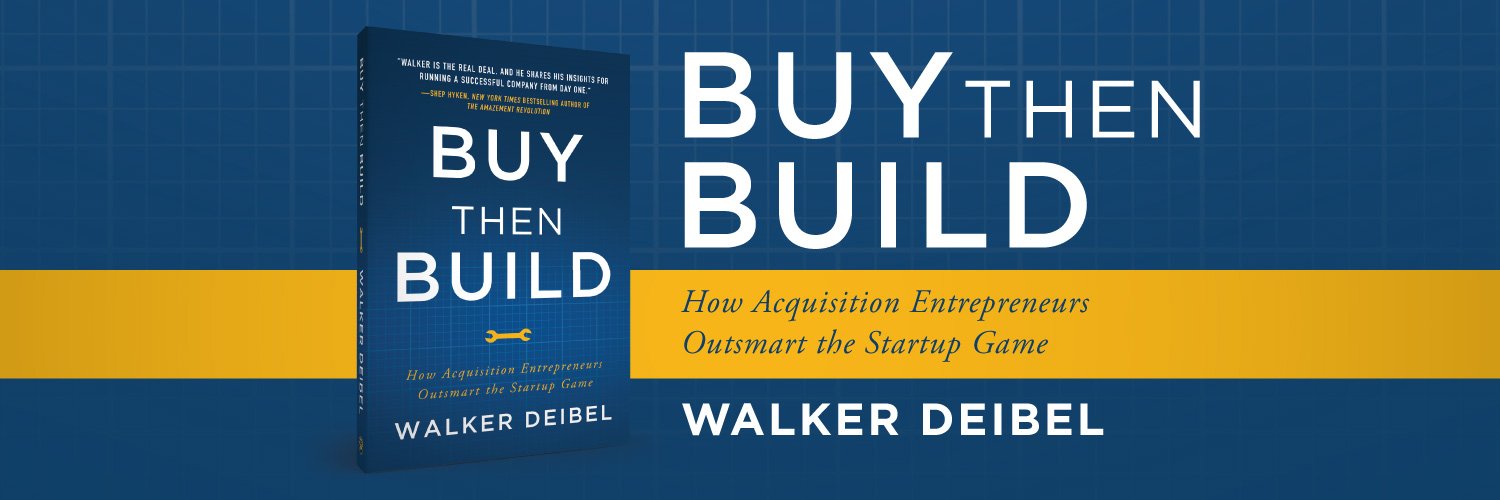
After buying 7 companies in 10 years, I discovered why: ⬇️
Many high earners keep optimizing for income long after they should be optimizing for protection, diversification, and capital allocation.
The saver’s toolkit is great for building wealth.
It’s not always enough to preserve and compound it.
The question isn't just "How do I make more?"
It's "How do I manage what I've already built?"
Most people think building wealth is about earning more and saving more.
But eventually, something changes.
There comes a point where your portfolio starts generating more income than your job ever could.
And that's when the old playbook stops working.
The habits that build wealth are powerful:
• Save aggressively
• Spend below your means
• Avoid bad debt
• Invest consistently
But once capital starts doing the heavy lifting, the challenge shifts from accumulation to allocation.
Different game. Different risks.
Today in #WealthStackWeekly, we're breaking down the "4th seat at the table" and why understanding it can change your view of term sheets, partnerships, and deal structures.
Join today and read the full issue below 👇
https://t.co/PbQ2iTiQsc
The new 007 game sold 1.5M copies in its first 24 hours.
Everyone talked about the developer and distributor, but almost nobody talked about the publisher.
That caught our attention.
In business and investing, the key player is often the one behind the scenes, shaping incentives, structuring economics, and deciding on the distribution of value.
There’s a huge difference between building a company to maximize valuation vs building one to maximize control, cash flow, and long-term equity.
More founders are starting to ask:
“Am I building a business… or building an outcome for the fund?”
The startup world made “raising money” look like the finish line.
But a lot of experienced operators eventually realize:
Capital is easy to celebrate…
Ownership is harder to get back.
The investor who helped Yale grow from $1B → $40B told institutions to invest heavily in private markets…
Then later told everyday investors to avoid alternatives and buy index funds instead.
Contradictory?
Not really.
We break down the 3 reasons why in this week’s #WealthStackWeekly
https://t.co/iSsL9s1dlP
$500B → $2.1T in a decade.
McKinsey says the U.S. private credit opportunity could exceed $30T.
The firms that win the next decade won't have the flashiest models.
They'll understand operators best.
"You never really know a borrower during good markets."
The most underrated line in private credit.
The shift from $500B → $2.1T isn't about rates.
It's about which lenders show up when things get hard.
Private credit isn't an "alternative asset" story.
It's an operator story.
Founders got tired of being lent to like institutions, and once they tasted speed and flexibility, they didn't go back.
That's the real $2.1T shift.
I structure private deals for a living…
…and I still had 6 figures sitting in cash for years.
Turns out I’m not alone.
Vanguard found that many investors leave rollover accounts sitting 100% in cash long-term.
The problem:
Cash feels safe, but can quietly become one of the most expensive forms of liquidity.
This week in Wealth Stack Weekly:
→ the liquidity spectrum
→ why more cash ≠ more safety
→ and how a 1% cash position can sometimes be safer than 7.5%
We break it all down in this week’s Wealth Stack Weekly.
https://t.co/CgMNaETSq7
But because they were closer to the reality on the ground.
By the time retail investors feel “certain” that something is wrong, the repricing often has already happened.
Markets move on whispers long before they move on announcements.
Makes you wonder:
How much of investing is actually analysis… and how much is simply access?
The biggest edge in investing usually isn’t intelligence.
It’s information timing.
Some people exit before the panic ever reaches the headlines.
Not because they predicted the future perfectly…
Since 2022, the stock market and the job market have been moving in opposite directions.
Translation:
Your portfolio may benefit from the same automation threatening jobs.
That’s why real diversification won't come solely from the stock market.
It’s now about building income streams that are non-correlated with public markets and your employer.
This week in #WealthStackWeekly :
→ How to think like an allocator
→ How to evaluate your balance sheet in 2 steps
→ Why private assets matter more than ever
Join free: https://t.co/iSsL9s1dlP
And for a while, that mindset helps.
But eventually, you realize the business will always ask for more.
More time.
More energy.
More attention.
It never naturally says, “That’s enough for today.”
You have to decide that.
Now, looking back, I don’t regret working hard.
I just understand something I didn’t back then:
Some memories compound more than money does.
What’s a moment where work quietly took over more space than it should’ve?
I really thought taking my honeymoon to a conference was normal at the time 😅
I had just bought my first company and couldn’t shake the feeling that if I missed a few days of networking or trend spotting, I’d fall behind.
So while most people were relaxing, I was walking conference halls, talking shop with people twice my age.
That’s the thing about building a business:
it slowly trains you to believe every moment should be productive.
-You stop taking real vacations.
-You check emails during dinner.
-You convince yourself the business can’t function without you for 48 hours.
Scopely built on brands the world already knew: The Walking Dead. WWE. Star Trek. Marvel. Monopoly. Scrabble.
The architect of that playbook was Andy Kleinman.
After the deal closed: Monopoly GO became the fastest mobile game to cross $6B in revenue, then Scopely bought Niantic’s gaming division (incl. Pokémon GO) for $3.5B.
Andy is now applying the same model at Delphi.
Same architect. Same playbook.
Scopely ran it on mobile free-to-play. Delphi runs it on AAA console (title economics ~10x larger).
I was the first investor to back Delphi.
To learn more about how I’ve invested in franchise IP, “like” this post and I’ll DM you an invite to a private webinar I’m having this week.
*This is not financial advice. Consult your financial advisor.
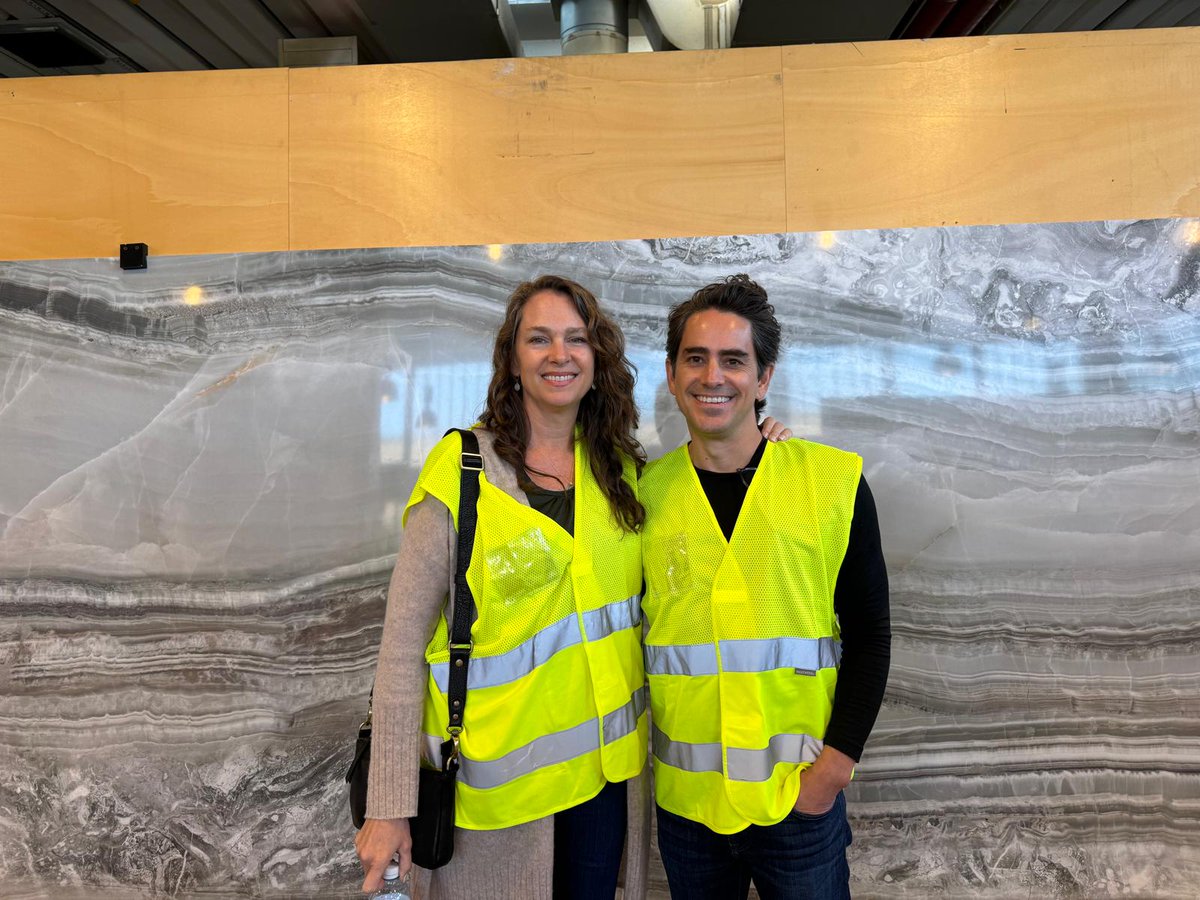
Let me tell you about Andy (he’s on the right).
In 2023, Saudi Arabia’s Public Investment Fund paid $4.9B for Scopely.
Most people don’t know the name Scopely, but everyone in gaming knows what it proved: A model that scales.
License iconic IP + elite external dev + a lean internal operating core.
You’re not limited. You’re being limited.
The Internal Revenue Service allows far more inside an IRA than most people realize: real estate, private equity, private credit, and more.
But most custodians show you a much smaller menu… usually what they sell.
So most investors build their strategy around what’s available, not what’s possible.
Same account. Same rules. Very different outcomes.
That gap can be worth millions.
We break it all down in this week’s #WealthStackWeekly 👇
https://t.co/iSsL9s1Lbn