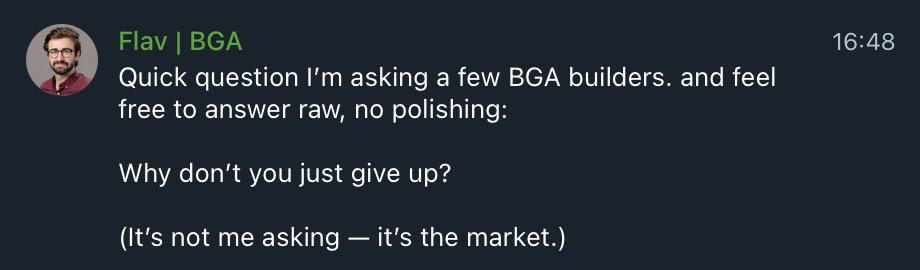
A few days ago, while knee deep in delivery for our V4 update, @FlavienDef shot a quick DM on Telegram with a simple question:
I had no idea what this was about but I did know there's a purpose to it so I just shared what is just in our core.
Just for context, Flav is the Global Business Development Director for @BGameAlliance. This role allows him to have a broader view of the entire GameFi ecosystem so this question made sense.
After I shared my "why" he asked if I'm ok with him sharing this with CT and the answer was HELL YE.
So here it is, unfiltered from a DM. Bottom line is: we won't flinch!
The question: Why don't you just quit?
Wanted to see how the new @playWAM will look like? Here's your chance before we go live. It's a lengthy video where we cover:
1. the new UI
2. the $WAM as gas
3. smart accounts
4. themes
5. game modes
6. stats and rankings
share your feedback in the comments and be prepared for our next updates
LFGG
🧵A lot of work has been put in what is coming and by community request here's a short sneak peak of the desktop version of WAM ( we did not have this before yet a lot of users wanted it ). The next chapter for @playWAM is full cryptonians. Fuck old school!
New update! 🚀
Our new WAM website is up and running with improved content, updated features, and the latest information about what we do.
Take a look 👉 https://t.co/X5KIw80msV
#crofam@cronosapp $WAM
ALT+SEASON is in sight. What does this mean for gaming?
Yesterday's space ( you can listen here - https://t.co/xo7XfHN2BL ) tackled one topic that will make sense more and more in the mid to long term future, for the games industry.
Topic: Can Gamers Run Entire Games Infrastructure?
If you've been in the games industry long enough, patterns start forming when looking back. This helps understand the future we're heading. Hint: decentralised gaming infra.
What's games infrastructure?
These are the services one studio pays for out of pocket to exist. I would categorise them in the following way, using the blockchain terminology we are already familiar with:
L1 - servers
These host game files, provide compute power, hold databases, secure the game/platform, provide access.
L2 - services
These are third party services like security via AI for fraud prevention, CDNs to make loading really fast, APIs of all sorts, payments, DNS to point a domain to that server IP, etc
Today, a game studio / publisher runs this. It implies both upfront cost and technical ability to set these up. Of course you start small but doing it wrong from the beginning will most likely spell doom when users start pouring in.
Depending on a team's ability to optimise initial costs, runway is longer or shorter. Which in term dictates the pressure under which that team operates.
Now, here's an interesting fact we've been honing on since we started at @playWAM: by 2030, at least 3.000.000.000 people ( 3B ) will play games on a daily basis, mostly on their phones. This requires enormous infrastructure to properly scale and run services in a flawless manner.
Here's the opportunity for everyone including us ( that's why we keep saying this on repeat ): with decentralisation of money and tech, everyone can be both a participant to the network and a profit engine at the same time, by providing resources.
Imagine this: you have your compute power in your pocket, on your desk at home. You run code in a simple point and click way to provide app security, compute power, storage, discovery for others.
Wait.. isn't this what actual blockchains do? Like Bitcoin, Ethereum, Solana etc? YES. EXACTLY. THIS IS A PROVEN MODEL FOR A DECENTRALIZED NETWORK WHERE YOU CAN PARTICIPATE AND GET REWARDED.
But where and why is this needed?
1. Most of the hosting providers today charge more and more per usage, regardless if you as a business are profitable or not. This means costs going up for a team, irrelevant of the fact that the product/game is profitable at that point
2. In order to get the right speed you NEED CDNs to reach end users fast, regardless where they are in the world, their internet connection or device
3. Securing a platform with smart services like AI fraud detection IS VERY EXPENSIVE at scale. The team that wants to do it has to put the money down first, integrate then see how they manage these costs
4. If you as a community member want to support a project ( and 10k other people like you ), today you can only BUY from them with your capital. Not with your resources
Here's why gaming DePin will be a huge gain for the gaming industry if properly decentralised, with interests aligned between the team, the player and the network participant.
1. Teams can access resources in a decentralised fashion, giving out rewards via protocols. This bypasses third party companies and strengthens the network
2. Players can no longer fear a certain title going down even if the project has completed its mission ( most indie companies want a start and a finish )
3. Regular users can share resources and get rewards they can then turn to profit. Go in, out whenever is convenient
4. The more network participants, the more shared compute, storage and bandwidth for everyone.
5. A token agnostic protocol that allows value accrual to network participants in whatever form they want, makes this more and more appealing.
A team pays with crypto for exact services ( pay as you go ) in their tokens. Participants decide if they want to join in to get those rewards, players get access.
For this to happen, participating to the network has to be dead simple, yet we're no longer in the era of clunky UIs or bad UX. This can be done.
The ALT+SEASON that is nearing will reignite the interest in GameFi and DePIN because of the above opportunities. These are not exclusive as GameFi is not just tokens in a game, but that's for another post.
This is just Bullish any way you look at it. Wampire Caps kick ass. They're not your usual caps, they're not for everyone, they won't be cheap. Thanks @cleanunicorn
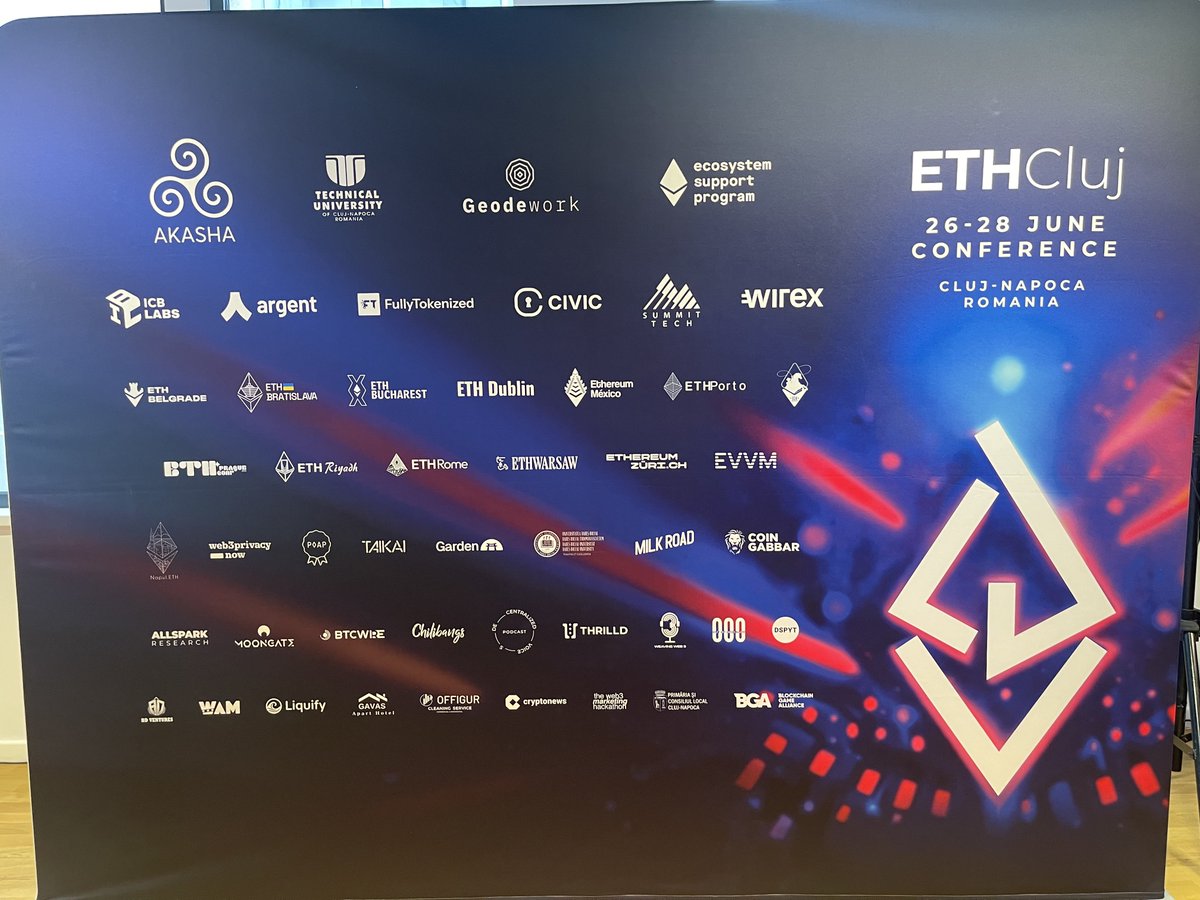
onstage at @ETHCluj representing @playWAM in a panel about DAOs and startups, dos and don'ts when it comes to raising capital from VCs, what is the perspective from the investor side ( real ones not crypto grifters ) with @Aljona_Yudina@paulofonseca@cleanunicorn@titus_k
Forget wasting energy hating what you can’t control. Builders build. Visionaries adapt.
Even if you don’t like everything you see in the market, mass adoption of crypto is inevitable.
The train is moving — fast.
The only question that matters: ARE YOU IN OR OUT?
WAM has the necessary resources to grow continuously and withstand any period of time.
We want this to be crystal clear for our community.
WAM will exist and keep building in any conditions — whether it’s tariffs, recession, a delayed altseason, or any other global crisis! 🚀🚀
Gm from the trenches.
This Friday at 5PM CET, we're joining 2 amazing speakers in The State of Web3 Gaming in 2025 space hosted by @Lamina1official
First the link for the space → set your reminder: https://t.co/r2y2z1tTP2
The panelists:
→ Casey Halter - @Lamina1official Dir. of Content & CT
→ @FlavienDef - @BGameAlliance Dir. of Global Dev
→ @dani_wam - WAM Co-founder
Don't miss it, things are heating up over the summer!
🧵WAM x Blockchain Series — Part 3: "If Players Don’t Care, Why Bother?"
Saying this again: most players don’t want to hear about blockchain. Or tokens. Or DAOs. Or decentralisation. Why? Because that's the the purpose of a consumer facing technology.
They want something to do while they wait in line. So why are we still doing this?
Because some people do care. And those people make the difference.
• Builders
• Influencers
• High-skill grinders
• Tournament organizers
They grow the platform. Blockchain lets them own it.
WAM doesn’t shove Web3 in your face.
You play. You win. You unlock cool stuff.
Behind the curtain:
• Scores are validated
• Tournaments are fair
• Progress is trackable
• Access is programmable
That’s blockchain done right and how actual adoption comes. Btw, adoption is another topic I'm fond of and no longer think it is rn necessary for massive massive success. But let's keep to the current topic.
Could we build this on a centralised DB? Sure.
But then:
• Devs can’t build on top without us being in the loop
• Communities can’t govern if they want to
• Growth hits a ceiling - we have big players in the web2 space that kill anything that resembles competition
We’re not using crypto for hype. We’re using it for access, for scale, for fairness to all involved parties.
This isn’t decentralisation for ideology. It’s modular access for people who earn it.
• Devs stake to launch games
• Top players vote on seasonal formats
• Influencers unlock tokenised rev-share
...and these are just a few NEW ways of unlocking value with blockchain.
You grow the game — you get a key.
The average player won’t touch a wallet. They won’t need to.
They’ll:
• Join a match
• Win rewards
• Share a clip
• Climb the board
All while the protocol handles everything underneath.
This isn’t “Web3 gaming.” That ship’s sailed.
This is gaming that happens to run on a smarter backend. It feels like Web2. But it scales like crypto.
Build for:
• People who want to flex
• People who want to monetise
• People who want to create
Blockchain is just the scaffolding for ambition. The real product is possibility.
People don’t need to love tokens, but they will love:
• Unlocking better rewards
• Owning their rep
• Competing with meaning
We don’t need to win hearts with tech. We just need to deliver better outcomes.
@playWAM isn’t about decentralising everything. It’s about sharing power where it matters.
Players will play. Builders will build. And the ones who grow the system?
They’ll finally get a cut.
If you still don't get it, if you still think crypto is a scam just because your bags are down, we are not the same and most likely this space is not right for you.