IN 1986 MIT FILMED A LECTURE THAT OPENS BY TELLING YOU COMPUTER SCIENCE IS NOT A SCIENCE AND HAS ALMOST NOTHING TO DO WITH COMPUTERS
72 minutes from Hal Abelson and Gerald Sussman, the lecture an entire generation of engineers calls the one that rewired how they think.
-> The line that lands: computer science is about computers the way astronomy is about telescopes. The tool was never the point.
The real subject was always one thing -- controlling complexity. Everything else is detail.
Forty years later it reads like a prophecy. AI writes the syntax now. What's left is exactly what they taught: taming complexity nobody can hold in their head.
The language was never the skill -> the thinking was. This is where you learn it.
Most people chase the newest framework. The ones who watched this think on a level frameworks can't touch.
Bookmark & Watch today it, this one's a legend ↓
Paul Hewitt's high school counselor told him he was too artistic for academic courses, so he spent his twenties boxing and painting signs, started college at 27, and wrote the physics textbook that teaches through ideas before equations so clearly that students who feared math end up loving the subject.
His name is Paul G. Hewitt. The book is Conceptual Physics.
First published in 1971. Still in print. Still the most widely used introductory physics textbook on earth.
And the reason it works is inseparable from the life he lived before he ever walked into a classroom.
Hewitt grew up in Saugus, Massachusetts. His school counselor looked at him and saw an artist, not a scientist, so he steered him away from the academic track entirely. Hewitt didn't fight it. He boxed competitively and won a silver medal at the New England Amateur Athletic Union championships at 17. He moved to Miami and painted signs. He served in the Army. After his discharge, he stayed in Colorado and prospected uranium.
He was 27 before anyone handed him a physics textbook.
He came to the subject the way someone comes to it from the outside. With no assumptions about how it was supposed to be taught. No inherited reverence for the notation. No sense that difficulty was a sign of rigor rather than a failure of explanation.
What he saw when he finally sat in those classrooms was a system designed to filter people out, not bring them in.
The standard approach handed students formulas before they had any picture of what the formula was describing. You learned to solve for x before you understood what x represented in the physical world. You memorized equations for force and motion without ever building an intuition for why objects behave the way they do.
The students who survived were the ones who could manipulate symbols without needing to understand them. Everyone else concluded they were bad at physics.
Hewitt knew they weren't. He had been one of them.
When he started teaching at City College of San Francisco in 1964, he tried to teach from a book called Physics for the Inquiring Mind by Eric Rogers, which was built around understanding rather than calculation. His department chair rejected it. Too heavy to carry around campus.
So in the summer of 1969, while the Moon landing was happening outside his window, he wrote his own.
The spiral-bound manuscript he produced had no numerical problems requiring algebra. Not one. What it had instead was the idea behind every piece of physics he was teaching. He explained what inertia feels like before he gave anyone Newton's first law. He described why the sky is blue before he introduced the wave equation.
He drew his own illustrations because he had spent years as a sign painter and cartoonist and he understood that a clear image does work that words alone cannot.
The approach had a name that sounded almost too simple to be serious. Concept first. Equation second.
But the effect in the classroom was immediate. Enrollment for his Physics 10 course grew to more than a thousand students per semester. The people filling those seats weren't future physicists. They were people who had written themselves off from science years earlier.
Hewitt had built the course specifically for that person because he understood exactly where the wall was. He had hit it himself.
Eric Mazur, a physics professor at Harvard, eventually said it out loud: students who took a conceptual physics course in high school arrived at university better prepared than those who had taken a traditional problem-solving course. Not because they had more equations memorized.
Because they had genuine understanding to build on. The equations, when they finally came, had somewhere to attach.
That is the thing most physics education still has backwards. The formula is treated as the entry point. Understanding is supposed to emerge from working the formula enough times.
Hewitt reversed it completely, and the reversal worked so well that the book is now in its twelfth edition at the college level and has never been out of print.
The strangest part of the whole story is what his counselor was right about.
Hewitt was an artist. He drew every illustration in the book himself. The visual clarity that made Conceptual Physics different from everything else on the shelf was not separate from his background as a sign painter and cartoonist. It came directly from it.
The counselor looked at a kid with a talent for pictures and decided that meant he didn't belong in science. Hewitt spent fifty years proving that the picture was exactly what science education was missing.
What subject finally made sense to you the moment someone explained the idea behind it instead of handing you the formula first?
Students need all kinds of teachers.
- The extroverts who bring energy.
- The introverts who lead with quiet thoughtfulness.
- The serious teachers who bring structure and focus.
- The silly teachers that put students in a state of relaxed alertness.
- The spontaneous teachers who model a creative spirit.
- The organized teachers who bring clarity and consistency.
Part of education is learning how to work with, learn from, and relate to people who are different from ourselves.
A teacher just said the quiet part out loud: it's time to go back to the old ways.
Maureen Mulvaney, an English teacher at Washburn High School in south Minneapolis, pulled the technology out of her classroom. No screens. No shortcuts. Just Pen, paper, books.
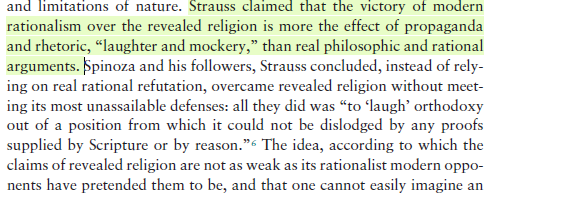
Strauss was spot on. Religion lost social prestige because it was subjected to ridicule, satire, mockery, and cultural pressure rather than being decisively refuted philosophically.
Libraries: free.
AI: subscription.
Libraries: written by humans with expertise.
AI: trained on whatever was on the internet.
Libraries: staffed by professionals.
AI: confidently wrong.
Go to the library.
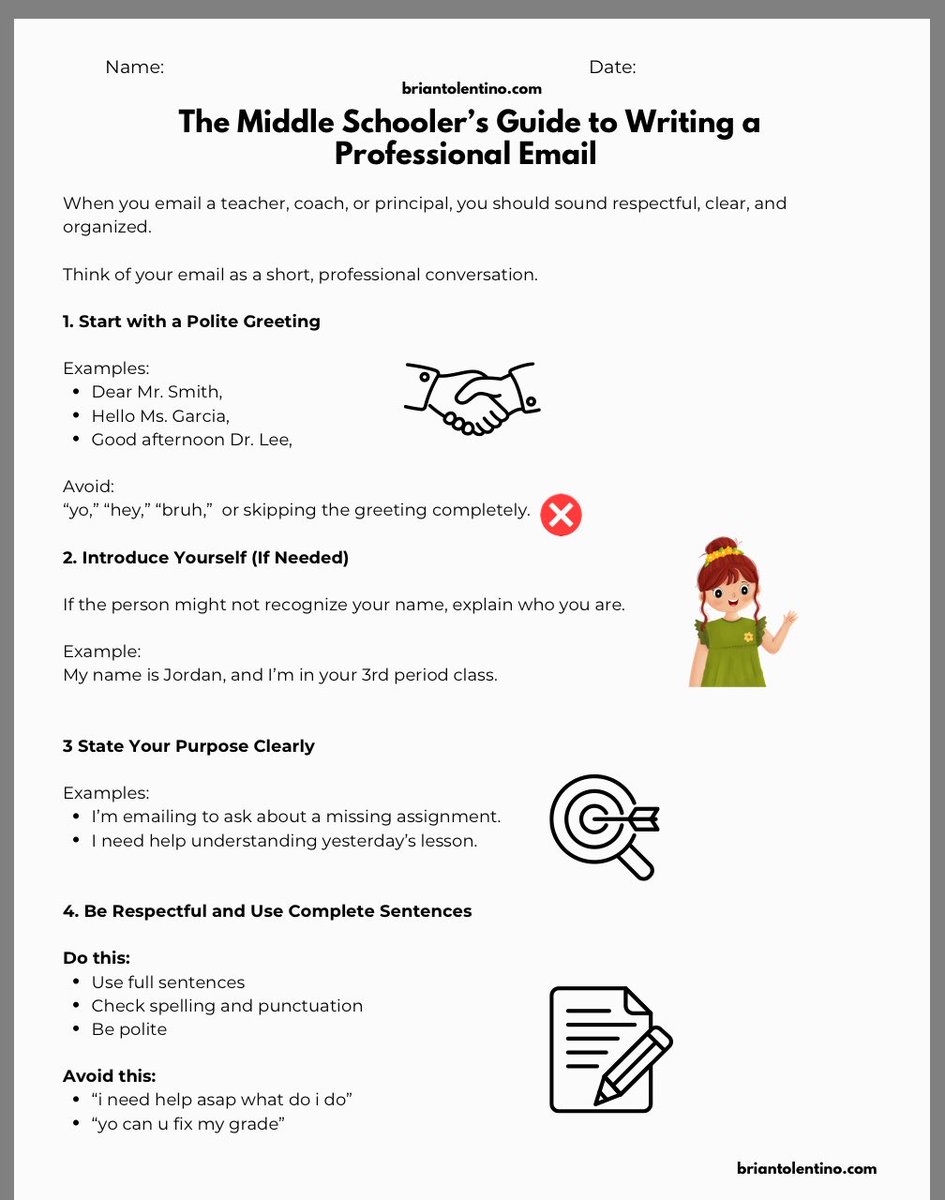
There’s a level of formality in writing that many students simply haven’t learned yet.
I’ll get messages in my Schoology inbox like:
“yo I need help wit my grade asap what can i do to fix it”
So I show them what it should look like:
Dear Mr. Tolentino,
I hope you’re doing well. I wanted to ask if I could get help understanding my recent assignment. I’m available after school this week.
Thank you,
Asher
Writing appropriately for the situation is a skill, and it needs to be taught explicitly now more than ever.
Link to email writing activity here:
https://t.co/wM4q2tHHlg
“I can’t give honest feedback when it is not honest work. I can’t help you work out how you want to think about something, how you want to be in the world, if you are not using your own brain to tell me where you are.” 👍
Any educator defending the use of AI is a scab.
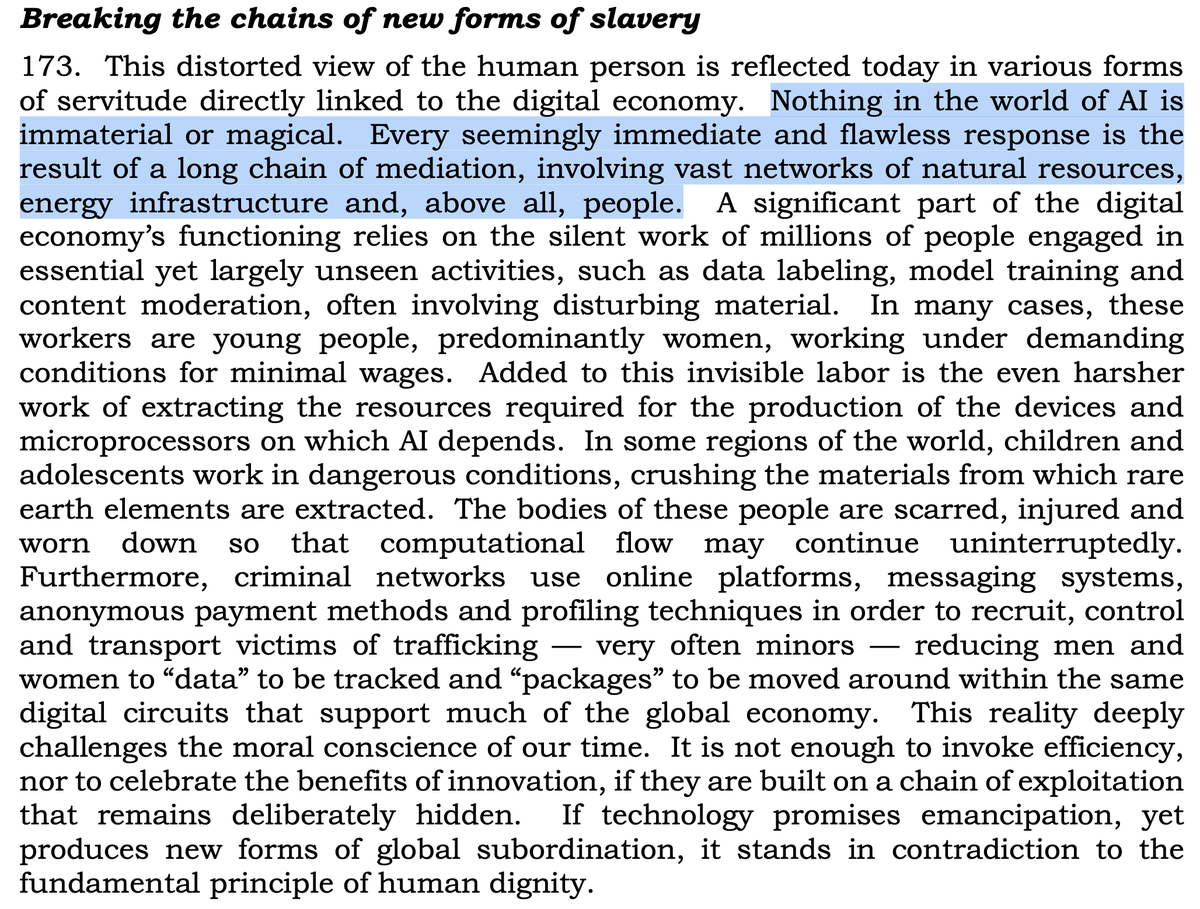
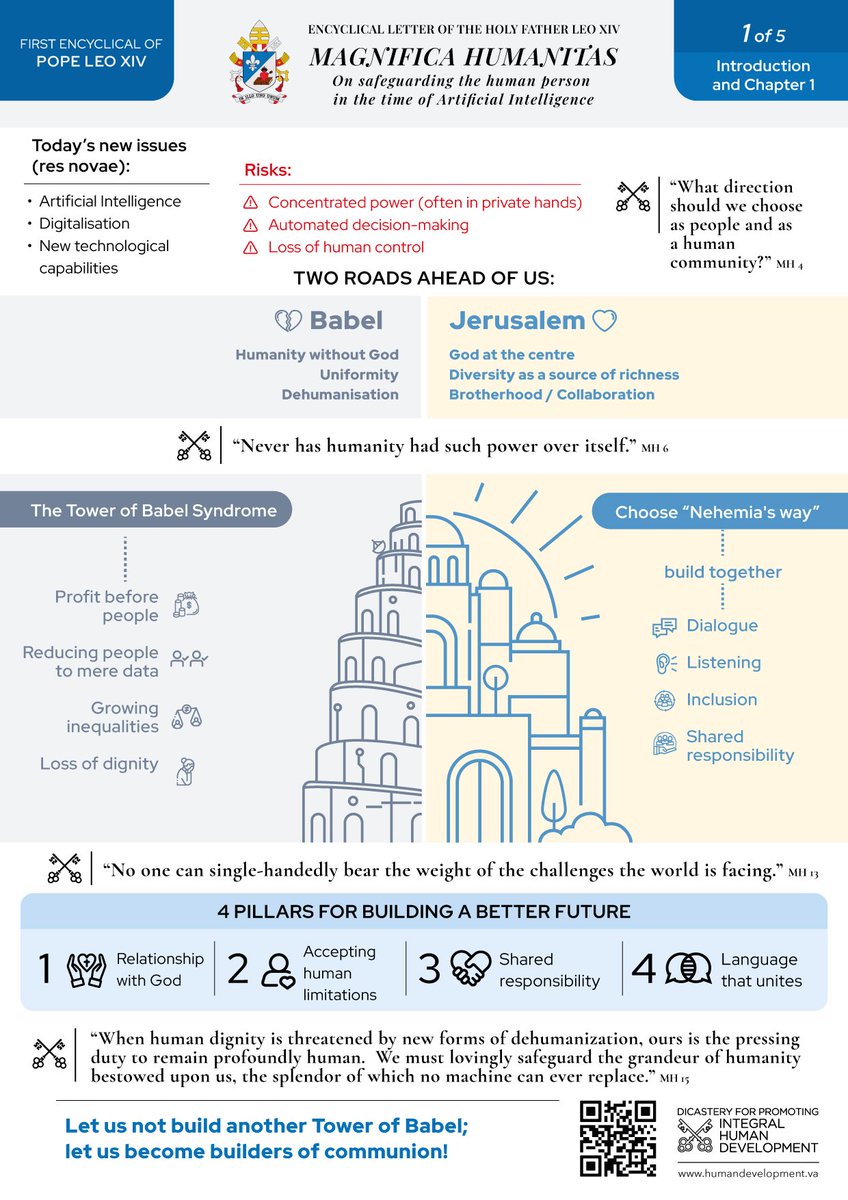
The Pope has weighed in: AI isn't magic. It is produced by a currently deeply exploitative, extractive supply chain. It challenges human dignity; it could fuel a new colonialism. And among the greatest challenges of our time will be to redirect its path of development.
Twelve professors and faculty members write about how A.I. is changing their work. Attitudes range from cautious optimism to abject despair.
https://t.co/v1bG1JlWjI
Tapi IMHO, bagus juga TZA cakap macam ni.
Tak pernah menang pilihan raya.
Masa jadi Menteri Kewangan pun tak bertanding dan menang atas mandat rakyat.
ARM yang dijaja sesetengah pihak sebagai “skandal terbesar” pun dipromosi sebagai kejayaan MITI.
Saya masih ingat macam mana dia keluar Dewan "tergesa-gesa", bawa press terus buat PC selepas pelancaran.
JSSEZ pun sama. Dijaja sebagai kejayaan.
Bagi aku, tak apa. Bagus pun. Lagi banyak dia bercakap macam ni, lagi jelas rakyat nampak perangainya.
Terutamanya warga Pandan.
Biar mereka nilai sendiri ini keyakinan, atau keangkuhan orang yang belum pernah diuji oleh pengundi?