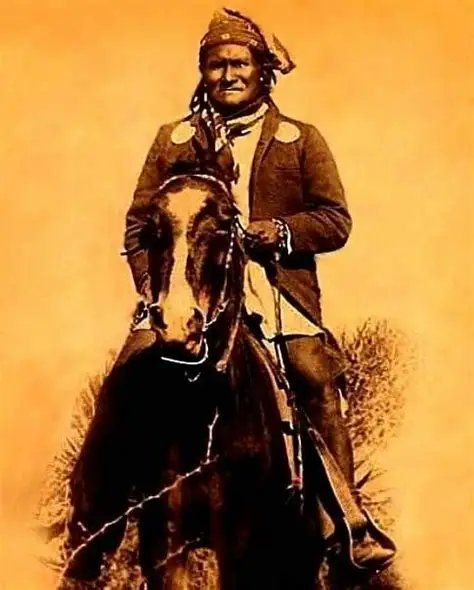
John Two Guns White Calf (1872–1934) was a Piegan Blackfeet chief in Montana whose likeness inspired the former logo of Washington's NFL franchise....
He became a prominent Blackfeet leader in Montana and was widely photographed while promoting Glacier National Park and Blackfeet heritage. Blackfeet leader Walter "Blackie" Wetzel designed the helmet emblem in the early 1970s using Two Guns White Calf's image as inspiration. Washington retired the logo and former team name in 2020 amid widespread criticism over the name, later adopting the Washington Commanders identity. Some of Two Guns White Calf's descendants have campaigned to restore his image and honor his legacy, while many Indigenous advocacy groups and team leaders have maintained different views on the former branding.
. . . .
John Two Guns White Calf was born around 1872 and became one of the best-known Blackfeet leaders of the early 20th century. The son of Chief White Calf, he grew up as his people's world was changing rapidly. Railroads, reservations and new borders reshaped life on the Northern Plains. With his striking profile, he became a familiar face to visitors at Glacier National Park in Montana. He appeared in countless photographs and paintings and represented the Blackfeet at public events until his death in 1934.
Decades later, in 1972, Washington's NFL team adopted a new logo showing a Native American man in profile. It was created with input from Walter "Blackie" Wetzel, a former Blackfeet tribal chairman, and drew on Two Guns White Calf's image. The logo stayed for nearly 50 years. In 2020, amid growing debate over Native American imagery in sports, the team retired its name and logo, and it later became the Washington Commanders.
Now, members of his family say they want the logo brought back. They see it as a tribute to their ancestor, not an insult, and want his legacy remembered. Native communities remain divided on the issue, and the debate goes on. Yet one thing is clear: behind the famous image was a real man, a respected Blackfeet leader whose descendants are still fighting to keep his name alive.
John Two Guns White Calf. For much of his life, Two Guns White Calf was promoted as the face on the famous Buffalo nickel, first minted in 1913. Tourists at Glacier National Park lined up to meet "the man on the nickel." The sculptor, James Earle Fraser, later explained that the coin's profile was a composite of several Native American men, so the claim was never proven. Even so, the story made him one of the most photographed Native Americans of his time, and the Great Northern Railway used his image to promote travel to the American West.
#archaeohistories
Menopause exists in humans and a handful of whales, and in the whales you can watch what it is for.
Nearly every female animal on earth breeds until she dies. A chimpanzee does, an elephant does, a blue whale does. A female orca has her last calf at about 40 and then lives to 80 or 90. Half her life comes after it.
Off the coast of Washington and British Columbia, researchers have followed the same orca families since the 1970s, every animal known by its fin. They found that in the years when the salmon fail, the whale at the front of the pod, leading the search, is nearly always an old female past breeding. She knows where the fish were in the last bad year, which may have been before anyone else in the family was born.
When a grandmother dies, her grandcalves are 4.5 times more likely to die over the next two years. Her grown sons, five-ton males of 30, are several times more likely to die within one. She had been catching salmon and biting them in half for him.
People work the same way. Among the Hadza a child's growth tracks how hard its grandmother works. In the parish registers of Finland and Canada from the 1700s, families with a living grandmother nearby buried fewer children.
Evolution switched off breeding in the middle of a woman's life in order to free up the most experienced person in the group.
In 1966 a New York gynaecologist wrote a bestseller describing the same event as a deficiency disease and the women as castrates, and the framing stuck.
The orcas call her the matriarch and follow her.
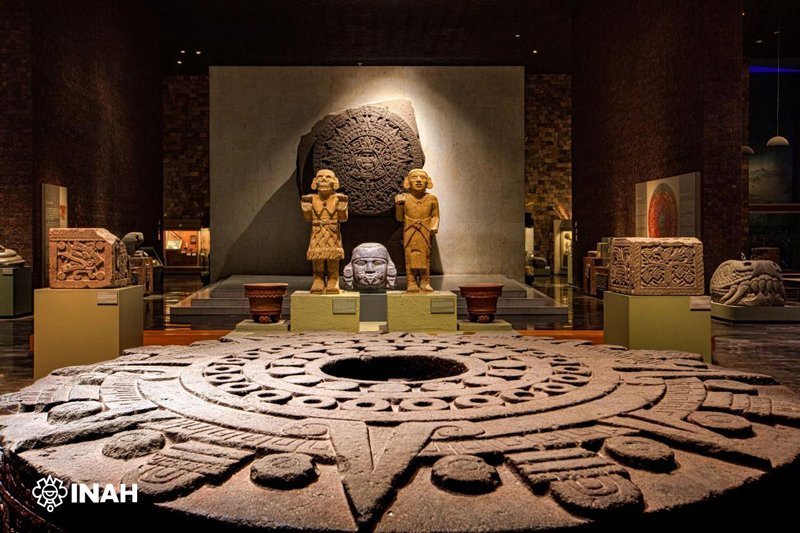
¡Hoy es #DomingoDeMuseos! 🏛️✨
¿Ya conoces nuestros recintos?
👉 https://t.co/0sgGetqQr5
🪪 Este día, el acceso a todos los #MuseosINAH es gratuito para público nacional y residente con una identificación oficial vigente.
📸 Museo Nacional de Antropología.
AZUL MAYA: EL PIGMENTO PREHISPÁNICO QUE HA RESISTIDO SIGLOS SIN DESVANECERSE
Los antiguos mayas desarrollaron un pigmento conocido como Azul Maya, cuya extraordinaria resistencia a la humedad, la luz y diversos agentes químicos ha permitido conservar su color durante siglos en murales, cerámicas y objetos ceremoniales.
Su elaboración combinaba índigo, un colorante vegetal obtenido del añil, con una arcilla mineral llamada paligorskita. Mediante un proceso de calentamiento, ambos materiales formaban un compuesto de gran estabilidad.
El pigmento representaba el agua, la vida y lo sagrado, y estaba asociado con Chaak, dios maya de la lluvia. Investigaciones arqueológicas han identificado su presencia en piezas con más de mil 400 años de antigüedad.