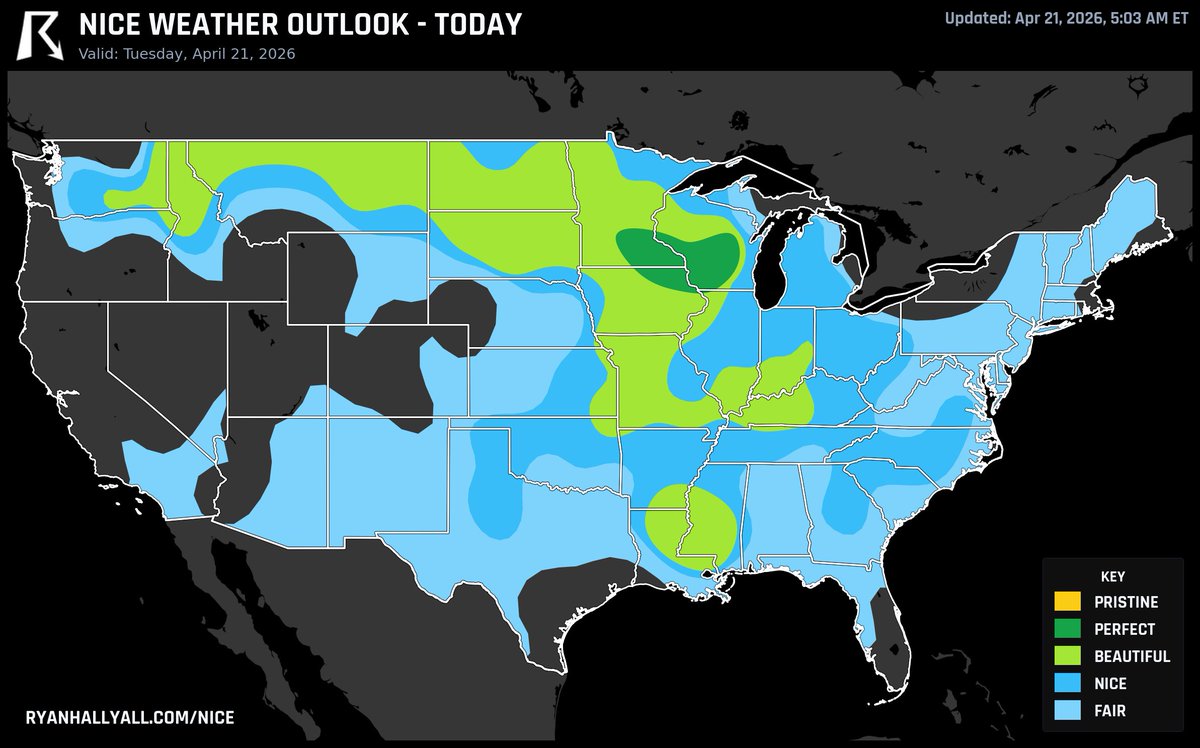
The Purdue AeroEco Lab predicts another 44 million birds flying over Wisconsin the next few nights.
Keeping your lights off overnight and your bird feeders full can help these birds as they migrate through the area.
https://t.co/z9TTAn87Fm
A news reporter asked Michael Jordan if he thought the ’90s Bulls could beat LeBron’s Lakers.
MJ: Yes.
Reporter: By how much?
MJ: Two or three points.
Reporter: Why so close?
MJ: Most of us are almost 60 now.
Warren Buffett, in his first sit-down since stepping down as Berkshire CEO, gave the cleanest indictment of legalized gambling in a decade. He called it a tax cut for the wealthy. The math proves him exactly right.
Americans wagered $165 billion at legal sportsbooks in 2025. They lost $16 billion of that. FanDuel pulled $6 billion of the losses. DraftKings pulled $5.3 billion. Every state with legal mobile sports betting collected a tax on the bettor side. New York alone took in over $1.2 billion in 2025 sports betting tax revenue.
Layer the lottery on top. State lotteries generate over $90 billion a year. The bottom half of income earners account for roughly 70% of total spend. The average lottery player makes $38,000. A household earning $20,000 spends three times more on tickets than one earning $30,000. The implicit tax rate, meaning whatever the state keeps after prizes, runs 30 to 50% depending on the game. No other revenue source in America has that base and that rate.
The structural design is the engine. A single straight sports bet carries a hold of 4 to 5%. A four-leg parlay carries a hold above 30%. FanDuel and DraftKings spent five years rebuilding their apps to make parlays the default product. FanDuel's blended hold rate hit 11.4% in 2025, up from roughly 7% in 2022. The product got worse for the customer and the customer wagered more anyway.
Now look at the substitution. Nine US states have no state income tax. Seven of those nine run state lotteries. Seven of those nine have legalized sports betting. The states most committed to never taxing wealth are the same states running the largest extraction machines on people who cannot afford to lose. Read it as policy.
Here is what Buffett is actually pointing at. The state needs revenue. It can raise income tax on the top decile, or it can run a lottery plus a sports betting tax. The second option raises the money from the people who can least afford it. The first option becomes politically optional. New York's $1.2 billion in 2025 sports betting tax is $1.2 billion the state did not have to ask of someone earning $5 million.
DraftKings and FanDuel sell a privatized collection mechanism for a regressive tax that the state never has to defend at the ballot box again. Voters approve legalization once. Collection runs forever. The state takes a cut. The wealthy get a quieter top bracket. The bettor's cut shrinks every quarter as the parlay menu gets pushed harder.
The function of a government, Buffett said, is not to play its people for suckers.
Thirty-nine state governments now do.
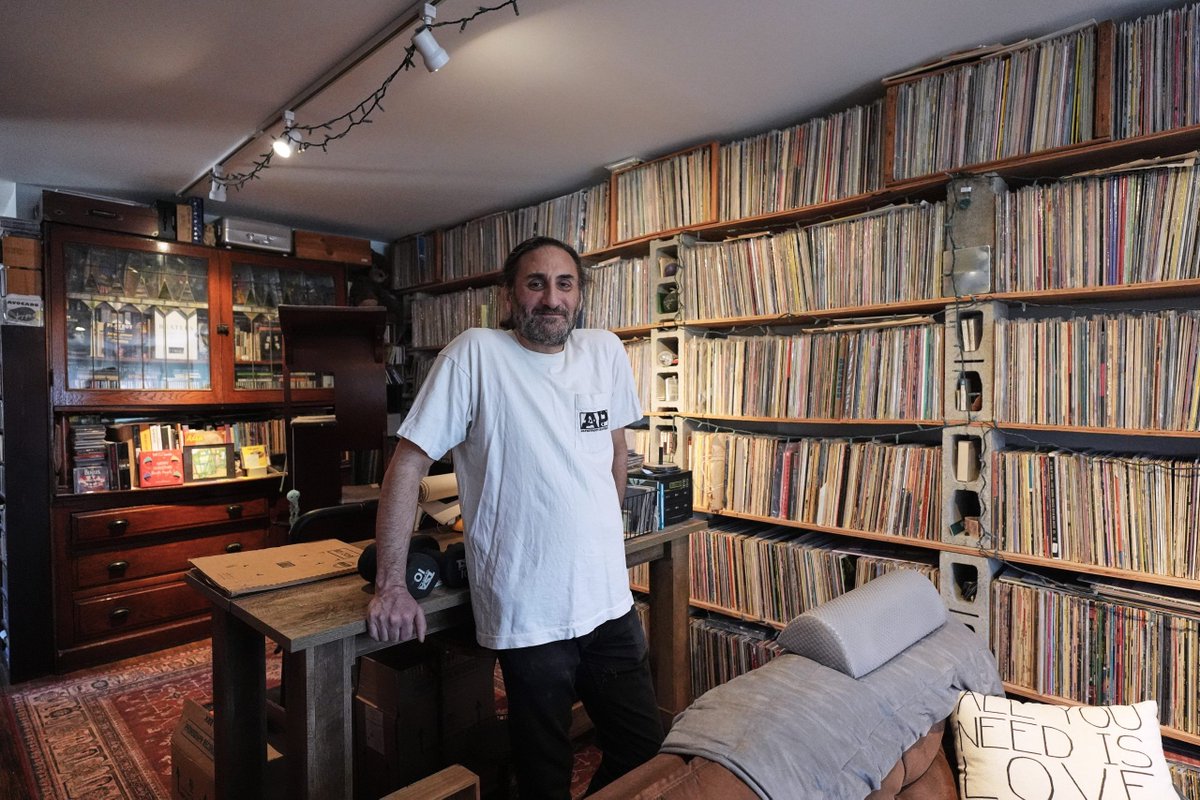
From the most goated apex heavy hitters to the least goated obscure abject indie rock nobodies, there's literally 10K shows in here!!! Dude deserves the highest medal of honor for his service. https://t.co/ZRQKlivgfW
40 Years Of Pirate Tapes Discovered!
A Hidden Treasure Trove of Live Music History: The Aadam Jacobs Collection
Picture this: It’s 1984, you’re a wide-eyed kid in Chicago, sneaking a tiny cassette recorder into a dimly lit venue because some underground experimental band called AMM is playing. You have no idea this one impulsive act, borrowed from your grandma’s mini-cassette player, plopped at the foot of a couch: will kick off a lifelong obsession that ends up preserving thousands of raw, electric moments from the city’s music underground. That’s exactly how the Aadam Jacobs Collection began, and let me tell you, as someone who’s more of a casual history buff than a music archivist, stumbling across this story felt like finding a time capsule in my own backyard.
I’ve always loved the idea of history as lived experience, the sweat, the feedback, the imperfect magic of a show that only a few hundred people witnessed. But most of us never get to hear those nights again.
Enter the Aadam Jacobs Collection, now beautifully laid out at https://t.co/IVX7ab7gBP under the cheeky title A Mad Undertaking. It’s an “undefinitive guide” (his words, not mine) to one guy’s decades-long quest to tape live music, and it’s turning into one of the most exciting preservation projects I’ve come across.
Aadam Jacobs grew up glued to college radio stations, like me (WRSU, WPRB, WLBI) for him, WUSB’s Zappathon, Chicago’s Antidote Radio, WZRD, and WNUR; where DJs basically handed him the keys to whole new sonic worlds.
One night in May 1984, mentors pointed him toward an AMM concert. He dragged his mom along, bought a Cornelius Cardew score afterward, and secretly hit record. The result? A slightly incomplete but utterly alive 40-year-old document of free improvisation that still crackles with discovery.
From that humble start, Jacobs kept going—cassettes, DATs, CD-Rs—quietly amassing more than 10,000 recordings of Chicago’s emerging scenes and touring acts who were just passing through.
What makes this collection special isn’t just the volume (though 10,000+ tapes is mind-boggling). It’s the moments.
Think early Nirvana tearing through a 1989 Chicago set. Or Phish opening for Alex Chilton at Lounge Ax in 1990, the tape Jacobs recently recovered after more than 12,000 days in storage, now lovingly mastered so you can hear Trey Anastasio’s guitar slicing through “Possum” with youthful fire.
There are Hüsker Dü, Liz Phair, and local legends like The Coctails, that quirky instrument-swapping pop-jazz outfit that owned the Chicago scene in the late ’80s and early ’90s. And then there’s the whole wild Mekons universe side projects, reunions, benefit shows, and surreal collaborations that feel like insider secrets finally seeing daylight.
I love how this isn’t polished studio perfection. These are raw tapes, sometimes stealth-recorded, sometimes captured with whatever mics Jacobs could smuggle in.
The project team (volunteers across Chicago, Cleveland, Palo Alto, and beyond) is digitizing them with minimal fuss: a little compression here, some careful channel blending there, but always staying true to the original vibe.
Over 1,500 shows are already up on the Internet Archive’s Live Music Archive, with plans to keep rolling out 25–30 a day until the whole collection is online. In the first year alone, people streamed or downloaded the tapes more than 133,000 times.
That’s not just nostalgia; that’s living history.
What really hits me, though, is the bigger picture. Before smartphones and social media, live music existed in the moment, and then it was gone.
A handful of tapers like Aadam Jacobs quietly saved those nights for the rest of us. Now a team of passionate volunteers is racing the clock (and warehouse dust) to make sure we can all experience them again.
History isn’t always in textbooks. Sometimes it’s in a dusty box of cassettes.
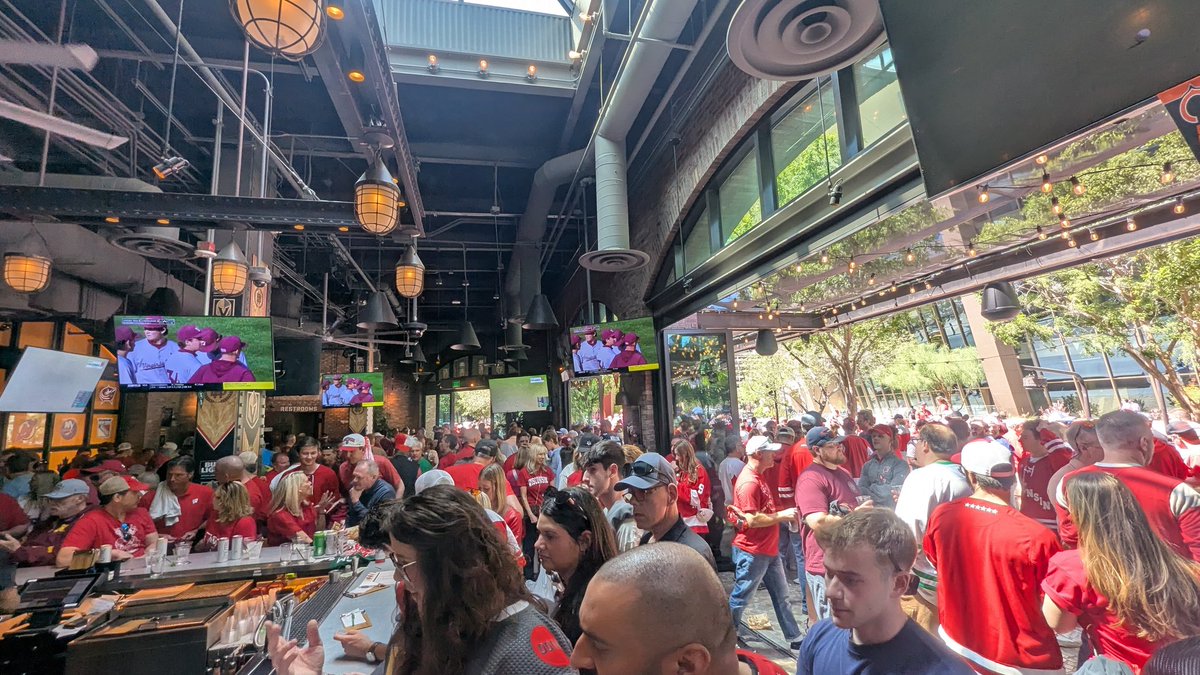
BREAKING: They have run out of CO2 on the tap lines at Beerhaus across the street from the T-Mobile Arena.
#Badgers and Pioneers fans will be drinking from cans and bottles the rest of the day. No draft beer to be served for the foreseeable future.