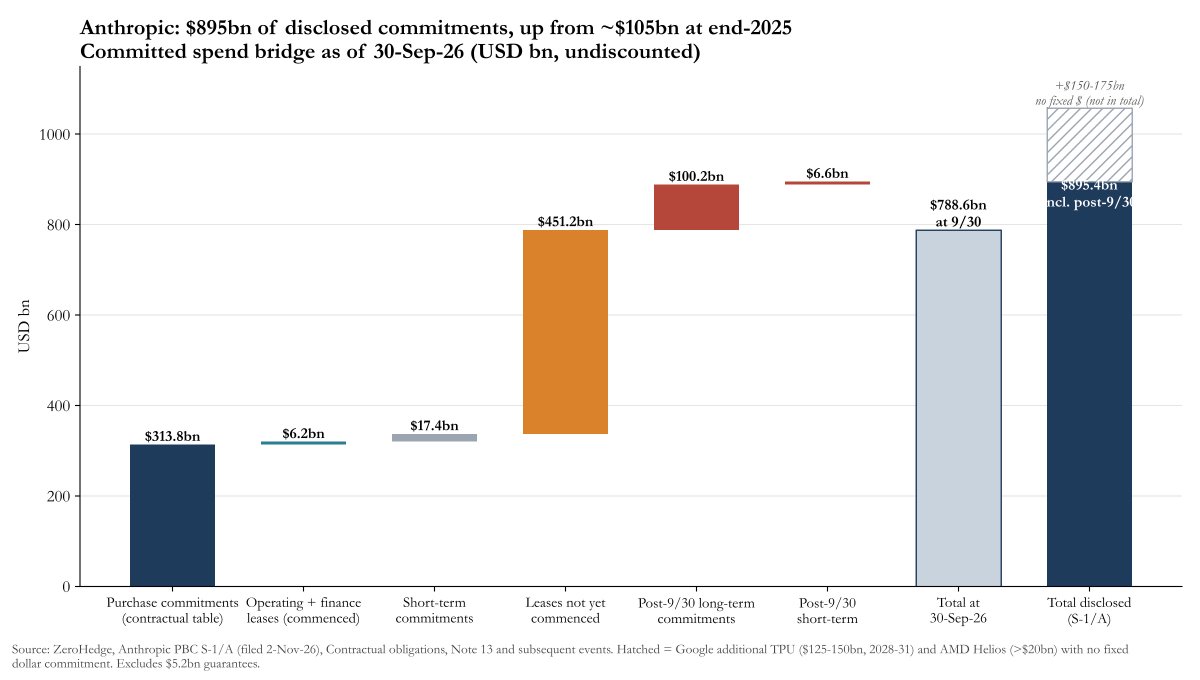
Anthropic has $895.4BN of committed spend (per latest S-1). That’s up from about $105bn at the end of 2025, and the only hyperscaler with more is GOOGL ($1,059bn). META is at $866BN.
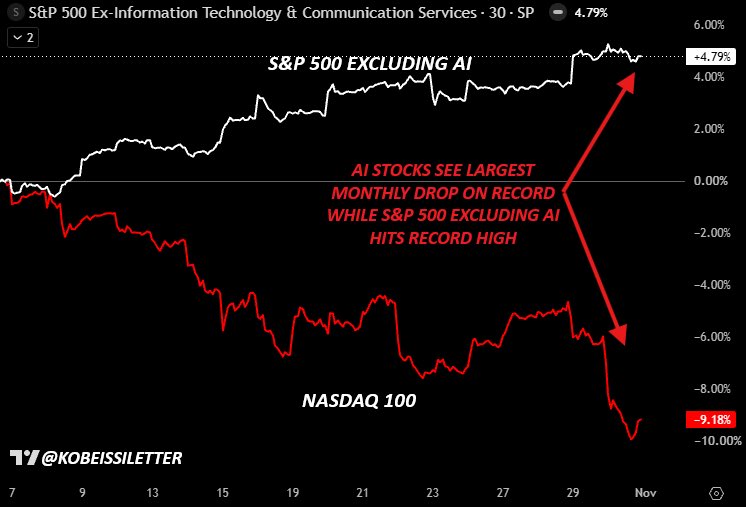
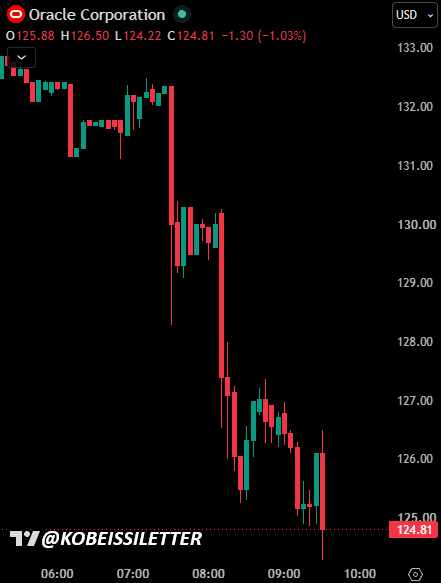
BREAKING: Oracle stock, $ORCL, falls over -5% after announcing plans to raise $20 billion through equity and debt issuances to fund its AI buildout.
The stock is now down -54% from this year's high.
Before its next clusters even come online, SpaceXAI's Colossus 2 in Memphis is already the world's most powerful AI data center.
Roughly 1.11 million H100 equivalents. That's computing power, not a chip count: what 1.11 million Nvidia H100 chips would deliver. The real chips: Nvidia Blackwell B200 and B300.
Ahead of OpenAI's Stargate. Ahead of EVERY big tech campus on Epoch AI's list of 96 sites.
This is where it stands:
1.11 million → Colossus 2, Memphis (SpaceXAI)
1.02 million → Stargate, Abilene (OpenAI/Oracle)
818,000 → New Carlisle, Indiana (Amazon)
769,000 → Fairwater, Atlanta (Microsoft)
637,000 → Pryor, Oklahoma (Google)
584,000 → Nusajaya, Malaysia (DayOne)
536,000 → Prometheus, Ohio (Meta)
481,000 → Kempas, Malaysia (DayOne)
By mid 2027, Colossus is expected to make that gap WIDER, with more Blackwell clusters coming online.
Epoch AI's Q1 2027 projection:
1.82 million → H100 equivalents
$58.0 billion → cost, up from $35.8 billion so far
In October 2025, it was at 278,000. Today: 1.11 million.
That's 4X. Not in 10 years. Not in 5. In about 12 months.
Follow me for more news like this.
More context :
A single Waymo car uses 4 H100 GPUs just to drive itself. That is about $200k worth of compute inside one car.
Right now, the Nvidia Orin self-driving modules used in Mercedes pack, and Tesla FSD use 64GB of LPDDR5X RAM.
Most people think better tech means we will need less memory over time. The exact opposite is happening.
Tesla's upcoming AI5 chip will jump to 96GB, and the AI6 chip is going straight to 144GB.
Even your smart fridge and smart TV need RAM now.
Soon, literally every physical object around us will have memory built into it.
And as robotics takes off, those memory numbers are going to get much bigger.
There is no way around the hardware bottleneck:
If AI robots run on the cloud, you need massive data centers full of memory.
If AI robots run on-device, you have to pack huge amounts of RAM directly into the machine.
Either way, the world is going to need an insane amount of memory.
This is not a problem we can fix easily.