The Third Battle of Panipat, fought on January 14, 1761, was a pivotal conflict in Indian history. It took place between the Maratha Empire and the Durrani Empire led by Ahmad Shah Durrani. The Marathas, under Sadashivrao Bhau, faced a formidable Durrani force. (1/3)
The Third Battle of Panipat, fought on January 14, 1761, was a pivotal conflict in Indian history. It took place between the Maratha Empire and the Durrani Empire led by Ahmad Shah Durrani. The Marathas, under Sadashivrao Bhau, faced a formidable Durrani force. (1/3)
The Third Battle of Panipat, fought on January 14, 1761, was a pivotal conflict in Indian history. It took place between the Maratha Empire and the Durrani Empire led by Ahmad Shah Durrani. The Marathas, under Sadashivrao Bhau, faced a formidable Durrani force. (1/3)
The Third Battle of Panipat, fought on January 14, 1761, was a pivotal conflict in Indian history. It took place between the Maratha Empire and the Durrani Empire led by Ahmad Shah Durrani. The Marathas, under Sadashivrao Bhau, faced a formidable Durrani force. (1/3)
including territorial shifts and political realignments, shaping the course of Indian history. The Third Battle of Panipat remains a crucial chapter in India's past, illustrating the complex dynamics of power, warfare, and regional politics during the 18th century. (3/3)
#History
The Third Battle of Panipat, fought on January 14, 1761, was a pivotal conflict in Indian history. It took place between the Maratha Empire and the Durrani Empire led by Ahmad Shah Durrani. The Marathas, under Sadashivrao Bhau, faced a formidable Durrani force. (1/3)
The battle unfolded in the plains of Panipat, with intense fighting and heavy casualties on both sides. Ultimately, the Marathas suffered a significant defeat, marking the end of their expansion and influence in northern India. The aftermath saw profound consequences, (2/3)
On 13 January, during the Battle of Guadalcanal in World War II, the 1st Marine Division of the United States made a decisive push to capture Galloping Horse Ridge from the Japanese 38th Infantry Division. This fierce engagement led to significant casualties on both sides. (1/4)
On 13 January, during the Battle of Guadalcanal in World War II, the 1st Marine Division of the United States made a decisive push to capture Galloping Horse Ridge from the Japanese 38th Infantry Division. This fierce engagement led to significant casualties on both sides. (1/4)
On 13 January, during the Battle of Guadalcanal in World War II, the 1st Marine Division of the United States made a decisive push to capture Galloping Horse Ridge from the Japanese 38th Infantry Division. This fierce engagement led to significant casualties on both sides. (1/4)
On 13 January, during the Battle of Guadalcanal in World War II, the 1st Marine Division of the United States made a decisive push to capture Galloping Horse Ridge from the Japanese 38th Infantry Division. This fierce engagement led to significant casualties on both sides. (1/4)
On 13 January, during the Battle of Guadalcanal in World War II, the 1st Marine Division of the United States made a decisive push to capture Galloping Horse Ridge from the Japanese 38th Infantry Division. This fierce engagement led to significant casualties on both sides. (1/4)
and the Japanese 38th Infantry Division. The capture of Galloping Horse Ridge by the 1st Marine Division was a pivotal moment in the Guadalcanal campaign, underscoring the ferocity of the fighting and the determination of (3/4)
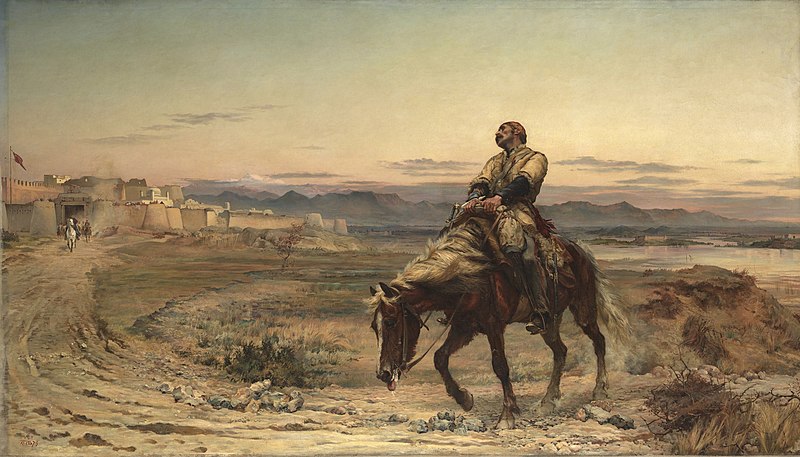
On 13 January 1842, during the First Anglo-Afghan War, Dr. William Brydon, a British Army surgeon, emerged as the lone survivor of a contingent of 16,500 soldiers following the disastrous retreat from Kabul. Wounded and exhausted, he managed to reach the safety of a
British garrison in Jalalabad. His harrowing journey quickly captured the public's imagination, symbolizing the catastrophic British defeat in Afghanistan. Brydon's survival became emblematic of the war's futility and the perils of imperial overreach. (2/2)
#Afghanistan#History
On 13 January 1842, during the First Anglo-Afghan War, Dr. William Brydon, a British Army surgeon, emerged as the lone survivor of a contingent of 16,500 soldiers following the disastrous retreat from Kabul. Wounded and exhausted, he managed to reach the safety of a
Could you guess how much of tons of rubble is above them ?
A new massacre in Nusirat refugee camp after an Israeli airstrike on a house that contained more than 20 person
Till now they extracted 17 and all of them passed.
eventual end of World War I and the signing of the Armistice on November 11, 1918. The breaking of the Hindenburg Line remains a pivotal moment in military history, symbolizing the turning tide of the war. (4/4)
#History#WWI#BattleofStQuentinCanal
On September 29, 1918, during World War I, Allied forces achieved a momentous victory by breaking through the formidable Hindenburg Line. This heavily fortified German defensive system had been a significant obstacle for the Allies on the Western Front. (1/4)
They successfully breached the Hindenburg Line, overcoming barbed wire, trenches, and concrete bunkers. The achievement had a domino effect, weakening the German resolve and leading to further Allied advances. This victory contributed significantly to the (3/4)