Annoying boomer take: China is evil and wants to destroy us. We need to nuke it o algo
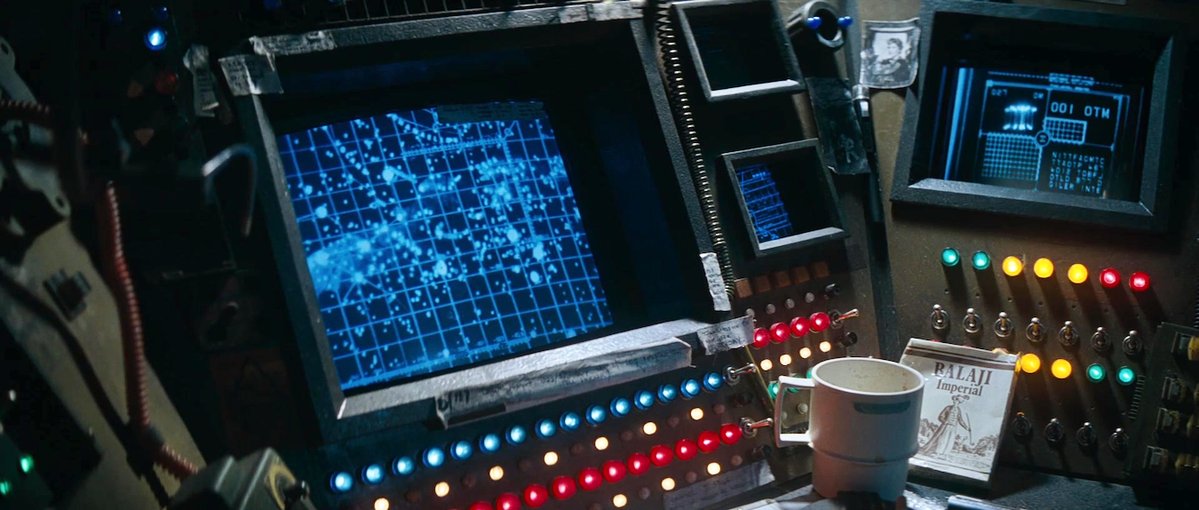
Annoying zoomer take: China is based because it has a lot of LEDs. It’ll end American hegemony
True countercultural opinion: China is in Asia. It is a large country populated by many Chinese
@CORONAGAMBIT I mean there's absolutely a grain of truth to this in that GCI was more important to the PVO than to the USAF (or VVS for that matter). But I'm suspicious of the hardware claim here. What about them specifically is geared towards GCI direction? Both these types are multiroles
as i understand it this is *kinda* true but when you actually read records of PVO interceptions you see quite a lot of judgement being exercised by the pilots. Western cold war judgements of soviet doctrine tend to assume things are going to be taken to a stupid extreme
Soviet AF pilots weren't meant to think for themselves.
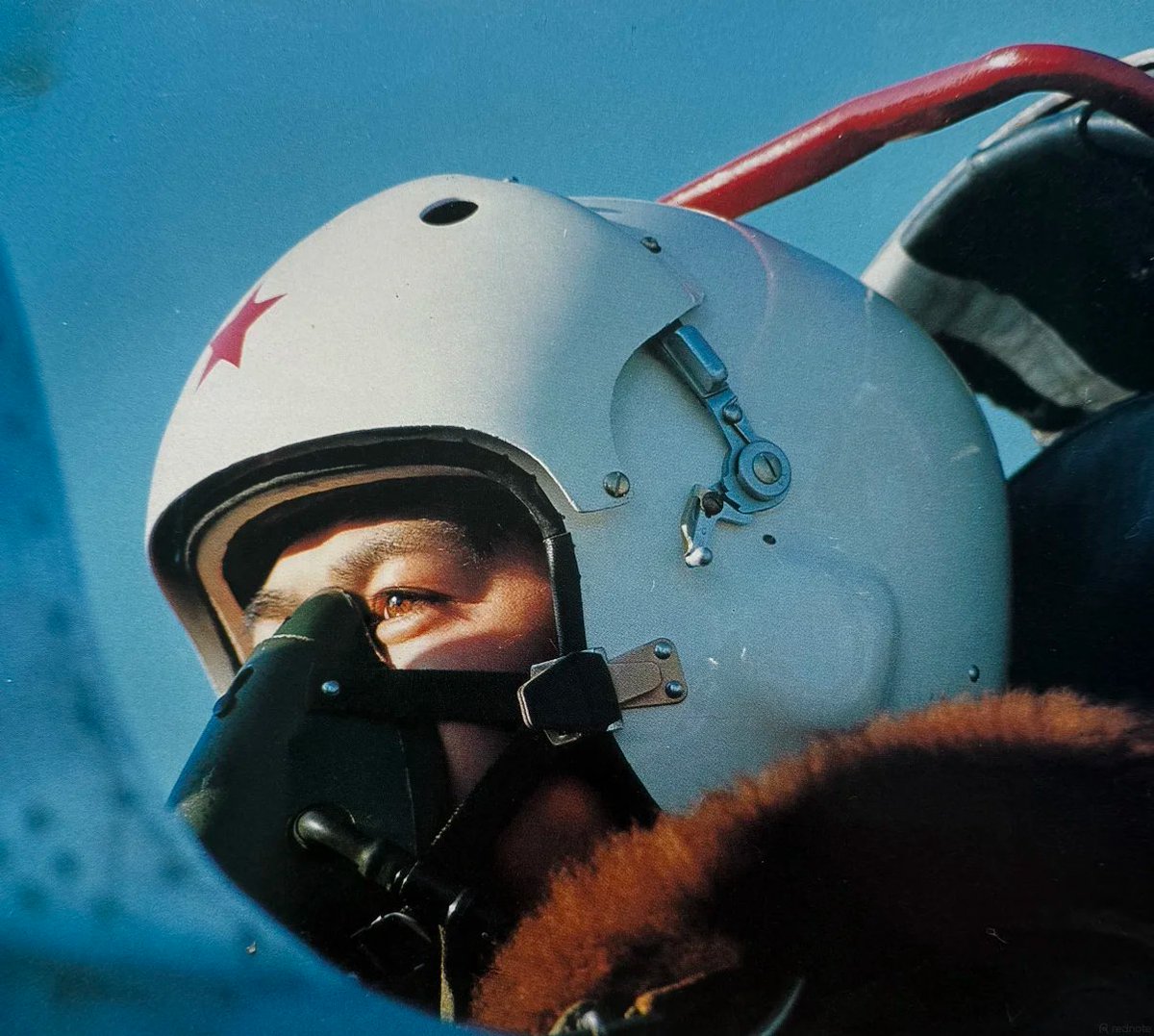
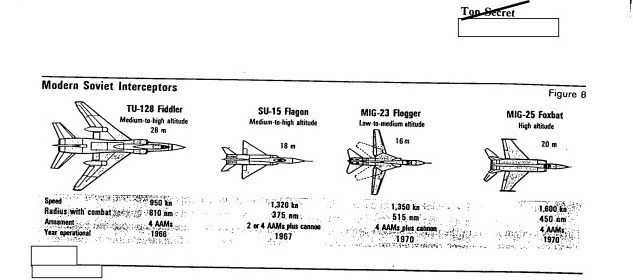
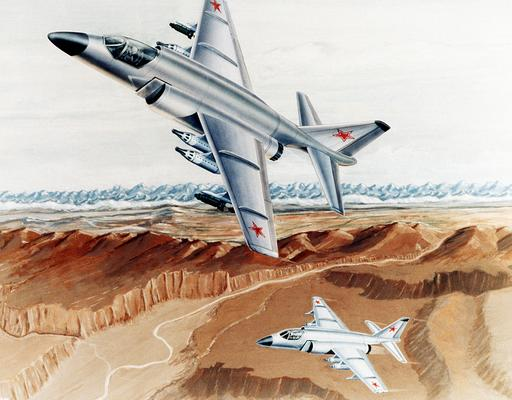
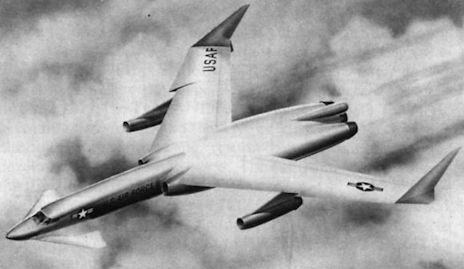
This 1979 CIA (declassified) assessment shows exactly how Soviet Air Defense Forces (PVO) designed an entire interceptor fleet to function as hardware extensions of a ground-based computer network (PVO operated 2,700 dedicated interceptor a/c, largest in the world).
Unlike USAF, PVO didn't deploy flexible, multi-role fighters, they built rigid altitude specialists like,
>swing-wing MIG-23 FLOGGER sat at the bottom handling low/medium threats
>the massive, unmaneuverable Tu-128 FIDDLER acted as a long range outer barrier
>at the absolute ceiling sat MiG-25 FOXBAT, it was optimized strictly for high-altitude and high-speed sprints.
These specs only mattered if GCI network stayed online. PVO doctrine stripped almost all tactical initiative from the cockpit, VVS pilots were trained via highly standardized pipelines to execute automated ground command vectors blindly.
CIA stated in its doc that jamming the data links or hitting the GCI nodes would leave this massive fleet of 2,600 interceptors effectively blind.
U gotta understand that every cold war general or CIA guy is starting from the assumption that the slavic mind is inscrutible and works like a kind of ant hive.
Then you have Soviet defectors like Suvorov telling them "yes it is, that's why you need to hire me to interpret it"
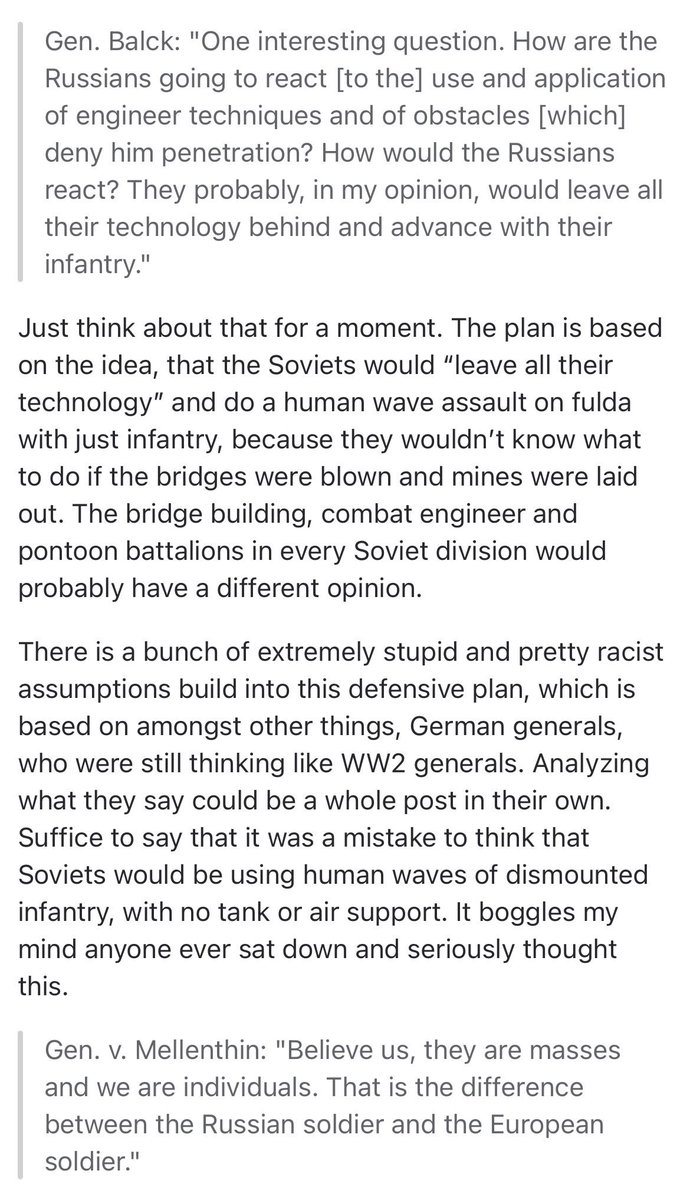
@warsthtdnthapn The US honest to god thought the Soviets were too stupid to build bridges or to use their amphibious capability on their vehicles. 1980s war planning believed the Soviets would abandon their vehicles and use human wave tactics after reaching rivers.
@corneliusmzu It also seems to me it's usually more like... procedure heavy rather than ceding "thinking" to superiors as such. It's more like lower level commanders have lots more frameworks to structure their thinking but still a lot of leeway to interpret and apply it
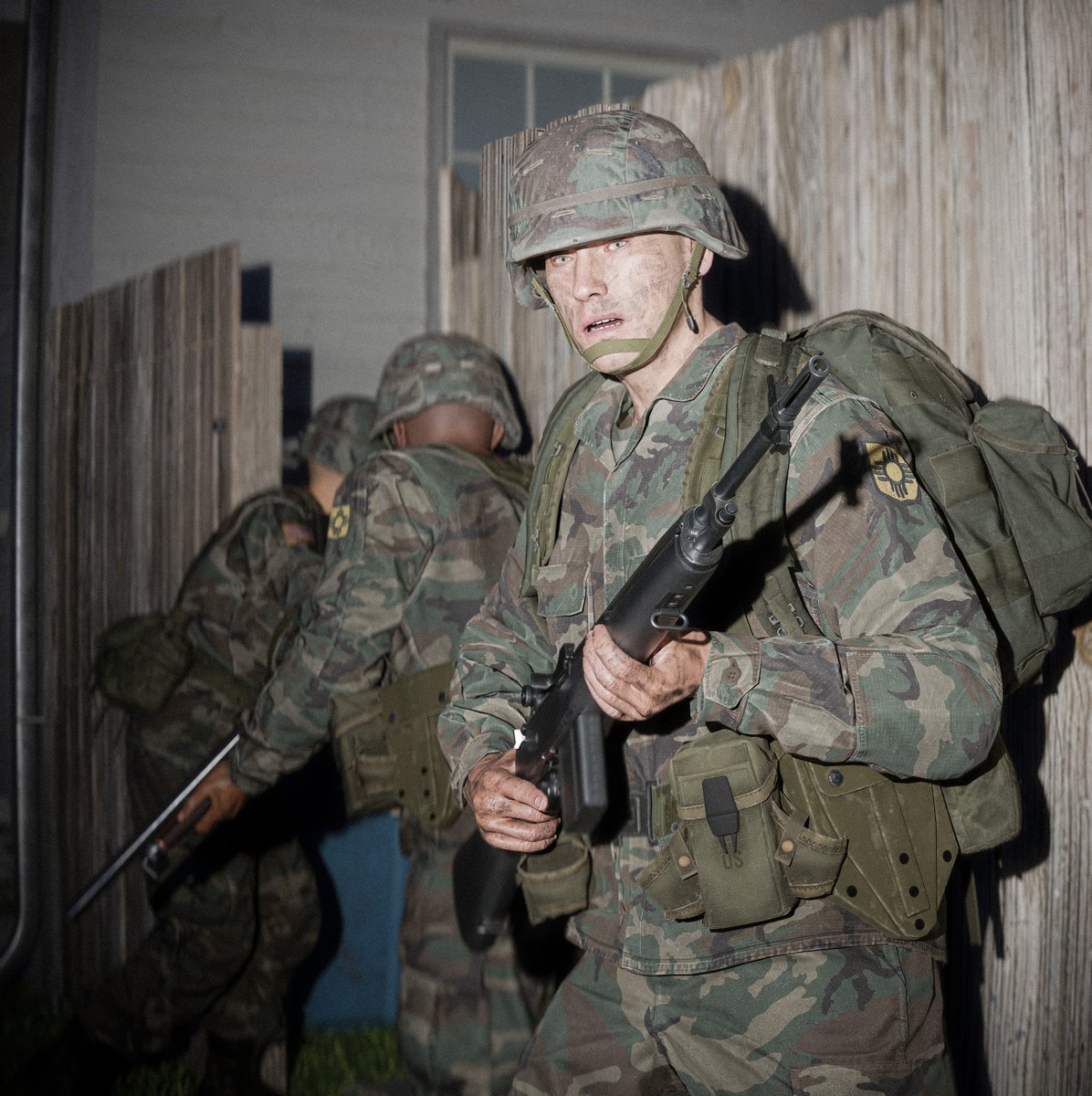
i had a dream where a group of gimp rebels saved me from being chased but i had to suit up so they know not to target me and their leader roasted me like this
Back in the Middle Ages you had hundreds of landless knights running around the Spanish countryside that would alter between rocking this fit and pleadging to defeat the moorish heathen on a weekly basis depending on who was paying more that day
I can't believe they were calling out Ogarkov in 1932:
The bourgeoisie is afraid to create a mass, multimillion-man army.
Among bourgeois military figures there have appeared those who think they can make do with small armies abundantly supplied with machines and automatic weapons. “Human mass in a material battle is already nothing. Moreover: it is evil,” says one such figure, G. Soldan. “Man on the battlefield is an obstacle from both the physical and psychological points of view,” says another, Fuller.
The bourgeoisie wants to build an army that would not be subject to the influence of unavoidable class contradictions, an army that would blindly go into battle for the interests of the capitalists.
Why is the bourgeoisie afraid of mass armies?
Soldan and Fuller, as well as several other figures of the capitalist armies—Liddell Hart, Werner Stewart—want to create a small mechanized army with tanks, tankettes, and armored vehicles.
They believe that the outcome of the future armed clash will be decided by fighters with machine guns and artillery pieces, placed in rapidly moving vehicles protected by armor.
They calculate that for such an army—rapidly moving, strong, powerful, but small in number—they will be able to select cadres of “loyal” people.
A fascist army placed in tanks—that is the army most desirable to the bourgeoisie.
With a mechanized army in India, General Vernet Stewart openly says, we would have nothing to fear from native uprisings. Tanks will suppress any uprising easily, quickly, conveniently, and confidently. Punitive expeditions will be conducted with almost no human losses for those carrying out the punishment. The command will boldly and decisively proceed into the very center of the uprising and immediately deliver the necessary blow.”
To replace man with machine—that is what the bourgeoisie would like. And it is not accidental, therefore, that in the capitalist world the ideas of air warfare are developing so rapidly.
Already in the First World War aviation was widely employed. In 1918, for example, during the second German offensive on the Marne, the Germans concentrated up to a thousand aircraft on a front of 60 km.
Intoxicated by the great achievements of aviation after the imperialist war, some military specialists of the capitalist armies went so far as to declare that from now on the air fleet would decide the “fate of the world.”
“Armies and fleets,” says General Mitchell, former commander of the air fleet of the USA, “must be placed in glass cases in a dusty museum... These venerable obsolete servants cannot be entrusted with national defense. Only the airplane is the judge of a nation.”
In the future war aviation will be employed even more widely than in the war of 1914–1918. The deceased Italian General Douhet expressed his views on future air warfare as follows:
“A crude, but indisputable fact, which must penetrate our consciousness and shake it, is this: the strongest army .. the strongest navy under the present condition of aviation technology could practically do nothing effective to prevent a properly prepared adversary from destroying, if he so desires... any one of our hundred cities.”
A modern aviation detachment of 10 aircraft, carrying 2 tons of bombs each, can drop 20 tons of bombs in a single raid, which constitutes a salvo of 3 English naval ships.
An air fleet of 1,000 such aircraft, which costs no more than one large warship, can in a single raid drop more bombs than the English fleet fires when firing 10 rounds from all its guns. This calculation alone speaks of how great the role of the air fleet is in modern war.
However, to think that one air fleet is capable of deciding the outcome of a war is just as incorrect as to dream that a small mechanized army will decide the future armed clash.
Despite the enormous combat significance of tanks, aviation, and other technical means, the war of the future, contrary to the theories of the bourgeoisie, will not do without numerous, multimillion-man armies.
It turns out, for example, that the rear of 50 operating tanks requires very many auxiliary vehicles for servicing them. These auxiliary vehicles need drivers and protectors. In addition, because of the great losses suffered by equipment on the battlefield, armies are always forced to maintain large reserves of technical equipment.
On August 8, 1918, on the so-called “black day of Germany,” 300 tanks were sent against the German army, and 12 days later only 6 remained in service; all the rest had been destroyed.
During four months of war in 1916, German aviation lost more than 3,000 aircraft, while in 1918, in order to have no fewer than 3,000 aircraft in service, Germany had to send approximately 19,000 aircraft to the front.
Every army must be prepared to replenish its combat equipment quickly and continuously, and for this it is necessary to have large reserves not only of machines, but also of fighters servicing these machines.
A tank and every armored vehicle move quickly and, at the same time, destroy the enemy’s manpower and equipment. As soon as an armored vehicle or tank stops, however, it soon becomes defenseless. The entire success of their “combat life” lies in movement. They are incapable of consolidating their own particular local successes by themselves.
Where the tanks have passed, some forces must be left behind. Such forces are provided by the main mass of fighters—the infantry.
All this shows that in the future war the armies will be mass armies—multimillion-man armies.
The Plenum of the ECCI determined as early as 1927 that future armies would be numerous precisely because of the growth of technology.
“The future war is a mechanized war,” said the Plenum. “Every country will be transformed into an enormous factory for means of extermination. The motor will occupy the decisive place in the matter of mechanized killing. But precisely because military technology has reached the highest stage of development, capitalist states will have to throw enormous masses into the areas of military operations.”
Capitalists, despite their desire to create small, selected armies, are forced to prepare numerous cadres for the future war.
In 1918 the USA had an army of 2 million men with 5,000 guns, 300 tanks, 2,000 aircraft, and 40,000 automobiles.
According to the decree on national defense adopted as early as 1920, the USA would begin a future war with an army of 3½ million men, with 15,000 guns, 6,000 tanks, 5,000 aircraft, and 200,000 automobiles.
Our western neighbors—Poland, Romania, Finland, Estonia, and Latvia—have about 600,000 soldiers and 5 million trained reserves in peacetime, while before the world war the five principal imperialist states had no more than 8 million fighters in reserve.
Our neighbors intend, in the event of war, to mobilize no fewer than 120 infantry divisions with 54 light and heavy machine guns, with 9,000 guns, whereas Germany entered the war in 1915 with only 95 divisions, having 1,800 machine guns and about 5,000 guns.
The five principal imperialist states already have a reserve of more than 20 million trained fighters.
The outcome of operations on the battlefields will be decided by man.
While preparing millions of fighters for future deployed armies, the bourgeoisie is already striving to prepare cadres loyal to it, upon whom it can rely in the struggle against revolutionary workers and peasants and who will help it carry out the mobilization and deployment of the army.
Already in France no fewer than 500,000 fascists are united in various paramilitary organizations. England has more than 300,000, the USA 1½ million, Italy more than a million, Germany 800,000, Poland more than a million, and Romania 156,000 people in its fascist organizations.
All these organizations are supported with government funds.
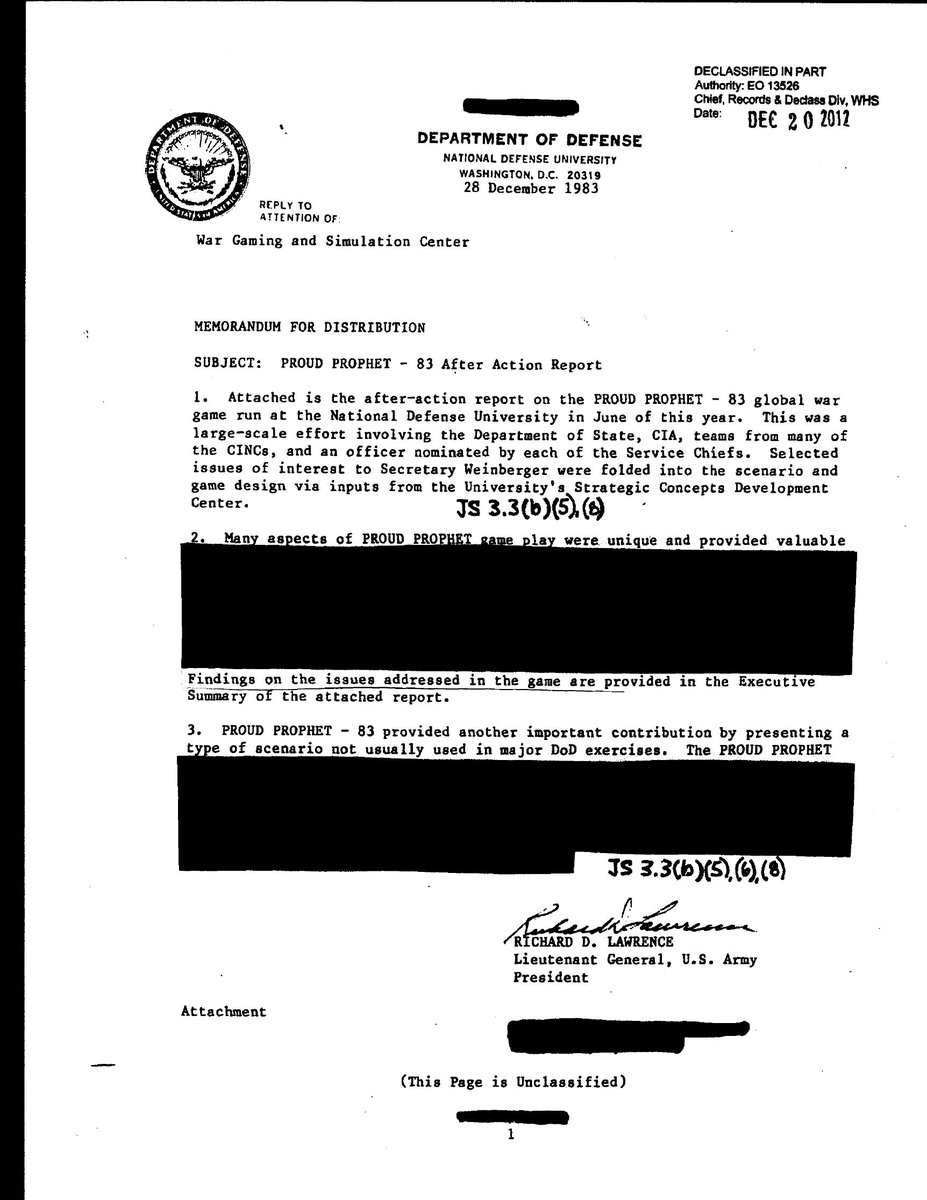
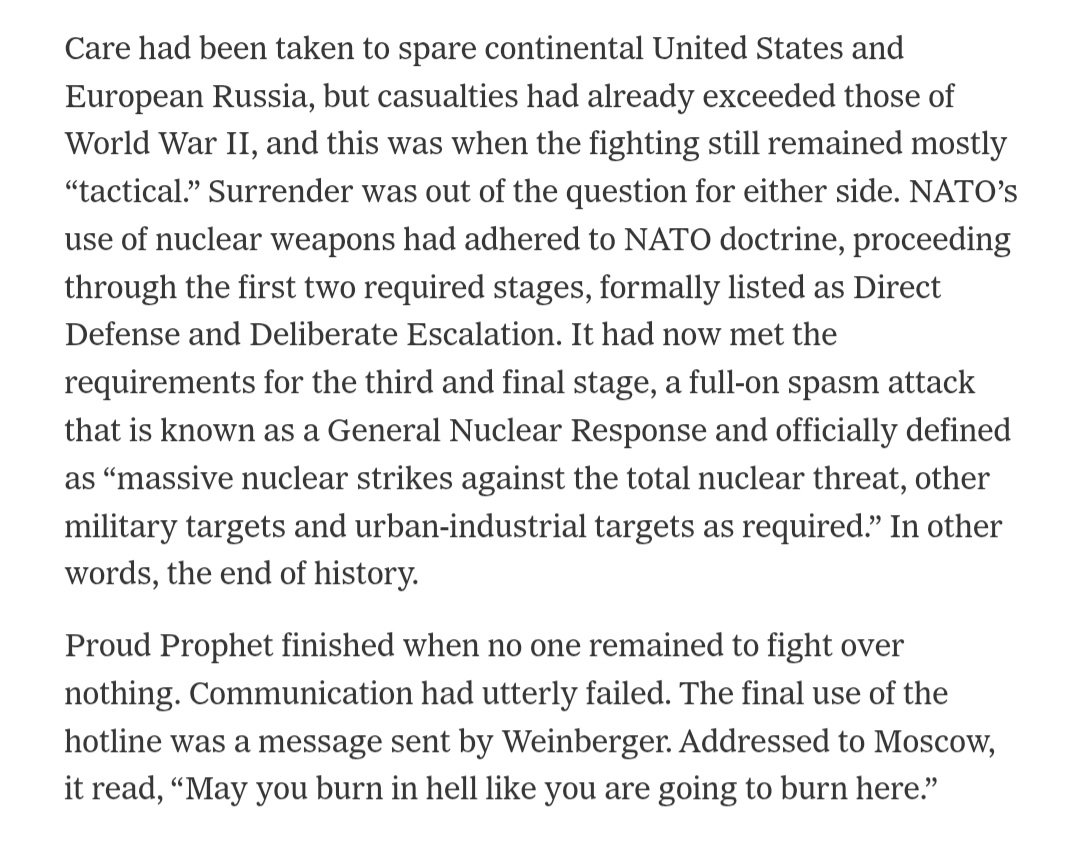
In 1983, the United States ran the "Proud Prophet-83" politico-military global war game to simulate a NATO-Warsaw Pact crisis and ensuing armed conflict.
Among the participants were officials from the Joint Staff, combatant commands, CIA, State Department, and (covertly) Secretary of Defense Caspar Weinberger and Joint Chiefs Chairman Gen. John Vessey.
Following a few days of simulated hostilies, both sides were exchanging hundreds of nuclear attacks across Europe and other theaters. Those strikes destroyed every major German and Polish city as well as Paris, London, Amsterdam, Rotterdam, Brussels, and additional targets farther afield.
The final message conveyed through a hotline estabilished for the purposes of simulation and directed to Moscow read:
"May you burn in hell like you are going to burn here."
It was sent by SecDef Caspar Weinberger.