1/15: In April, I resigned from OpenAI after losing confidence that the company would behave responsibly in its attempt to build artificial general intelligence — “AI systems that are generally smarter than humans.” https://t.co/yzMKnZwros
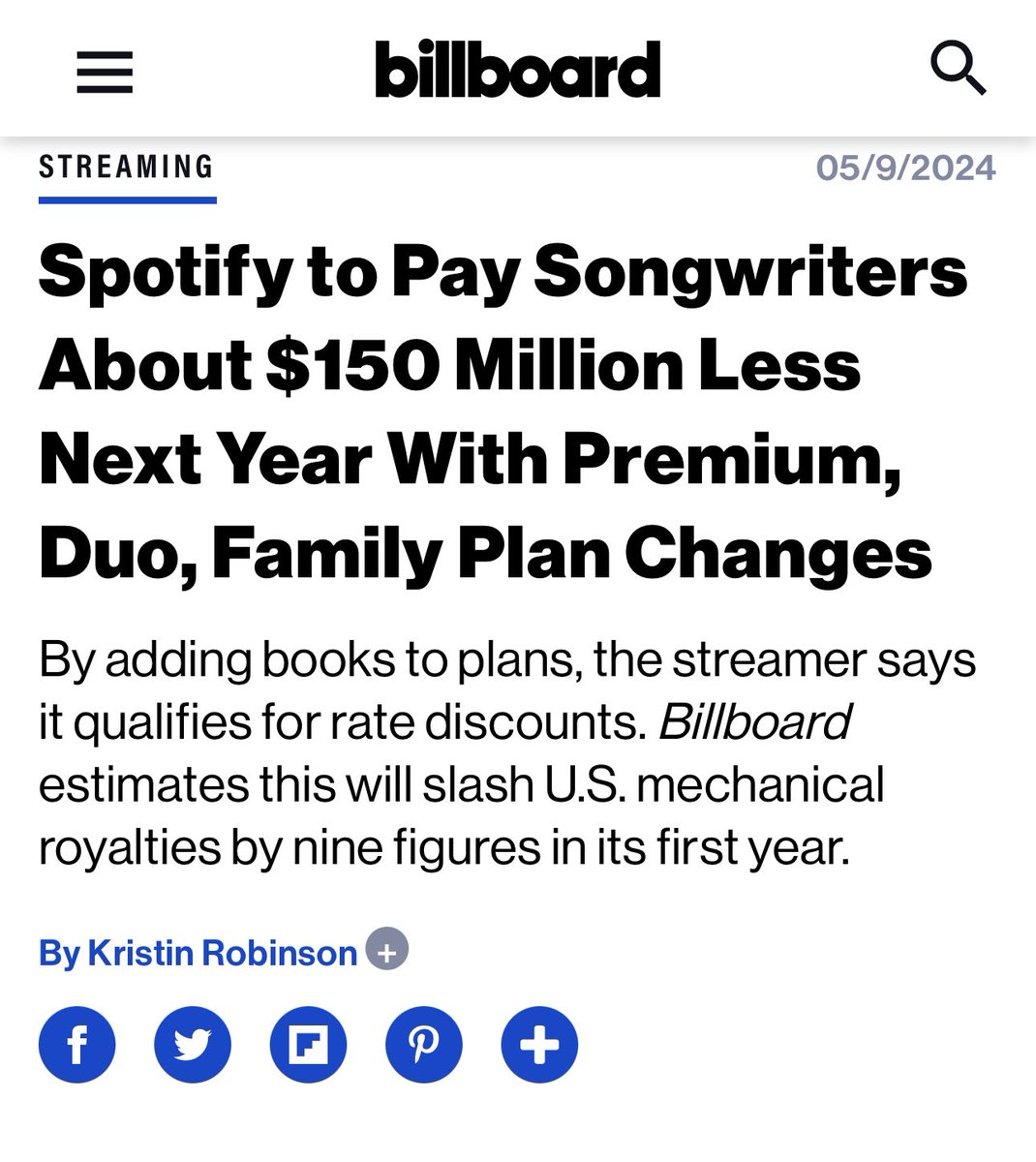
Spotify has launched a major assault on songwriters. Again. Remember last time when we won an overdue rate increase and Spotify did everything in its power to try to deny songwriters that victory? We fought and we won. It’s time to fight again.
All these GenAI companies avoiding the direct answer to the questions of what was your model trained on are cowards. In back rooms they hide behind the notion of fair use, but in public lie or avoid the question. It’s despicable.
I’ve been approached by generative AI founders who want to train models responsibly (i.e. without scraping), but who are being told by potential investors that this will mean they will fall behind companies that aren’t bothering to be ethical, so they won’t invest.
This is self-perpetuating, and in many ways these investors are causing as much harm as the companies doing the scraping.
There are customers and partners who want ethical AI models; there is growing backlash against models that exploit creators; and there’s a good chance many existing models are found to be infringing copyright. If, as an investor, you’re only talking to AI companies that choose to exploit creators, you’re probably not being given the full picture.
If you fund ethical AI companies, they will have a chance to prosper. If you don’t, they won’t.
Does anyone know if there is any way to turn off AI or AI-related content on Spotify? I can’t listen to my discover weekly anymore because the amount of music it shows me with AI vocals drives me up the wall.
Genuine question for @realwashedout and @subpop records: how do you think about the possibility Sora was trained on copyrighted videos without consent? If this doesn’t concern you, is this a tacit acknowledgement that generative AI models can be trained on your music without your permission?
This is meant in good faith. Curious to understand the logic behind using Sora.
It’s good to see generative AI companies moving towards licensing the training data they use. But it’s important that they license all their data, not just content from the big players who are most likely to sue them if they don’t.
Songwriters are feeling effects from the UMG TikTok ban:
- songwriters (when a UMPG talent is involved) are being asked by nonUMG artists to not submit pub splits upon release
- UMPG writers are being excluded from camps + sessions
Read more:
https://t.co/2ca04roH3c
1) @axrose - A&R, Def Jam
"My biggest takeaway from this year when it comes to finding and developing acts, is I would like to believe more of the industry is waking up to actually finding talent instead of looking at the numbers.
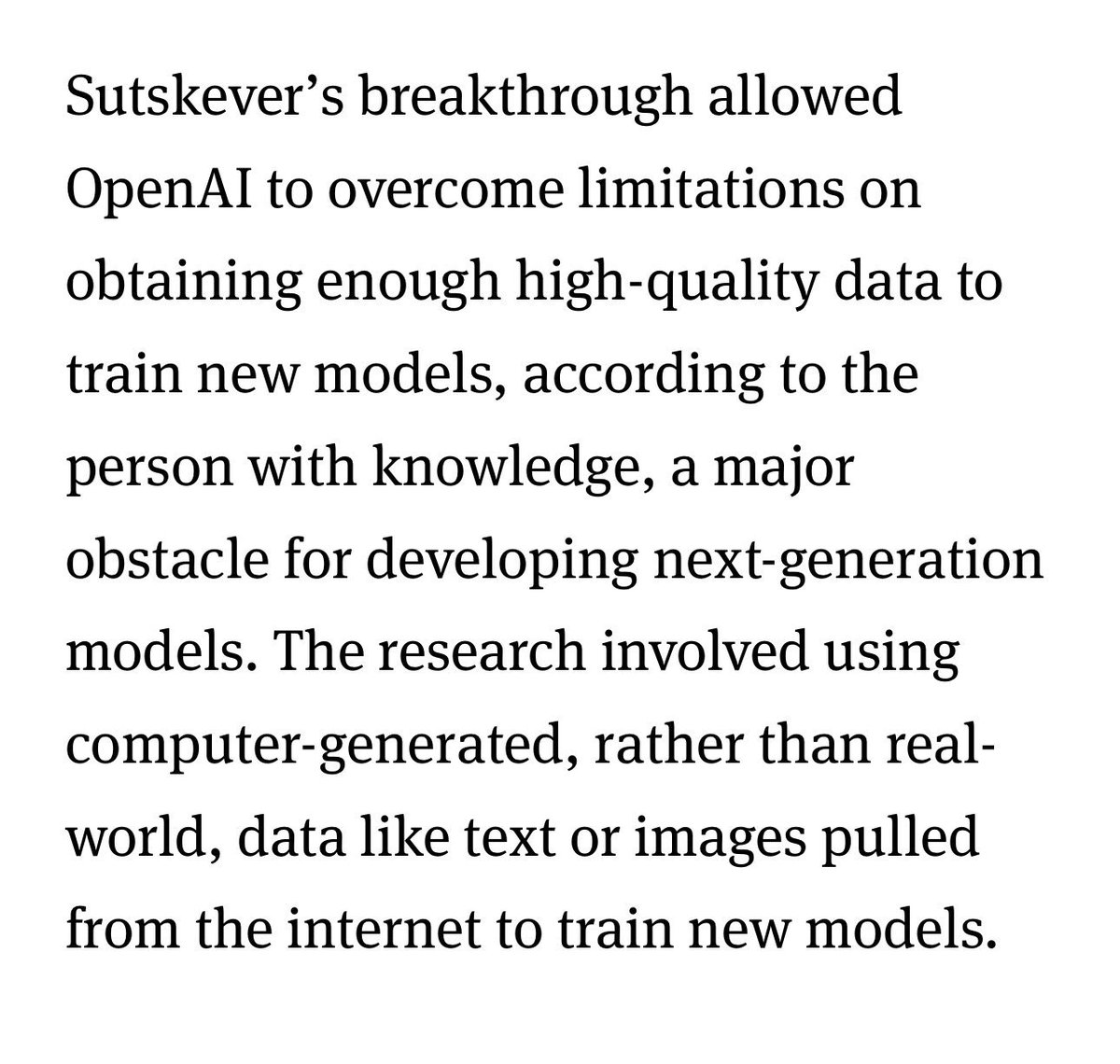
Synthetic data is often generated using models that were themselves trained on unlicensed, copyrighted work.
Synthetic data is only a solution if the original training data used to create it was licensed. If not, using synthetic data is just data laundering.
I’ve resigned from my role leading the Audio team at Stability AI, because I don’t agree with the company’s opinion that training generative AI models on copyrighted works is ‘fair use’.
First off, I want to say that there are lots of people at Stability who are deeply thoughtful about these issues. I’m proud that we were able to launch a state-of-the-art AI music generation product trained on licensed training data, sharing the revenue from the model with rights-holders. I’m grateful to my many colleagues who worked on this with me and who supported our team, and particularly to Emad for giving us the opportunity to build and ship it. I’m thankful for my time at Stability, and in many ways I think they take a more nuanced view on this topic than some of their competitors.
But, despite this, I wasn’t able to change the prevailing opinion on fair use at the company.
This was made clear when the US Copyright Office recently invited public comments on generative AI and copyright, and Stability was one of many AI companies to respond. Stability’s 23-page submission included this on its opening page:
“We believe that Al development is an acceptable, transformative, and socially-beneficial use of existing content that is protected by fair use”.
For those unfamiliar with ‘fair use’, this claims that training an AI model on copyrighted works doesn’t infringe the copyright in those works, so it can be done without permission, and without payment. This is a position that is fairly standard across many of the large generative AI companies, and other big tech companies building these models — it’s far from a view that is unique to Stability. But it’s a position I disagree with.
I disagree because one of the factors affecting whether the act of copying is fair use, according to Congress, is “the effect of the use upon the potential market for or value of the copyrighted work”. Today’s generative AI models can clearly be used to create works that compete with the copyrighted works they are trained on. So I don’t see how using copyrighted works to train generative AI models of this nature can be considered fair use.
But setting aside the fair use argument for a moment — since ‘fair use’ wasn’t designed with generative AI in mind — training generative AI models in this way is, to me, wrong. Companies worth billions of dollars are, without permission, training generative AI models on creators’ works, which are then being used to create new content that in many cases can compete with the original works. I don’t see how this can be acceptable in a society that has set up the economics of the creative arts such that creators rely on copyright.
To be clear, I’m a supporter of generative AI. It will have many benefits — that’s why I’ve worked on it for 13 years. But I can only support generative AI that doesn’t exploit creators by training models — which may replace them — on their work without permission.
I’m sure I’m not the only person inside these generative AI companies who doesn’t think the claim of ‘fair use’ is fair to creators. I hope others will speak up, either internally or in public, so that companies realise that exploiting creators can’t be the long-term solution in generative AI.
JUST IN: Spotify finally raises US prices.
$9.99 to $10.99
This is the 1st US premium price bump since the start, 12 years ago.
Finally.
10% more for artists.