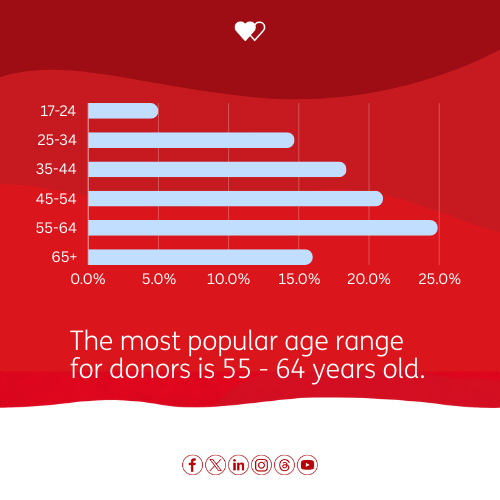
🩸 This #NationalBloodDonorWeek we are celebrating the newest members of our lifesaving team!
🫱 🫲 In the last year we welcomed over 7,120
💪 Feeling inspired? Start your lifesaving donor journey today!
👉 https://t.co/YErRAceYRT
🎉 #HCSWeek2025 kicks off today! 🎉
A huge shoutout to the incredible healthcare science workforce, driving innovation, diagnosis & patient care across the NHS. Let’s celebrate, inspire & showcase the impact of 50+ specialisms!
📢 Get involved: @WeHCScientists
The Great Big Biomedical Scientist Quiz 2024 – Round 10: Transfusion Science
Presented by the IBMS Specialist Advisory Panels - test your knowledge and broaden your expertise.
Check out the full quiz and scroll to the end for the answers:
https://t.co/Cg6vtV6FYm
#BiomedicalScience #ScienceQuiz #CPD
🚨 The July issue of #TransfusionToday is LIVE!
Catch up on the highlights from #ISBTBarcelona, the handover to new board members, and the latest from the #Immunohematology WP. Plus, dive into reports from our recent ISBT Highlights Days!
Read it now! https://t.co/yVK7JIPSpW
The results of the 2023 laboratory culture survey were stark. A panel discussion at #SHOTUK2024 will discuss safety culture in laboratories, with representation from @KerryTLC2022 @MHRA, @IBMS@RCPath & SHOT
SHOT Surveys - Serious Hazards of Transfusion (https://t.co/oBDMoPG57K)
In celebration of #BiomedicalScienceDay2024 we salute each and every biomedical scientist that has been working tirelessly to make our world safer
Your skills, professionalism and dedication is making a difference to lives every day and for that we say thank you🙏
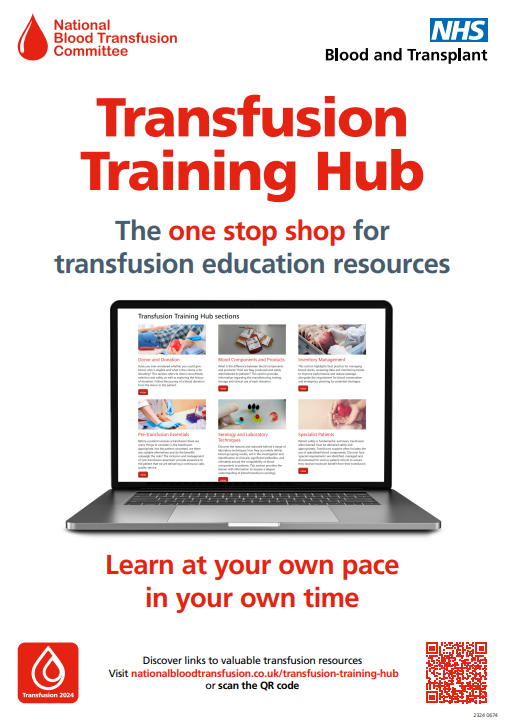
As part of the Scientific Education and Training Strategic Plan for Transfusion 2024, a webpage has been created to host various transfusion education resources, freely accessible to all!🩸
Check it out ⬇
https://t.co/P4eHsAE5zG
#LearningUpdate 📚
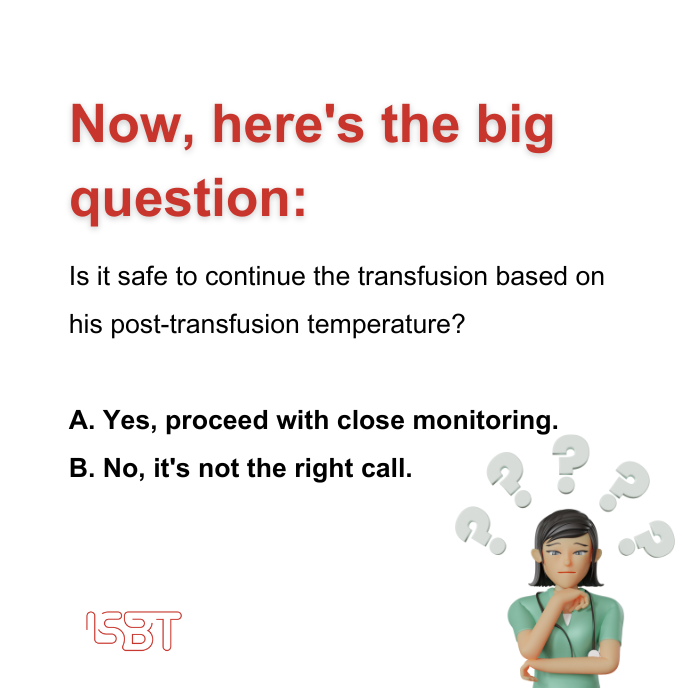
This month, we're exploring Transfusion Reactions. Is it safe to continue the transfusion based on post-transfusion temperature? Share your thoughts! 💬 #ISBTClinical#TransfusionReactions
#BGS2024
Wondered what it’s like managing blood stocks on the Isle of Wight! Think challenges - weather/transport/drones! Emily talks about - 'A matter of logistics- the challenge of delivering blood to an island hospital'
Book now!/Join us in Nottingham https://t.co/MjLkJsTkig
#BGS2024
Join Tracey and Tom for interactive case studies which challenge you by putting you in the shoes of reference laboratory staff to resolve complex serological puzzles that arise during grouping/antibody ID/XMing!!!
Book now!/Join us in Nottingham https://t.co/IH5Vgo1YVD
🤱🏽👶🏽🩸Maternal fetal medicine #blooducation chalk talk.
After a basic review of pretransfusion testing, we discussed the concepts of an antibody to a high frequency antigen. These are antigens that are present on almost all individuals. Another way of saying it, is that very few donors would lack the antigen. This makes it very stressful, or fun (however you like to see the cup filled) to find compatible blood products for patients who have an antibody to a high frequency antigen.
Take for instance, Richuanna. A 30~ish year-old pregnant woman who was discovered to have an antibody to Ata.
What to do when this is discovered during pregnancy?
1.) Dig into the literature.
Based on case reports or the Antigen Fact Book, determine if it has been recognized if the antibody is clinically significant. And when I say clinically significant, I mean can it cause a hemolytic transfusion reaction, HDFN or decrease the age of a red blood cell in circulation.
2.) What stage of red blood cell fetal maturation does this antigen express itself? If expressed super early, like antigens of the Kell blood group system, then following a titer may not be helpful.
3.) When the waters are muddy, and the clinical significance is not understood, perform a macrophage monolayer assay (MMA). This is a test investigates if monocytes gobble up red blood cells mixed with the patient’s antibodies. If the monocyte index is >5%, red blood cells have a high likelihood of becoming rapidly destroyed by the antibody. If it is less, then it may not be necessary to take conservative actions.
4.) Investigate if the donor has any relatives. If she does and they are willing, see if they want to have their blood typed to become a potential donor.
5.) If the patient is stable, consider collecting an autologous unit. Keep in mind that a pRBC unit has a 42-day expiration date. Freezing the unit would be an option, but once thawed, washed and deglyced, the unit expires in 24 hours. Consider all the logistical timing when coordinating blood availability for your patient.
To finish our fairy tale story, Richuanna delivered a healthy full-term baby. A few years later, she was called to action when a patient with her rare blood type needed a unit of blood. Once a patient, now a hero. My hero.
https://t.co/JCWA3PZgeg