I've long argued that efforts to control people (including kids) aren't just disrespectful; they're also counterproductive. I love this epigram by Herb Lovett that follows from that fact: "The more intrusive the procedure, the less empirical evidence there is to justify its use."
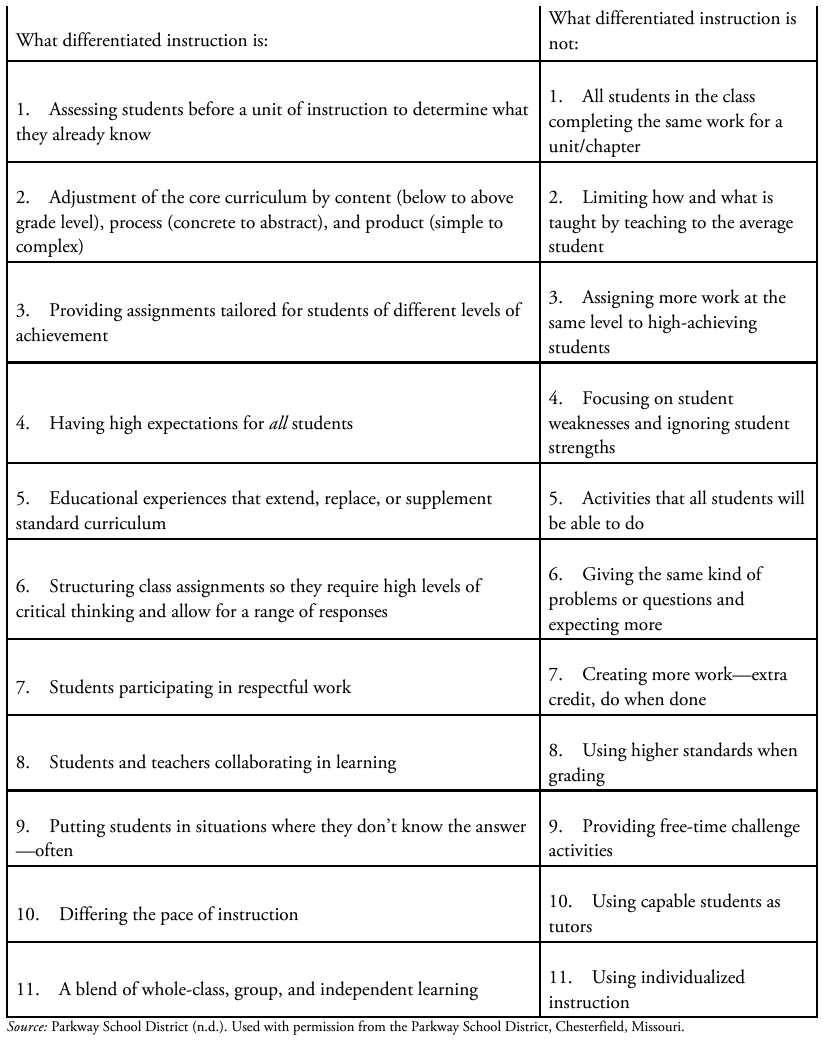
Yes! And we have to be responsive to *each* class of kids and their needs. Conceivably, my 3rd period algebra kids will be doing different stuff than 4th period. Because it’s not a one size fits all approach!
Differentiation is designing instruction with students in mind, and a remedy for the ineffective one-size-fits-all model.
It's not impossible. It's not unrealistic. It's what we are supposed to do as teachers.
Everything on the left-hand column is considered good practice.
🕒 Wait time 🕒 between asking a question and calling on someone for an answer — as well as waiting to respond to an answer — is an important strategy to include for all learners.
Sketchnote via @ValentinaESL
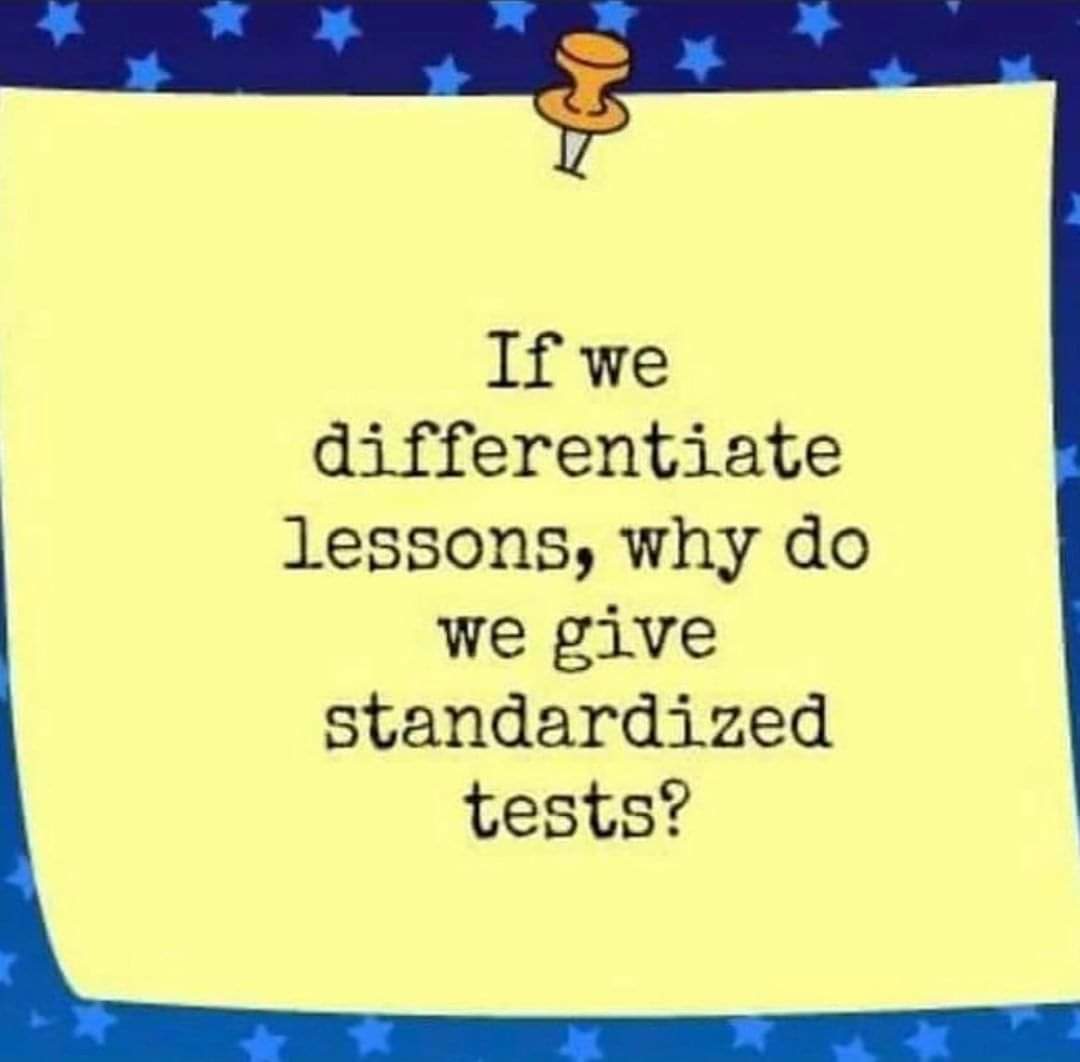
It's striking how many people fail to understand that quantified evaluations, such as standardized tests and rubrics, are no more objective than narratives & other qualitative appraisals. They just use numbers to conceal the subjective judgments that underpin them.
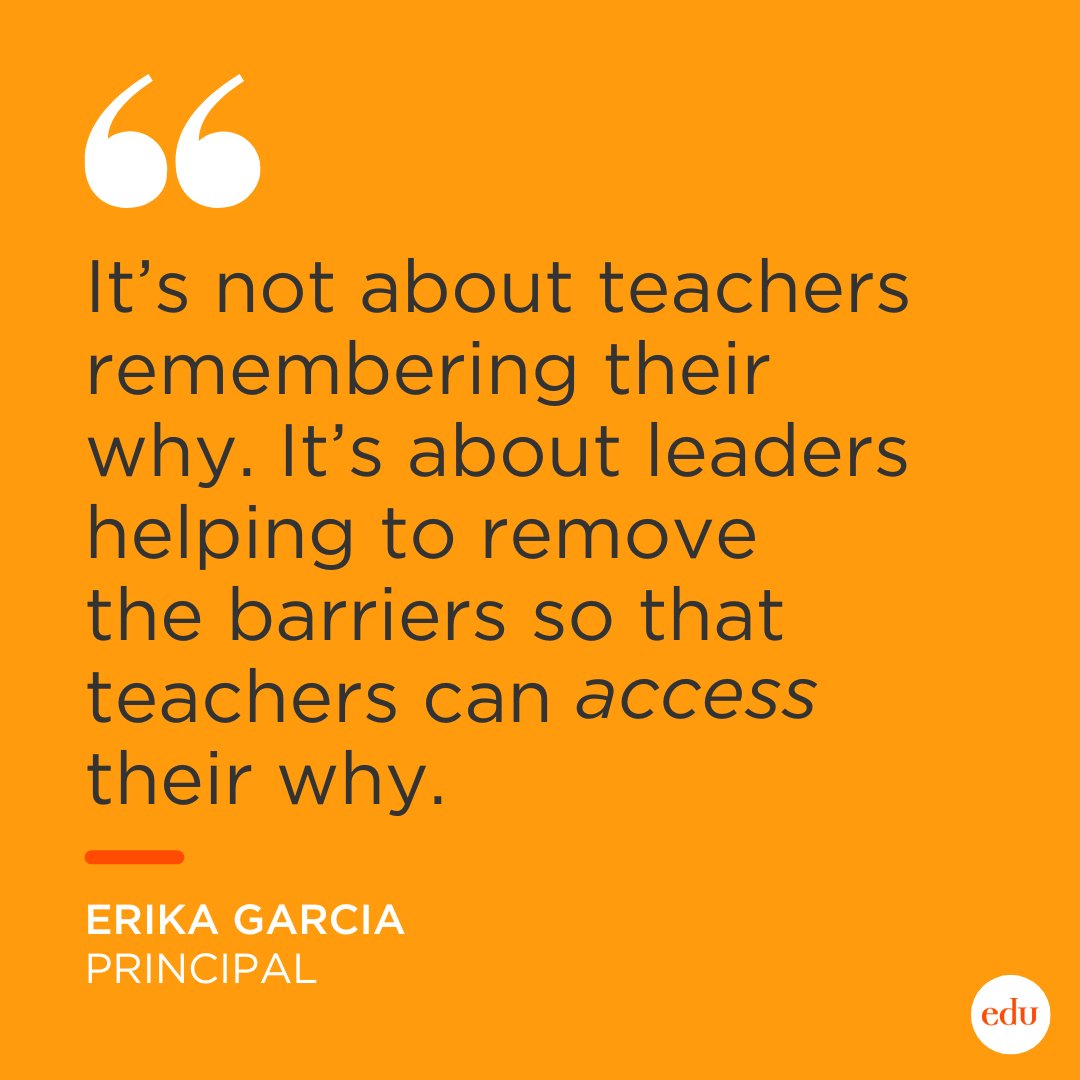
When I was a building principal, we had a group of boys who were consistently getting office referrals during lunch for aggressive and disruptive behaviors. In the past, these behaviors had led to increasingly severe consequences that did not reduce the negative behaviors (and caused some students to be sent home and to miss instruction). I sat down with the group and we worked together to come up with a plan on what to do during lunch. One of the boys asked if we could start a knitting club, since his Auntie had recently taught him how to knit. Since he was a leader of the group, the other boys agreed. I asked them to come back tomorrow with some ideas of what to knit. The next day one of the boys said that he wanted to knit little hats for the preemies at the hospital, since his little cousin was there and that a nurse mentioned that they had run out of the little hats. The boys knitted daily and we delivered the hats to the hospital. We received many heartfelt thank you notes from families, nurses and doctors (and even an in-person visit with a personal thank you and cookies from a newborn's mom). This group continued to grow as did our ability to create knitted hats for preemies. This became a huge success for the participating students. There was significant improvement in the students’ behavior, attitude, achievement, and attendance. It is so important to think outside of the box for “win-win” solutions. It really isn’t the WHAT you do that is important, it is the WHY you are doing it! Our knitting group become a team, family, and community.
#maslowbeforebloom
How the standards-and-testing juggernaut has soured children on reading for pleasure: "There's a whole generation of kids who associate reading with assessment now." A book is seen not as fun but as something to be "analyz[ed] within an inch of its life": https://t.co/XW8OpP3RzE
Rubrics offer clarity about grading but can overwhelm students, so the single-point rubric focuses their attention on what’s important.
https://t.co/UtCmBN0VKs
What if #chatGPT is the catalyst we’ve been waiting for to personalize school?
To shift from what we’re learning about, to who we are becoming?
It’s the ultimate driving question for this teaching project…
What questions might I ask that AI can’t answer?