@pisquared FastSet supports a range of verifiable claims—payments, votes, AI inferences, and more—all backed by proofs (cryptographic, ZK, semantic). Ideal for modern dApps
@pisquared Massively parallel settlement
Instead of forcing every validator to agree on one global order, FastSet lets independent, non‐conflicting claims settle in parallel—no delays
High TPS isn’t just a flex.
It is what makes scaling real world Web3 apps possible without breaking the user experience.
This @mpost_io op-ed explains why throughput is the difference between theory and adoption.
Read it and you will see what most are missing. ↓
Blockchains are inherently slow.
Pi² is building the verifiable settlement layer that pushes beyond their bottlenecks.
Great convo with @BlockhuntersOrg and @RosuGrigore covering FastSet, OmniSet, and where Web3 infra is headed.
Watch here ↓
Curious how FastSet achieves 100K+ TPS and sub-100ms finality?
The key is modular design for parallel claims and verifiable settlement, not the bottlenecks of traditional blockchains.
Choose your path. Full whitepaper or one pager ↓
FastSet Wallet is built for speed and scale.
Watch @Ovcd27 open a wallet, fund it instantly, send assets across the network, and follow every step live.
See how fast it really is ↓
X Space Recap: 100K+ TPS Real or Hype?
Yesterday the Pi Squared team went live to tackle one of the biggest questions in web3: is 100K+ TPS actually possible, or just hype.
Who joined
@RosuGrigore (Founder & CEO)
@Ovcd27 (Blockchain Developer - VSL)
@UBAmain (Community Lead)
Why TPS matters – @Ovcd27 broke down TPS and why it remains the benchmark for blockchain performance. Most chains today hit only hundreds or a few thousand TPS, limited by bottlenecks in traditional infrastructure.
FastSet breakthrough – @RosuGrigore explained how Pi²’s FastSet reached 100K+ TPS with sub 100ms finality on standard hardware. Unlike blockchains that rely on expensive machines, FastSet is actor based and avoids total ordering, opening the door to massive scalability.
Trust and speed – @Ovcd27 addressed the key tradeoff question. Even at 100K+ TPS, FastSet keeps decentralization and verifiability intact. That means speed without sacrificing trust.
Why it matters – High frequency trading, real-world assets, micropayments, and gaming all stand to gain. Pi² is already aiming at 1M TPS by mainnet, and ultra low latency could unlock entirely new real-time global applications.
Community Portal – @UBAmain introduced the Pi² Portal, your hub for FastSet learning, quests to earn points, and the Reactor TPS Game launching next week to stress test the network in real time.
Final takeaway – @RosuGrigore left us with this: the future of web3 may not look like blockchain at all. Pi² is building toward that vision with speed, simplicity, and scalability at its core!
Catch the full Space, including community Q&A, here ↓
I just earned 31 $B3TR for offsetting 5 Carbon Years (CY) on https://t.co/b6bvrpZyv4! 🌱 That's 5.00 tons of CO₂ removed—like taking it out of the air for a whole year. Join
@pauseyourcarbon
and get rewarded for climate action! #CO2#ClimateAction
I just earned 38 $B3TR for offsetting 5 Carbon Years (CY) on https://t.co/b6bvrpZyv4! 🌱 That's 5.00 tons of CO₂ removed—like taking it out of the air for a whole year. Join @pauseyourcarbon and get rewarded for climate action! #CO2#ClimateAction 🌎
Why Web3 needs a unified OS.
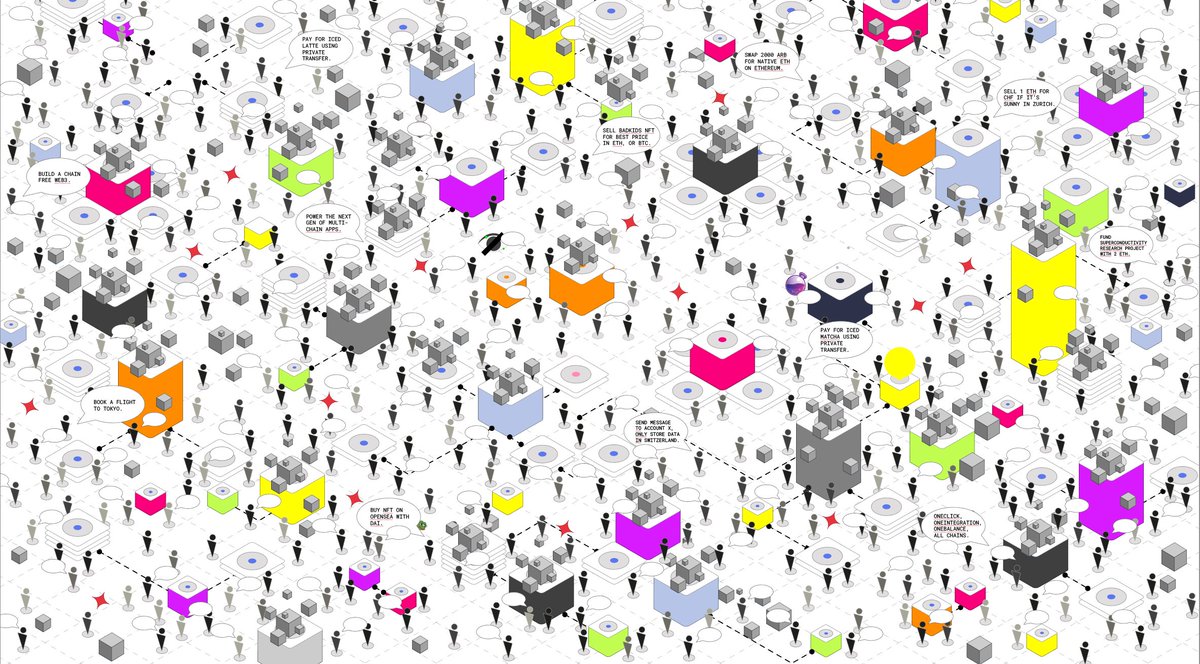
Today's blockchains are fragmented. Users, state, applications, and liquidity are split between chains.
This creates headaches for developers and unnecessary complexity for users— a chaotic experience of patchwork solutions and vulnerable bridges.
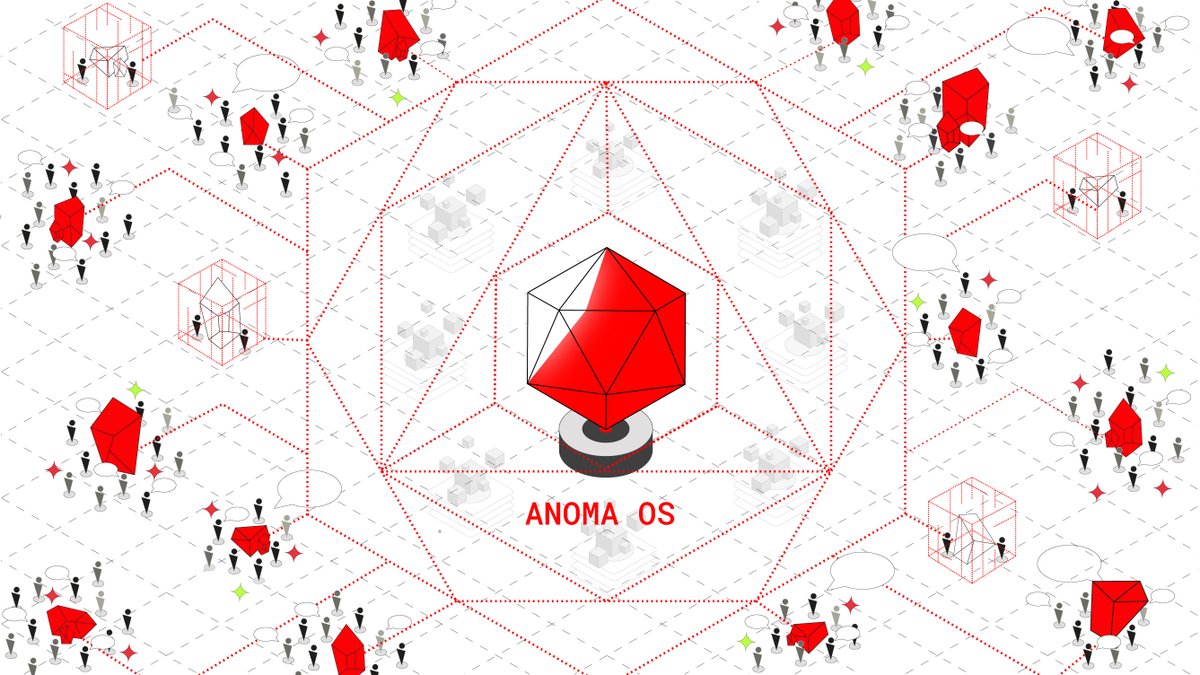
Anoma unifies blockchains into a single development environment, ending the fragmentation that limits today's apps and leads to poor UX.
Builders can treat the multichain landscape as a unified system, and users don't need to worry about the complexities of infrastructure.
By building on the Intent Machine, you can deploy 1 app that just works anywhere. Access state, users, and settlement on any connected chain.
You can focus on your app and leave the complexities of cross-chain & intent solving infrastructure to Anoma—it's 100% plug-and-play.
Intents aren't magic, but Anoma apps will feel like they are 🧙♂️
Users simply express their intent, and Anoma takes care of the rest. This enables a more human-centric future of seamless, natural user interfaces, and empowers people to make blockchains work for them.
Anoma is Web3's OS.
The missing link between blockchains and users, Anoma is:
• Intent-centric
• Distributed
• User-friendly
• Scale-free
• Universal
Let's dive into what it means for Web3 & how it enables apps that work like magic ✨
🧵⤵️